
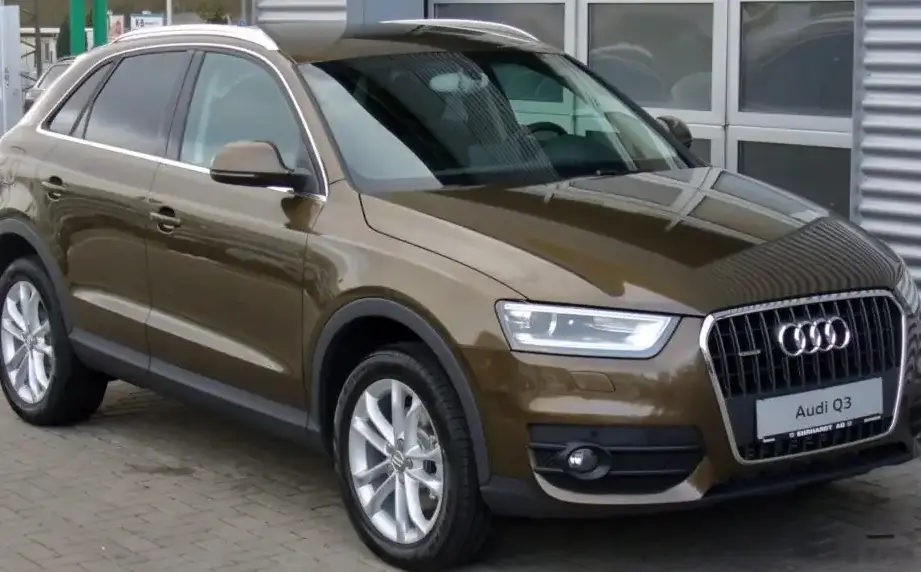
The Audi Q3 I (8U) 2.0 TDI 140 hp variant was a popular entry point into the luxury compact SUV segment when it launched in 2012, continuing through the 2014 model year. Positioned within the first generation (8U) of the Q3, this model aimed to balance fuel efficiency, practicality, and the Audi brand experience. It served as a key offering in the European market, where diesel engines were – and continue to be – highly favored, and also saw moderate sales in other regions. This specific configuration, combining the 2.0-liter TDI engine with a six-speed manual transmission, represented a core trim level, offering a more accessible price point compared to higher-powered or more lavishly equipped Q3 models.
Technical Specifications
| Brand | Audi |
| Model | Q3 |
| Generation | Q3 I (8U) |
| Type (Engine) | 2.0 TDI (140 Hp) |
| Start of production | 2012 |
| End of production | 2014 |
| Powertrain Architecture | Internal Combustion engine |
| Body type | SUV |
| Seats | 5 |
| Doors | 5 |
| Fuel consumption (urban) | 6.2 l/100 km (37.9 US mpg, 45.6 UK mpg, 16.1 km/l) |
| Fuel consumption (extra urban) | 4.7 l/100 km (50 US mpg, 60.1 UK mpg, 21.3 km/l) |
| Fuel consumption (combined) | 5.2 l/100 km (45.2 US mpg, 54.3 UK mpg, 19.2 km/l) |
| CO2 emissions | 137 g/km |
| Fuel Type | Diesel |
| Acceleration 0 – 100 km/h | 9.9 sec |
| Acceleration 0 – 62 mph | 9.9 sec |
| Acceleration 0 – 60 mph | 9.4 sec |
| Maximum speed | 202 km/h (125.52 mph) |
| Emission standard | Euro 5 |
| Weight-to-power ratio | 10.9 kg/Hp, 92.1 Hp/tonne |
| Weight-to-torque ratio | 4.8 kg/Nm, 210.5 Nm/tonne |
| Power | 140 Hp @ 4200 rpm |
| Power per litre | 71.1 Hp/l |
| Torque | 320 Nm @ 1750-2500 rpm (236.02 lb.-ft. @ 1750-2500 rpm) |
| Engine layout | Front, Transverse |
| Engine Model/Code | CFFB, CLJA |
| Engine displacement | 1968 cm3 (120.09 cu. in.) |
| Number of cylinders | 4 |
| Engine configuration | Inline |
| Fuel injection system | Diesel Commonrail |
| Engine aspiration | Turbocharger, Intercooler |
| Engine oil capacity | 4.3 l (4.54 US qt | 3.78 UK qt) |
| Coolant capacity | 8 l (8.45 US qt | 7.04 UK qt) |
| Kerb Weight | 1520 kg (3351.03 lbs.) |
| Max. weight | 2030 kg (4475.38 lbs.) |
| Max load | 510 kg (1124.36 lbs.) |
| Trunk (boot) space – minimum | 460 l (16.24 cu. ft.) |
| Fuel tank capacity | 64 l (16.91 US gal | 14.08 UK gal) |
| Length | 4385 mm (172.64 in.) |
| Width | 1831 mm (72.09 in.) |
| Height | 1608 mm (63.31 in.) |
| Wheelbase | 2603 mm (102.48 in.) |
| Front track | 1571 mm (61.85 in.) |
| Rear track | 1575 mm (62.01 in.) |
| Minimum turning circle | 11.8 m (38.71 ft.) |
| Drivetrain Architecture | Front wheel drive |
| Number of gears | 6 gears, manual transmission |
| Front suspension | Independent type McPherson |
| Rear suspension | Independent multi-link suspension |
| Front brakes | Ventilated discs |
| Rear brakes | Disc |
| Assisting systems | ABS (Anti-lock braking system) |
| Steering type | Steering rack and pinion |
| Power steering | Electric Steering |
| Tires size | 215/65 R16 |
| Wheel rims size | 6.5J x 16 |
Powertrain & Engine Architecture
The heart of this Q3 variant is the 2.0-liter four-cylinder diesel engine, typically identified by engine codes CFFB or CLJA depending on the specific production date and market. This engine belongs to the Volkswagen Group’s modular engine family, known for its robust construction and efficiency. It utilizes a common rail direct injection system, delivering fuel at extremely high pressures for optimized combustion. A turbocharger with an intercooler is employed to boost power output and improve torque across a wider rev range. The engine features four valves per cylinder (DOHC) and a timing belt. The six-speed manual transmission was the standard offering for this trim, providing drivers with direct control over gear selection. The transmission’s gear ratios were tuned to prioritize fuel economy and smooth operation, rather than outright performance.
Driving Characteristics
The 140 hp 2.0 TDI with a manual transmission offered a balanced driving experience. Acceleration from 0-60 mph took around 9.4 seconds, which was adequate for everyday driving but didn’t provide particularly sporty performance. The engine’s 320 Nm (236 lb-ft) of torque, available from 1750-2500 rpm, provided good responsiveness in typical driving situations, making overtaking and merging onto highways relatively effortless. Compared to the more powerful 2.0 TDI variants (typically around 177 hp), this version felt noticeably less energetic. However, it offered significantly better fuel economy. The manual transmission, while engaging, required more driver involvement than the optional S tronic dual-clutch transmission available on higher trims.
Equipment & Trim Levels
The 140 hp TDI Q3 typically came with a respectable level of standard equipment. This included air conditioning, a multi-function steering wheel, power windows, and an audio system with CD player. Safety features such as ABS, electronic stability control, and multiple airbags were standard. Interior upholstery was typically cloth, with options for leather upgrades. Common optional extras included parking sensors, a panoramic sunroof, navigation system, and upgraded alloy wheels. The trim level often dictated the exterior styling details, such as chrome accents and body-colored bumpers.
Chassis & Braking
The Q3’s chassis featured an independent McPherson strut suspension at the front and a multi-link suspension at the rear, providing a comfortable ride and good handling characteristics. The suspension was tuned to prioritize comfort over outright sportiness. Front brakes were ventilated discs, while rear brakes were solid discs. The steering was electrically assisted, offering a light and precise feel. The standard tire size was 215/65 R16, providing a good balance between ride comfort and grip.
Market Reception & Comparison
The Audi Q3 2.0 TDI 140 hp was generally well-received by automotive critics. It was praised for its fuel efficiency, comfortable ride, and practical interior. However, some reviewers noted that the engine lacked the punch of more powerful alternatives. Compared to the higher-output TDI variants, this version offered a more affordable entry point into the Q3 range, but at the expense of performance. Against competitors like the BMW X1 and Mercedes-Benz GLA, the Q3 offered a compelling combination of luxury, practicality, and fuel economy.
Legacy
The 2.0 TDI engine, in its various iterations, proved to be a reliable and durable powertrain. While diesel engines have faced increased scrutiny in recent years due to emissions concerns, the Q3 2.0 TDI remains a popular choice in the used car market, particularly in Europe. The CFFB and CLJA engine codes are generally considered robust, but regular maintenance, including oil changes and timing belt replacements, is crucial for long-term reliability. Today, these Q3s represent a relatively affordable way to experience Audi’s build quality and features.
