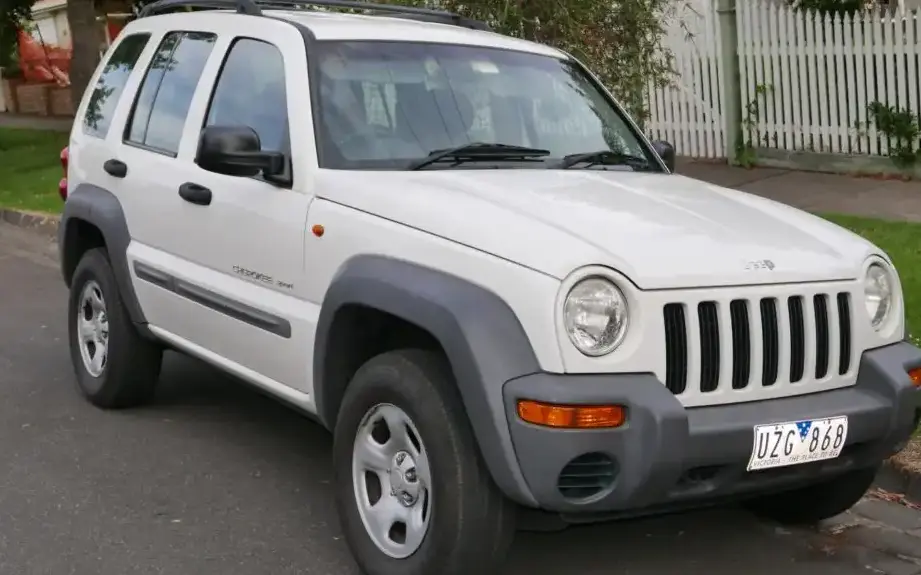
The Jeep Cherokee III (KJ) 2.5 CRD, produced from 2002 to 2008, marked a significant evolution for the Cherokee model line. It transitioned from the unibody construction of the previous generation (XJ) to a more traditional body-on-frame design. This third generation, internally designated the KJ, aimed to combine Jeep’s established off-road prowess with enhanced on-road comfort and refinement. The 2.5 CRD variant, powered by a turbocharged diesel engine, was primarily targeted towards European and international markets where diesel fuel was more readily available and economically advantageous. It occupied a middle position within the Cherokee KJ lineup, offering a balance between fuel efficiency and adequate performance, positioned below the more powerful gasoline engine options.
Technical Specifications
| Brand | Jeep |
| Model | Cherokee |
| Generation | Cherokee III (KJ) |
| Type (Engine) | 2.5 CRD (143 Hp) |
| Start of production | 2002 |
| End of production | 2008 |
| Powertrain Architecture | Internal Combustion engine |
| Body type | SUV |
| Seats | 5 |
| Doors | 5 |
| Fuel consumption (urban) | 11.7 l/100 km (20.1 US mpg, 24.1 UK mpg, 8.5 km/l) |
| Fuel consumption (extra urban) | 7.5 l/100 km (31.4 US mpg, 37.7 UK mpg, 13.3 km/l) |
| Fuel consumption (combined) | 9 l/100 km (26.1 US mpg, 31.4 UK mpg, 11.1 km/l) |
| Fuel Type | Diesel |
| Acceleration 0 – 100 km/h | 13.5 sec |
| Acceleration 0 – 62 mph | 13.5 sec |
| Acceleration 0 – 60 mph | 12.8 sec |
| Maximum speed | 170 km/h (105.63 mph) |
| Weight-to-power ratio | 12.5 kg/Hp, 79.9 Hp/tonne |
| Weight-to-torque ratio | 5.2 kg/Nm, 191.6 Nm/tonne |
| Power | 143 Hp @ 4000 rpm |
| Power per litre | 57.2 Hp/l |
| Torque | 343 Nm @ 2000 rpm (252.98 lb.-ft. @ 2000 rpm) |
| Engine layout | Front, Longitudinal |
| Engine Model/Code | R425 |
| Engine displacement | 2499 cm3 (152.5 cu. in.) |
| Number of cylinders | 4 |
| Engine configuration | Inline |
| Cylinder Bore | 92 mm (3.62 in.) |
| Piston Stroke | 94 mm (3.7 in.) |
| Compression ratio | 17.5:1 |
| Number of valves per cylinder | 2 |
| Fuel injection system | Diesel Commonrail |
| Engine aspiration | Turbocharger, Intercooler |
| Valvetrain | OHC |
| Engine oil capacity | 6.5 l (6.87 US qt | 5.72 UK qt) |
| Coolant | 12.5 l (13.21 US qt | 11 UK qt) |
| Kerb Weight | 1790 kg (3946.27 lbs.) |
| Max. weight | 2400 kg (5291.09 lbs.) |
| Max load | 610 kg (1344.82 lbs.) |
| Trunk (boot) space – minimum | 820 l (28.96 cu. ft.) |
| Trunk (boot) space – maximum | 1950 l (68.86 cu. ft.) |
| Fuel tank capacity | 76 l (20.08 US gal | 16.72 UK gal) |
| Length | 4430 mm (174.41 in.) |
| Width | 1820 mm (71.65 in.) |
| Height | 1865 mm (73.43 in.) |
| Wheelbase | 2650 mm (104.33 in.) |
| Front track | 1525 mm (60.04 in.) |
| Rear (Back) track | 1515 mm (59.65 in.) |
| Drive wheel | All wheel drive (4×4) |
| Number of gears and type of gearbox | 5 gears, manual transmission |
| Front suspension | Double wishbone |
| Rear suspension | Transverse stabilizer |
| Front brakes | Ventilated discs |
| Rear brakes | Disc |
| Assisting systems | ABS (Anti-lock braking system) |
| Steering type | Steering rack and pinion |
| Power steering | Hydraulic Steering |
| Tires size | 235/70 R16 |
Powertrain & Engine Architecture
The core of the Cherokee 2.5 CRD is the R425 engine, a 2.5-liter inline-four cylinder diesel. This engine employed a common rail direct injection system, a technology that enabled precise fuel delivery and enhanced combustion efficiency. The Bosch-supplied common rail system operated at exceptionally high pressures – 1600 bar – to effectively atomize the fuel. A turbocharger, coupled with an intercooler, was utilized to increase power output and improve torque throughout the engine’s operational range. The engine featured an overhead camshaft (OHC) valvetrain with two valves per cylinder. A 5-speed manual transmission was the standard offering, selected for its durability and efficiency. While an automatic transmission was available on some Cherokee KJ models, it wasn’t commonly paired with the 2.5 CRD engine in most markets.
Driving Characteristics
The 2.5 CRD Cherokee delivered a driving experience distinct from its gasoline-powered counterparts. Producing 143 horsepower and 343 Nm (253 lb-ft) of torque, it wasn’t a performance-oriented vehicle, but it provided sufficient power for everyday driving and towing. The torque curve was relatively flat, delivering usable power from low engine speeds, making it well-suited for off-road conditions and hauling loads. Acceleration from 0-60 mph took approximately 12.8 seconds, and the top speed was limited to 170 km/h (106 mph). The manual transmission’s gear ratios were optimized for fuel economy and towing, rather than rapid acceleration. In comparison to the V6 gasoline engines, the 2.5 CRD felt less responsive but offered significantly improved fuel economy.
Equipment & Trim Levels
The 2.5 CRD Cherokee generally came with a reasonable standard equipment package. This included air conditioning, power windows and locks, and an AM/FM radio with a CD player. Higher trim levels, such as the Limited, added features like leather upholstery, alloy wheels, a premium sound system, and a sunroof. Optional extras included a navigation system, heated seats, and a tow package. Interior appointments were typically functional and durable, reflecting the Cherokee’s intended use as a rugged SUV. The dashboard layout was straightforward and user-friendly, with clearly marked controls.
Chassis & Braking
The Cherokee KJ’s chassis was a robust body-on-frame construction, providing a solid base for both on-road and off-road driving. The front suspension utilized a double wishbone design, while the rear featured a solid axle with coil springs and a transverse stabilizer bar. This configuration offered a good compromise between ride comfort and off-road capability. Braking was provided by ventilated discs at the front and solid discs at the rear. An Anti-lock Braking System (ABS) was standard, enhancing safety and control during emergency braking. The steering system was a hydraulic rack and pinion setup, delivering precise and responsive steering feel.
Market Reception & Comparison
The 2.5 CRD Cherokee was well-received in European markets, where diesel engines were highly favored. Critics praised its fuel efficiency and torque, making it a practical choice for long-distance travel and towing. However, some reviewers noted its relatively slow acceleration compared to gasoline-powered competitors. Compared to the 3.7L V6 gasoline engine, the 2.5 CRD offered considerably better fuel economy (around 9 l/100km versus 12-14 l/100km) but less overall power. The 2.5 CRD was generally considered more reliable than some of the early gasoline direct injection (GDI) engines offered in the Cherokee KJ, as it lacked the complex fuel system that could be susceptible to carbon buildup.
Legacy
The Jeep Cherokee KJ 2.5 CRD has earned a reputation for being a durable and reliable SUV, particularly in regions where it was widely used. The R425 engine, while not known for exceptional performance, is generally regarded as a robust and long-lasting unit, provided it receives regular maintenance. In the used car market, these Cherokees are often sought after by those seeking a capable and fuel-efficient off-road vehicle. Common maintenance concerns include turbocharger wear, fuel injector issues, and occasional problems with the cooling system. However, parts availability is generally good, and the Cherokee KJ remains a popular choice for enthusiasts and practical drivers alike.