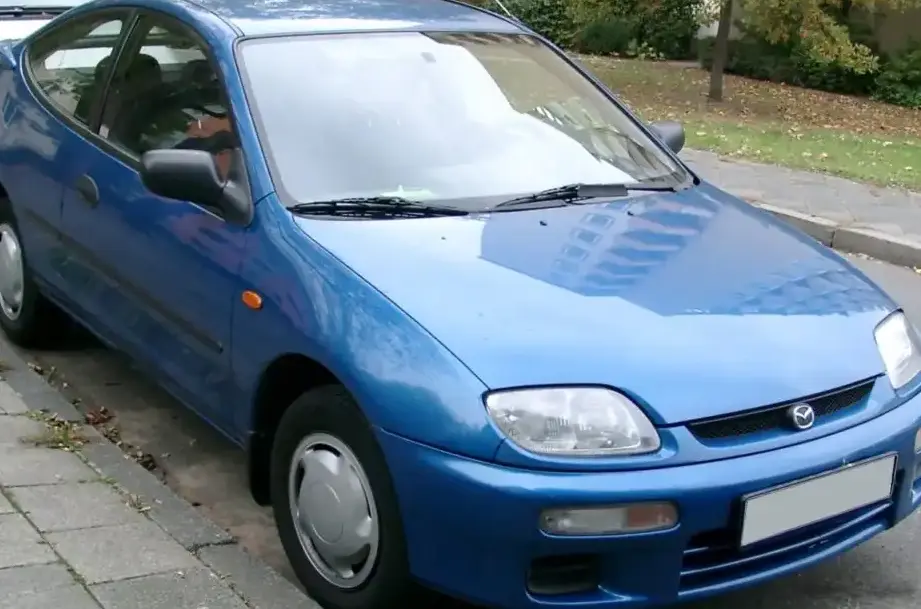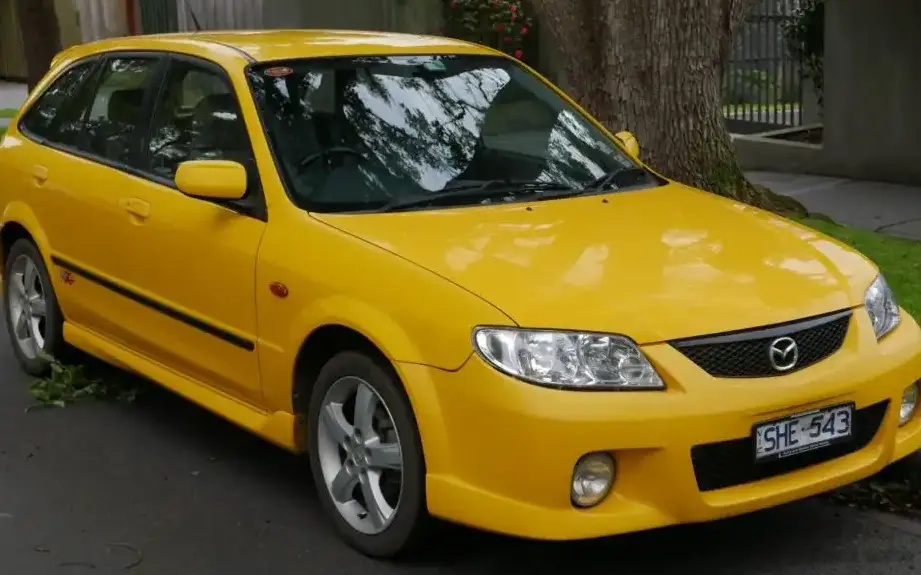
The Mazda 323 F VI (BJ) 1.8i 16V, produced between 1998 and 2003, represented a significant evolution in Mazda’s compact hatchback offerings. Positioned as a mid-range trim within the BJ generation (the sixth iteration of the 323 series), this variant aimed to balance performance, fuel efficiency, and affordability. It was primarily marketed in Europe and Asia, where compact hatchbacks were – and continue to be – a dominant vehicle segment. The 323 F VI, built on the Mazda BG platform, sought to offer a more refined and modern driving experience compared to its predecessors, competing with rivals like the Volkswagen Golf, Ford Focus, and Opel/Vauxhall Astra.
Technical Specifications
| Brand | Mazda |
| Model | 323 |
| Generation | 323 F VI (BJ) |
| Type (Engine) | 1.8 i 16V (114 Hp) |
| Start of production | 1998 |
| End of production | 2003 |
| Powertrain Architecture | Internal Combustion engine |
| Body type | Hatchback |
| Seats | 5 |
| Doors | 5 |
| Fuel consumption (urban) | 10.5 l/100 km (22.4 US mpg) |
| Fuel consumption (extra urban) | 6.5 l/100 km (36.2 US mpg) |
| Fuel Type | Petrol (Gasoline) |
| Acceleration 0 – 100 km/h | 10.8 sec |
| Acceleration 0 – 62 mph | 10.8 sec |
| Acceleration 0 – 60 mph | 10.3 sec |
| Maximum speed | 194 km/h (120.55 mph) |
| Weight-to-power ratio | 9.8 kg/Hp |
| Weight-to-torque ratio | 6.9 kg/Nm |
| Power | 114 Hp @ 6000 rpm |
| Power per litre | 62 Hp/l |
| Torque | 161 Nm @ 4000 rpm (118.75 lb.-ft. @ 4000 rpm) |
| Engine layout | Front, Transverse |
| Engine Model/Code | FP, FP55 |
| Engine displacement | 1840 cm3 (112.28 cu. in.) |
| Number of cylinders | 4 |
| Engine configuration | Inline |
| Cylinder Bore | 83 mm (3.27 in.) |
| Piston Stroke | 85 mm (3.35 in.) |
| Compression ratio | 9.7:1 |
| Number of valves per cylinder | 4 |
| Fuel injection system | Multi-port manifold injection |
| Engine aspiration | Naturally aspirated engine |
| Valvetrain | DOHC |
| Engine oil capacity | 3.5 l (3.7 US qt | 3.08 UK qt) |
| Coolant capacity | 7.5 l (7.93 US qt | 6.6 UK qt) |
| Kerb Weight | 1115 kg (2458.15 lbs.) |
| Max. weight | 1625 kg (3582.51 lbs.) |
| Max load | 510 kg (1124.36 lbs.) |
| Trunk (boot) space – minimum | 355 l (12.54 cu. ft.) |
| Trunk (boot) space – maximum | 1000 l (35.31 cu. ft.) |
| Fuel tank capacity | 55 l (14.53 US gal | 12.1 UK gal) |
| Length | 4200 mm (165.35 in.) |
| Width | 1705 mm (67.13 in.) |
| Height | 1410 mm (55.51 in.) |
| Wheelbase | 2610 mm (102.76 in.) |
| Front track | 1470 mm (57.87 in.) |
| Rear (Back) track | 1470 mm (57.87 in.) |
| Drivetrain Architecture | Front wheel drive |
| Number of gears | 5 |
| Gearbox type | Manual transmission |
| Front suspension | Coil spring |
| Rear suspension | Coil spring |
| Front brakes | Ventilated discs |
| Rear brakes | Disc |
| Assisting systems | ABS (Anti-lock braking system) |
| Steering type | Steering rack and pinion |
| Power steering | Hydraulic Steering |
| Tires size | 195/55 R15 |
| Wheel rims size | 15 |
Powertrain & Engine Architecture
The heart of the 323 F VI 1.8i 16V was the Mazda FP engine, a naturally aspirated, inline-four cylinder powerplant. The ‘FP’ designation encompassed several variations, with the FP-DE being a common iteration. This engine featured a double overhead camshaft (DOHC) valvetrain operating 16 valves (four per cylinder), contributing to its relatively high output for its displacement. Fuel delivery was managed by a multi-port fuel injection system, providing precise fuel metering for improved efficiency and responsiveness. The 1.8-liter engine produced 114 horsepower at 6000 rpm and 161 Nm (118.75 lb-ft) of torque at 4000 rpm. The engine’s design prioritized smooth operation and reasonable fuel economy over outright performance. The engine was transversely mounted in the front of the vehicle, driving the front wheels. The five-speed manual transmission was the standard offering, providing a direct and engaging driving experience.
Driving Characteristics
The 1.8i 16V offered a balanced driving experience. While not a performance-oriented model, the engine provided adequate power for everyday driving and occasional highway cruising. Acceleration from 0 to 60 mph took approximately 10.3 seconds, and the car had a top speed of around 120.55 mph. The five-speed manual transmission allowed drivers to effectively utilize the engine’s powerband. Compared to the lower-powered 1.5-liter variants, the 1.8i offered noticeably more punch, particularly when overtaking or climbing hills. However, it lacked the more spirited performance of the higher-end models equipped with larger engines. The gear ratios were tuned for a blend of fuel efficiency and usability, with a relatively long fifth gear for comfortable highway cruising. The steering was light and precise, making the car easy to maneuver in urban environments.
Equipment & Trim Levels
The 1.8i 16V trim typically included features such as power steering, central locking, electric front windows, and an AM/FM radio. Air conditioning was often an optional extra. Interior upholstery was typically cloth, with a relatively simple and functional dashboard layout. Higher trim levels within the 323 F VI range offered upgrades such as alloy wheels, a sunroof, and upgraded audio systems. Safety features included ABS (Anti-lock Braking System) as standard equipment, a significant improvement over earlier models. The overall interior design focused on practicality and durability rather than luxury.
Chassis & Braking
The 323 F VI utilized a relatively conventional chassis design, featuring coil springs and independent suspension at all four wheels. The front suspension employed MacPherson struts, while the rear suspension utilized a multi-link setup. This configuration provided a good balance of ride comfort and handling. Braking duties were handled by ventilated discs at the front and solid discs at the rear, providing adequate stopping power for the vehicle’s weight and performance. The ABS system helped to maintain steering control during emergency braking situations. The car’s relatively lightweight construction (approximately 1115 kg or 2458 lbs) contributed to its nimble handling characteristics.
Market Reception & Comparison
The Mazda 323 F VI 1.8i 16V was generally well-received by automotive critics as a competent and reliable compact hatchback. It was praised for its comfortable ride, precise steering, and fuel efficiency. However, some critics noted that its performance was not as exciting as some of its rivals. Compared to the lower-powered 1.5-liter models, the 1.8i offered a significant improvement in performance, but it came at a slightly higher price. Fuel economy was competitive with other vehicles in its class, averaging around 36.2 US mpg on the highway. Reliability was generally good, with the FP engine proving to be a durable and long-lasting unit.
Legacy
The Mazda 323 F VI 1.8i 16V has proven to be a relatively reliable and affordable used car. The FP engine is known for its durability, and parts availability remains reasonably good. While not a particularly collectible model, it represents a solid and practical choice for buyers seeking a dependable compact hatchback. Today, well-maintained examples can still be found on the used car market, offering a cost-effective and enjoyable driving experience. The 323 F VI, and particularly the 1.8i variant, helped solidify Mazda’s reputation for building well-engineered and reliable vehicles.