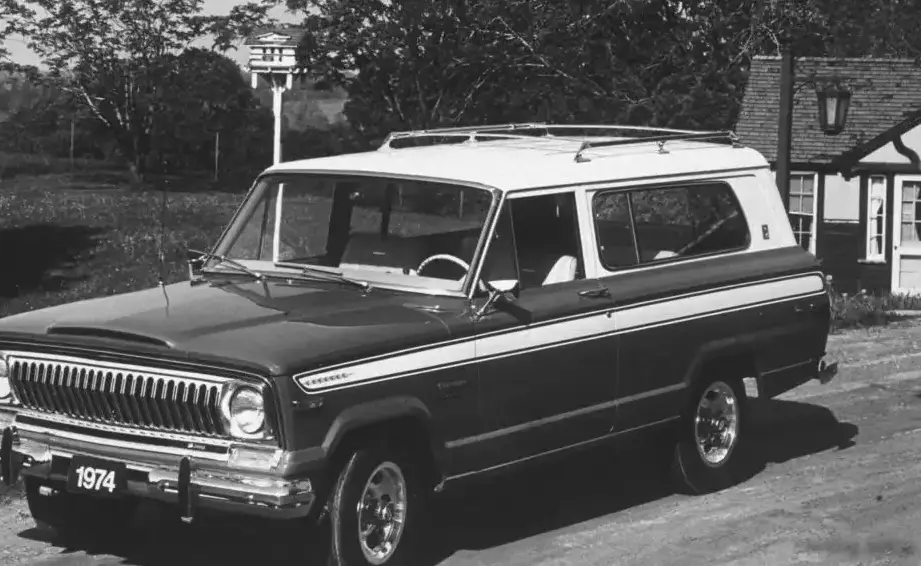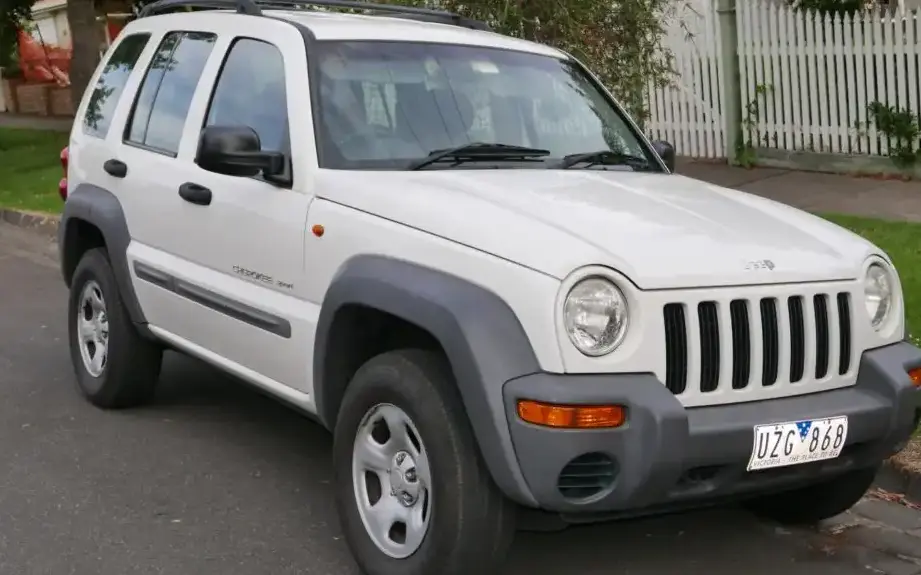
The Jeep Cherokee III (KJ) 2.8 CRDi, produced between 2004 and 2008, represented a significant step for the Cherokee model line, moving away from the unibody construction of its predecessor (the XJ) to a more traditional body-on-frame design. This generation, known internally as the KJ, aimed to blend Jeep’s renowned off-road capability with improved on-road refinement and comfort. The 2.8 CRDi variant, powered by a turbocharged diesel engine, was primarily aimed at European and international markets where diesel fuel was more prevalent and cost-effective. It occupied a middle ground in the Cherokee KJ lineup, offering a balance between performance, fuel economy, and price, positioned below the more powerful gasoline engine options.
Technical Specifications
| Brand | Jeep |
| Model | Cherokee |
| Generation | Cherokee III (KJ) |
| Type (Engine) | 2.8 CRDi (163 Hp) |
| Start of production | 2004 |
| End of production | 2008 |
| Powertrain Architecture | Internal Combustion engine |
| Body type | SUV |
| Seats | 5 |
| Doors | 5 |
| Fuel consumption (urban) | 12 l/100 km (19.6 US mpg) |
| Fuel consumption (extra urban) | 7.7 l/100 km (30.5 US mpg) |
| Fuel Type | Diesel |
| Acceleration 0 – 100 km/h | 12.8 sec |
| Acceleration 0 – 62 mph | 12.8 sec |
| Acceleration 0 – 60 mph | 12.2 sec |
| Maximum speed | 174 km/h (108.12 mph) |
| Weight-to-power ratio | 12 kg/Hp |
| Weight-to-torque ratio | 4.9 kg/Nm |
| Power | 163 Hp @ 4000 rpm |
| Torque | 400 Nm @ 1800 rpm (295.02 lb.-ft. @ 1800 rpm) |
| Engine layout | Front, Longitudinal |
| Engine displacement | 2778 cm3 (169.52 cu. in.) |
| Number of cylinders | 4 |
| Engine configuration | Inline |
| Cylinder Bore | 94 mm (3.7 in.) |
| Piston Stroke | 100 mm (3.94 in.) |
| Compression ratio | 17.5:1 |
| Number of valves per cylinder | 4 |
| Fuel injection system | Diesel Commonrail |
| Engine aspiration | Turbocharger, Intercooler |
| Valvetrain | DOHC |
| Engine oil capacity | 6.1 l (6.45 US qt | 5.37 UK qt) |
| Coolant capacity | 12.5 l (13.21 US qt | 11 UK qt) |
| Kerb Weight | 1960 kg (4321.06 lbs.) |
| Max. weight | 2520 kg (5555.65 lbs.) |
| Max load | 560 kg (1234.59 lbs.) |
| Trunk (boot) space – minimum | 820 l (28.96 cu. ft.) |
| Trunk (boot) space – maximum | 1950 l (68.86 cu. ft.) |
| Fuel tank capacity | 76 l (20.08 US gal | 16.72 UK gal) |
| Length | 4430 mm (174.41 in.) |
| Width | 1820 mm (71.65 in.) |
| Height | 1865 mm (73.43 in.) |
| Wheelbase | 2650 mm (104.33 in.) |
| Front track | 1525 mm (60.04 in.) |
| Rear track | 1525 mm (60.04 in.) |
| Drive wheel | All wheel drive (4×4) |
| Number of gears | 6 |
| Gearbox type | Manual transmission |
| Front suspension | Double wishbone |
| Rear suspension | Transverse stabilizer |
| Front brakes | Ventilated discs |
| Rear brakes | Disc |
| Assisting systems | ABS (Anti-lock braking system) |
| Steering type | Steering rack and pinion |
| Power steering | Hydraulic |
| Tires size | 235/70 R16 |
Powertrain & Engine Architecture
The heart of the Cherokee 2.8 CRDi is the Mercedes-Benz OM612 diesel engine. This 2.8-liter inline-four cylinder engine utilizes common rail direct injection, a technology that delivers fuel directly into the combustion chamber at extremely high pressure, resulting in improved fuel efficiency and reduced emissions. The engine produces 163 horsepower at 4000 rpm and a substantial 400 Nm (295 lb-ft) of torque at just 1800 rpm. This torque output is a key characteristic of diesel engines, providing strong low-end pulling power. The engine also features a turbocharger with an intercooler, which forces more air into the cylinders, further enhancing performance. The 6-speed manual transmission was the standard offering for this variant, providing a good balance of fuel economy and driver control. The engine’s DOHC (Double Overhead Camshaft) valvetrain and four valves per cylinder contribute to its efficient operation.
Driving Characteristics
The 2.8 CRDi Cherokee offered a distinctly different driving experience compared to its gasoline-powered siblings. While not as outright quick as the V6 models, the diesel engine’s abundant torque made it surprisingly capable, particularly when towing or navigating challenging terrain. The 6-speed manual transmission allowed drivers to keep the engine in its optimal power band, maximizing efficiency and responsiveness. The gear ratios were well-suited for both highway cruising and off-road crawling. Compared to the automatic transmission options available on other Cherokee trims, the manual offered more driver engagement and control. However, the diesel engine was noticeably louder and produced more vibration than the gasoline engines, a common characteristic of diesel technology at the time.
Equipment & Trim Levels
The 2.8 CRDi trim typically included standard features such as air conditioning, power windows and locks, and an AM/FM radio with a CD player. Higher trim levels offered options like leather upholstery, a premium sound system, sunroof, and alloy wheels. The interior design was functional and durable, reflecting the Cherokee’s intended use as a rugged SUV. The dashboard layout was straightforward, with easy-to-read gauges and intuitive controls. Specific trim packages varied depending on the market, but generally, the 2.8 CRDi was positioned as a well-equipped, mid-range offering.
Chassis & Braking
The Cherokee KJ utilized a robust body-on-frame chassis, providing a solid foundation for both on-road comfort and off-road capability. The suspension system consisted of a double wishbone setup at the front and a multi-link setup at the rear, offering a good balance of ride quality and handling. The 2.8 CRDi models typically featured ventilated disc brakes at the front and solid discs at the rear. ABS (Anti-lock Braking System) was standard, enhancing safety and control during emergency braking situations. The steering system was a hydraulic rack-and-pinion setup, providing precise and responsive steering feel.
Market Reception & Comparison
The 2.8 CRDi Cherokee was generally well-received in markets where diesel engines were popular. Critics praised its fuel efficiency, strong torque output, and off-road capability. However, some reviewers noted the engine’s noise and vibration compared to gasoline alternatives. Compared to the 3.7L V6 Cherokee, the 2.8 CRDi offered significantly better fuel economy but less overall power. The V6 was favored by those prioritizing acceleration and towing capacity, while the diesel appealed to buyers seeking a more economical and efficient vehicle. The 2.8 CRDi also offered a more refined driving experience than the base 2.5L four-cylinder engine.
Legacy
The Jeep Cherokee KJ 2.8 CRDi has proven to be a relatively reliable vehicle, with the OM612 diesel engine known for its durability. However, like any diesel engine, it requires regular maintenance, including oil changes and fuel filter replacements. Common issues include potential problems with the fuel injection system and turbocharger. Today, the 2.8 CRDi Cherokee can be found on the used car market at relatively affordable prices. It remains a popular choice for those seeking a capable and fuel-efficient SUV with genuine off-road credentials. Its robust construction and reliable diesel engine ensure that it continues to provide years of dependable service.