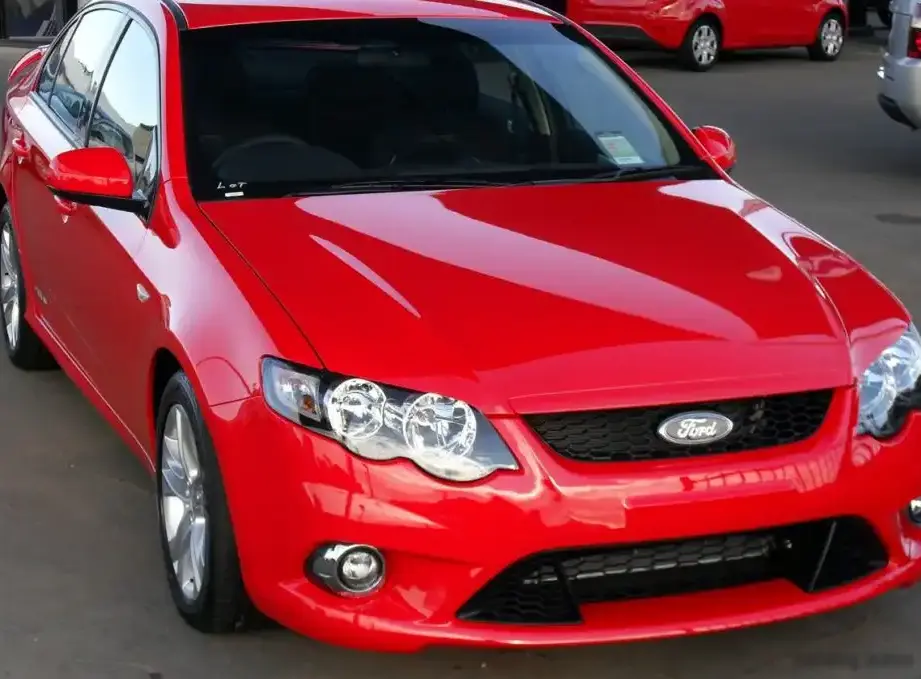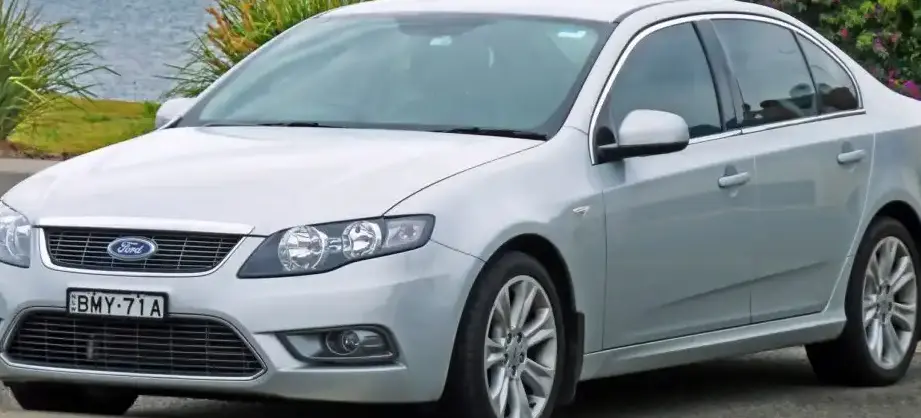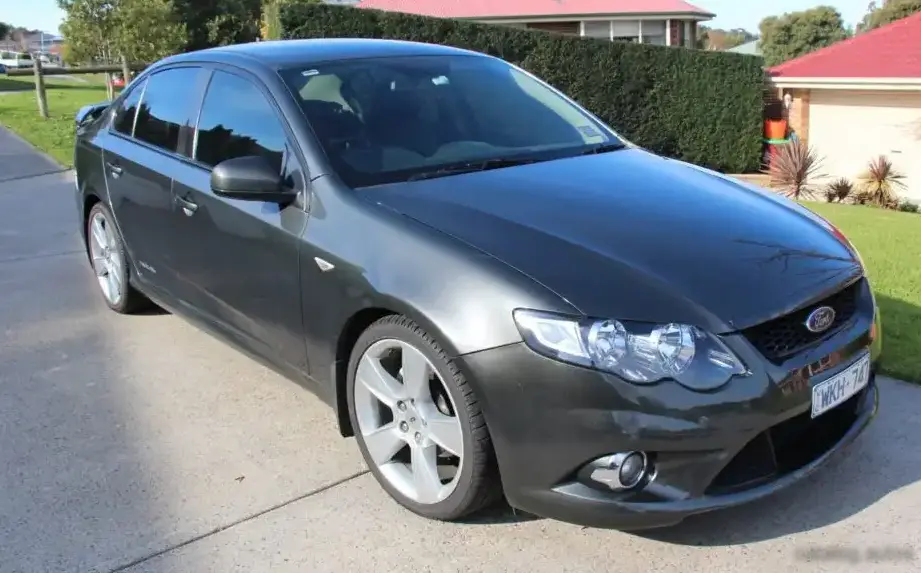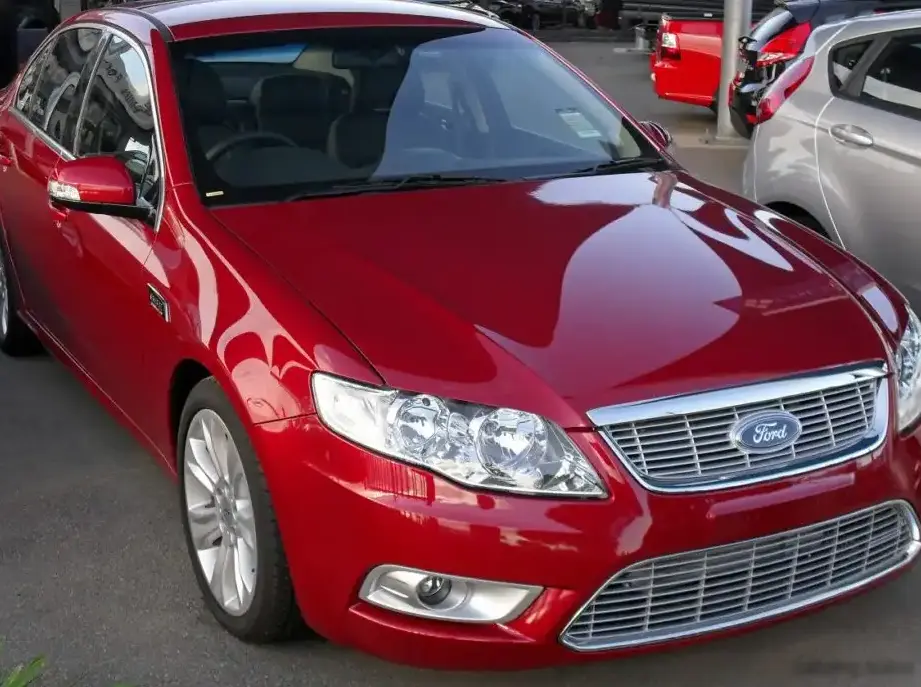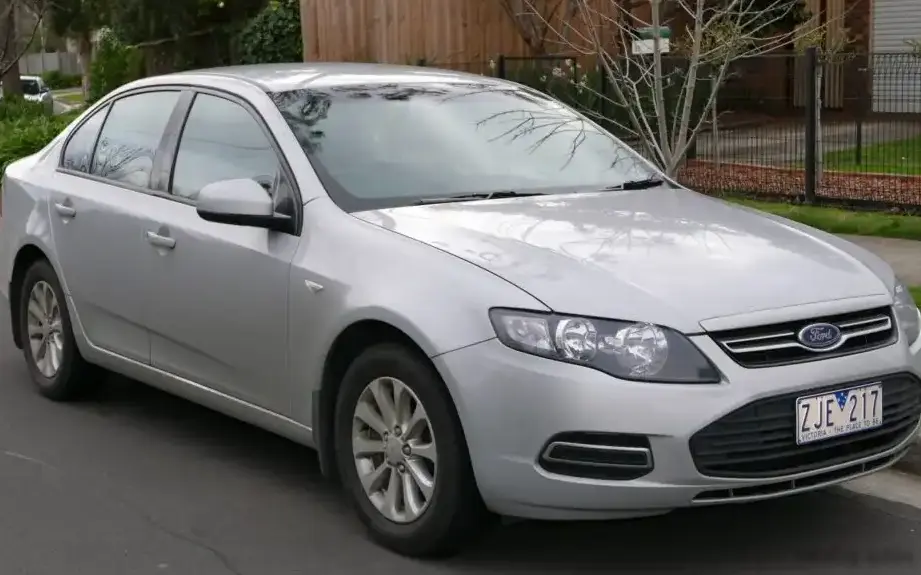
The Ford Falcon FG X 4.0 DI-VCT Turbo, produced from 2014 to 2016, represented the pinnacle of performance for the Australian-built Falcon lineup. This variant, powered by the Barra 270T engine, was positioned as the flagship model, offering a significant power upgrade over the naturally aspirated engines available in other FG X trims. It marked the end of an era for large, rear-wheel-drive Australian-made cars, as Ford ceased production at its Broadmeadows and Geelong facilities in October 2016. The FG X series, and particularly this turbocharged variant, aimed to deliver a blend of performance, technology, and refinement to compete with imported rivals.
Technical Specifications
| Brand | Ford |
| Model | Falcon |
| Generation | Falcon (FG X) |
| Type (Engine) | 4.0 DI-VCT Turbo (367 Hp) |
| Start of production | 2014 |
| End of production | 2016 |
| Powertrain Architecture | Internal Combustion engine |
| Body type | Sedan |
| Seats | 5 |
| Doors | 4 |
| Fuel consumption (urban) | 17.2 l/100 km (13.7 US mpg, 16.4 UK mpg, 5.8 km/l) |
| Fuel consumption (extra urban) | 9 l/100 km (26.1 US mpg, 31.4 UK mpg, 11.1 km/l) |
| Fuel consumption (combined) | 12 l/100 km (19.6 US mpg, 23.5 UK mpg, 8.3 km/l) |
| Fuel Type | Petrol (Gasoline) |
| Power | 367 Hp @ 5250 rpm |
| Power per litre | 92.1 Hp/l |
| Torque | 533 Nm @ 2000-4750 rpm (393.12 lb.-ft. @ 2000-4750 rpm) |
| Engine layout | Front, Longitudinal |
| Engine Model/Code | Barra 270T |
| Engine displacement | 3983 cm3 (243.06 cu. in.) |
| Number of cylinders | 6 |
| Engine configuration | Inline |
| Cylinder Bore | 92.26 mm (3.63 in.) |
| Piston Stroke | 99.31 mm (3.91 in.) |
| Compression ratio | 8.8:1 |
| Number of valves per cylinder | 4 |
| Fuel injection system | Multi-port manifold injection |
| Engine aspiration | Turbocharger, Intercooler |
| Valvetrain | DOHC |
| Trunk (boot) space (minimum) | 535 l (18.89 cu. ft.) |
| Fuel tank capacity | 68 l (17.96 US gal, 14.96 UK gal) |
| Permitted trailer load with brakes (12%) | 1200 kg (2645.55 lbs.) |
| Length | 4949 mm (194.84 in.) |
| Width | 1868 mm (73.54 in.) |
| Width including mirrors | 2100 mm (82.68 in.) |
| Height | 1494 mm (58.82 in.) |
| Wheelbase | 2838 mm (111.73 in.) |
| Front track | 1583 mm (62.32 in.) |
| Rear track | 1598 mm (62.91 in.) |
| Front overhang | 943 mm (37.13 in.) |
| Rear overhang | 1168 mm (45.98 in.) |
| Drag coefficient (Cd) | 0.291 |
| Minimum turning circle | 11 m (36.09 ft.) |
| Drivetrain Architecture | Rear wheel drive |
| Number of gears and type of gearbox | 6 gears, manual transmission |
| Front suspension | Double wishbone |
| Rear suspension | Independent multi-link suspension |
| Front brakes | Ventilated discs, 322 mm |
| Rear brakes | Disc, 328 mm |
| Assisting systems | ABS (Anti-lock braking system) |
| Steering type | Steering rack and pinion |
| Power steering | Hydraulic Steering |
| Tires size | 245/35 R19 |
| Wheel rims size | 8J x 19 |
Introduction
The Ford Falcon FG X 4.0 DI-VCT Turbo, launched in 2014, was the ultimate expression of the Falcon’s performance potential before the end of Australian manufacturing. Built on the FG X platform, which itself was an evolution of the earlier FG series, this variant aimed to deliver a compelling alternative to imported performance sedans. The ‘Barra’ 270T engine, a heavily modified version of the existing 4.0-liter inline-six, was the centerpiece of this model. The FG X series represented a final, significant investment by Ford Australia, incorporating updated technology and styling to maintain competitiveness in a shrinking market segment. This particular trim was positioned as the high-performance offering, appealing to enthusiasts seeking a powerful, rear-wheel-drive sedan.
Powertrain & Engine Architecture
The heart of the FG X 4.0 DI-VCT Turbo is the Barra 270T engine. This engine is based on the Ford Barra inline-six, but significantly upgraded with a twin-turbocharger system and strengthened internal components. The engine utilizes multi-port fuel injection and a double overhead camshaft (DOHC) valvetrain. The turbochargers are a key element, providing substantial boost to increase power output. The engine code, Barra 270T, signifies the increased power output compared to the naturally aspirated Barra engines. The 6-speed manual transmission was the only transmission option offered with this engine, designed to handle the increased torque. The engine’s architecture prioritizes durability and responsiveness, with a focus on delivering a broad torque curve for strong acceleration in various driving conditions.
Driving Characteristics
The FG X 4.0 DI-VCT Turbo delivers a markedly different driving experience compared to the naturally aspirated Falcon variants. The twin-turbocharged engine provides a substantial surge of power, particularly in the mid-range, resulting in strong acceleration. The 6-speed manual transmission allows for precise control over gear selection, maximizing performance. While the engine produces peak power at 5250 rpm, the broad torque curve ensures ample pulling power throughout the rev range. Compared to the 5.0-liter V8 Falcon, the turbocharged six-cylinder offers a different character – more accessible torque and a slightly lighter front-end weight distribution. The suspension, tuned for performance, provides a firm but controlled ride, enhancing handling and stability.
Equipment & Trim Levels
The FG X 4.0 DI-VCT Turbo was generously equipped, reflecting its position as the flagship model. Standard features included leather upholstery, sports seats, a premium audio system, and climate control. Unique styling cues, such as a rear spoiler and specific alloy wheel designs, differentiated it from other FG X trims. Optional extras included a sunroof, satellite navigation, and upgraded interior trim materials. The interior design focused on providing a sporty and comfortable environment, with a driver-centric layout and high-quality materials. The FG X also incorporated Ford’s SYNC2 infotainment system, offering connectivity and control over various vehicle functions.
Chassis & Braking
The FG X 4.0 DI-VCT Turbo utilizes a robust chassis and braking system to handle its increased performance. The suspension features double wishbones at the front and an independent multi-link setup at the rear, providing a balance of ride comfort and handling precision. Ventilated disc brakes are fitted to all four wheels, with larger rotors compared to lower-spec models. The braking system is assisted by ABS (Anti-lock Braking System) to enhance safety and control. The chassis was reinforced in key areas to withstand the increased stresses generated by the turbocharged engine. The steering system employs a hydraulic rack and pinion setup, providing precise and responsive steering feel.
Market Reception & Comparison
The FG X 4.0 DI-VCT Turbo received positive reviews from automotive critics, who praised its performance, handling, and overall refinement. However, its relatively high fuel consumption was a common criticism. Compared to the naturally aspirated Falcon variants, the turbocharged model offered a significant performance advantage but at the cost of increased complexity and potential maintenance costs. Against imported rivals, such as the Holden Commodore V8 and various European performance sedans, the Falcon FG X 4.0 DI-VCT Turbo offered a compelling value proposition, providing a high level of performance for its price. Fuel economy figures of around 12 l/100 km (19.6 US mpg) were typical, reflecting the engine’s power output.
Legacy
The Ford Falcon FG X 4.0 DI-VCT Turbo represents a significant chapter in Australian automotive history. As the last high-performance Falcon produced domestically, it holds a special place in the hearts of many enthusiasts. The Barra 270T engine has become highly sought after in the aftermarket tuning scene, with owners modifying and upgrading the engine to extract even more power. While the FG X series is no longer in production, it remains a popular choice in the used car market, particularly among those seeking a powerful, rear-wheel-drive sedan with a unique Australian heritage. The long-term reliability of the Barra 270T engine is generally considered good, provided it is properly maintained, although the turbocharger system does require regular inspection and servicing.