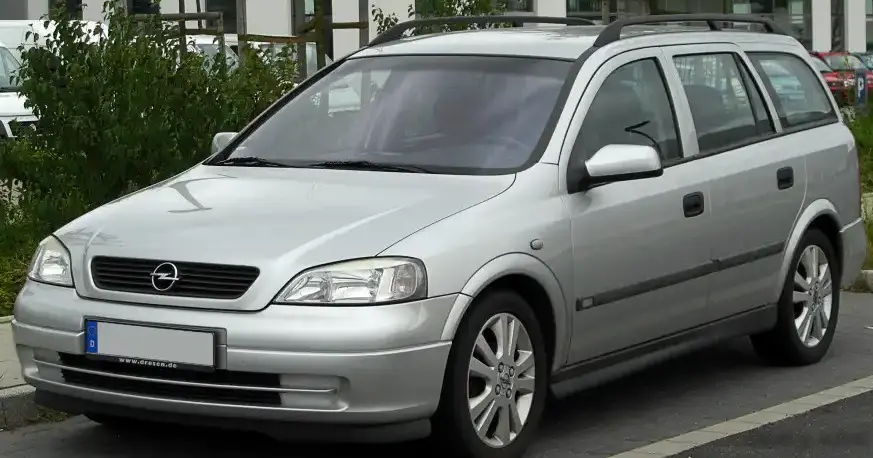
The Opel Astra G Caravan 2.0 DI 16V Automatic, produced between October 1998 and June 2002, represents a specific configuration within the broader Astra G Caravan (estate) range. This variant combined a 2.0-liter direct injection diesel engine with an automatic transmission, aiming to provide a balance of fuel efficiency and convenience for European buyers. It occupied a mid-range position in the lineup, offering a step up in performance from the smaller displacement engines while remaining more affordable than the higher-powered gasoline options. The Astra G generation (1998-2004) was a significant model for Opel, building upon the success of its predecessor and introducing a more refined and modern design.
Technical Specifications
| Brand | Opel |
| Model | Astra |
| Generation | Astra G Caravan |
| Type (Engine) | 2.0 DI 16V (82 Hp) Automatic |
| Start of production | October, 1998 |
| End of production | June, 2002 |
| Powertrain Architecture | Internal Combustion engine |
| Body type | Station wagon (estate) |
| Seats | 5 |
| Doors | 5 |
| Fuel consumption (urban) | 9 l/100 km (26.1 US mpg, 31.4 UK mpg, 11.1 km/l) |
| Fuel consumption (extra urban) | 5.6 l/100 km (42 US mpg, 50.4 UK mpg, 17.9 km/l) |
| Fuel consumption (combined) | 6.8 l/100 km (34.6 US mpg, 41.5 UK mpg, 14.7 km/l) |
| Fuel Type | Diesel |
| Acceleration 0 – 100 km/h | 16 sec |
| Acceleration 0 – 62 mph | 16 sec |
| Acceleration 0 – 60 mph | 15.2 sec |
| Maximum speed | 165 km/h (102.53 mph) |
| Weight-to-power ratio | 15.2 kg/Hp, 65.9 Hp/tonne |
| Weight-to-torque ratio | 6.7 kg/Nm, 148.6 Nm/tonne |
| Power | 82 Hp @ 4300 rpm |
| Power per litre | 41.1 Hp/l |
| Torque | 185 Nm @ 1800 rpm (136.45 lb.-ft. @ 1800 rpm) |
| Engine layout | Front, Transverse |
| Engine Model/Code | X20DTL, Y20DTL |
| Engine displacement | 1995 cm3 (121.74 cu. in.) |
| Number of cylinders | 4 |
| Engine configuration | Inline |
| Cylinder Bore | 84 mm (3.31 in.) |
| Piston Stroke | 90 mm (3.54 in.) |
| Compression ratio | 18.5:1 |
| Number of valves per cylinder | 4 |
| Fuel injection system | Direct injection |
| Engine aspiration | Turbocharger |
| Valvetrain | SOHC |
| Engine oil capacity | 5.5 l (5.81 US qt | 4.84 UK qt) |
| Coolant | 7.9 l (8.35 US qt | 6.95 UK qt) |
| Kerb Weight | 1245 kg (2744.76 lbs.) |
| Max. weight | 1765 kg (3891.16 lbs.) |
| Max load | 520 kg (1146.4 lbs.) |
| Trunk (boot) space – minimum | 480 l (16.95 cu. ft.) |
| Trunk (boot) space – maximum | 1500 l (52.97 cu. ft.) |
| Fuel tank capacity | 52 l (13.74 US gal | 11.44 UK gal) |
| Max. roof load | 100 kg (220.46 lbs.) |
| Permitted trailer load with brakes (12%) | 1300 kg (2866.01 lbs.) |
| Permitted trailer load without brakes | 665 kg (1466.07 lbs.) |
| Permitted towbar download | 75 kg (165.35 lbs.) |
| Length | 4288 mm (168.82 in.) |
| Width | 1709 mm (67.28 in.) |
| Width including mirrors | 1989 mm (78.31 in.) |
| Height | 1510 mm (59.45 in.) |
| Wheelbase | 2611 mm (102.8 in.) |
| Front track | 1484 mm (58.43 in.) |
| Rear (Back) track | 1452 mm (57.17 in.) |
| Drag coefficient (Cd) | 0.31 |
| Minimum turning circle | 10.8 m (35.43 ft.) |
| Drivetrain Architecture | The Internal combustion engine (ICE) drives the front wheels of the vehicle. |
| Drive wheel | Front wheel drive |
| Number of gears and type of gearbox | 4 gears, automatic transmission |
| Front suspension | Independent, type McPherson with coil spring and anti-roll bar |
| Rear suspension | Semi-independent, coil spring |
| Front brakes | Ventilated discs |
| Rear brakes | Disc |
| Assisting systems | ABS (Anti-lock braking system) |
| Steering type | Steering rack and pinion |
| Power steering | Hydraulic Steering |
| Tires size | 185/65 R15; 195/60 R15 |
| Wheel rims size | 6J x 15; 6.5J x 15 |
Powertrain & Engine Architecture
The heart of this Astra variant is the 2.0 DI 16V diesel engine, identified by engine codes X20DTL and Y20DTL. This engine is a four-cylinder, inline configuration, featuring direct fuel injection and a turbocharger. Direct injection, a relatively new technology at the time, allowed for more precise fuel delivery and improved combustion efficiency. The 16-valve cylinder head, with four valves per cylinder, further enhanced breathing and contributed to the engine’s power output. The automatic transmission was a four-speed unit, designed to provide smooth gear changes and ease of driving. While not known for its sportiness, it was a popular choice for drivers prioritizing comfort and convenience. The engine’s turbocharger provided a noticeable boost in torque, particularly at lower engine speeds, making it suitable for hauling loads and overtaking maneuvers.
Driving Characteristics
The 2.0 DI 16V Automatic Astra Caravan offered a comfortable, if not particularly exhilarating, driving experience. With 82 horsepower and 185 Nm (136 lb-ft) of torque, acceleration was adequate for everyday driving, but noticeably slower than the gasoline-powered versions or even the higher-output diesel variants. The four-speed automatic transmission, while smooth, lacked the responsiveness of a manual gearbox and could sometimes feel sluggish during quick acceleration. The gear ratios were optimized for fuel efficiency rather than performance. The turbocharger helped to mitigate some of the power deficit, providing a useful surge of torque at lower RPMs, making it easier to maintain speed on inclines or when fully loaded. Compared to the 1.7 DI or 1.8 gasoline engines, this variant offered a more relaxed driving experience, particularly on long journeys.
Equipment & Trim Levels
The 2.0 DI 16V Automatic typically came with a reasonable level of standard equipment. This included central locking, power windows, power steering, and an anti-lock braking system (ABS). Interior upholstery was usually cloth, with a functional and durable design. Optional extras included air conditioning, alloy wheels, a sunroof, and a CD player. The trim level often dictated the quality of the interior materials and the availability of additional features. This variant generally sat in the mid-range of the Astra Caravan lineup, offering a good balance of features and affordability.
Chassis & Braking
The Astra G Caravan featured an independent McPherson strut suspension at the front and a semi-independent coil spring suspension at the rear. This setup provided a comfortable ride quality, although it wasn’t particularly sporty. The front brakes were ventilated discs, offering good stopping power, while the rear brakes were solid discs. The hydraulic power steering provided light and easy steering, making it convenient for maneuvering in urban environments. Stabilizer bars were fitted to both the front and rear axles to reduce body roll during cornering.
Market Reception & Comparison
The Opel Astra G Caravan 2.0 DI 16V Automatic was generally well-received by critics as a practical and fuel-efficient family car. It offered a good compromise between performance, economy, and comfort. However, some reviewers noted that the automatic transmission could feel sluggish and that the engine lacked the refinement of some of its competitors. Compared to the 1.8-liter gasoline versions, the diesel offered significantly better fuel economy, but at the expense of performance. The 1.7 DI offered similar fuel economy but with even less power, while the more powerful 2.0 16V gasoline engine provided a more engaging driving experience but consumed more fuel.
Legacy
The X20DTL and Y20DTL engines, while generally reliable, are now showing their age. Common issues include turbocharger wear, injector problems, and potential issues with the automatic transmission. However, with regular maintenance, these engines can still provide many years of service. In the used car market, the 2.0 DI 16V Automatic Astra Caravan represents a relatively affordable and practical option for those seeking a spacious and fuel-efficient estate car. Its simplicity and relatively low running costs make it an appealing choice for budget-conscious buyers. Parts availability is generally good, and the Astra G remains a popular choice for classic car enthusiasts and everyday drivers alike.