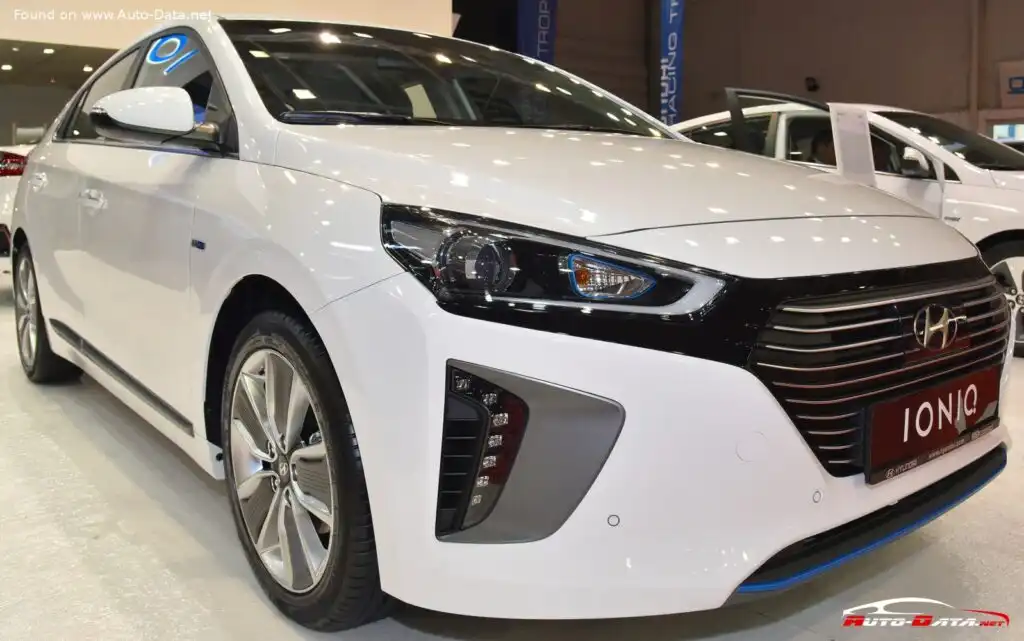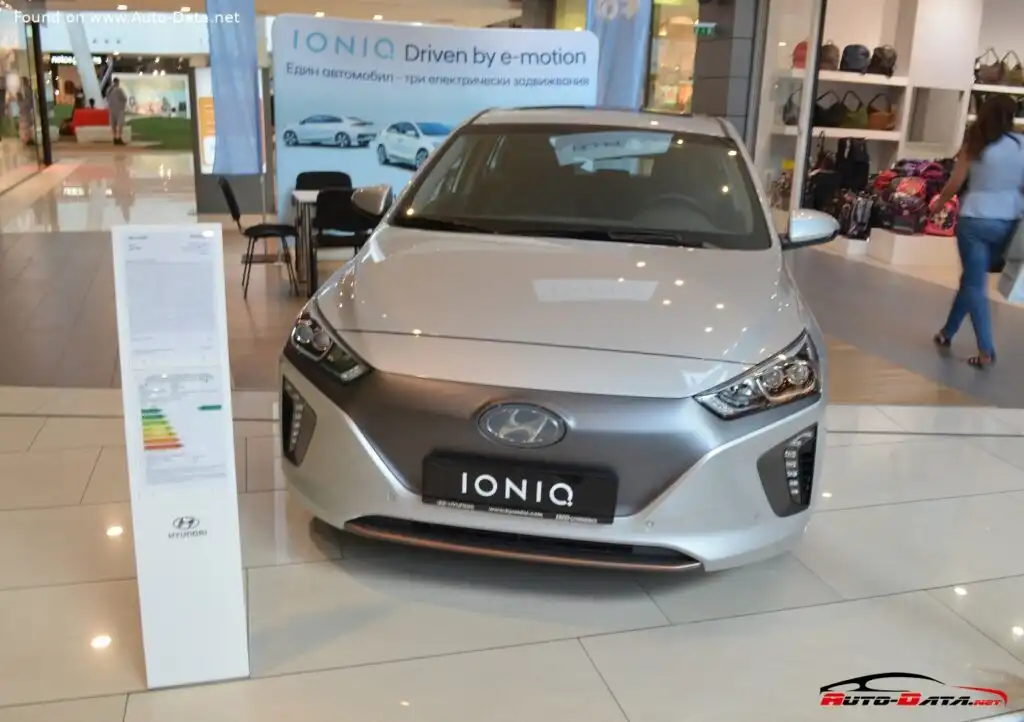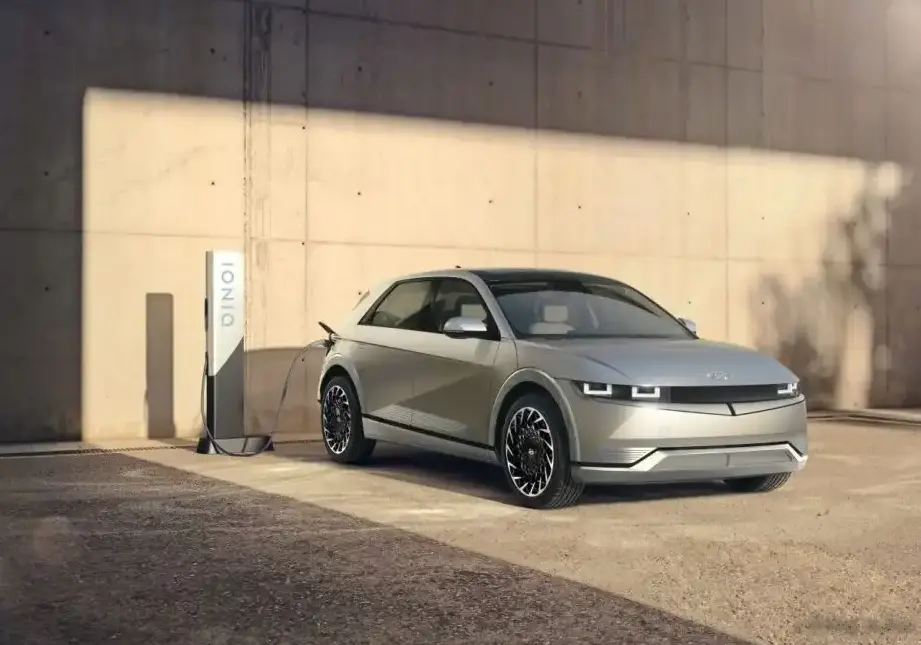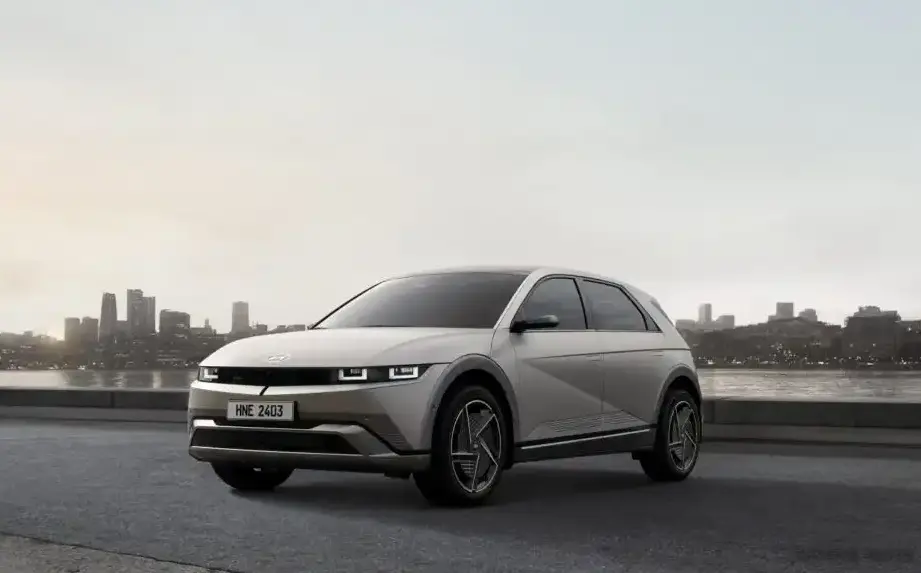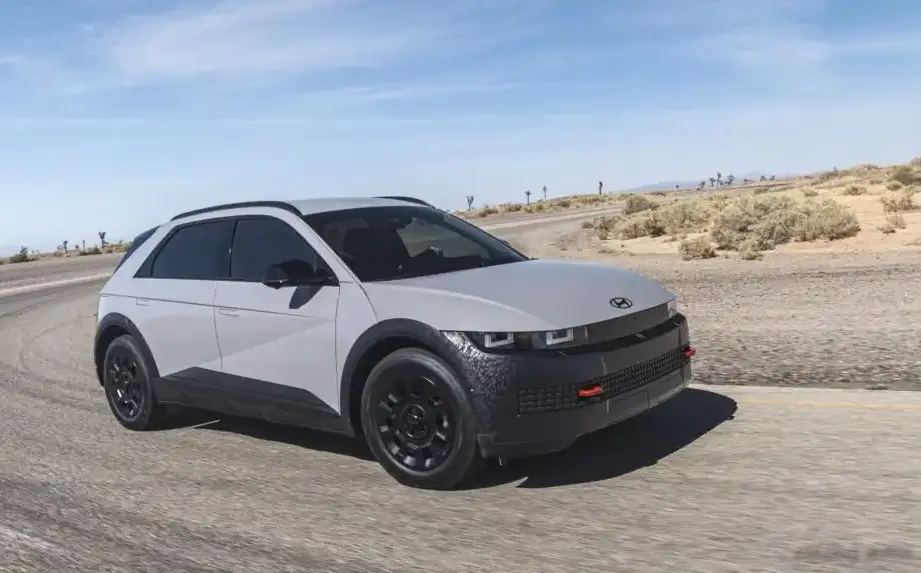
The Hyundai IONIQ 5 XRT 84 kWh (320 Hp) AWD, introduced in September 2024 as part of the model’s facelift, represents a significant offering in Hyundai’s expanding electric vehicle lineup. Built on the Electric Global Modular Platform (E-GMP), the IONIQ 5 is a compact SUV designed to compete with vehicles like the Tesla Model Y, Ford Mustang Mach-E, and Volkswagen ID.4. The XRT trim, positioned as a mid-to-high range option, focuses on delivering a blend of performance, range, and rugged styling. It builds upon the foundational IONIQ 5, offering increased capability and a distinctive aesthetic compared to lower trims.
Technical Specifications
| Brand | Hyundai |
| Model | IONIQ 5 |
| Generation | IONIQ 5 (facelift 2024) |
| Type (Engine) | XRT 84 kWh (320 Hp) Electric AWD |
| Start of production | September, 2024 |
| Powertrain Architecture | BEV (Electric Vehicle) |
| Body type | SUV |
| Seats | 5 |
| Doors | 5 |
| Fuel Type | Electricity |
| Maximum speed | 185 km/h (114.95 mph) |
| Emission standard | ZEV |
| Weight-to-power ratio | 6.7 kg/Hp, 149.9 Hp/tonne |
| Weight-to-torque ratio | 3.5 kg/Nm, 283.4 Nm/tonne |
| Gross battery capacity | 84 kWh |
| Battery voltage | 697 V |
| Battery technology | Lithium-ion (Li-Ion) |
| Battery weight | 477 kg (1051.6 lbs.) |
| Battery location | Below the floor |
| All-electric range (EPA) | 417 km (259.11 mi) |
| Average Energy consumption (EPA) | 22.3 kWh/100 km (35.89 kWh/100 mi, 94 MPGe, 4.5 km/kWh, 2.8 mi/kWh) |
| Electric motor 1 power | 101 Hp |
| Electric motor 1 location | Front axle, Transverse |
| Electric motor 1 type | Synchronous |
| Electric motor 2 power | 224 Hp |
| Electric motor 2 location | Rear axle, Transverse |
| Electric motor 2 type | Synchronous |
| System power | 320 Hp |
| System torque | 605 Nm (446.23 lb.-ft.) |
| Kerb Weight | 2135 kg (4706.87 lbs.) |
| Max. weight | 2645 kg (5831.23 lbs.) |
| Max load | 510 kg (1124.36 lbs.) |
| Trunk (boot) space – minimum | 520 l (18.36 cu. ft.) |
| Trunk (boot) space – maximum | 1580 l (55.8 cu. ft.) |
| Length | 4655 mm (183.27 in.) |
| Width | 1890 mm (74.41 in.) |
| Height | 1626 mm (64.02 in.) |
| Wheelbase | 3000 mm (118.11 in.) |
| Front track | 1633 mm (64.29 in.) |
| Rear (Back) track | 1638 mm (64.49 in.) |
| Front overhang | 866 mm (34.09 in.) |
| Rear overhang | 789 mm (31.06 in.) |
| Ride height (ground clearance) | 178 mm (7.01 in.) |
| Drag coefficient (Cd) | 0.282 |
| Minimum turning circle (turning diameter) | 12 m (39.37 ft.) |
| Approach angle | 19.8° |
| Departure angle | 30° |
| Drivetrain Architecture | One electric motor drives the front wheels, one electric motor drives the rear wheels. |
| Drive wheel | All wheel drive (4×4) |
| Number of gears and type of gearbox | 1 gears, automatic transmission |
| Front suspension | Independent type McPherson |
| Rear suspension | Independent multi-link suspension |
| Front brakes | Ventilated discs, 325×30 mm |
| Rear brakes | Disc, 325×12 mm |
| Assisting systems | ABS (Anti-lock braking system) |
| Steering type | Steering rack and pinion |
| Power steering | Electric Steering |
| Tires size | 235/60 R18 |
| Wheel rims size | 7.5J x 18 |
Powertrain & Engine Architecture
The IONIQ 5 XRT utilizes a dual-motor all-wheel-drive (AWD) powertrain. Each axle is driven by a permanent magnet synchronous motor. The front motor produces 101 horsepower, while the rear motor delivers a more substantial 224 horsepower, combining for a total system output of 320 horsepower and 446 lb-ft of torque. The 84 kWh battery pack, utilizing lithium-ion chemistry, is positioned under the floor of the vehicle, contributing to a low center of gravity and maximizing interior space. The battery operates at a high voltage of 697V, enabling faster charging times. The vehicle supports both 400V and 800V DC fast charging, allowing for a significant range boost with a relatively short charging session. The single-speed automatic transmission is inherent to electric vehicle design, providing seamless acceleration. The powertrain is managed by a sophisticated power control unit (PCU) that optimizes energy flow and efficiency.
Driving Characteristics
The IONIQ 5 XRT delivers brisk acceleration, estimated at around 5.1 seconds for a 0-60 mph sprint, thanks to the instant torque provided by the electric motors and the AWD system. The dual-motor setup provides excellent traction in various weather conditions. Compared to rear-wheel-drive IONIQ 5 variants, the XRT offers enhanced stability and control. While not as overtly sporty as some performance-focused EVs, the XRT provides a comfortable and engaging driving experience. The single-speed transmission offers smooth, linear acceleration. Regenerative braking is adjustable, allowing drivers to customize the level of deceleration when lifting off the throttle, contributing to increased efficiency and range. The XRT’s suspension is tuned for a balance between comfort and handling, providing a compliant ride on most road surfaces.
Equipment & Trim Levels
The XRT trim builds upon the SEL and Limited trims, adding unique exterior styling cues and additional features. Standard equipment includes a 12.3-inch touchscreen infotainment system with navigation, a digital instrument cluster, Hyundai SmartSense suite of advanced driver-assistance systems (ADAS), including automatic emergency braking, lane-keeping assist, and adaptive cruise control. Interior features include synthetic leather upholstery, heated and ventilated front seats, a panoramic sunroof, and a premium audio system. The XRT also features unique exterior accents, including distinctive wheels, cladding, and roof rails, giving it a more rugged appearance. Optional extras include a head-up display, a surround-view monitor, and a digital key.
Chassis & Braking
The IONIQ 5 utilizes an independent McPherson strut suspension in the front and a multi-link suspension in the rear. This configuration provides a comfortable ride and responsive handling. The XRT trim benefits from slightly stiffer spring rates and dampers compared to lower trims, enhancing body control. The braking system consists of ventilated discs at the front (325x30mm) and solid discs at the rear (325x12mm). ABS (Anti-lock Braking System) is standard, along with electronic stability control and traction control. The steering system is an electric power-assisted rack and pinion setup, providing precise and responsive steering feel. The vehicle rides on 235/60 R18 tires mounted on 7.5J x 18 inch alloy wheels.
Market Reception & Comparison
The Hyundai IONIQ 5 has been widely praised by automotive critics for its innovative design, spacious interior, fast charging capabilities, and competitive pricing. The XRT trim, in particular, has been well-received for its enhanced styling and all-wheel-drive capability. Compared to the standard IONIQ 5 trims, the XRT offers a more distinctive appearance and improved traction. Fuel economy, measured in MPGe (miles per gallon equivalent), is estimated at 94 MPGe combined. The IONIQ 5 generally offers comparable range and efficiency to its competitors, such as the Tesla Model Y and Ford Mustang Mach-E. Reliability data is still emerging, but Hyundai has a generally good reputation for build quality and dependability.
Legacy
The Hyundai IONIQ 5 represents a pivotal moment for the brand, demonstrating its commitment to electric mobility and innovative design. The E-GMP platform, upon which the IONIQ 5 is built, is expected to underpin a range of future Hyundai and Kia electric vehicles. The 84 kWh battery pack and dual-motor AWD powertrain are proving to be a popular combination, offering a compelling balance of range, performance, and practicality. As the used car market matures, the IONIQ 5 XRT is expected to hold its value well, particularly among buyers seeking a well-equipped and technologically advanced electric SUV. The longevity of the battery pack and the availability of replacement parts will be key factors in determining the long-term reliability and desirability of this vehicle.