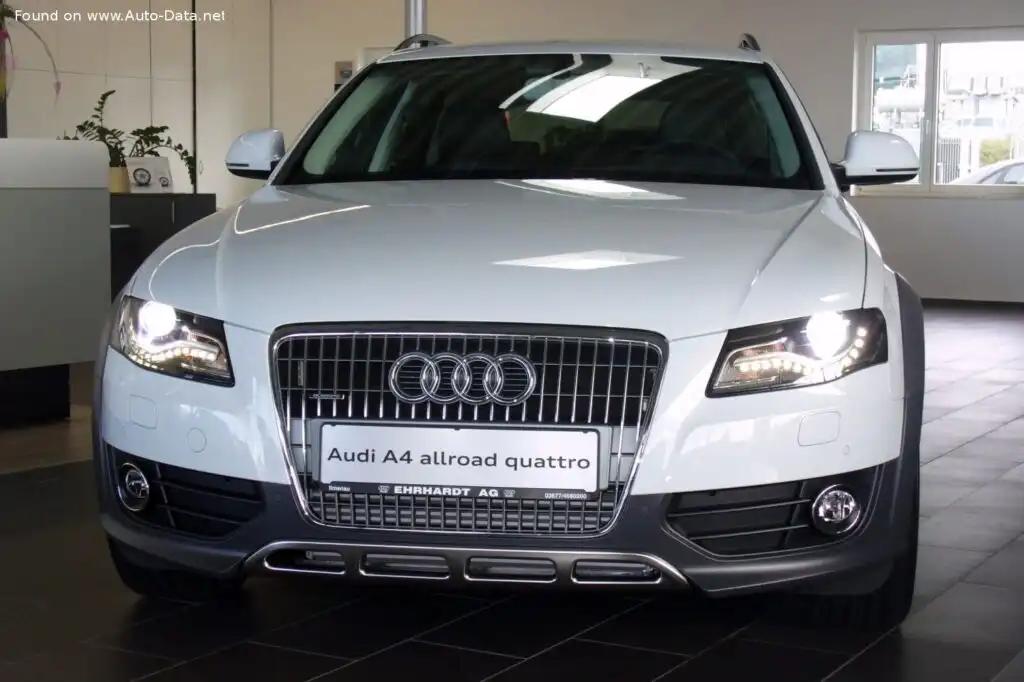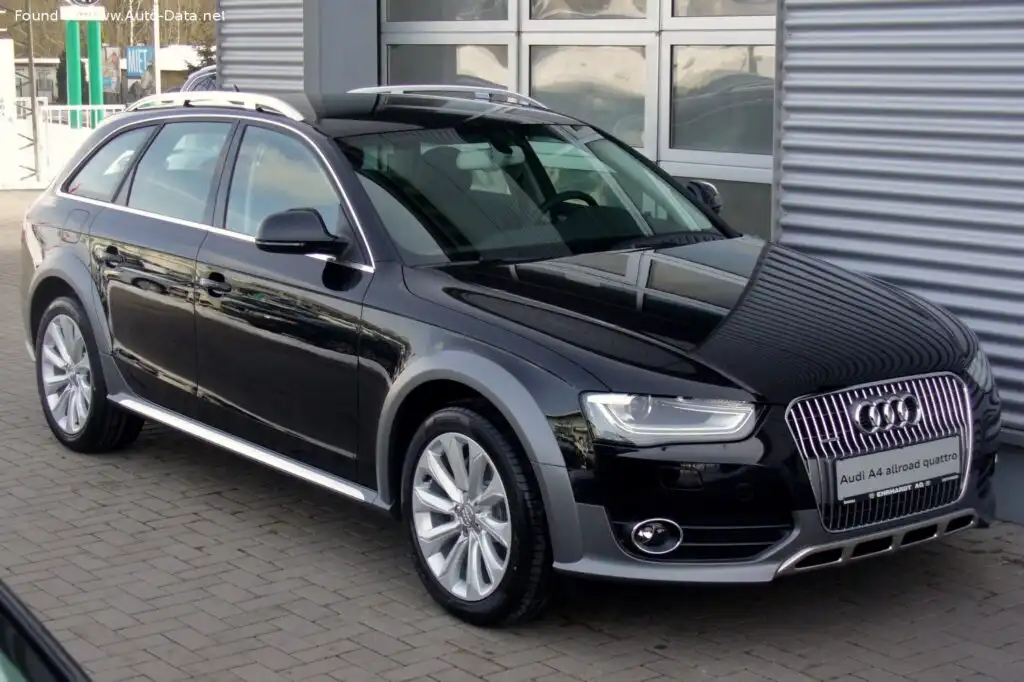
The Audi A4 (B7) 3.2 FSI quattro Tiptronic, produced between 2004 and 2007, represented a high-performance variant within the B7 generation of Audi’s popular compact executive car. Positioned as a premium offering, it combined a naturally aspirated 3.2-liter V6 engine with Audi’s quattro all-wheel-drive system and a six-speed Tiptronic automatic transmission. This model aimed to deliver a blend of refined performance, all-weather capability, and luxurious comfort, appealing to buyers seeking a step up from the more common four-cylinder A4 variants. It was built on the Volkswagen Group’s B7 (8E) platform, shared with models like the Volkswagen Passat and Škoda Superb.
Technical Specifications
| Brand | Audi |
| Model | A4 |
| Generation | A4 (B7 8E) |
| Type (Engine) | 3.2 FSI V6 (256 Hp) quattro Tiptronic |
| Start of production | 2004 |
| End of production | 2007 |
| Powertrain Architecture | Internal Combustion engine |
| Body type | Sedan |
| Seats | 5 |
| Doors | 4 |
| Fuel consumption (urban) | 15.4 l/100 km (15.3 US mpg, 18.3 UK mpg, 6.5 km/l) |
| Fuel consumption (extra urban) | 7.9 l/100 km (29.8 US mpg, 35.8 UK mpg, 12.7 km/l) |
| Fuel consumption (combined) | 10.7 l/100 km (22 US mpg, 26.4 UK mpg, 9.3 km/l) |
| CO2 emissions | 269 g/km |
| Fuel Type | Petrol (Gasoline) |
| Acceleration 0 – 100 km/h | 6.9 sec |
| Acceleration 0 – 62 mph | 6.9 sec |
| Acceleration 0 – 60 mph | 6.6 sec |
| Maximum speed | 250 km/h (155.34 mph) |
| Emission standard | Euro 4 |
| Weight-to-power ratio | 6.2 kg/Hp, 162 Hp/tonne |
| Weight-to-torque ratio | 4.8 kg/Nm, 208.9 Nm/tonne |
| Power | 256 Hp @ 6500 rpm |
| Power per litre | 82 Hp/l |
| Torque | 330 Nm @ 3250 rpm (243.4 lb.-ft. @ 3250 rpm) |
| Engine layout | Front, Longitudinal |
| Engine Model/Code | AUK, BKH |
| Engine displacement | 3123 cm3 (190.58 cu. in.) |
| Number of cylinders | 6 |
| Engine configuration | V-engine |
| Cylinder Bore | 84.5 mm (3.33 in.) |
| Piston Stroke | 92.8 mm (3.65 in.) |
| Compression ratio | 12.5:1 |
| Number of valves per cylinder | 4 |
| Fuel injection system | Direct injection |
| Engine aspiration | Naturally aspirated engine |
| Valvetrain | DOHC |
| Engine oil capacity | 6.2 l (6.55 US qt | 5.46 UK qt) |
| Coolant | 12 l (12.68 US qt | 10.56 UK qt) |
| Kerb Weight | 1580 kg (3483.3 lbs.) |
| Max. weight | 2130 kg (4695.85 lbs.) |
| Max load | 550 kg (1212.54 lbs.) |
| Trunk (boot) space – minimum | 460 l (16.24 cu. ft.) |
| Trunk (boot) space – maximum | 720 l (25.43 cu. ft.) |
| Fuel tank capacity | 63 l (16.64 US gal | 13.86 UK gal) |
| Max. roof load | 75 kg (165.35 lbs.) |
| Permitted trailer load with brakes (8%) | 2000 kg (4409.25 lbs.) |
| Permitted trailer load with brakes (12%) | 1800 kg (3968.32 lbs.) |
| Permitted trailer load without brakes | 750 kg (1653.47 lbs.) |
| Permitted towbar download | 80 kg (176.37 lbs.) |
| Length | 4586 mm (180.55 in.) |
| Width | 1772 mm (69.76 in.) |
| Width including mirrors | 1937 mm (76.26 in.) |
| Height | 1427 mm (56.18 in.) |
| Wheelbase | 2648 mm (104.25 in.) |
| Front track | 1522 mm (59.92 in.) |
| Rear (Back) track | 1522 mm (59.92 in.) |
| Drag coefficient (Cd) | 0.31 |
| Minimum turning circle (turning diameter) | 11.1 m (36.42 ft.) |
| Drivetrain Architecture | The Internal combustion engine (ICE) drives permanently the four wheels of the vehicle. |
| Drive wheel | All wheel drive (4×4) |
| Number of gears and type of gearbox | 6 gears, automatic transmission Tiptronic |
| Front suspension | Independent multi-link suspension |
| Rear suspension | Independent multi-link suspension |
| Front brakes | Ventilated discs |
| Rear brakes | Disc |
| Assisting systems | ABS (Anti-lock braking system) |
| Steering type | Steering rack and pinion |
| Power steering | Hydraulic Steering |
| Tires size | 215/55 R16 |
| Wheel rims size | 7J x 16 |
Powertrain & Engine Architecture
The heart of the A4 3.2 FSI quattro Tiptronic is the AUK or BKH engine code, a 3.2-liter naturally aspirated V6. This engine utilizes Audi’s FSI (Fuel Stratified Injection) direct injection technology, which improves combustion efficiency and power output compared to traditional port fuel injection. The engine features a double overhead camshaft (DOHC) valvetrain with four valves per cylinder, contributing to its high-revving nature. The 3.2 FSI produces 256 horsepower at 6500 rpm and 330 Nm (243 lb-ft) of torque at 3250 rpm. The six-speed Tiptronic automatic transmission allows for both fully automatic operation and manual gear selection via steering wheel-mounted paddles or the gear selector. This transmission is known for its smooth shifts, but can sometimes feel less responsive than a dual-clutch transmission.
Driving Characteristics
The 3.2 FSI quattro Tiptronic offered a noticeably more engaging driving experience than the base A4 models. The V6 engine provided ample power for confident acceleration and effortless highway cruising. The quattro all-wheel-drive system delivered excellent traction in all weather conditions, enhancing stability and control. While the Tiptronic transmission offered convenience, it didn’t provide the same level of driver involvement as the available six-speed manual transmission. Gear ratios were tuned for a balance of performance and fuel economy, but the car’s weight (approximately 3483 lbs) meant that it wasn’t as nimble as lighter competitors. The 0-60 mph time of around 6.6 seconds was respectable for its time, but not groundbreaking.
Equipment & Trim Levels
The 3.2 FSI quattro Tiptronic typically came well-equipped, reflecting its position as a premium trim level. Standard features often included leather upholstery, automatic climate control, a premium audio system, and power-adjustable front seats. Optional extras included a sunroof, navigation system, and upgraded wheels. Interior trim options varied, with choices in wood or aluminum accents. The dashboard layout was typical of the B7 A4, characterized by a clean and functional design.
Chassis & Braking
The A4 B7 featured an independent multi-link suspension at both the front and rear, providing a comfortable ride and good handling characteristics. The 3.2 FSI model typically had slightly stiffer springs and dampers compared to lower-spec A4s to manage the increased power and weight. Braking duties were handled by ventilated discs at the front and solid discs at the rear, with ABS (Anti-lock Braking System) standard. The suspension setup was designed to balance comfort and handling, offering a composed ride on most road surfaces.
Market Reception & Comparison
The A4 3.2 FSI quattro Tiptronic was generally well-received by automotive critics, who praised its powerful engine, all-wheel-drive system, and comfortable interior. However, some reviewers noted that the Tiptronic transmission could feel a bit sluggish at times, and the fuel economy was relatively poor compared to the four-cylinder models. Compared to the 1.8T and 2.0T variants, the 3.2 FSI offered significantly more power and a more refined driving experience, but at a higher price point. The 3.2 FSI also differed from the diesel-powered A4s (like the 2.0 TDI) in terms of engine character and fuel efficiency, appealing to buyers who prioritized performance over economy.
Legacy
The A4 B7 3.2 FSI quattro Tiptronic has developed a reputation as a reliable and enjoyable car, although maintenance costs can be higher than for the more common A4 variants. The 3.2 FSI engine is generally considered durable, but the timing chain tensioners can be a potential weak point, requiring periodic inspection and possible replacement. The Tiptronic transmission, while generally reliable, can be expensive to repair if issues arise. Today, these cars are sought after by enthusiasts who appreciate their combination of performance, luxury, and all-weather capability. Finding well-maintained examples is becoming increasingly difficult, but they offer a compelling alternative to more modern compact executive cars.