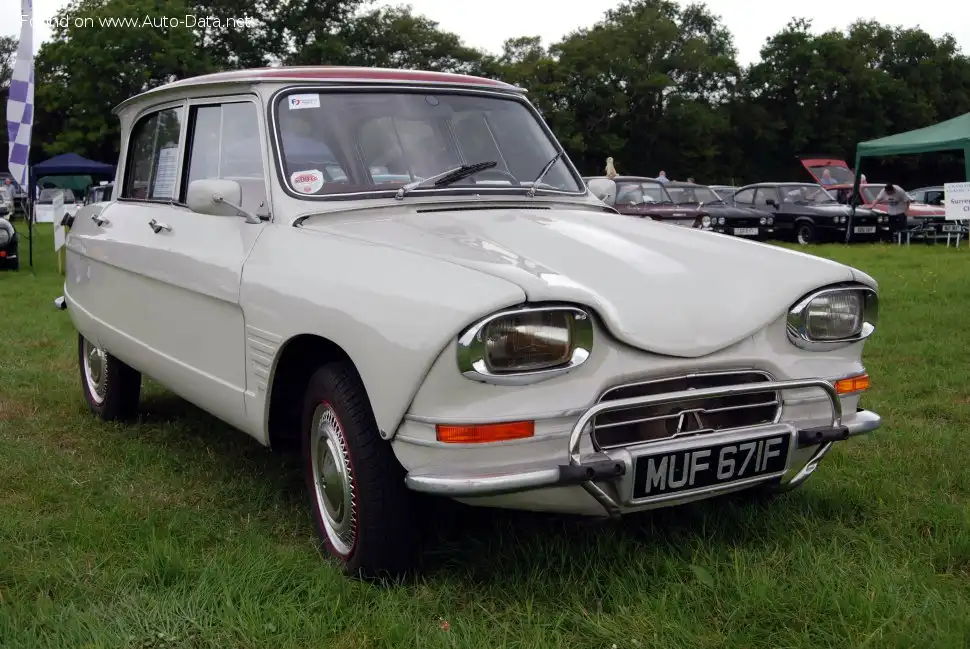
The Citroën AMI 6, particularly the early Citroen AMI 6 0.6 (24 Hp) model, represents a unique chapter in automotive history, embodying the French automaker’s penchant for innovative, often eccentric, design and engineering. Launched in April 1961, the AMI 6 was conceived to fill the significant market gap in Citroën’s lineup between the spartan, utilitarian 2CV and the large, luxurious, and technologically advanced DS. Marketed under the slogan the second car for the price of a scooter, it was designed to appeal to a growing middle class in post-war Europe seeking more comfort and style than the 2CV could offer, without the expense of a larger saloon. The AMI 6 Berline (saloon) is most famous for its radical and controversial styling, a final masterpiece from the legendary designer Flaminio Bertoni.
Historical Context and Development
By the late 1950s, Citroën recognized the need for a mid-range vehicle. The company’s ‘Projet M’ (M for Milieu de gamme, or mid-range) was initiated to create this crucial new model. The brief was challenging: the car had to be built upon a modified 2CV chassis to keep development and production costs low, yet it needed to offer superior comfort, more space, and a more powerful engine.
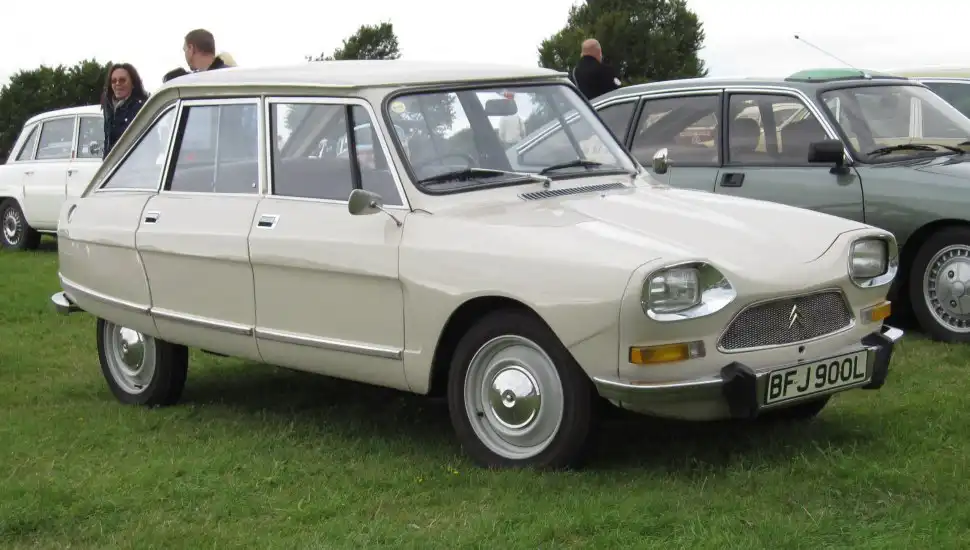
The task of styling this new car fell to Flaminio Bertoni, the head of Citroën’s design department and the visionary artist behind the iconic Traction Avant, 2CV, and DS. The AMI 6 would be his final completed project before his death in 1964. Constrained by the 2CV’s wheelbase, Bertoni faced the problem of creating a three-box saloon with adequate rear passenger headroom and a large, accessible boot. His solution was as unorthodox as it was brilliant: a reverse-raked or Z-line rear windscreen. This design choice, while becoming the car’s most debated feature, was rooted in practicality. It allowed for a full-width boot lid, exceptional rear headroom for a car of its size, and it ingeniously kept the rear window clear of rain and snow through aerodynamics alone.
The name Ami 6 was a clever play on words. Phonetically in French, it sounds like la missis, implying a car for the lady of the house, while also translating to friend 6, referencing its new 602 cc engine. The car debuted in 1961, initially meeting a mixed public reception due to its unconventional looks, but it would go on to become a remarkable commercial success.
Design and Styling
The aesthetic of the Citroën AMI 6 Berline is impossible to ignore. The front end was dominated by a large, dipped bonnet that sloped dramatically between the prominent front wings. Its most notable feature was the rectangular headlamps, a world-first for a volume-production car, which would heavily influence automotive design trends throughout the 1960s and 1970s.
The car’s profile was defined by the aforementioned Z-line C-pillar. This feature drew comparisons to certain American models of the era, such as the 1959 Ford Anglia and the Lincoln Continental, but Bertoni’s execution was uniquely European. The thin pillars and large glass area created an airy and bright cabin. The body panels featured subtle, pressed swage lines that added rigidity to the thin steel without adding significant weight.
The interior was spartan but functional, reflecting its utilitarian roots. It featured a single-spoke steering wheel (a Citroën safety trademark), a minimalist dashboard with a distinctive horizontal slide-rule speedometer, and a quirky, dash-mounted umbrella handle gear shifter. The seats were simple benches, designed for practicality and to maximize interior space, allowing three-abreast seating if necessary.
Technical Analysis of the Citroen AMI 6 0.6 (24 Hp)
At the core of the early AMI 6 was the M4 engine, an evolution of the 2CV’s smaller powerplant. The Citroen AMI 6 0.6 (24 Hp) was powered by a 602 cc air-cooled, horizontally opposed two-cylinder boxer engine. This engine configuration provided a low center of gravity and was known for its durability, simplicity, and distinctive thrumming sound.
Producing a modest 24 horsepower at 4,750 rpm and 40 Nm of torque at 3,000 rpm, the engine was not designed for high performance. Instead, its focus was on reliability and economy. The power was delivered to the front wheels via a four-speed manual transmission. This front-engine, front-wheel-drive layout was a Citroën signature, providing excellent traction and optimizing interior space by eliminating the need for a transmission tunnel.
The car’s chassis and suspension were directly derived from the 2CV, featuring a fully independent, interconnected hydro-pneumatic system. This setup linked the front and rear wheels on each side, allowing for an exceptionally long-travel, soft ride. While it resulted in significant body roll during cornering, it gave the AMI 6 an unparalleled ability to absorb road imperfections, providing a magic carpet ride quality that was unmatched by any car in its class. Steering was managed by a direct and responsive rack-and-pinion system, and braking was handled by drum brakes on all four wheels, which were adequate for the vehicle’s light weight and modest performance.
Performance and Driving Experience
Driving a Citroen AMI 6 0.6 (24 Hp) is an experience characteristic of classic Citroëns. With a curb weight of just 630 kg, the 24 horsepower engine was sufficient to propel the car to a top speed of 114 km/h (about 71 mph). Acceleration was leisurely, and the car was best driven by conserving momentum rather than relying on power. The engine was flexible and, once up to speed, could comfortably cruise on the fast-flowing French Routes Nationales for which it was designed.
The driving experience was dominated by the unique suspension. On smooth roads, the car maintained a steady composure, but on uneven surfaces, it truly excelled, gliding over bumps and potholes that would unsettle most other vehicles. The trade-off was the pronounced body lean in corners, which could be unnerving for the uninitiated but was a predictable and safe characteristic of the car’s handling. Drivers learned to embrace the lean and use the car’s momentum to flow through turns. The combination of the supple ride, light steering, and comfortable (if unsupportive) seats made the AMI 6 an excellent long-distance tourer for its time.
Legacy and Success
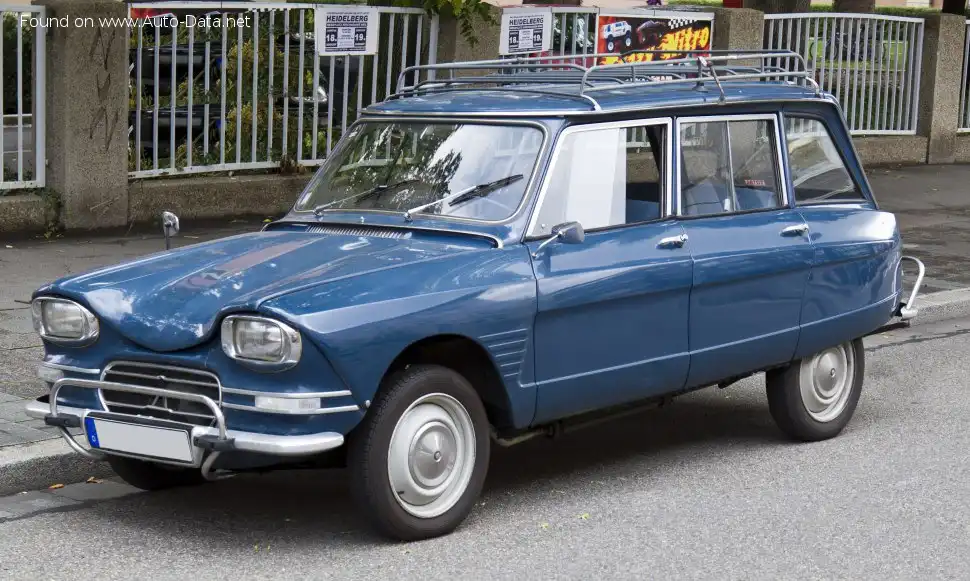
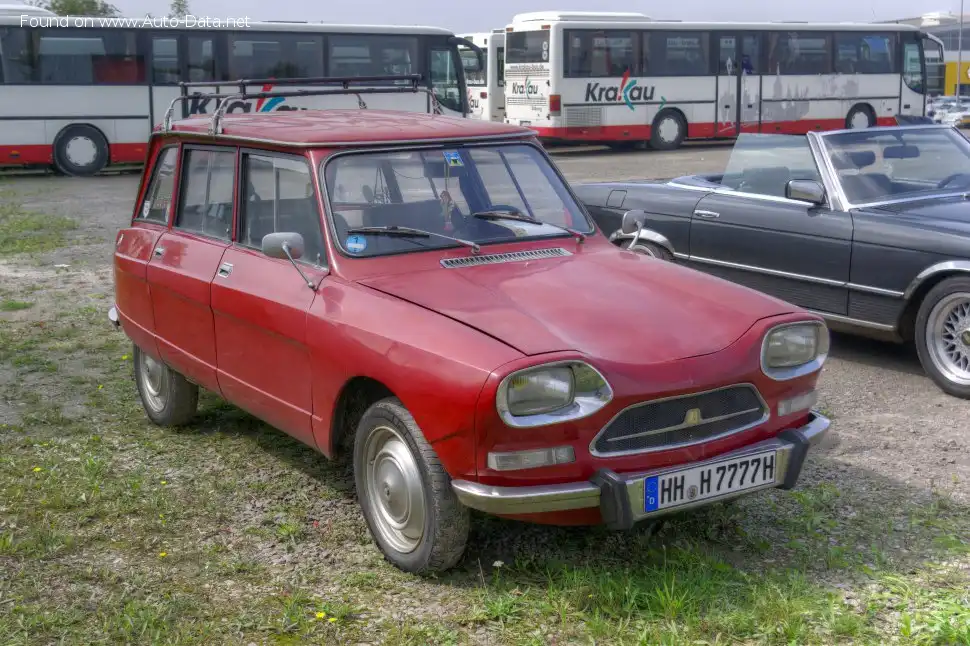
Despite the initial aesthetic shock, the AMI 6 became a resounding success. In 1964, Citroën introduced the Break (estate) version, which featured a much more conventional and widely accepted roofline. The Break was immensely practical, offering a vast, flat load floor, and it quickly became the best-selling variant, significantly outselling the Berline.
This commercial success culminated in 1966 when the AMI 6 became the best-selling car in France, a remarkable achievement for such an unconventionally styled vehicle. Over its production run from 1961 to 1969, more than one million AMI 6 models (both Berline and Break) were sold. It perfectly fulfilled its mission of bridging the gap in Citroën’s range and introduced thousands of families to a new level of automotive comfort. The AMI 6 was eventually succeeded by the AMI 8 in 1969, which retained the same mechanical underpinnings but featured a more conventional fastback-style body.
In conclusion, the Citroen AMI 6 0.6 (24 Hp) stands as a testament to an era of bold automotive design and engineering pragmatism. It was a car that dared to be different, prioritizing function over conventional form. While its Z-line styling remains a topic of debate, its combination of a durable and economical engine, a revolutionary level of ride comfort, and surprising practicality sealed its place as a French icon and an important model in the rich history of Citroën.
Full Technical Specifications: Citroën AMI 6 0.6 (24 Hp) Berline (1963-1965)
| Category | Specification |
| ————————- | ———————————————————————– |
| General Information | |
| Brand | Citroën |
| Model