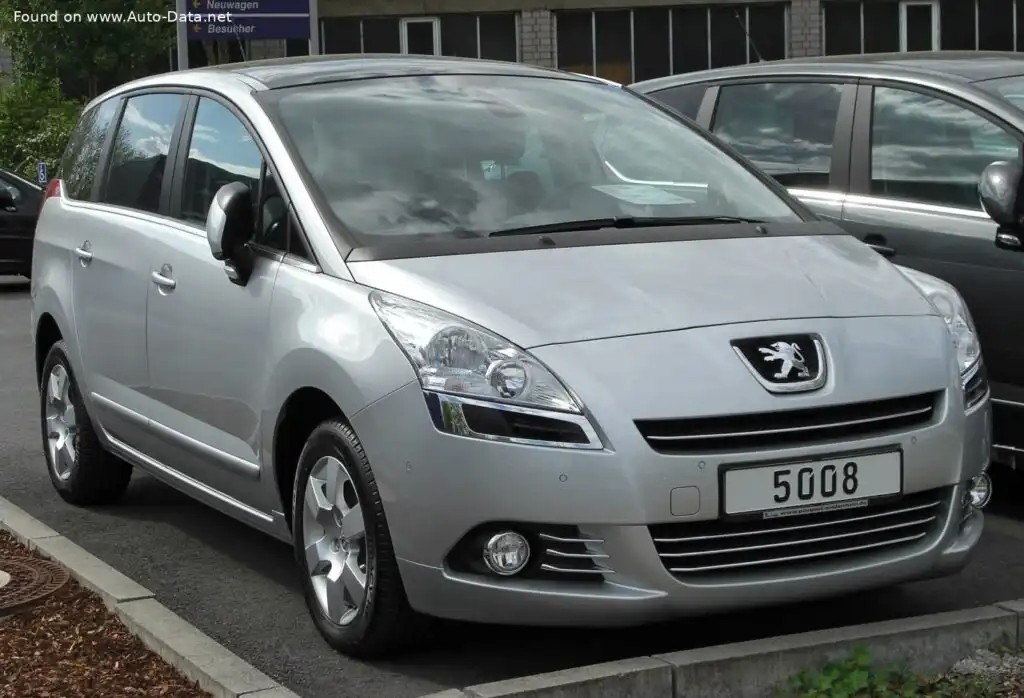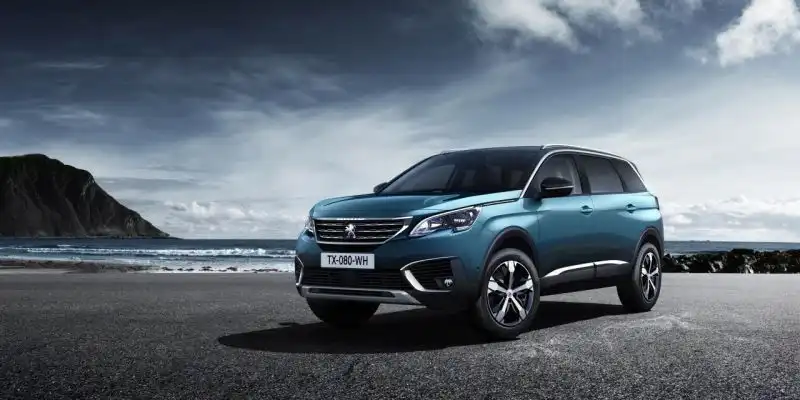
The Peugeot 5008 II, launched in 2017, represented a significant evolution for the French automaker’s mid-size SUV offering. The 1.5 BlueHDi 130 hp variant, produced from 2017 to 2020, was a key component of the Phase I lineup, positioned as a fuel-efficient and practical option within the broader 5008 range. Built on the EMP2 platform (also underpinning models like the Peugeot 3008 and Citroën C5 Aircross), the 5008 aimed to blend family practicality with a touch of French design flair. This particular engine and transmission combination targeted buyers prioritizing economy and usability over outright performance, making it a popular choice in European markets.
Technical Specifications
| Brand | Peugeot |
| Model | 5008 |
| Generation | 5008 II (Phase I, 2017) |
| Type (Engine) | 1.5 BlueHDi (130 Hp) |
| Start of production | 2017 |
| End of production | 2020 |
| Powertrain Architecture | Internal Combustion engine |
| Body type | SUV |
| Seats | 7 |
| Doors | 5 |
| Fuel consumption (urban) | 4.6-4.7 l/100 km (51.1 – 50 US mpg, 61.4 – 60.1 UK mpg, 21.7 – 21.3 km/l) |
| Fuel consumption (extra urban) | 3.8 l/100 km (61.9 US mpg, 74.3 UK mpg, 26.3 km/l) |
| Fuel consumption (combined) | 4.1-4.2 l/100 km (57.4 – 56 US mpg, 68.9 – 67.3 UK mpg, 24.4 – 23.8 km/l) |
| CO2 emissions | 107-109 g/km |
| Fuel Type | Diesel |
| Acceleration 0 – 100 km/h | 11.1 sec |
| Acceleration 0 – 62 mph | 11.1 sec |
| Acceleration 0 – 60 mph | 10.5 sec |
| Maximum speed | 191 km/h (118.68 mph) |
| Emission standard | Euro 6 d |
| Weight-to-power ratio | 11 kg/Hp, 90.9 Hp/tonne |
| Weight-to-torque ratio | 4.8 kg/Nm, 209.8 Nm/tonne |
| Power | 130 Hp @ 3750 rpm |
| Power per litre | 86.8 Hp/l |
| Torque | 300 Nm @ 1750 rpm (221.27 lb.-ft. @ 1750 rpm) |
| Maximum engine speed | 5100 rpm |
| Engine layout | Front, Transverse |
| Engine Model/Code | YHZ DV5RC |
| Engine displacement | 1498 cm3 (91.41 cu. in.) |
| Number of cylinders | 4 |
| Engine configuration | Inline |
| Cylinder Bore | 75 mm (2.95 in.) |
| Piston Stroke | 84.8 mm (3.34 in.) |
| Compression ratio | 16.4:1 |
| Number of valves per cylinder | 2 |
| Fuel injection system | Diesel Commonrail |
| Engine aspiration | Turbocharger, Intercooler |
| Engine oil capacity | 4 l (4.23 US qt | 3.52 UK qt) |
| Kerb Weight | 1430 kg (3152.61 lbs.) |
| Max. weight | 2190 kg (4828.12 lbs.) |
| Max load | 760 kg (1675.51 lbs.) |
| Trunk (boot) space – minimum | 780 l (27.55 cu. ft.) |
| Trunk (boot) space – maximum | 1940 l (68.51 cu. ft.) |
| Fuel tank capacity | 56 l (14.79 US gal | 12.32 UK gal) |
| Max. roof load | 80 kg (176.37 lbs.) |
| Permitted trailer load with brakes (12%) | 1300 kg (2866.01 lbs.) |
| Permitted trailer load without brakes | 750 kg (1653.47 lbs.) |
| Permitted towbar download | 72 kg (158.73 lbs.) |
| Length | 4641 mm (182.72 in.) |
| Width | 1844 mm (72.6 in.) |
| Width with mirrors folded | 1906 mm (75.04 in.) |
| Width including mirrors | 2098 mm (82.6 in.) |
| Height | 1646 mm (64.8 in.) |
| Wheelbase | 2840 mm (111.81 in.) |
| Front track | 1593-1601 mm (62.72 – 63.03 in.) |
| Rear track | 1601-1610 mm (63.03 – 63.39 in.) |
| Front overhang | 926 mm (36.46 in.) |
| Rear overhang | 875 mm (34.45 in.) |
| Minimum turning circle | 11.2 m (36.75 ft.) |
| Front suspension | Coil spring, Independent type McPherson |
| Rear suspension | Semi-independent, coil spring |
| Front brakes | Ventilated discs |
| Rear brakes | Disc |
| Gearbox | 6 gears, manual transmission |
| Tires size | 215/65 R17 90H; 225/55 R18 90H |
| Wheel rims size | 17; 18 |
Powertrain & Engine Architecture
The heart of this 5008 variant is the 1.5 BlueHDi engine, part of Peugeot’s (and wider Stellantis) BlueHDi range of diesel engines. The ‘DV5RC’ engine code designates a 1498cc, four-cylinder diesel engine. This engine utilizes a common-rail direct injection system, delivering fuel at extremely high pressure for optimized combustion. A turbocharger with an intercooler is employed to boost power and torque, providing 130 horsepower at 3750 rpm and 300 Nm (221 lb-ft) of torque at a low 1750 rpm. The high compression ratio of 16.4:1 is typical for modern diesel engines, contributing to efficiency. The engine also incorporates a particulate filter to reduce emissions, meeting Euro 6d standards. The engine is transversely mounted in the front of the vehicle. The 6-speed manual transmission was the standard offering for this trim, providing a balance between fuel economy and driver control.
Driving Characteristics
The 1.5 BlueHDi 130 hp engine, paired with the 6-speed manual gearbox, delivers a practical and usable driving experience. Acceleration from 0-100 km/h (0-62 mph) takes around 11.1 seconds, which is adequate for everyday driving but doesn’t offer particularly sporty performance. The engine’s strong low-end torque makes it well-suited for overtaking and navigating urban environments. Compared to the more powerful 180 hp BlueHDi variants, this engine prioritizes fuel efficiency over outright speed. The gear ratios are tuned for economy, with a relatively long sixth gear for comfortable cruising on motorways. While not as engaging as a higher-performance model, the 1.5 BlueHDi provides sufficient power for most driving situations, especially when the vehicle isn’t fully loaded with passengers and luggage.
Equipment & Trim Levels
The 1.5 BlueHDi 130 hp variant typically came equipped as a mid-range trim level, offering a good balance of features and affordability. Standard equipment generally included air conditioning, a touchscreen infotainment system with Bluetooth connectivity, cruise control, and rear parking sensors. Interior upholstery was typically cloth, with options for upgrading to leather. Higher trim levels added features such as a panoramic sunroof, navigation system, and advanced driver-assistance systems (ADAS) like automatic emergency braking and lane departure warning. The 5008’s interior design was a highlight, featuring a modern and minimalist aesthetic with a focus on ergonomics.
Chassis & Braking
The 5008 II utilizes a McPherson strut front suspension and a semi-independent coil spring rear suspension. This setup provides a comfortable ride quality, absorbing bumps and imperfections in the road surface effectively. The front brakes are ventilated discs, offering good stopping power, while the rear brakes are solid discs. Anti-lock Braking System (ABS) is standard. The 5008’s chassis is designed to accommodate the seven-seat configuration, providing a stable and predictable handling experience. Stabilizer bars are fitted to both the front and rear axles to reduce body roll during cornering.
Market Reception & Comparison
The Peugeot 5008 II, and specifically the 1.5 BlueHDi 130 hp variant, received positive reviews for its stylish design, spacious interior, and fuel efficiency. Critics praised the engine’s torque and economy, making it a practical choice for families. Compared to the more powerful diesel options, the 1.5 BlueHDi offered a lower purchase price and improved fuel consumption. However, some reviewers noted that the acceleration wasn’t as brisk as with the higher-output engines. Against competitors like the Nissan Qashqai and Kia Sportage, the 5008 stood out with its distinctive styling and well-appointed interior.
Legacy
The 1.5 BlueHDi engine has proven to be a reliable and durable powertrain. While diesel engines, in general, have faced increased scrutiny regarding emissions, the BlueHDi technology helped to mitigate these concerns. In the used car market, the 5008 1.5 BlueHDi 130 hp remains a popular choice, offering a good balance of practicality, economy, and value. Regular maintenance, including timely servicing and adherence to manufacturer recommendations, is crucial for ensuring the long-term reliability of this engine. The 5008’s overall build quality and design have contributed to its enduring appeal, making it a well-regarded SUV in its segment.