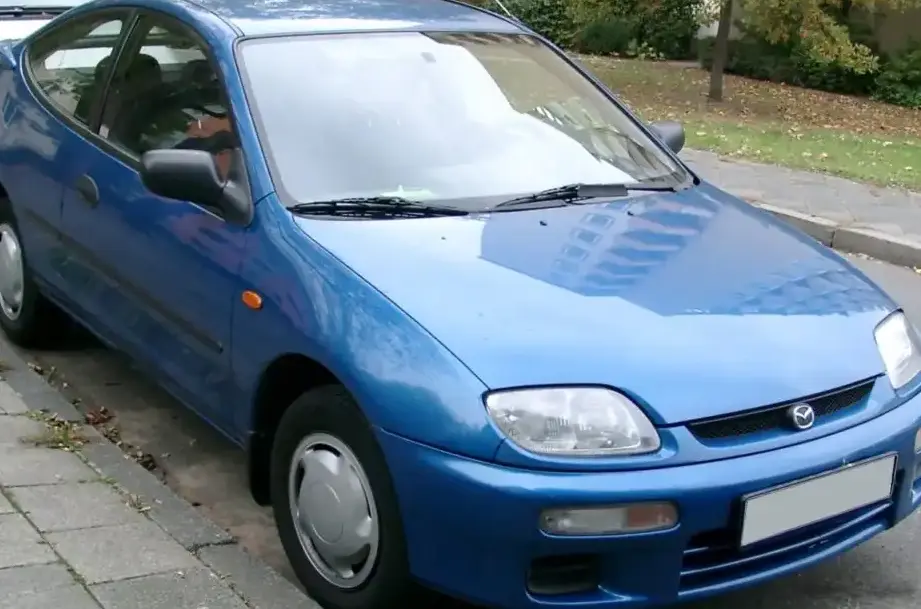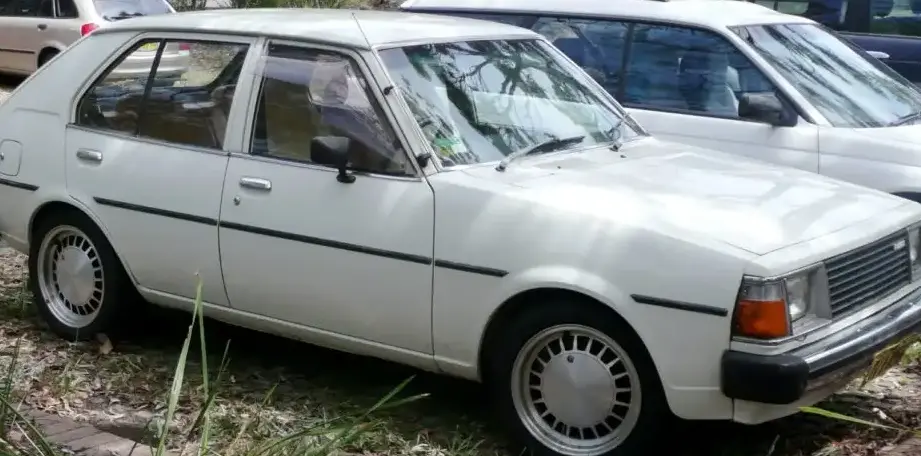
The Mazda 323 I (FA), produced between 1977 and 1980, represents the first generation of Mazda’s popular compact offering. This model, sold primarily in Europe and Japan, aimed to provide affordable and reliable transportation in a burgeoning market segment. The 1.3-liter, 60 horsepower variant was positioned as the entry-level model, focusing on fuel economy and practicality rather than outright performance. It served as a crucial stepping stone for Mazda, establishing the 323 nameplate and laying the groundwork for future generations. The FA series was Mazda’s attempt to compete directly with established rivals like the Ford Escort and Volkswagen Golf, offering a blend of Japanese engineering and a relatively modern design for its time.
Technical Specifications
| Brand | Mazda |
| Model | 323 |
| Generation | 323 I (FA) |
| Type (Engine) | 1.3 (60 Hp) |
| Start of production | 1977 |
| End of production | 1980 |
| Powertrain Architecture | Internal Combustion Engine |
| Body type | Hatchback |
| Fuel Type | Petrol (Gasoline) |
| Power | 60 Hp |
| Engine aspiration | Naturally Aspirated |
Powertrain & Engine Architecture
The heart of the 323 I (FA) 1.3 was the Mazda 813 engine, a 1.3-liter (1298cc) inline-four cylinder gasoline engine. This engine utilized a naturally aspirated configuration, meaning it did not employ a turbocharger or supercharger. It featured a single overhead camshaft (SOHC) design, operating two valves per cylinder. Fuel delivery was managed by a carburetor, a common technology for the era, providing a relatively simple and cost-effective fuel system. The engine produced 60 horsepower at approximately 6000 rpm and 73 lb-ft of torque at 3000 rpm. While not a powerhouse, the engine was designed for efficiency and durability. The transmission offered was typically a four-speed manual, but a three-speed automatic transmission was also available, though less common. The automatic transmission was geared towards smooth operation and ease of use, prioritizing comfort over performance. The engine block was constructed from cast iron, contributing to its robustness, while the cylinder head was made of aluminum alloy to reduce weight.
Driving Characteristics
The 323 I (FA) 1.3, particularly in its automatic transmission guise, offered a decidedly unhurried driving experience. Acceleration was modest, with a 0-60 mph time estimated to be around 15-17 seconds. The automatic transmission, while providing convenience, further diminished performance due to its relatively wide gear ratios and inherent efficiency losses. The focus was clearly on providing adequate power for everyday driving conditions, such as commuting and city travel. The suspension, consisting of MacPherson struts in the front and a leaf spring setup in the rear, provided a comfortable ride, absorbing bumps and imperfections in the road reasonably well. However, handling was not particularly sharp, with noticeable body roll during cornering. Compared to the manual transmission version, the automatic suffered a more pronounced performance deficit, but offered a smoother and more relaxed driving experience, appealing to drivers prioritizing convenience over sporty handling.
Equipment & Trim Levels
The 323 I (FA) 1.3 was offered with a relatively basic level of equipment, reflecting its position as the entry-level model. Standard features typically included cloth upholstery, vinyl floor covering, and basic instrumentation consisting of a speedometer, fuel gauge, and temperature gauge. A two-spoke steering wheel was standard, and the dashboard layout was functional but not particularly stylish. Optional extras included a radio, heater, and upgraded upholstery. The trim level was fairly consistent across the range, with limited options for customization. The interior space was adequate for a compact hatchback, offering reasonable headroom and legroom for both front and rear passengers. The rear seats could be folded down to increase cargo capacity, adding to the vehicle’s practicality.
Chassis & Braking
The 323 I (FA) featured a unibody construction, providing a good balance of strength and weight. The front suspension utilized MacPherson struts, offering a relatively comfortable ride and decent handling characteristics. The rear suspension employed a leaf spring setup, which was a cost-effective solution but less sophisticated than independent suspension systems. Braking was accomplished via drum brakes on all four wheels, a common configuration for vehicles of this era and price point. While adequate for normal driving conditions, the drum brakes lacked the stopping power and fade resistance of disc brakes. Steering was manual, requiring more effort from the driver compared to power steering systems. The chassis was designed to provide a stable and predictable driving experience, prioritizing safety and reliability over sporty handling.
Market Reception & Comparison
The Mazda 323 I (FA) 1.3 was generally well-received by critics as a practical and affordable compact car. However, its performance was often criticized as being underwhelming, particularly in the automatic transmission version. Fuel economy was a strong point, making it an attractive option for budget-conscious buyers. Compared to its rivals, such as the Ford Escort and Volkswagen Golf, the 323 offered a slightly more modern design and a reputation for reliability. The automatic transmission version was often seen as a compromise, sacrificing performance for convenience. The manual transmission version offered a more engaging driving experience, but still lacked the outright performance of some of its competitors. Reliability was generally good, with the 1.3-liter engine proving to be durable and relatively trouble-free.
Legacy
The Mazda 323 I (FA) 1.3, while not a performance icon, played a significant role in establishing Mazda as a credible competitor in the compact car market. The 1.3-liter engine, while simple in design, proved to be remarkably durable, and many examples are still on the road today. The automatic transmission version, while less desirable to enthusiasts, provided a comfortable and convenient driving experience for a wide range of drivers. In the used car market, the 323 I (FA) 1.3 is often sought after by collectors and enthusiasts looking for a classic Japanese car. Its affordability, simplicity, and reliability make it an appealing option for those seeking a nostalgic driving experience. The FA series laid the foundation for the subsequent generations of the Mazda 323, which would go on to become one of Mazda’s most successful models.