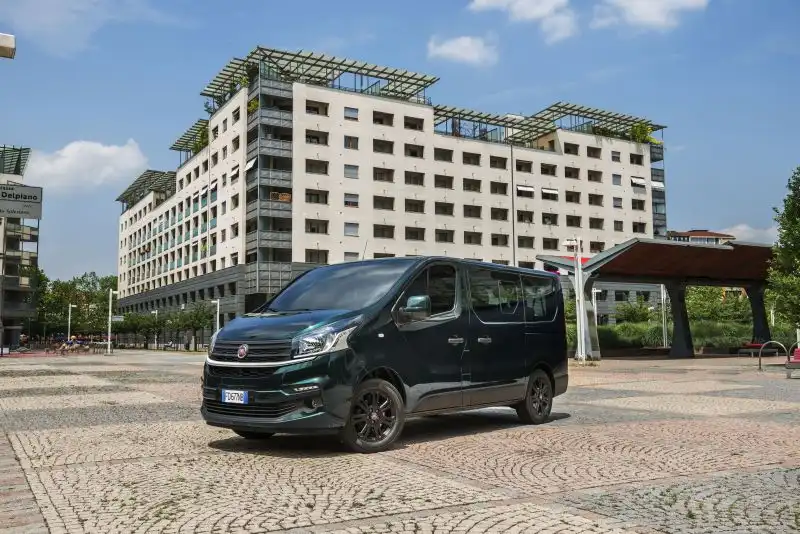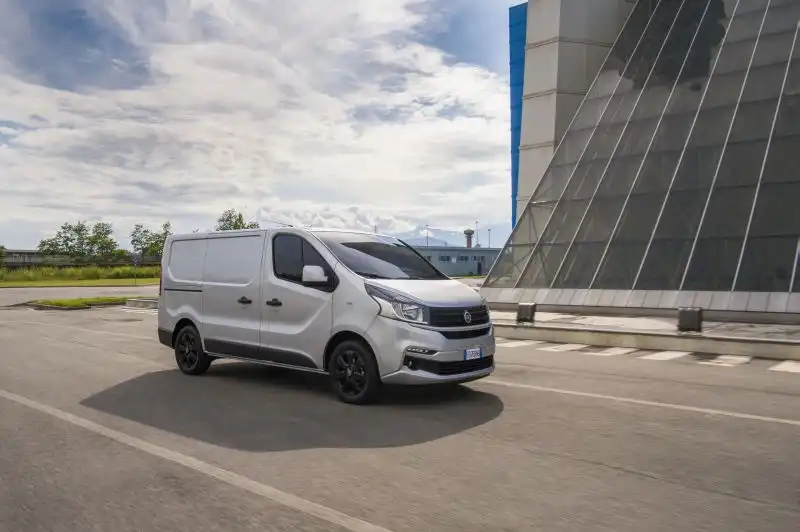
The Fiat Talento Van 1.6 Ecojet (125 Hp) L2H2 was a light commercial vehicle produced by Fiat Professional from 2016 to 2021. Part of the second generation Talento range, this variant occupied a middle ground in the lineup, offering a balance between fuel efficiency, payload capacity, and affordability. The L2H2 designation refers to the vehicle’s body length (L2 – long) and roof height (H2 – high), providing a substantial cargo volume. It was primarily marketed towards businesses and tradespeople requiring a versatile and reliable van for deliveries, transport, and mobile workshops, primarily in the European market.
Technical Specifications
| Brand | Fiat |
| Model | Talento |
| Generation | Talento Van |
| Type (Engine) | 1.6 Ecojet (125 Hp) L2H2 |
| Start of production | 2016 year |
| End of production | 2021 year |
| Powertrain Architecture | Internal Combustion engine |
| Body type | Minivan |
| Seats | 3 |
| Doors | 5 |
| Fuel consumption (urban) | 7.4 l/100 km (31.8 US mpg) |
| Fuel consumption (extra urban) | 6.6 l/100 km (35.6 US mpg) |
| Fuel consumption (combined) | 6.9 l/100 km (34.1 US mpg) |
| CO2 emissions | 178 g/km |
| Fuel Type | Diesel |
| Maximum speed | 155 km/h (96.31 mph) |
| Emission standard | Euro 6 |
| Weight-to-power ratio | 15.1 kg/Hp |
| Weight-to-torque ratio | 5.9 kg/Nm |
| Power | 125 Hp @ 3500 rpm |
| Torque | 320 Nm @ 1500 rpm (236.02 lb.-ft. @ 1500 rpm) |
| Engine layout | Front, Transverse |
| Engine Model/Code | R9M 452 |
| Engine displacement | 1598 cm3 (97.52 cu. in.) |
| Number of cylinders | 4 |
| Engine configuration | Inline |
| Cylinder Bore | 80 mm (3.15 in.) |
| Piston Stroke | 79.5 mm (3.13 in.) |
| Compression ratio | 15.45:1 |
| Number of valves per cylinder | 4 |
| Fuel injection system | Diesel Commonrail |
| Engine aspiration | Twin-Turbo, Intercooler |
| Engine oil capacity | 7.4 l (7.82 US qt | 6.51 UK qt) |
| Coolant | 9.5 l (10.04 US qt | 8.36 UK qt) |
| Kerb Weight | 1890 kg (4166.74 lbs.) |
| Max. weight | 3060 kg (6746.15 lbs.) |
| Max load | 1170 kg (2579.41 lbs.) |
| Trunk (boot) space – maximum | 8600 l (303.71 cu. ft.) |
| Fuel tank capacity | 80 l (21.13 US gal | 17.6 UK gal) |
| Permitted trailer load with brakes (12%) | 2000 kg (4409.25 lbs.) |
| Permitted trailer load without brakes | 750 kg (1653.47 lbs.) |
| Length | 5399 mm (212.56 in.) |
| Width | 1956 mm (77.01 in.) |
| Width including mirrors | 2283 mm (89.88 in.) |
| Height | 2490 mm (98.03 in.) |
| Wheelbase | 3498 mm (137.72 in.) |
| Front track | 1615 mm (63.58 in.) |
| Rear (Back) track | 1628 mm (64.09 in.) |
| Front overhang | 933 mm (36.73 in.) |
| Rear overhang | 968 mm (38.11 in.) |
| Minimum turning circle | 13.73 m (45.05 ft.) |
| Drivetrain Architecture | Front wheel drive |
| Number of gears and type of gearbox | 6 gears, manual transmission |
| Front suspension | Independent, type McPherson with coil spring and anti-roll bar |
| Rear suspension | Semi-independent, coil spring |
| Front brakes | Ventilated discs |
| Rear brakes | Disc |
| Assisting systems | ABS (Anti-lock braking system) |
| Steering type | Steering rack and pinion |
| Power steering | Hydraulic Steering |
| Tires size | 205/65 R16; 215/60 R17 |
| Wheel rims size | 16; 17 |
INTRODUCTION
The Fiat Talento, launched in 2016, was a collaborative effort between the Fiat Professional and Renault-Nissan-Mitsubishi Alliance. It shared its platform and many components with the Renault Trafic and Nissan NV300. The 1.6 Ecojet (125 Hp) L2H2 variant represented a popular choice for businesses seeking a practical and economical van. Positioned within the Talento range, it offered a step up in power and torque compared to the lower-powered 95 hp version, while remaining more affordable and fuel-efficient than the higher-output 145 hp and 170 hp options. The L2H2 configuration provided a generous cargo capacity, making it suitable for a wide range of commercial applications.
Powertrain & Engine Architecture
The heart of the Talento 1.6 Ecojet L2H2 is the R9M 452 engine, a 1.6-liter inline-four cylinder diesel engine. This engine is a product of the Renault-Nissan Alliance and features a sophisticated twin-turbocharger setup with an intercooler. This configuration allows for a broad torque curve and improved responsiveness. The engine utilizes a Diesel Commonrail direct fuel injection system, delivering fuel directly into the combustion chamber at high pressure for efficient combustion. The engine produces 125 horsepower at 3500 rpm and 320 Nm (236 lb-ft) of torque at a low 1500 rpm. The engine’s 15.45:1 compression ratio contributes to its efficiency. The engine is paired with a six-speed manual transmission, which was the standard offering for this variant. The transmission’s gear ratios are tuned for a balance of fuel economy and usability, prioritizing low-end torque for hauling loads.
Driving Characteristics
The Talento 1.6 Ecojet L2H2, with its 125 hp and 320 Nm of torque, offered a respectable driving experience for a light commercial vehicle. While not designed for outright speed, the engine provided sufficient power for everyday driving and hauling moderate loads. The twin-turbo setup minimized turbo lag, delivering a relatively smooth and linear power delivery. The six-speed manual transmission allowed drivers to keep the engine in its optimal power band. Compared to the 95 hp version, the 125 hp model felt noticeably more capable, especially when fully loaded or traveling uphill. However, it lacked the outright punch of the higher-powered variants. The suspension, tuned for comfort and load-carrying capacity, provided a reasonably smooth ride, even on uneven surfaces. Steering was light and precise, making maneuvering in urban environments relatively easy.
Equipment & Trim Levels
The Talento 1.6 Ecojet L2H2 typically came with a functional, yet basic, level of equipment. Standard features included a driver’s airbag, ABS brakes, power steering, and a basic audio system with USB connectivity. The cabin was designed with practicality in mind, featuring durable materials and a functional dashboard layout. The seats were typically upholstered in hard-wearing fabric. Optional extras included air conditioning, a passenger airbag, rear parking sensors, a touchscreen infotainment system with navigation, and cruise control. Higher trim levels offered additional features such as upgraded upholstery, alloy wheels, and a more comprehensive safety package.
Chassis & Braking
The Talento utilized a front-wheel-drive layout, contributing to its fuel efficiency and relatively low load floor. The front suspension consisted of an independent McPherson strut setup with coil springs and an anti-roll bar, providing a comfortable ride and stable handling. The rear suspension employed a semi-independent coil spring arrangement. The braking system featured ventilated discs on the front wheels and solid discs on the rear, providing adequate stopping power for the vehicle’s weight. ABS (Anti-lock Braking System) was standard, enhancing safety during emergency braking situations. The steering system utilized a rack and pinion setup with hydraulic power assistance, offering precise and responsive steering.
Market Reception & Comparison
The Fiat Talento 1.6 Ecojet L2H2 was generally well-received by critics as a practical and economical light commercial vehicle. It was praised for its spacious cargo area, fuel efficiency, and comfortable ride. Compared to the lower-powered 95 hp version, the 125 hp model offered a significant improvement in performance, making it a more suitable choice for businesses that frequently carry heavy loads. However, some critics noted that the interior was somewhat basic compared to some of its competitors. In terms of fuel economy, the 1.6 Ecojet engine offered competitive figures, typically achieving around 34.1 US mpg on the combined cycle. Reliability was generally good, although some owners reported minor issues with the electronic systems.
Legacy
The Fiat Talento 1.6 Ecojet L2H2 has established itself as a reliable and affordable workhorse in the used commercial vehicle market. The R9M engine, while not without its quirks, has proven to be relatively durable when properly maintained. The availability of spare parts is good, and maintenance costs are generally reasonable. Today, these vans continue to be popular choices for small businesses and tradespeople seeking a practical and economical solution for their transportation needs. The Talento’s collaborative design and shared components with Renault and Nissan have ensured a continued supply of parts and expertise, solidifying its position as a dependable light commercial vehicle.