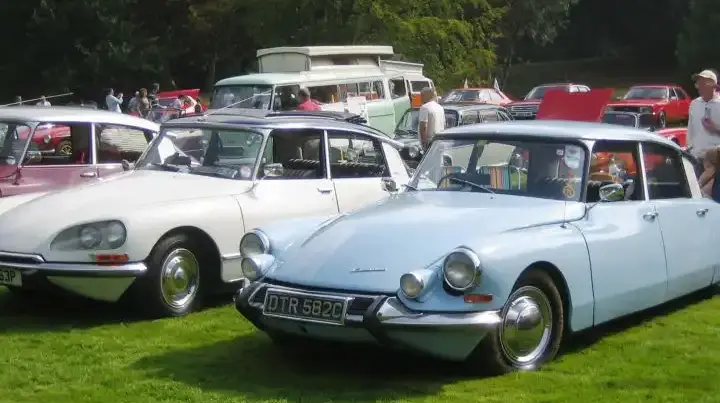
The Citroën DS II 19, produced between 1965 and 1967, represented a refinement of the groundbreaking Citroën DS, a vehicle that revolutionized automotive engineering and design. This variant, designated by the “19” signifying its engine displacement, offered a balance between the DS’s innovative technology and a more accessible price point. It occupied a mid-range position within the DS II lineup, slotting below the more powerful ID 21 and DS 21 models, but offering a more refined experience than the entry-level ID 19. The DS II 19 was primarily marketed in Europe, where it became a symbol of French automotive prowess and a favorite among those seeking a blend of luxury, comfort, and advanced technology.
Technical Specifications
| Brand | Citroen |
| Model | DS |
| Generation | DS II |
| Type (Engine) | 19 (90 Hp) |
| Start of production | 1965 |
| End of production | 1967 |
| Powertrain Architecture | Internal Combustion engine |
| Body type | Sedan |
| Seats | 5 |
| Doors | 4 |
| Fuel Type | Petrol (Gasoline) |
| Maximum speed | 165 km/h (102.53 mph) |
| Weight-to-power ratio | 13.9 kg/Hp, 72 Hp/tonne |
| Weight-to-torque ratio | 8.4 kg/Nm, 119.2 Nm/tonne |
| Power | 90 Hp @ 5250 rpm |
| Power per litre | 45.3 Hp/l |
| Torque | 149 Nm @ 3500 rpm (109.9 lb.-ft. @ 3500 rpm) |
| Engine layout | Front, Longitudinal |
| Engine displacement | 1985 cm3 (121.13 cu. in.) |
| Number of cylinders | 4 |
| Engine configuration | Inline |
| Cylinder Bore | 90 mm (3.54 in.) |
| Piston Stroke | 78 mm (3.07 in.) |
| Compression ratio | 8.75:1 |
| Number of valves per cylinder | 2 |
| Fuel injection system | Carburettor |
| Engine aspiration | Naturally aspirated engine |
| Kerb Weight | 1250 kg (2755.78 lbs.) |
| Max. weight | 1760 kg (3880.14 lbs.) |
| Max load | 510 kg (1124.36 lbs.) |
| Trunk (boot) space – minimum | 500 l (17.66 cu. ft.) |
| Fuel tank capacity | 65 l (17.17 US gal | 14.3 UK gal) |
| Length | 4838 mm (190.47 in.) |
| Width | 1790 mm (70.47 in.) |
| Height | 1470 mm (57.87 in.) |
| Wheelbase | 3125 mm (123.03 in.) |
| Front track | 1500 mm (59.06 in.) |
| Rear (Back) track | 1300 mm (51.18 in.) |
| Minimum turning circle (turning diameter) | 11 m (36.09 ft.) |
| Drivetrain Architecture | The Internal combustion engine (ICE) drives the front wheels of the vehicle. |
| Drive wheel | Front wheel drive |
| Number of gears and type of gearbox | 4 gears, manual transmission |
| Front suspension | Hydro-pneumatic element |
| Rear suspension | Hydro-pneumatic element |
| Front brakes | Disc |
| Rear brakes | Drum |
| Steering type | Steering rack and pinion |
Powertrain & Engine Architecture
The heart of the DS II 19 was its 1985cc inline-four cylinder engine. This engine, often referred to by its engine code, utilized a cast iron block and an aluminum cylinder head. It featured a relatively modest compression ratio of 8.75:1 and employed a single Solex carburetor for fuel delivery. The valvetrain consisted of two valves per cylinder, operated by a single overhead camshaft. While not a powerhouse, the engine produced a respectable 90 horsepower at 5250 rpm and 149 Nm (109.9 lb-ft) of torque at 3500 rpm. The engine was mounted longitudinally in the front of the vehicle, driving the front wheels. The standard transmission was a four-speed manual gearbox, although a three-speed automatic transmission was available as an option, though less common.
Driving Characteristics
The DS II 19, with its 90 horsepower engine and manual transmission, offered a comfortable and refined driving experience. Acceleration was adequate for the time, but not particularly brisk. The car was more about effortless cruising than outright speed. The four-speed manual gearbox provided reasonable control, but the gear ratios were spaced to prioritize fuel economy and smooth operation rather than performance. Compared to the more powerful DS 21, the DS II 19 felt noticeably slower, especially when fully loaded. However, the DS’s legendary hydropneumatic suspension system provided an unparalleled ride quality, absorbing bumps and imperfections in the road with ease. The steering was light and precise, thanks to its rack-and-pinion setup.
Equipment & Trim Levels
The DS II 19 was well-equipped for its era. Standard features included comfortable seating for five passengers, a spacious trunk, and a comprehensive instrument panel. Interior upholstery was typically cloth, although leather was available as an optional extra. The dashboard featured a combination of analog gauges and warning lights, providing the driver with essential information. Optional extras included a sunroof, power steering, and a radio. The DS II 19 was generally finished in a range of solid colors, with two-tone paint schemes also available. The trim level was generally consistent across the DS II 19 models, with options being the primary way to personalize the vehicle.
Chassis & Braking
The DS II 19’s chassis was a monocoque construction, providing a strong and rigid platform. The most notable feature of the chassis was its hydropneumatic suspension system, developed by Citroën in collaboration with Pirelli. This system used pressurized fluid and nitrogen gas to provide a self-leveling and exceptionally comfortable ride. The front suspension utilized independent double wishbones, while the rear suspension employed a trailing arm design. Braking was provided by disc brakes at the front and drum brakes at the rear. The braking system was hydraulically operated and offered adequate stopping power for the vehicle’s weight and performance.
Market Reception & Comparison
The Citroën DS II 19 was generally well-received by critics and buyers alike. It was praised for its innovative technology, comfortable ride, and stylish design. However, some critics noted that the engine was somewhat underpowered for the car’s size and weight. Compared to the DS 21, the DS II 19 offered a more affordable entry point into the DS world, but at the expense of performance. Fuel economy was reasonable for the time, but not exceptional. Reliability was generally good, although the complex hydropneumatic suspension system required regular maintenance. The DS II 19 competed with other luxury sedans of the era, such as the Mercedes-Benz “Fintail” and the Peugeot 404.
Legacy
The Citroën DS II 19, and the DS line as a whole, left an indelible mark on automotive history. Its innovative technology, particularly the hydropneumatic suspension, set a new standard for ride comfort and handling. The DS II 19 remains a sought-after classic car today, prized by collectors and enthusiasts for its unique design and engineering. While the hydropneumatic suspension system can require specialized maintenance, the engine itself is relatively robust and reliable. Parts availability can be a challenge, but a dedicated network of suppliers and enthusiasts helps to keep these iconic vehicles on the road. The DS II 19 stands as a testament to Citroën’s commitment to innovation and its ability to create truly groundbreaking automobiles.