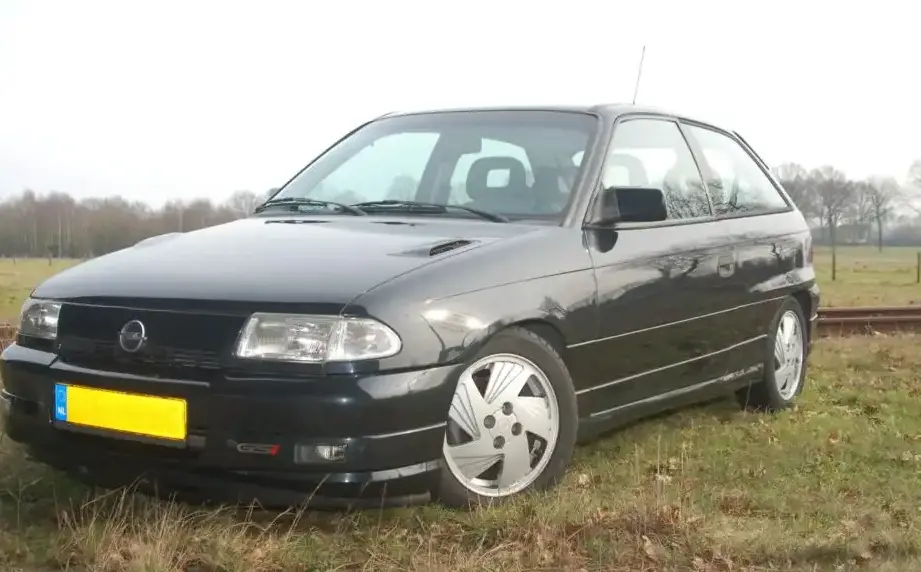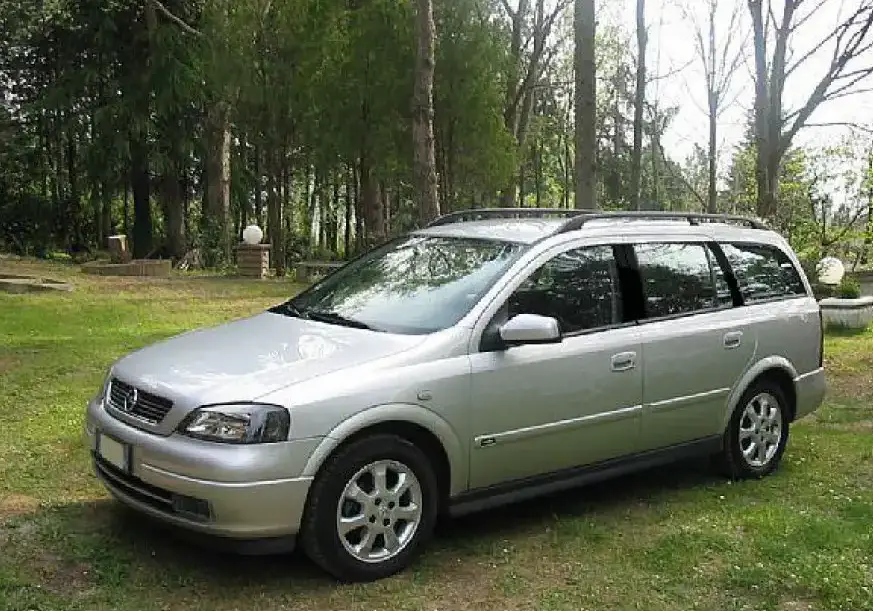
The Opel Astra G Caravan (facelift, produced from November 2002 to May 2004) 2.0 16V T OPC represents the high-performance variant of the Astra G estate car. Positioned as the flagship model within the Caravan range, the OPC (Opel Performance Center) offered a significant increase in power and sporting capability compared to other Astra G trims. It was designed to appeal to drivers seeking a practical, yet engaging, driving experience. The Astra G generation, built on the GM/Opel T platform (also known as the 1HX0 platform), aimed to modernize Opel’s offerings and compete effectively in the crowded European compact car market.
Technical Specifications
| Brand | Opel |
| Model | Astra |
| Generation | Astra G Caravan (facelift 2002) |
| Type (Engine) | 2.0 16V T OPC (200 Hp) |
| Start of production | November, 2002 |
| End of production | May, 2004 |
| Powertrain Architecture | Internal Combustion engine |
| Body type | Station wagon (estate) |
| Seats | 5 |
| Doors | 5 |
| Fuel consumption (urban) | 12.7 l/100 km (18.5 US mpg, 22.2 UK mpg, 7.9 km/l) |
| Fuel consumption (extra urban) | 7 l/100 km (33.6 US mpg, 40.4 UK mpg, 14.3 km/l) |
| Fuel consumption (combined) | 9.1 l/100 km (25.8 US mpg, 31 UK mpg, 11 km/l) |
| Fuel Type | Petrol (Gasoline) |
| Acceleration 0 – 100 km/h | 7.8 sec |
| Acceleration 0 – 62 mph | 7.8 sec |
| Acceleration 0 – 60 mph | 7.4 sec |
| Maximum speed | 231 km/h (143.54 mph) |
| Weight-to-power ratio | 6.7 kg/Hp, 149.3 Hp/tonne |
| Weight-to-torque ratio | 5.4 kg/Nm, 186.6 Nm/tonne |
| Power | 200 Hp @ 5600 rpm |
| Power per litre | 100.1 Hp/l |
| Torque | 250 Nm @ 1950-5600 rpm (184.39 lb.-ft. @ 1950-5600 rpm) |
| Engine layout | Front, Transverse |
| Engine Model/Code | Z20LET |
| Engine displacement | 1998 cm3 (121.93 cu. in.) |
| Number of cylinders | 4 |
| Engine configuration | Inline |
| Cylinder Bore | 86 mm (3.39 in.) |
| Piston Stroke | 86 mm (3.39 in.) |
| Compression ratio | 8.8:1 |
| Number of valves per cylinder | 4 |
| Fuel injection system | Multi-port manifold injection |
| Engine aspiration | Turbocharger, Intercooler |
| Valvetrain | DOHC |
| Engine oil capacity | 4.25 l (4.49 US qt | 3.74 UK qt) |
| Coolant | 7.4 l (7.82 US qt | 6.51 UK qt) |
| Kerb Weight | 1340 kg (2954.19 lbs.) |
| Max. weight | 1860 kg (4100.6 lbs.) |
| Max load | 520 kg (1146.4 lbs.) |
| Trunk (boot) space – minimum | 480 l (16.95 cu. ft.) |
| Trunk (boot) space – maximum | 1500 l (52.97 cu. ft.) |
| Fuel tank capacity | 52 l (13.74 US gal | 11.44 UK gal) |
| Length | 4288 mm (168.82 in.) |
| Width | 1710 mm (67.32 in.) |
| Height | 1510 mm (59.45 in.) |
| Wheelbase | 2611 mm (102.8 in.) |
| Front track | 1464 mm (57.64 in.) |
| Rear (Back) track | 1452 mm (57.17 in.) |
| Drivetrain Architecture | The Internal combustion engine (ICE) drives the front wheels of the vehicle. |
| Drive wheel | Front wheel drive |
| Number of gears and type of gearbox | 5 gears, manual transmission |
| Front suspension | Wishbone |
| Rear suspension | Suspension with traction connecting levers |
| Front brakes | Ventilated discs |
| Rear brakes | Disc |
| Assisting systems | ABS (Anti-lock braking system) |
| Steering type | Steering rack and pinion |
| Power steering | Hydraulic Steering |
| Tires size | 215/40 ZR 17 |
| Wheel rims size | 7.5 J x 17 |
Powertrain & Engine Architecture
The heart of the Astra G Caravan OPC is the Z20LET, a 2.0-liter, turbocharged inline-four cylinder engine. This engine is a member of Opel’s ‘Ecotec’ family, known for its focus on efficiency and performance. The Z20LET utilizes a cast iron block with an aluminum cylinder head, featuring dual overhead camshafts (DOHC) and four valves per cylinder. Fuel delivery is managed by a multi-port fuel injection system, optimized for the turbocharger’s boost pressure. The turbocharger itself is a Garrett GT2256V, providing significant boost across a wide RPM range. The engine’s 8.8:1 compression ratio is a compromise between performance and reliability when used with forced induction. The five-speed manual transmission was the only gearbox option, chosen for its durability and direct connection to the engine’s power.
Driving Characteristics
The 200 horsepower and 250 Nm (184 lb-ft) of torque delivered by the Z20LET engine transformed the Astra G Caravan into a surprisingly capable performer. Acceleration from 0 to 60 mph took approximately 7.4 seconds, and it could reach a top speed of 143.54 mph. The turbocharger provides a noticeable surge of power in the mid-range, making overtaking maneuvers effortless. While not as sharp-handling as dedicated hot hatchbacks, the OPC Caravan offered a good balance between performance and practicality. The five-speed manual transmission provided precise shifts, and the relatively short gear ratios helped to keep the engine in its power band. Compared to the naturally aspirated 1.8-liter versions, the OPC offered a dramatically improved driving experience, but at the cost of increased fuel consumption.
Equipment & Trim Levels
The Astra G Caravan OPC came reasonably well-equipped as standard. Interior features included sport seats upholstered in a unique cloth/leather combination, a leather-wrapped steering wheel, and aluminum trim accents. Air conditioning, power windows, and central locking were also standard. Optional extras included a sunroof, upgraded audio system, and parking sensors. The exterior was distinguished by a more aggressive body kit, including a front spoiler, side skirts, and a rear spoiler. 17-inch alloy wheels were also standard, contributing to the car’s sporty appearance.
Chassis & Braking
The Astra G Caravan OPC featured a lowered and stiffened suspension compared to standard Caravan models. The front suspension utilized wishbones, while the rear employed a multi-link setup with traction connecting levers. This setup provided improved handling and stability. Braking duties were handled by ventilated discs at the front and solid discs at the rear, assisted by an Anti-lock Braking System (ABS). The braking system was adequate for the car’s performance, but some reviewers noted that the rear drums could feel underpowered during hard braking.
Market Reception & Comparison
The Astra G Caravan OPC was generally well-received by automotive critics. It was praised for its strong performance, practical estate car body style, and relatively affordable price. However, some critics noted that the interior quality was not as high as some of its rivals, such as the Ford Focus ST170. Fuel economy was also a concern, with combined fuel consumption averaging around 25.8 US mpg. Compared to the 1.8-liter versions of the Astra G Caravan, the OPC offered a significant performance upgrade, but it also came with higher running costs and insurance premiums.
Legacy
The Opel Astra G Caravan OPC has developed a cult following among enthusiasts. The Z20LET engine is known for its robustness and tunability, and many owners have modified their cars to extract even more power. While the engine itself is generally reliable, potential issues include turbocharger failure and oil leaks. Today, well-maintained examples of the Astra G Caravan OPC are becoming increasingly collectible, appealing to those seeking a practical and engaging classic car. The combination of performance, practicality, and relative affordability has ensured its place as a memorable model in Opel’s history.