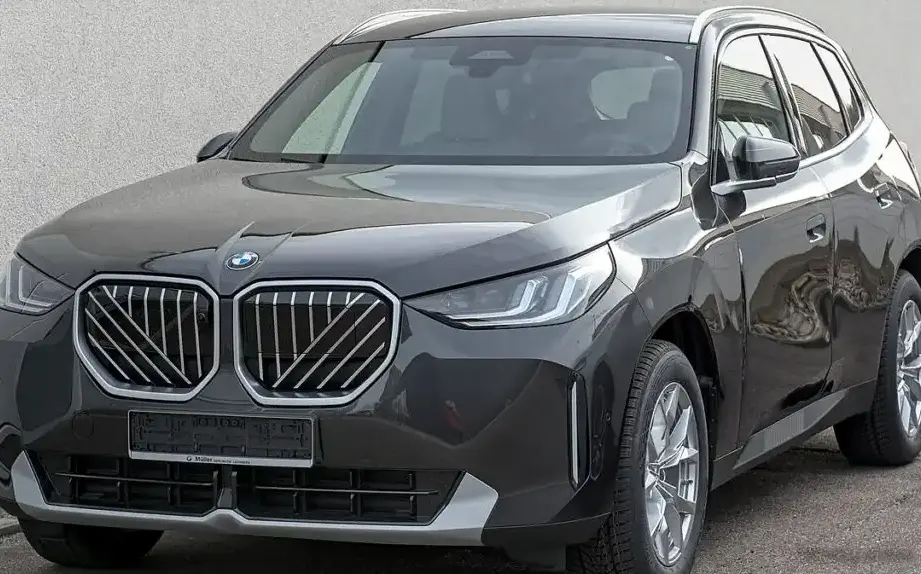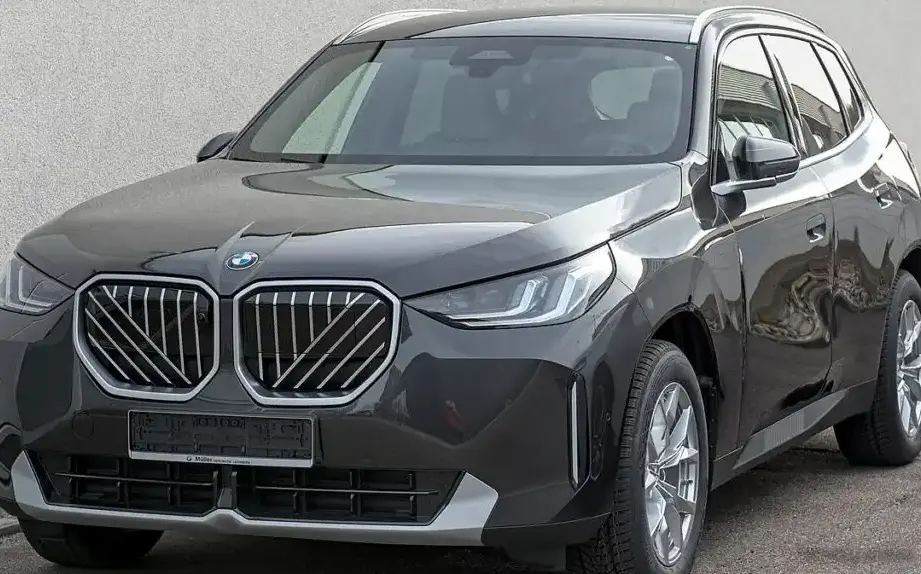
The BMW X3 (E83) facelift, specifically the 3.0sd variant with the Steptronic automatic transmission, was produced from 2006 to 2010. This model represented a significant mid-cycle refresh of the original X3 (introduced in 2003), bringing updated styling, improved interior materials, and enhanced engine options. The 3.0sd occupied a premium position within the E83 lineup, offering a blend of performance, luxury, and practicality aimed at buyers seeking a capable and refined compact SUV. It was positioned above the 2.0d and 2.5i models, and below the range-topping xDrive 3.0si.
Technical Specifications
| Brand | BMW |
| Model | X3 |
| Generation | X3 (E83, facelift 2006) |
| Type (Engine) | 3.0sd (286 Hp) Steptronic |
| Start of production | 2006 |
| End of production | 2010 |
| Powertrain Architecture | Internal Combustion engine |
| Body type | SUV |
| Seats | 5 |
| Doors | 5 |
| Fuel consumption (economy) – urban | 11.3 l/100 km (20.8 US mpg, 25 UK mpg, 8.8 km/l) |
| Fuel consumption (economy) – extra urban | 7.2 l/100 km (32.7 US mpg, 39.2 UK mpg, 13.9 km/l) |
| Fuel consumption (economy) – combined | 8.7 l/100 km (27 US mpg, 32.5 UK mpg, 11.5 km/l) |
| CO2 emissions | 232 g/km |
| Fuel Type | Diesel |
| Acceleration 0 – 100 km/h | 6.6 sec |
| Acceleration 0 – 62 mph | 6.6 sec |
| Acceleration 0 – 60 mph | 6.3 sec |
| Maximum speed | 240 km/h (149.13 mph) |
| Emission standard | Euro 4 |
| Weight-to-power ratio | 6.6 kg/Hp, 152.5 Hp/tonne |
| Weight-to-torque ratio | 3.2 kg/Nm, 309.3 Nm/tonne |
| Power | 286 Hp @ 4400 rpm |
| Power per litre | 95.6 Hp/l |
| Torque | 580 Nm @ 1750-2250 rpm (427.79 lb.-ft. @ 1750-2250 rpm) |
| Engine layout | Front, Longitudinal |
| Engine Model/Code | M57D30 |
| Engine displacement | 2993 cm3 (182.64 cu. in.) |
| Number of cylinders | 6 |
| Engine configuration | Inline |
| Cylinder Bore | 84 mm (3.31 in.) |
| Piston Stroke | 90 mm (3.54 in.) |
| Compression ratio | 17:1 |
| Number of valves per cylinder | 4 |
| Fuel injection system | Diesel Commonrail |
| Engine aspiration | Turbocharger, Intercooler |
| Engine oil capacity | 7.5 l (7.93 US qt | 6.6 UK qt) |
| Kerb Weight | 1875 kg (4133.67 lbs.) |
| Max. weight | 2385 kg (5258.02 lbs.) |
| Max load | 510 kg (1124.36 lbs.) |
| Trunk (boot) space – minimum | 480 l (16.95 cu. ft.) |
| Trunk (boot) space – maximum | 1560 l (55.09 cu. ft.) |
| Fuel tank capacity | 67 l (17.7 US gal | 14.74 UK gal) |
| Max. roof load | 75 kg (165.35 lbs.) |
| Permitted trailer load with brakes (12%) | 2000 kg (4409.25 lbs.) |
| Permitted trailer load without brakes | 750 kg (1653.47 lbs.) |
| Permitted towbar download | 80 kg (176.37 lbs.) |
| Length | 4569 mm (179.88 in.) |
| Width | 1853 mm (72.95 in.) |
| Width including mirrors | 1987 mm (78.23 in.) |
| Height | 1674 mm (65.91 in.) |
| Wheelbase | 2795 mm (110.04 in.) |
| Front track | 1524 mm (60 in.) |
| Rear (Back) track | 1542 mm (60.71 in.) |
| Front overhang | 821 mm (32.32 in.) |
| Rear overhang | 953 mm (37.52 in.) |
| Ride height (ground clearance) | 201 mm (7.91 in.) |
| Drag coefficient (Cd) | 0.35 |
| Minimum turning circle (turning diameter) | 11.7 m (38.39 ft.) |
| Approach angle | 23.9° |
| Departure angle | 21.8° |
| Ramp-over (brakeover) angle | 17.2° |
| Wading depth | 500 mm (19.69 in.) |
| Drive wheel | All wheel drive (4×4) |
| Number of gears and type of gearbox | 6 gears, automatic transmission |
| Front brakes | Ventilated discs |
| Rear brakes | Ventilated discs |
| Assisting systems | ABS (Anti-lock braking system) |
| Steering type | Steering rack and pinion |
| Power steering | Electric Steering |
| Tires size | 235/50 R18 |
| Wheel rims size | 8J x 18 |
Powertrain & Engine Architecture
The heart of the X3 3.0sd was the M57D30, a 3.0-liter inline-six diesel engine. This engine was a mainstay of BMW’s diesel lineup during the early 2000s, known for its robust construction and strong torque output. The ‘D30’ designation refers to its approximate displacement of 3.0 liters. The M57D30 utilized a common rail direct injection system, delivering fuel at extremely high pressure for optimized combustion. A variable geometry turbocharger (VGT) and intercooler further enhanced performance, providing a broad torque curve and minimizing turbo lag. The engine produced 286 horsepower at 4400 rpm and a substantial 580 Nm (427.79 lb-ft) of torque between 1750 and 2250 rpm. The Steptronic automatic transmission was a six-speed unit, offering smooth shifts and the ability to manually select gears.
Driving Characteristics
The X3 3.0sd offered a compelling driving experience. The high torque output of the M57D30 meant strong acceleration, with a 0-60 mph time of around 6.3 seconds. While not a sports car, the X3 felt surprisingly agile for its size and weight. The Steptronic transmission was well-matched to the engine, providing seamless gear changes during normal driving and responsive downshifts when needed. Compared to the 2.0d, the 3.0sd offered significantly more power and a more relaxed driving experience, particularly when fully loaded or towing. It lacked the high-revving excitement of the 3.0si petrol variant, but provided superior fuel economy and a broader usable powerband.
Equipment & Trim Levels
The X3 3.0sd typically came well-equipped, reflecting its position as a premium model. Standard features included leather upholstery, automatic climate control, a multi-function steering wheel, and a BMW Business radio system. Optional extras included navigation, sunroof, heated seats, and upgraded audio systems. The interior design was functional and well-built, although some critics noted the relatively conservative styling compared to rivals. Trim levels varied by market, but generally offered packages that added cosmetic enhancements and additional convenience features.
Chassis & Braking
The X3 E83 featured a MacPherson strut front suspension and a multi-link rear suspension, providing a good balance of ride comfort and handling. The 3.0sd models typically had slightly stiffer springs and dampers compared to lower-powered variants to cope with the increased weight and performance. Braking was handled by ventilated discs all around, providing ample stopping power. Anti-lock brakes (ABS) and electronic stability control (DSC) were standard safety features.
Market Reception & Comparison
The X3 3.0sd was generally well-received by automotive critics. It was praised for its powerful engine, comfortable ride, and practical interior. Fuel economy was considered good for a vehicle of its size and performance, averaging around 27 US mpg in combined driving. Compared to competitors like the Audi Q5 and Volvo XC60 (which arrived later), the X3 offered a more engaging driving experience. However, some critics found the interior styling to be somewhat dated and the infotainment system less intuitive than those offered by rivals.
Legacy
The M57D30 engine proved to be remarkably durable, and well-maintained examples of the X3 3.0sd continue to be reliable vehicles today. However, like any diesel engine, it’s important to be aware of potential issues with the diesel particulate filter (DPF) and fuel injectors. The X3 E83, including the 3.0sd variant, has developed a loyal following among enthusiasts who appreciate its blend of practicality, performance, and BMW driving dynamics. On the used car market, these models typically command a premium compared to lower-powered X3 variants, reflecting their desirability and relative rarity.