Technical Specifications
| Brand | Citroën |
| Model | DS |
| Generation | DS III |
| Type (Engine) | 21 (109 Hp) |
| Start of production | 1967 |
| End of production | 1968 |
| Powertrain Architecture | Internal Combustion engine |
| Body type | Sedan |
| Seats | 5 |
| Doors | 4 |
| Fuel consumption (extra urban) | 10.6 l/100 km (22.2 US mpg, 26.6 UK mpg, 9.4 km/l) |
| Fuel Type | Petrol (Gasoline) |
| Maximum speed | 175 km/h (108.74 mph) |
| Weight-to-power ratio | 11.9 kg/Hp, 84.2 Hp/tonne |
| Weight-to-torque ratio | 7.4 kg/Nm, 134.4 Nm/tonne |
| Power | 109 Hp @ 5500 rpm |
| Power per litre | 50.1 Hp/l |
| Torque | 174 Nm @ 3000 rpm (128.34 lb.-ft. @ 3000 rpm) |
| Engine layout | Front, Longitudinal |
| Engine Model/Code | B22644 |
| Engine displacement | 2175 cm3 (132.73 cu. in.) |
| Number of cylinders | 4 |
| Engine configuration | Inline |
| Cylinder Bore | 90 mm (3.54 in.) |
| Piston Stroke | 85.5 mm (3.37 in.) |
| Compression ratio | 8.75:1 |
| Number of valves per cylinder | 2 |
| Fuel injection system | Carburettor |
| Engine aspiration | Naturally aspirated engine |
| Engine oil capacity | 5 l (5.28 US qt | 4.4 UK qt) |
| Coolant | 11 l (11.62 US qt | 9.68 UK qt) |
| Kerb Weight | 1295 kg (2854.99 lbs.) |
| Max. weight | 1780 kg (3924.23 lbs.) |
| Max load | 485 kg (1069.24 lbs.) |
| Trunk (boot) space – minimum | 500 l (17.66 cu. ft.) |
| Fuel tank capacity | 65 l (17.17 US gal | 14.3 UK gal) |
| Length | 4874 mm (191.89 in.) |
| Width | 1803 mm (70.98 in.) |
| Height | 1470 mm (57.87 in.) |
| Wheelbase | 3125 mm (123.03 in.) |
| Front track | 1500 mm (59.06 in.) |
| Rear (Back) track | 1300 mm (51.18 in.) |
| Front overhang | 1016 mm (40 in.) |
| Rear overhang | 733 mm (28.86 in.) |
| Minimum turning circle (turning diameter) | 11 m (36.09 ft.) |
| Drivetrain Architecture | The Internal combustion engine (ICE) drives the front wheels of the vehicle. |
| Drive wheel | Front wheel drive |
| Number of gears and type of gearbox | 4 gears, manual transmission |
| Front suspension | Hydro-pneumatic element |
| Rear suspension | Hydro-pneumatic element |
| Front brakes | Disc |
| Rear brakes | Drum |
| Steering type | Steering rack and pinion |
| Power steering | Hydraulic Steering |
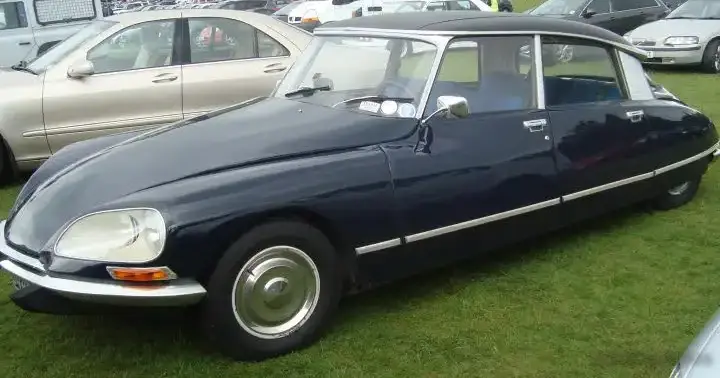
The Citroën DS 21, produced between 1967 and 1968, represented a refinement of the iconic DS series, continuing the legacy of innovative engineering and distinctive styling that had captivated the automotive world since the original DS’s debut in 1955. Positioned as a mid-range offering within the DS lineup, the 21 model bridged the gap between the more accessible ID models and the top-of-the-line Pallas. It was a significant vehicle in the European market, embodying French luxury and technological advancement. This specific variant, equipped with a 2.2-liter four-cylinder engine producing 109 horsepower, offered a balance of performance and refinement for discerning buyers. The DS range, including the 21, was manufactured at Citroën’s facilities in France and sold primarily throughout Europe.
Powertrain & Engine Architecture
The Citroën DS 21 utilized the B22644 engine, a 2175 cc inline four-cylinder petrol engine. This engine featured a cast iron block and an aluminum cylinder head, a common configuration for the era. It employed a single overhead camshaft (SOHC) valvetrain with two valves per cylinder. Fuel delivery was managed by a Solex carburetor, a typical setup for European cars of the 1960s. The engine’s longitudinal front-engine layout contributed to the DS’s balanced handling characteristics. The four-speed manual transmission was standard, providing a relatively direct connection between the engine and the front wheels. The engine’s 8.75:1 compression ratio was a compromise between performance and the fuel quality available at the time.
Driving Characteristics
The DS 21, with its 109 horsepower and 174 Nm (128 lb-ft) of torque, offered a comfortable and refined driving experience. While not overtly sporty, it provided adequate acceleration for highway cruising and overtaking. The four-speed manual transmission allowed for precise control, but the gear ratios were geared towards relaxed touring rather than aggressive performance. Compared to the more powerful DS 23, the 21 felt less urgent in its acceleration, but it also offered improved fuel economy. The DS’s signature hydropneumatic suspension system provided an exceptionally smooth ride, absorbing bumps and imperfections in the road with remarkable ease. This, combined with the power steering, made the DS 21 a remarkably easy car to drive, even on long journeys.
Equipment & Trim Levels
The DS 21 was well-equipped for its time, offering a level of luxury and convenience that was uncommon in many contemporary vehicles. Standard features included comfortable seating upholstered in fabric or leather (optional), a comprehensive instrument panel, and hydraulic disc brakes on the front wheels. The DS’s interior was known for its spaciousness and ergonomic design. Optional extras included a sunroof, air conditioning, and upgraded audio systems. The DS 21 occupied a middle ground in the DS lineup; it wasn’t as lavishly appointed as the Pallas model, but it offered more features and a higher level of refinement than the basic ID models.
Chassis & Braking
The DS 21’s chassis was a monocoque construction, providing a strong and rigid platform. The most notable feature of the chassis was, of course, the hydropneumatic suspension system. This system utilized pressurized fluid and nitrogen gas to provide a self-leveling and exceptionally comfortable ride. The front suspension employed independent hydropneumatic elements, while the rear suspension also utilized hydropneumatic elements, offering a similar level of comfort and control. Braking was provided by hydraulic disc brakes on the front wheels and drum brakes on the rear. The hydraulic braking system was linked to the hydropneumatic suspension, providing effective and consistent stopping power.
Market Reception & Comparison
The Citroën DS 21 was generally well-received by automotive critics and buyers alike. It was praised for its innovative technology, comfortable ride, and distinctive styling. However, some critics noted that the engine, while adequate, lacked the outright performance of some of its competitors. Compared to the DS 23, the 21 offered a more affordable entry point into the DS range, making it accessible to a wider range of buyers. Its fuel economy was also slightly better than the 23. Compared to other luxury cars of the era, such as the Mercedes-Benz “Fintail” models, the DS 21 offered a more avant-garde and technologically advanced package, albeit with a reputation for potentially complex maintenance.
Legacy
The Citroën DS 21, and the DS series as a whole, remains a highly regarded and collectible classic car. The hydropneumatic suspension system, in particular, is considered a landmark achievement in automotive engineering. While the DS’s complex systems can require specialized knowledge to maintain, the cars are generally durable and reliable when properly cared for. Today, the DS 21 is sought after by enthusiasts who appreciate its unique blend of style, innovation, and comfort. The availability of spare parts can be a challenge, but a dedicated network of suppliers and enthusiasts helps to keep these iconic cars on the road. The DS 21 stands as a testament to Citroën’s commitment to pushing the boundaries of automotive design and engineering.