Technical Specifications
| Brand | Ford |
| Model | Fiesta |
| Generation | Fiesta I (Mk1) |
| Type (Engine) | 0.9 (40 Hp) |
| Start of Production | 1976 |
| End of Production | 1983 |
| Powertrain Architecture | Internal Combustion Engine |
| Body Type | Hatchback |
| Fuel Type | Petrol (Gasoline) |
| Power | 40 Hp |
| Engine Aspiration | Naturally Aspirated |
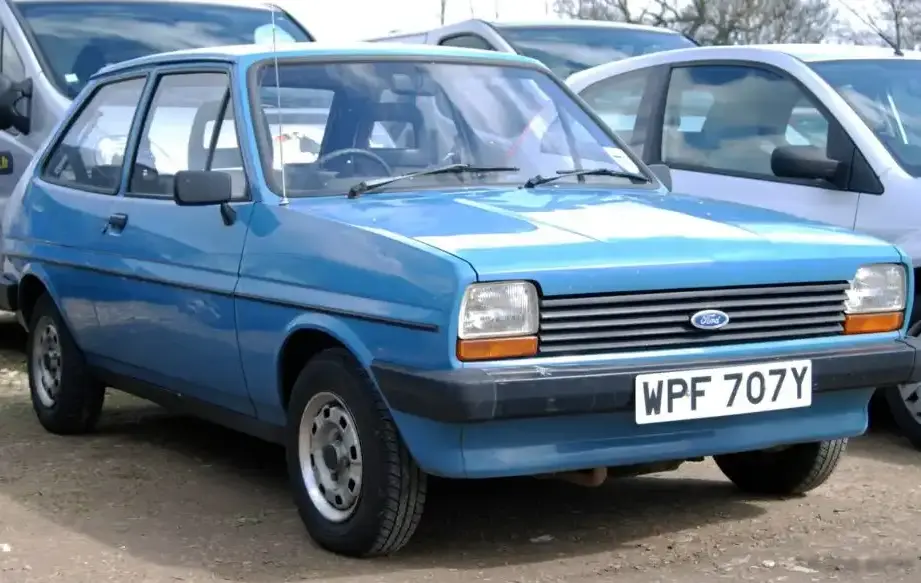
The Ford Fiesta Mk1, produced from 1976 to 1983, marked Ford of Europe’s entry into the burgeoning supermini segment. Developed in response to the success of competitors like the Fiat 127 and Renault 5, the Fiesta was a completely new design, not a derivative of an existing model. The 0.9-liter (40 horsepower) variant, introduced at launch, served as the foundational model for the Fiesta range, aiming to provide affordable and economical transportation to a wide customer base. This initial engine and configuration was crucial in establishing the Fiesta’s reputation for practicality and value, particularly in the European market where fuel efficiency and compact size were highly valued. It directly competed with vehicles like the Citroen 2CV and other basic, economical city cars.
Powertrain & Engine Architecture
The base-model Fiesta Mk1 was powered by a 957cc, inline-four cylinder engine, internally designated as the 100E. While simple in design, this engine was robust and relatively easy to maintain. It featured a single overhead camshaft operating two valves per cylinder. Fuel delivery was handled by a single, down-draft carburetor – typically a Ford 32 DFEV – common for cars in this price range during the 1970s. The engine’s modest 40 horsepower output at 6000 rpm and 58 lb-ft of torque at 3000 rpm were achieved with a low compression ratio of 8.8:1, prioritizing fuel economy and reliability over performance. The engine block was constructed from cast iron, contributing to its durability. The standard transmission paired with this engine was a four-speed manual gearbox, chosen for its simplicity and cost-effectiveness. While an automatic transmission was later offered on higher-spec Fiesta models, it was not available with the 0.9-liter engine.
Driving Characteristics
The 0.9-liter Fiesta Mk1 offered a decidedly unhurried driving experience. Acceleration was modest, taking approximately 18 seconds to reach 60 mph, and top speed was around 85 mph. However, the car’s light weight (around 1,500 lbs) and nimble handling made it surprisingly enjoyable to drive around town. The four-speed gearbox had relatively long gearing, emphasizing fuel economy. The steering was light and precise, making parking and maneuvering in tight spaces easy. Compared to the later 1.1-liter and 1.3-liter Fiesta variants, the 0.9-liter model felt noticeably slower, especially when carrying passengers or luggage. The manual transmission required a deliberate shift action, and the engine needed to be revved to extract maximum performance. Hill starts could be challenging, requiring careful clutch control to avoid stalling.
Equipment & Trim Levels
The base-model 0.9-liter Fiesta was deliberately spartan in its equipment levels, reflecting its position as the entry point to the Fiesta range. Standard features were minimal, typically including cloth upholstery, vinyl floor covering, and basic instrumentation consisting of a speedometer and fuel gauge. The dashboard was constructed from durable plastic and featured minimal ornamentation. Optional extras included a heater, a radio, and upgraded seat trim. The Fiesta’s interior was designed for practicality and ease of cleaning, rather than luxury. Early models featured a simple, two-spoke steering wheel, which was later replaced by a more modern three-spoke design. Exterior trim was equally basic, with black plastic bumpers and steel wheels with hubcaps being standard.
Chassis & Braking
The Fiesta Mk1 utilized a front-wheel-drive layout with an independent MacPherson strut suspension at the front and a twist-beam axle with trailing arms at the rear. This suspension setup provided a reasonable balance between ride comfort and handling. The steering was rack and pinion, contributing to the car’s precise steering feel. Braking was initially provided by front disc brakes and rear drum brakes. Later models saw the introduction of larger diameter brakes for improved stopping power. The car’s relatively light weight helped to compensate for the limited braking performance. Stabilizer bars were not fitted to the base-model 0.9-liter Fiesta, further emphasizing its focus on affordability. Tire size was typically 155/80R13.
Market Reception & Comparison
The 0.9-liter Fiesta Mk1 was generally well-received by critics and buyers. It was praised for its fuel economy, practicality, and affordability. However, its modest performance was often criticized, particularly by those accustomed to larger, more powerful cars. Compared to the 1.1-liter and 1.3-liter Fiesta variants, the 0.9-liter model offered significantly lower performance but also lower running costs. The 1.1-liter offered a noticeable improvement in acceleration and overall drivability, while the 1.3-liter provided a more refined driving experience. The 0.9-liter Fiesta was particularly popular with first-time car buyers, city dwellers, and those seeking a reliable and economical runabout. Its fuel consumption was a key selling point during the fuel crises of the 1970s.
Legacy
The 0.9-liter Fiesta Mk1, while the least powerful variant, played a vital role in establishing the Fiesta as a successful and popular supermini. The engine proved to be remarkably durable and reliable, and many examples are still on the road today. The simplicity of the engine and its mechanical components makes it relatively easy to maintain and repair, even by amateur mechanics. In the used car market, the 0.9-liter Fiesta Mk1 is often sought after by enthusiasts looking for a classic and affordable Ford. Its value has been steadily increasing in recent years, reflecting its growing popularity as a collectible car. While not a performance icon, the 0.9-liter Fiesta Mk1 represents a significant chapter in Ford’s history and a testament to the enduring appeal of simple, practical, and reliable transportation.