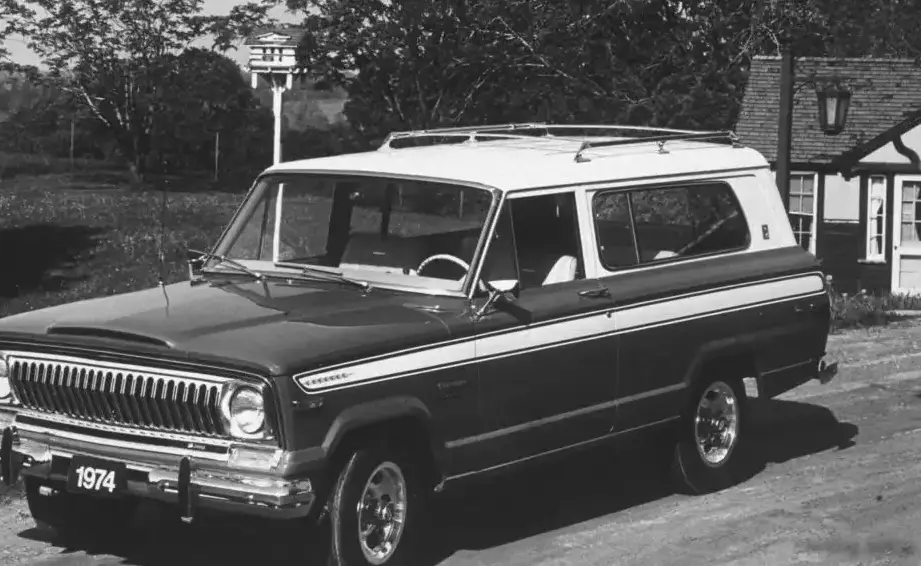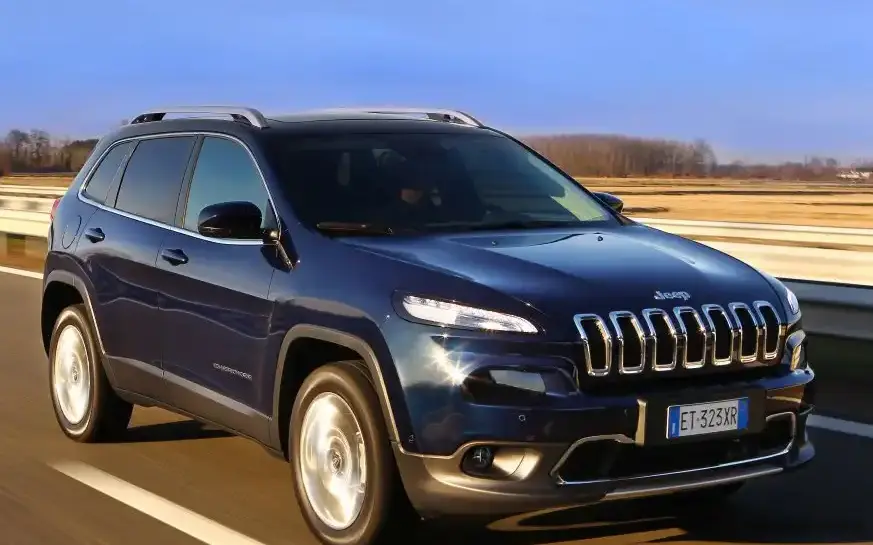
The Jeep Cherokee (KL) 2.4 MultiAir2 TIGERSHARK 4WD Automatic represents a significant entry point into the fifth generation of the Cherokee, produced from 2013 to 2017. This variant aimed to balance fuel efficiency with Jeep’s renowned four-wheel-drive capability, targeting a broader customer base than previous, more rugged iterations. Positioned as a mid-range offering, it slotted below the more powerful 3.2L V6 models and served as an alternative to the base 2.4L engine without the MultiAir technology. The KL Cherokee marked a shift for the model, moving from a body-on-frame construction to a unibody platform, enhancing on-road comfort and handling.
Technical Specifications
| Brand | Jeep |
| Model | Cherokee |
| Generation | Cherokee V (KL) |
| Type | 2.4 MultiAir2 TIGERSHARK (184 Hp) 4WD Automatic |
| Start of production | 2013 |
| End of production | 2017 |
| Powertrain Architecture | Internal Combustion engine |
| Body type | SUV |
| Seats | 5 |
| Doors | 5 |
| Fuel consumption (urban) | 11.2 l/100 km (21 US mpg) |
| Fuel consumption (extra urban) | 8.4-8.7 l/100 km (28-27 US mpg) |
| Fuel consumption (combined) | 9.8-10.2 l/100 km (24-23.1 US mpg) |
| Fuel Type | Petrol (Gasoline) |
| Emission standard | LEV II |
| Weight-to-power ratio | 9.7 kg/Hp |
| Weight-to-torque ratio | 7.6 kg/Nm |
| Power | 184 Hp @ 6400 rpm |
| Torque | 234 Nm @ 4600 rpm (172.59 lb.-ft. @ 4600 rpm) |
| Maximum engine speed | 6500 rpm |
| Engine layout | Front, Transverse |
| Engine Model/Code | ED6 |
| Engine displacement | 2360 cm3 (144.02 cu. in.) |
| Number of cylinders | 4 |
| Engine configuration | Inline |
| Cylinder Bore | 88 mm (3.46 in.) |
| Piston Stroke | 97 mm (3.82 in.) |
| Compression ratio | 10:1 |
| Number of valves per cylinder | 4 |
| Fuel injection system | Multi-port manifold injection |
| Engine aspiration | Naturally aspirated engine |
| Valvetrain | SOHC, MultiAir |
| Engine oil capacity | 5.2 l (5.49 US qt | 4.58 UK qt) |
| Coolant capacity | 6.7 l (7.08 US qt | 5.9 UK qt) |
| Kerb Weight | 1788-1793 kg (3941.87 – 3952.89 lbs.) |
| Max. weight | 2495 kg (5500.53 lbs.) |
| Max load | 702-707 kg (1547.65 – 1558.67 lbs.) |
| Trunk (boot) space – minimum | 700 l (24.72 cu. ft.) |
| Trunk (boot) space – maximum | 1667 l (58.87 cu. ft.) |
| Fuel tank capacity | 60 l (15.85 US gal | 13.2 UK gal) |
| Length | 4624 mm (182.05 in.) |
| Width | 1859 mm (73.19 in.) |
| Height | 1683-1710 mm (66.26 – 67.32 in.) |
| Wheelbase | 2700 mm (106.3 in.) |
| Front track | 1580-1593 mm (62.2 – 62.72 in.) |
| Rear track | 1573-1594 mm (61.93 – 62.76 in.) |
| Minimum turning circle | 11.5-11.6 m (37.73 – 38.06 ft.) |
| Drivetrain Architecture | All wheel drive (4×4) |
| Number of gears | 9 |
| Gearbox type | Automatic transmission |
| Front suspension | Independent, McPherson with coil spring and anti-roll bar |
| Rear suspension | Independent multi-link spring suspension with stabilizer |
| Front brakes | Ventilated discs, 330×28 mm |
| Rear brakes | Disc, 278×12 mm |
| Tires size | 225/60 R17; 225/65 R17; 225/55 R18; 225/60 R18 |
| Wheel rims size | 7J x 17; 7J x 18 |
Powertrain & Engine Architecture
The heart of this Cherokee variant is the 2.4-liter “Tigershark” inline-four engine, designated ED6. This engine utilizes Fiat’s MultiAir2 technology, an electro-hydraulic valve actuation system. MultiAir2 allows for independent control of intake valve timing and lift, optimizing combustion efficiency and reducing emissions. The system replaces traditional camshafts with electro-hydraulic actuators, enabling variable valve timing and lift on demand. Fuel delivery is managed by a multi-port fuel injection system. The engine produces 184 horsepower at 6400 rpm and 234 Nm (172.59 lb-ft) of torque at 4600 rpm. Paired with this engine is a ZF-sourced 9-speed automatic transmission. This transmission was a key feature of the KL Cherokee, offering a wide gear ratio spread for improved fuel economy and performance. The 9-speed’s close ratios help keep the engine in its optimal power band.
Driving Characteristics
The 2.4L MultiAir2 with the 9-speed automatic delivers adequate, but not exhilarating, performance. Acceleration is reasonable for everyday driving, but the engine can feel strained when climbing hills or during quick overtaking maneuvers. The 9-speed transmission generally shifts smoothly, but some drivers have reported occasional hesitation or hunting for the right gear, particularly at lower speeds. The wide gear ratio spread contributes to good fuel economy, but it also means the engine is often operating at lower rpm, which can diminish responsiveness. Compared to the V6 models, this variant offers a more fuel-efficient and affordable option, but at the expense of outright power and towing capacity. The automatic transmission, while technologically advanced, doesn’t offer the same level of driver engagement as a manual transmission.
Equipment & Trim Levels
The 2.4L MultiAir2 4WD Automatic Cherokee typically came standard with features like air conditioning, power windows and locks, a touchscreen infotainment system with Bluetooth connectivity, and a rearview camera. Higher trim levels, such as the Limited, added features like leather upholstery, heated front seats, a power liftgate, and advanced safety technologies like blind-spot monitoring and rear cross-path detection. Optional extras included a panoramic sunroof, navigation system, and premium audio system. Interior upholstery was typically cloth on lower trims, upgrading to leather on higher-end models. The dashboard layout was generally straightforward and functional, with a focus on ease of use.
Chassis & Braking
The KL Cherokee utilizes a fully independent suspension system, with a McPherson strut setup at the front and a multi-link setup at the rear. This suspension design provides a comfortable ride quality, even on rough roads. Stabilizer bars are included at both ends to reduce body roll during cornering. Braking duties are handled by ventilated discs at the front and solid discs at the rear. The Cherokee is equipped with an Anti-lock Braking System (ABS) as standard. Steering is provided by an electric power steering system, offering light and precise control. Tire sizes varied depending on the trim level, ranging from 225/60 R17 to 225/55 R18.
Market Reception & Comparison
The 2.4L MultiAir2 Cherokee received mixed reviews. Critics praised its fuel efficiency and comfortable ride, but some found the engine underpowered, especially when paired with the vehicle’s weight and the demands of four-wheel drive. Compared to the V6 models, the 2.4L offered a more affordable entry point into the Cherokee lineup, but it lacked the V6’s performance and towing capacity. Fuel economy was a key selling point, with the 2.4L consistently achieving better MPG figures than the V6. Reliability has been a concern for some owners, with reports of issues related to the MultiAir system and the 9-speed transmission. However, many owners have reported years of trouble-free operation.
Legacy
The Jeep Cherokee KL 2.4L MultiAir2 4WD Automatic represents a transitional period for the Cherokee, moving it towards a more modern and fuel-efficient platform. While the MultiAir system and 9-speed transmission have had their share of reported issues, the powertrain remains relatively common in the used car market. These Cherokees offer a good value proposition for buyers seeking a capable and comfortable SUV with reasonable fuel economy. However, potential buyers should be aware of the potential for MultiAir system and transmission issues and factor those into their purchase decision. The KL Cherokee helped to broaden the appeal of the Cherokee nameplate, attracting a wider range of customers than previous generations.