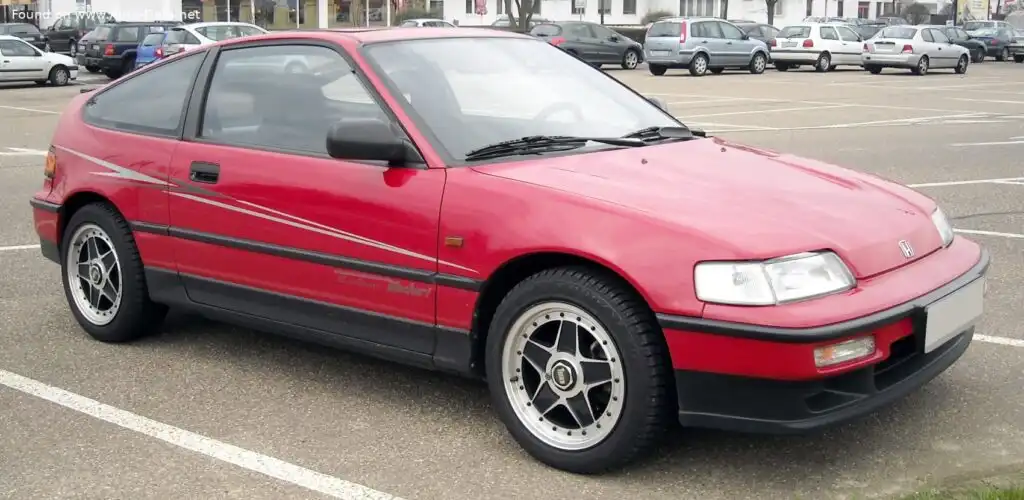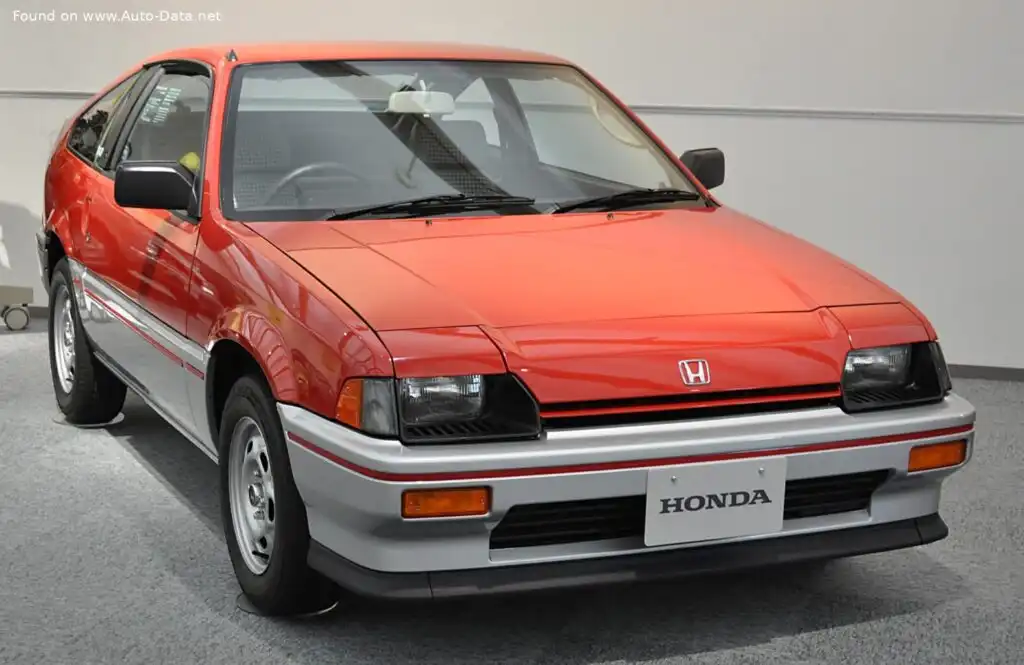
The Honda CRX 1.3, produced between 1983 and 1987 as part of the first-generation CRX (AF/AS chassis), represented the entry point into Honda’s sporty compact coupe lineup. Positioned below the 1.5L and later 1.6L variants, the 1.3L model aimed for affordability and fuel efficiency, appealing to a broader market segment than its higher-performance siblings. The CRX, overall, was Honda’s response to rising fuel costs and a desire for a fun-to-drive, economical vehicle, and quickly gained popularity for its lightweight design and nimble handling. This initial CRX generation laid the foundation for a successful line of sporty compact cars that would continue for two more generations.
Technical Specifications
| Brand | Honda |
| Model | CRX |
| Generation | CRX I (AF, AS) |
| Type (Engine) | 1.3 (71 Hp) |
| Start of Production | 1983 |
| End of Production | 1987 |
| Powertrain Architecture | Internal Combustion Engine |
| Body Type | Liftback |
| Fuel Type | Petrol (Gasoline) |
| Power | 71 Hp |
| Engine Aspiration | Naturally Aspirated |
| Engine Code | A13 |
| Displacement | 1.3 Liters (1299 cc) |
| Cylinders | 4 |
| Valves per Cylinder | 2 |
| Fuel System | Carbureted |
| Transmission | 4-Speed Automatic (Optional 5-Speed Manual) |
| Weight (approx.) | 1,850 lbs (840 kg) |
| Top Speed (approx.) | 95 mph (153 km/h) |
| 0-60 mph (approx.) | 12.5 seconds |
Powertrain & Engine Architecture
The CRX 1.3 was powered by Honda’s A13 engine, a 1.3-liter, inline-four cylinder engine. This engine utilized a single overhead camshaft (SOHC) design with two valves per cylinder. Crucially, the 1983-1985 models were equipped with a carburetor, specifically a Hitachi unit, for fuel delivery. This was a cost-saving measure compared to the fuel injection systems found in the higher-spec CRX models. Later models (1986-1987) saw a transition to electronic fuel injection (EFI) in some markets, though the carburetor remained available. The A13 produced 71 horsepower at 6,000 rpm and 79 lb-ft of torque at 4,500 rpm. The engine was known for its reliability and relatively simple maintenance requirements. The automatic transmission offered was a four-speed unit, designed for smooth operation and fuel economy rather than outright performance. A five-speed manual transmission was also available, offering a more engaging driving experience and slightly improved performance.
Driving Characteristics
The 1.3L CRX with the automatic transmission delivered a comfortable, if not particularly exhilarating, driving experience. The automatic transmission’s gear ratios were geared towards fuel efficiency, resulting in relatively slow acceleration. The 0-60 mph time of around 12.5 seconds reflects this focus. However, the CRX’s lightweight construction (approximately 1,850 lbs) meant that it felt nimble and responsive in city driving and on winding roads. Compared to the 1.5L and 1.6L CRX models, the 1.3L automatic was noticeably slower, particularly in highway passing situations. The manual transmission version of the 1.3L offered a more spirited drive, allowing the driver to better utilize the engine’s limited power band. Steering was precise and well-weighted, contributing to the car’s overall fun-to-drive character. The suspension, while simple, provided a comfortable ride without excessive body roll.
Equipment & Trim Levels
The CRX 1.3 was typically the base model, and as such, came with a relatively sparse equipment list. Standard features generally included cloth upholstery, a basic AM/FM radio, and manual windows and locks. Air conditioning was often an optional extra. The interior design was functional and straightforward, prioritizing practicality over luxury. Dashboard configuration was simple, with clearly marked gauges for speed, fuel level, and coolant temperature. Optional extras included upgraded sound systems, power windows, and a sunroof. The trim level was generally consistent across the production run, with minor cosmetic variations depending on the market. The focus was on providing an affordable and reliable vehicle with essential features.
Chassis & Braking
The CRX utilized a front-engine, front-wheel-drive layout. The suspension consisted of independent MacPherson struts at the front and a torsion beam rear suspension. This setup provided a good balance between ride comfort and handling. Braking on the CRX 1.3 typically consisted of disc brakes at the front and drum brakes at the rear. This was a cost-saving measure, as the higher-spec models featured disc brakes all around. The braking system was adequate for the car’s weight and performance, but lacked the stopping power of more advanced systems. The chassis was lightweight and rigid, contributing to the car’s nimble handling characteristics. A stabilizer bar was included at the front to reduce body roll during cornering.
Market Reception & Comparison
The CRX 1.3 was well-received as an affordable and fuel-efficient entry into the sporty coupe market. Critics praised its handling and lightweight design, but noted its lack of outright power. Compared to the 1.5L and 1.6L CRX models, the 1.3L offered significantly less performance, but at a lower price point. Fuel economy was a major selling point, with the 1.3L CRX achieving around 35-40 mpg in real-world driving. Reliability was also highly regarded, with the A13 engine proving to be durable and long-lasting. The automatic transmission, while smooth, was often criticized for detracting from the driving experience. The 1.3L CRX appealed to buyers who prioritized fuel economy and affordability over performance, while the higher-spec models attracted enthusiasts seeking a more engaging driving experience.
Legacy
The Honda CRX 1.3, despite being the entry-level variant, played a crucial role in establishing the CRX as a popular and influential vehicle. The A13 engine, while not particularly powerful, proved to be remarkably reliable, and many examples are still on the road today. The CRX’s lightweight design and nimble handling set a benchmark for sporty compact cars. In the used car market, the CRX 1.3 remains a relatively affordable option for those seeking a classic Honda with a reputation for reliability. While not as sought-after as the higher-spec models, the 1.3L CRX offers a unique blend of affordability, fuel efficiency, and Honda’s renowned build quality. Its simplicity makes it a relatively easy car to maintain and repair, appealing to DIY mechanics and enthusiasts alike. The CRX, in all its forms, left a lasting impact on the automotive landscape, influencing the design and development of future sporty compact cars.