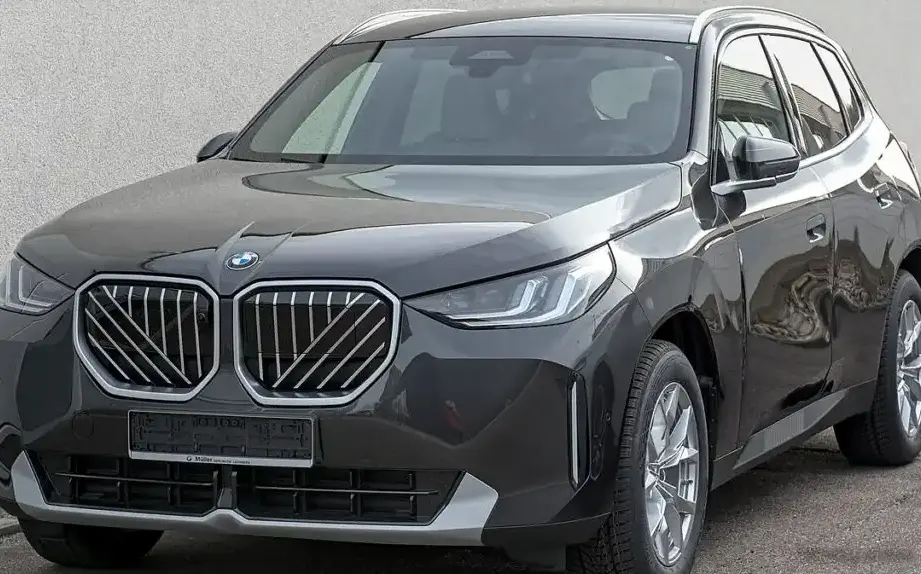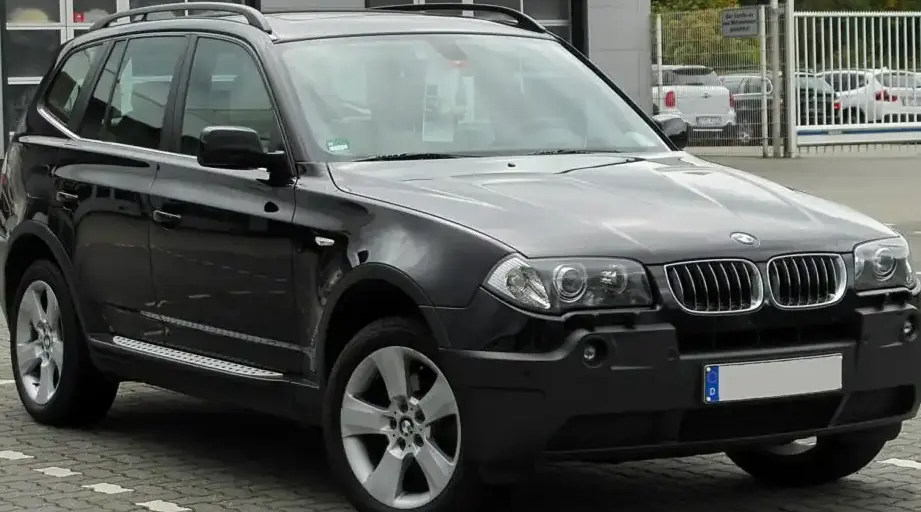
The BMW X3 (E83) 30d xDrive Steptronic, produced from 2008 to 2010, represents a significant offering within the first generation of BMW’s compact luxury SUV. This variant, part of the E83 facelift introduced in 2006, aimed to provide a balance of performance, efficiency, and practicality for the European market, though limited numbers were also available in other regions. Positioned as a mid-range trim, the 30d slotted above the entry-level 2.0d models and below the higher-performance 3.0si gasoline variant. It catered to buyers seeking the prestige of the BMW brand combined with the fuel economy and torque characteristics of a modern diesel engine, paired with the convenience of an automatic transmission.
Technical Specifications
| Brand | BMW |
| Model | X3 |
| Generation | X3 (E83, facelift 2006) |
| Type (Engine) | 30d (218 Hp) xDrive Steptronic |
| Start of production | 2008 |
| End of production | 2010 |
| Powertrain Architecture | Internal Combustion engine |
| Body type | SUV |
| Seats | 5 |
| Doors | 5 |
| Fuel consumption (urban) | 9.9 l/100 km (23.8 US mpg, 28.5 UK mpg, 10.1 km/l) |
| Fuel consumption (extra urban) | 6.4 l/100 km (36.8 US mpg, 44.1 UK mpg, 15.6 km/l) |
| Fuel consumption (combined) | 7.7 l/100 km (30.5 US mpg, 36.7 UK mpg, 13 km/l) |
| CO2 emissions | 206 g/km |
| Fuel Type | Diesel |
| Acceleration 0 – 100 km/h | 7.7 sec |
| Acceleration 0 – 62 mph | 7.7 sec |
| Acceleration 0 – 60 mph | 7.3 sec |
| Maximum speed | 220 km/h (136.7 mph) |
| Emission standard | Euro 4 |
| Weight-to-power ratio | 8.3 kg/Hp, 120.8 Hp/tonne |
| Weight-to-torque ratio | 3.6 kg/Nm, 277 Nm/tonne |
| Power | 218 Hp @ 4000 rpm |
| Torque | 500 Nm @ 1750-2750 rpm (368.78 lb.-ft. @ 1750-2750 rpm) |
| Engine layout | Front, Longitudinal |
| Engine Model/Code | M57D30 |
| Engine displacement | 2993 cm3 (182.64 cu. in.) |
| Number of cylinders | 6 |
| Engine configuration | Inline |
| Cylinder Bore | 84 mm (3.31 in.) |
| Piston Stroke | 90 mm (3.54 in.) |
| Compression ratio | 17:1 |
| Number of valves per cylinder | 4 |
| Fuel injection system | Diesel Commonrail |
| Engine aspiration | Turbocharger, Intercooler |
| Engine oil capacity | 7.5 l (7.93 US qt | 6.6 UK qt) |
| Coolant | 10.4 l (10.99 US qt | 9.15 UK qt) |
| Kerb Weight | 1805 kg (3979.34 lbs.) |
| Max. weight | 2355 kg (5191.89 lbs.) |
| Max load | 550 kg (1212.54 lbs.) |
| Trunk (boot) space – minimum | 480 l (16.95 cu. ft.) |
| Trunk (boot) space – maximum | 1560 l (55.09 cu. ft.) |
| Fuel tank capacity | 67 l (17.7 US gal | 14.74 UK gal) |
| Max. roof load | 75 kg (165.35 lbs.) |
| Permitted trailer load with brakes (12%) | 2000 kg (4409.25 lbs.) |
| Permitted trailer load without brakes | 750 kg (1653.47 lbs.) |
| Permitted towbar download | 80 kg (176.37 lbs.) |
| Length | 4569 mm (179.88 in.) |
| Width | 1853 mm (72.95 in.) |
| Height | 1674 mm (65.91 in.) |
| Wheelbase | 2795 mm (110.04 in.) |
| Front track | 1524 mm (60 in.) |
| Rear (Back) track | 1542 mm (60.71 in.) |
| Ride height (ground clearance) | 201 mm (7.91 in.) |
| Drag coefficient (Cd) | 0.34 |
| Minimum turning circle (turning diameter) | 11.7 m (38.39 ft.) |
| Approach angle | 23.9° |
| Departure angle | 21.8° |
| Ramp-over (brakeover) angle | 17.2° |
| Wading depth | 500 mm (19.69 in.) |
| Drive wheel | All wheel drive (4×4) |
| Number of gears and type of gearbox | 6 gears, automatic transmission |
| Front brakes | Ventilated discs |
| Rear brakes | Ventilated discs |
| Assisting systems | ABS (Anti-lock braking system) |
| Steering type | Steering rack and pinion |
| Power steering | Electric Steering |
| Tires size | 235/55 R17 |
| Wheel rims size | 8J x 17 |
Powertrain & Engine Architecture
The heart of the X3 30d is the M57D30, a 3.0-liter inline-six diesel engine. This engine, a mainstay of BMW’s diesel lineup during the 2000s, is renowned for its robust construction and strong torque output. The ‘D30’ designation indicates a displacement of 3.0 liters. The M57D30 utilizes a common rail direct injection system, delivering fuel at extremely high pressure for optimized combustion. A variable geometry turbocharger (VGT) with an intercooler further enhances performance by increasing air intake and reducing intake temperatures. The engine features four valves per cylinder and a cast iron block, contributing to its durability. Paired with the engine is a six-speed automatic transmission (Steptronic), offering smooth gear changes and a degree of driver control through manual shift modes. This transmission was specifically tuned to handle the high torque output of the diesel engine.
Driving Characteristics
The X3 30d xDrive Steptronic delivers a distinctly different driving experience compared to its gasoline-powered siblings. The 500 Nm (368 lb-ft) of torque, available from a low 1750 rpm, provides strong acceleration and effortless overtaking capability. While not as outright quick as the 3.0si, the 30d excels in providing usable power across a wider range of engine speeds. The automatic transmission, while smooth, can feel slightly less responsive than the manual transmissions offered in other X3 variants. The xDrive all-wheel-drive system provides excellent traction in various conditions, enhancing stability and confidence. The gear ratios are optimized for fuel efficiency and relaxed cruising, rather than outright performance.
Equipment & Trim Levels
The X3 30d xDrive Steptronic typically came equipped with a respectable level of standard features. These included automatic climate control, power windows and mirrors, a multi-function steering wheel, and a basic audio system. Upholstery was generally cloth, though leather options were available. Optional extras included a premium sound system, navigation system, sunroof, and parking sensors. The trim level could be further enhanced with packages offering combinations of these features. The interior design was typical BMW of the era, focusing on functionality and a driver-centric layout.
Chassis & Braking
The E83 X3 utilizes a MacPherson strut front suspension and a multi-link rear suspension, providing a comfortable ride and good handling characteristics. The 30d variant, being a mid-range model, generally featured slightly thicker stabilizer bars compared to the base 2.0d models, improving body control. Braking duties are handled by ventilated disc brakes on all four wheels, providing ample stopping power. The ABS (Anti-lock Braking System) is standard, enhancing safety during emergency braking situations. The xDrive system actively distributes torque between the front and rear axles, optimizing traction and stability.
Market Reception & Comparison
The X3 30d was generally well-received by automotive critics. It was praised for its strong diesel engine, comfortable ride, and practical interior. However, some reviewers noted that the automatic transmission could feel slightly sluggish at times. Compared to the 2.0d models, the 30d offered a significant performance upgrade, while remaining more fuel-efficient than the 3.0si. Against competitors like the Audi Q5 and Volvo XC60 (which arrived later), the X3 30d held its own in terms of performance and refinement. Fuel economy was a key selling point, offering a substantial improvement over comparable gasoline-powered SUVs.
Legacy
The M57D30 engine, found in the X3 30d, has proven to be remarkably durable and reliable when properly maintained. While diesel engines generally require more diligent maintenance than their gasoline counterparts, the M57D30 is known for its longevity. Today, well-maintained examples of the X3 30d can still be found on the used car market, offering a relatively affordable entry point into BMW ownership. Common issues include wear and tear on the turbocharger and potential problems with the glow plugs. However, these are generally addressable with routine maintenance and repairs. The X3 30d remains a popular choice for those seeking a practical, comfortable, and fuel-efficient luxury SUV.