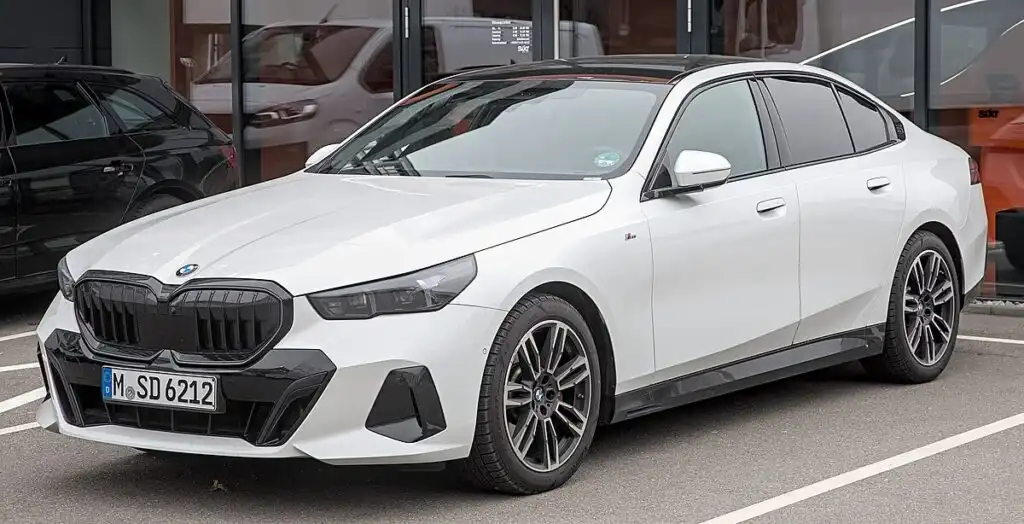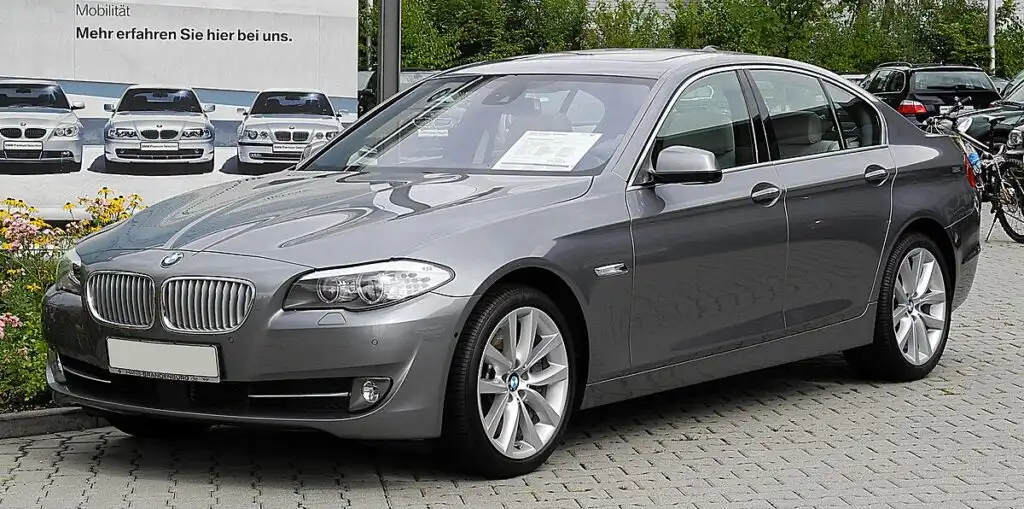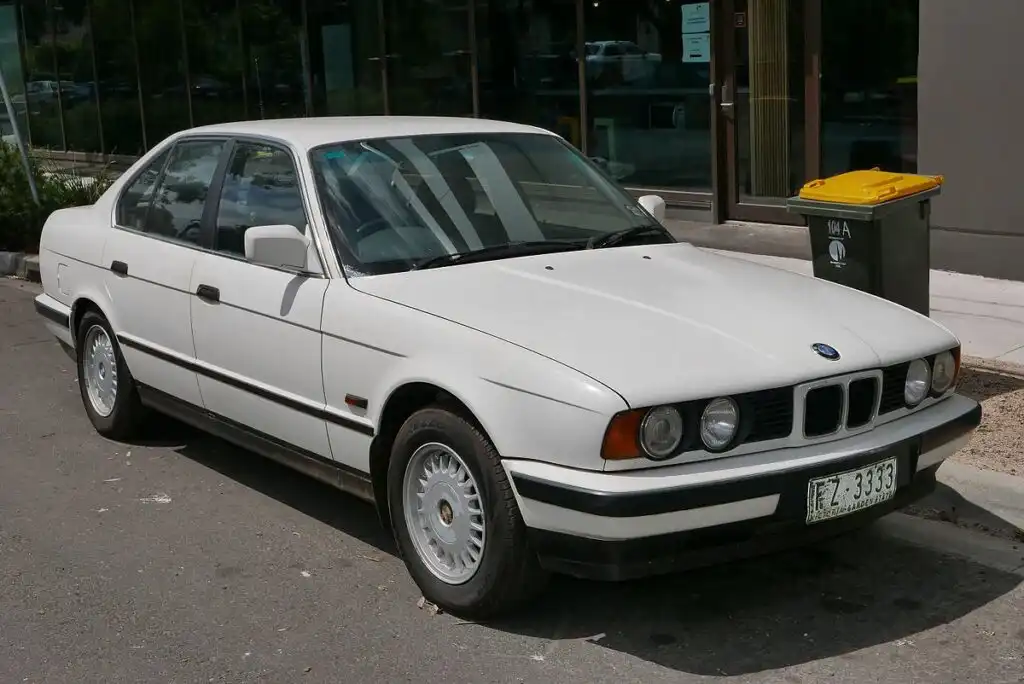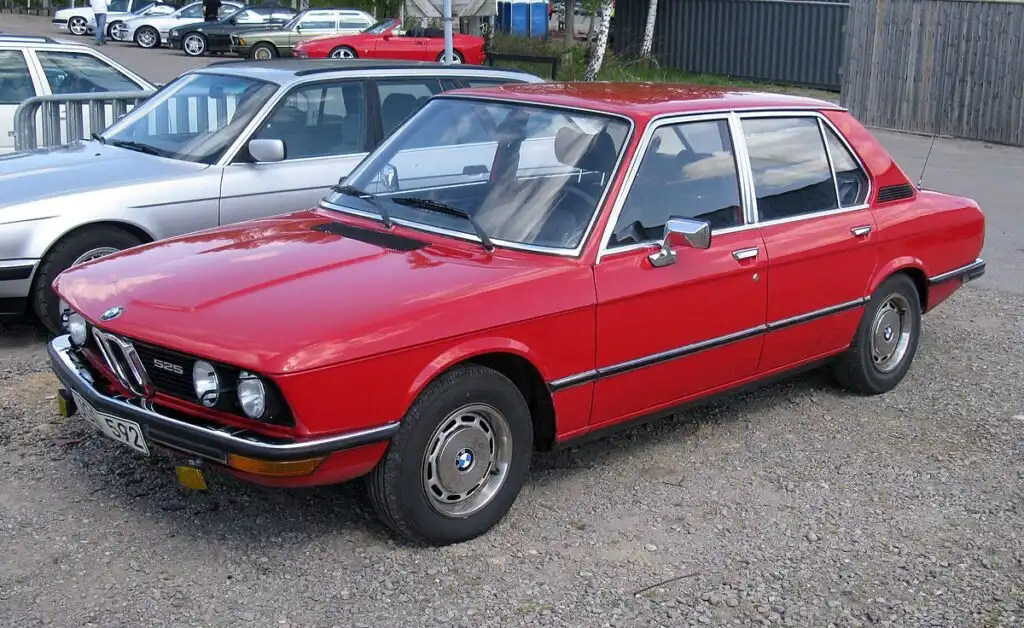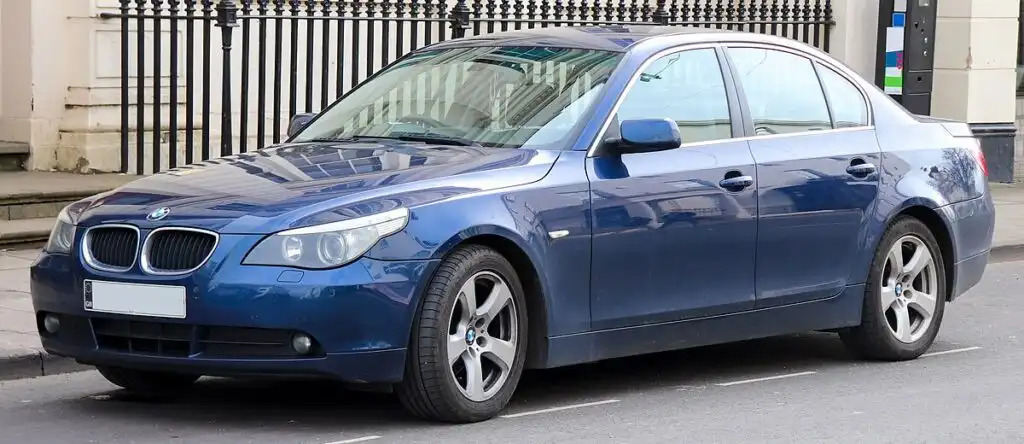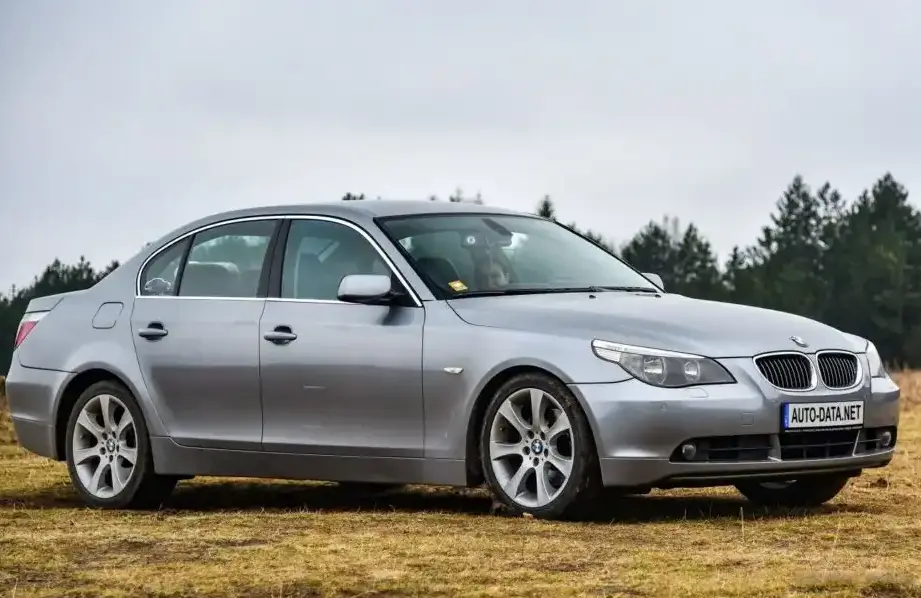
The BMW 5 Series (E60) 530d Steptronic, produced from July 2003 to March 2004, represented a significant offering in the mid-size luxury sedan segment. Positioned as a diesel-powered variant within the broader E60 generation (2003-2010), it aimed to provide a blend of performance and fuel efficiency, appealing to European drivers seeking a refined and economical grand tourer. This model utilized BMW’s then-new platform, the E60, known for its advancements in chassis technology and driver-focused design. The 530d Steptronic occupied a mid-range position in the 5 Series lineup, slotting above the 525d and below the more powerful 535d.
Technical Specifications
| Brand | BMW |
| Model | 5 Series |
| Generation | 5 Series (E60) |
| Type (Engine) | 530d (218 Hp) Steptronic |
| Start of production | July, 2003 |
| End of production | March, 2004 |
| Powertrain Architecture | Internal Combustion engine |
| Body type | Sedan |
| Seats | 5 |
| Doors | 4 |
| Fuel consumption (economy) – urban (NEDC) | 10.6 l/100 km (22.2 US mpg, 26.6 UK mpg, 9.4 km/l) |
| Fuel consumption (economy) – extra urban (NEDC) | 6.3 l/100 km (37.3 US mpg, 44.8 UK mpg, 15.9 km/l) |
| Fuel consumption (economy) – combined (NEDC) | 7.8 l/100 km (30.2 US mpg, 36.2 UK mpg, 12.8 km/l) |
| CO2 emissions (NEDC) | 208 g/km |
| Fuel Type | Diesel |
| Acceleration 0 – 100 km/h | 7.3 sec |
| Acceleration 0 – 62 mph | 7.3 sec |
| Acceleration 0 – 60 mph | 6.9 sec |
| Maximum speed | 243 km/h (150.99 mph) |
| Emission standard | Euro 3 |
| Weight-to-power ratio | 7.4 kg/Hp, 135.4 Hp/tonne |
| Weight-to-torque ratio | 3.2 kg/Nm, 310.6 Nm/tonne |
| Power | 218 Hp @ 4000 rpm |
| Power per litre | 72.8 Hp/l |
| Torque | 500 Nm @ 2000 rpm (368.78 lb.-ft. @ 2000 rpm) |
| Engine layout | Front, Longitudinal |
| Engine Model/Code | M57D30TU |
| Engine displacement | 2993 cm3 (182.64 cu. in.) |
| Number of cylinders | 6 |
| Engine configuration | Inline |
| Cylinder Bore | 84 mm (3.31 in.) |
| Piston Stroke | 90 mm (3.54 in.) |
| Compression ratio | 17:1 |
| Number of valves per cylinder | 4 |
| Fuel injection system | Diesel Commonrail |
| Engine aspiration | Turbocharger, Intercooler |
| Valvetrain | DOHC |
| Engine oil capacity | 7.75 l (8.19 US qt | 6.82 UK qt) |
| Coolant | 9.8 l (10.36 US qt | 8.62 UK qt) |
| Kerb Weight | 1610 kg (3549.44 lbs.) |
| Max. weight | 2170 kg (4784.03 lbs.) |
| Max load | 560 kg (1234.59 lbs.) |
| Trunk (boot) space – minimum | 520 l (18.36 cu. ft.) |
| Fuel tank capacity | 70 l (18.49 US gal | 15.4 UK gal) |
| Max. roof load | 100 kg (220.46 lbs.) |
| Permitted trailer load with brakes (8%) | 2000 kg (4409.25 lbs.) |
| Permitted trailer load with brakes (12%) | 2000 kg (4409.25 lbs.) |
| Permitted trailer load without brakes | 750 kg (1653.47 lbs.) |
| Permitted towbar download | 90 kg (198.42 lbs.) |
| Length | 4841 mm (190.59 in.) |
| Width | 1846 mm (72.68 in.) |
| Width including mirrors | 2030 mm (79.92 in.) |
| Height | 1468 mm (57.8 in.) |
| Wheelbase | 2888 mm (113.7 in.) |
| Front track | 1558 mm (61.34 in.) |
| Rear (Back) track | 1582 mm (62.28 in.) |
| Front overhang | 852 mm (33.54 in.) |
| Rear overhang | 1101 mm (43.35 in.) |
| Drag coefficient (Cd) | 0.28 |
| Minimum turning circle (turning diameter) | 11.4 m (37.4 ft.) |
| Drivetrain Architecture | The Internal combustion engine (ICE) drives the rear wheels of the vehicle. |
| Drive wheel | Rear wheel drive |
| Number of gears and type of gearbox | 6 gears, automatic transmission |
| Front suspension | Spring Strut, Transverse stabilizer |
| Rear suspension | Independent multi-link spring suspension with stabilizer |
| Front brakes | Ventilated discs, 324×30 mm |
| Rear brakes | Ventilated discs, 320×20 mm |
| Assisting systems | ABS (Anti-lock braking system) |
| Steering type | Steering rack and pinion |
| Power steering | Hydraulic Steering |
| Tires size | Front wheel tires: 225/55 R16; 225/50 R17; 245/45 R17; 245/40 R18; 245/35 R19Rear wheel tires: 225/55 R16; 225/50 R17; 245/45 R17; 245/40 R18; 275/35 R18; 275/30 R19 |
| Wheel rims size | Front wheel rims: 7J x 16; 7.5J x 17; 8J x 17; 8J x 18; 8J x 19Rear wheel rims: 7J x 16; 7.5J x 17; 8J x 17; 8J x 18; 9J x 18; 9.5J x 19 |
Powertrain & Engine Architecture
The heart of the 530d Steptronic is the M57D30TU, a 3.0-liter inline-six diesel engine. This engine, a cornerstone of BMW’s diesel offerings in the early 2000s, featured common rail direct injection, a variable geometry turbocharger, and an intercooler. The M57D30TU produced 218 horsepower at 4000 rpm and a substantial 500 Nm (368 lb-ft) of torque at just 2000 rpm. The engine utilized a DOHC (Double Overhead Camshaft) valvetrain with four valves per cylinder. The ‘TU’ designation indicates a technical update to the M57 series, incorporating improvements to the fuel injection system and turbocharger for enhanced efficiency and reduced emissions. The Steptronic transmission is a 6-speed automatic gearbox, known for its smooth shifts and adaptive learning capabilities. It was designed to handle the engine’s high torque output and provide a comfortable driving experience.
Driving Characteristics
The 530d Steptronic offered a compelling driving experience, prioritizing effortless cruising and strong acceleration. The abundant low-end torque from the diesel engine meant brisk acceleration in everyday driving situations. While not as overtly sporty as the gasoline-powered 530i or 540i models, the 530d provided ample power for overtaking and highway merging. The automatic transmission, while smooth, wasn’t as responsive as the available manual gearbox. Gear ratios were tuned for fuel efficiency and relaxed cruising, rather than outright performance. Compared to the 525d, the 530d offered a noticeable power increase, while the 535d provided even more performance at the expense of fuel economy.
Equipment & Trim Levels
The 530d Steptronic typically came well-equipped, reflecting its position in the BMW lineup. Standard features included leather upholstery, automatic climate control, a multi-function steering wheel, and a BMW Business radio system. Optional extras included a navigation system, premium sound system, sunroof, and sport seats. Interior trim options ranged from wood veneers to aluminum accents. The Steptronic transmission was often paired with wood trim and more luxurious upholstery options, emphasizing the car’s comfort and refinement.
Chassis & Braking
The E60 5 Series featured a sophisticated chassis design, utilizing a MacPherson strut front suspension and a multi-link rear suspension. The 530d was equipped with ventilated disc brakes on all four wheels, providing ample stopping power. ABS (Anti-lock Braking System) was standard. The suspension was tuned for a balance between comfort and handling, offering a relatively compliant ride without sacrificing stability. Stabilizer bars were fitted front and rear to reduce body roll during cornering.
Market Reception & Comparison
The 530d Steptronic was generally well-received by automotive critics. It was praised for its fuel efficiency, strong torque, and comfortable ride. However, some reviewers noted that the automatic transmission could feel slightly sluggish compared to the manual option. Compared to its competitors, such as the Mercedes-Benz E320 CDI and Audi A6 3.0 TDI, the 530d offered a more driver-focused experience. Fuel economy was competitive, and reliability proved to be generally good, although diesel particulate filter issues could arise with infrequent long-distance driving.
Legacy
The M57D30TU engine has proven to be a durable and reliable powerplant, with many examples exceeding high mileage. The 530d Steptronic remains a popular choice in the used car market, particularly for those seeking a comfortable and economical long-distance cruiser. While modern diesel technology has advanced significantly, the E60 530d still offers a compelling combination of performance, efficiency, and BMW build quality. Maintenance costs are generally reasonable, although preventative maintenance, particularly regarding the diesel particulate filter and fuel injectors, is crucial for long-term reliability.