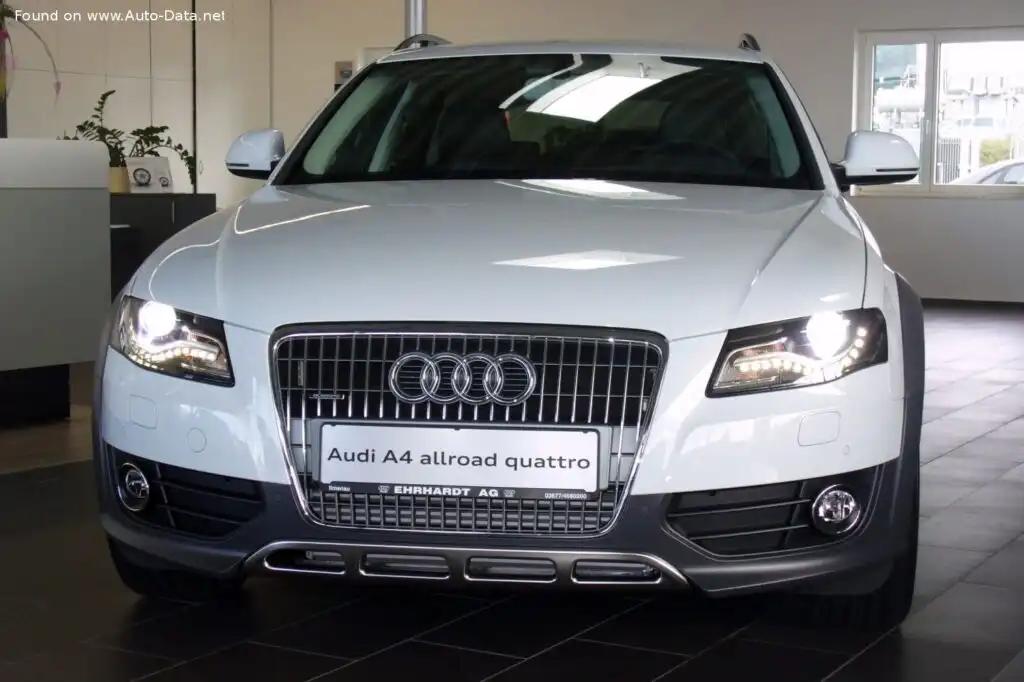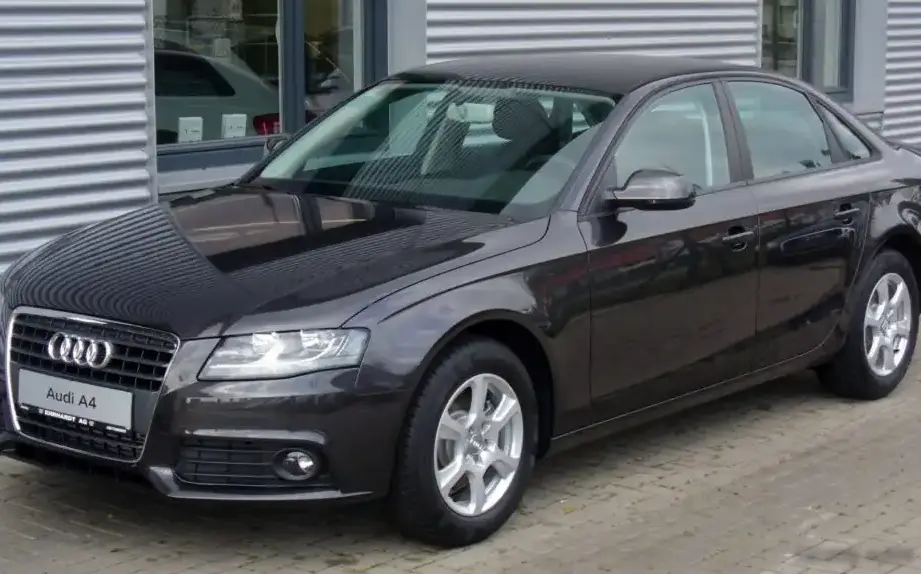
The Audi A4 (B8 8K) 2.0 TFSI 180 hp variant, produced from June 2008 to 2011, represented a key offering within Audi’s popular compact executive car lineup. Positioned as a mid-range option, it bridged the gap between the entry-level 1.8 TFSI models and the more performance-focused 2.0 TFSI variants with higher horsepower outputs. This iteration of the A4, built on the Volkswagen Group’s B8 (8K) platform – shared with models like the Volkswagen Passat and Škoda Superb – aimed to deliver a balance of performance, fuel efficiency, and refinement for the discerning driver. The B8 generation marked a significant evolution in Audi’s design language and technology, and the 2.0 TFSI 180 hp model was a popular choice in European and North American markets.
Technical Specifications
| Brand | Audi |
| Model | A4 |
| Generation | A4 (B8 8K) |
| Type (Engine) | 2.0 TFSI (180 Hp) |
| Start of production | June, 2008 |
| End of production | 2011 |
| Powertrain Architecture | Internal Combustion engine |
| Body type | Sedan |
| Seats | 5 |
| Doors | 4 |
| Fuel consumption (urban) | 9 l/100 km (26.1 US mpg, 31.4 UK mpg, 11.1 km/l) |
| Fuel consumption (extra urban) | 5.2 l/100 km (45.2 US mpg, 54.3 UK mpg, 19.2 km/l) |
| Fuel consumption (combined) | 6.6 l/100 km (35.6 US mpg, 42.8 UK mpg, 15.2 km/l) |
| CO2 emissions | 154 g/km |
| Fuel Type | Petrol (Gasoline) |
| Acceleration 0 – 100 km/h | 7.9 sec |
| Acceleration 0 – 62 mph | 7.9 sec |
| Acceleration 0 – 60 mph | 7.5 sec |
| Maximum speed | 236 km/h (146.64 mph) |
| Emission standard | Euro 5 |
| Weight-to-power ratio | 7.9 kg/Hp, 125.9 Hp/tonne |
| Weight-to-torque ratio | 4.5 kg/Nm, 223.8 Nm/tonne |
| Power | 180 Hp @ 4000-6000 rpm |
| Power per litre | 90.7 Hp/l |
| Torque | 320 Nm @ 1500-3900 rpm (236.02 lb.-ft. @ 1500-3900 rpm) |
| Engine layout | Front, Longitudinal |
| Engine Model/Code | EA888 / CDNB |
| Engine displacement | 1984 cm3 (121.07 cu. in.) |
| Number of cylinders | 4 |
| Engine configuration | Inline |
| Cylinder Bore | 82.5 mm (3.25 in.) |
| Piston Stroke | 92.8 mm (3.65 in.) |
| Compression ratio | 9.6:1 |
| Number of valves per cylinder | 4 |
| Fuel injection system | Direct injection |
| Engine aspiration | Turbocharger, Intercooler |
| Valvetrain | DOHC |
| Engine oil capacity | 4.6 l (4.86 US qt | 4.05 UK qt) |
| Coolant | 7 l (7.4 US qt | 6.16 UK qt) |
| Kerb Weight | 1430 kg (3152.61 lbs.) |
| Max. weight | 1980 kg (4365.15 lbs.) |
| Max load | 550 kg (1212.54 lbs.) |
| Trunk (boot) space – minimum | 480 l (16.95 cu. ft.) |
| Trunk (boot) space – maximum | 962 l (33.97 cu. ft.) |
| Fuel tank capacity | 65 l (17.17 US gal | 14.3 UK gal) |
| Max. roof load | 90 kg (198.42 lbs.) |
| Permitted trailer load with brakes (8%) | 1700 kg (3747.86 lbs.) |
| Permitted trailer load with brakes (12%) | 1500 kg (3306.93 lbs.) |
| Permitted trailer load without brakes | 750 kg (1653.47 lbs.) |
| Permitted towbar download | 80 kg (176.37 lbs.) |
| Length | 4703 mm (185.16 in.) |
| Width | 1826 mm (71.89 in.) |
| Height | 1427 mm (56.18 in.) |
| Wheelbase | 2808 mm (110.55 in.) |
| Front track | 1564 mm (61.57 in.) |
| Rear (Back) track | 1551 mm (61.06 in.) |
| Drag coefficient (Cd) | 0.280 |
| Minimum turning circle (turning diameter) | 11.4 m (37.4 ft.) |
| Drivetrain Architecture | The Internal combustion engine (ICE) drives the front wheels of the vehicle. |
| Drive wheel | Front wheel drive |
| Number of gears and type of gearbox | 6 gears, manual transmission |
| Front suspension | Independent multi-link suspension |
| Rear suspension | Independent multi-link spring suspension with stabilizer |
| Front brakes | Ventilated discs |
| Rear brakes | Disc |
| Assisting systems | ABS (Anti-lock braking system) |
| Steering type | Steering rack and pinion |
| Power steering | Electric Steering |
| Tires size | 225/55 R16; 225/50 R17 |
| Wheel rims size | 7.5J x 16; 7.5J x 17 |
Powertrain & Engine Architecture
At the heart of the A4 2.0 TFSI 180 hp lay the EA888 engine, specifically the CDNB variant. This 1.984-liter (121.07 cubic inches) inline-four cylinder engine utilized direct fuel injection (FSI) and a single turbocharger with an intercooler. The direct injection system allowed for precise fuel delivery, enhancing both power and efficiency. The engine featured a dual overhead camshaft (DOHC) valvetrain with four valves per cylinder, optimizing gas flow for improved performance. The turbocharger provided a significant boost in power output compared to naturally aspirated engines of similar displacement. The engine’s control unit (ECU) carefully managed the turbocharger’s boost pressure and fuel injection timing to deliver a broad torque curve. The standard transmission was a 6-speed manual, although a continuously variable transmission (CVT) – marketed as ‘Multitronic’ by Audi – was also available as an option.
Driving Characteristics
The 180 hp 2.0 TFSI A4 offered a respectable level of performance. Acceleration from 0 to 60 mph took approximately 7.5 to 7.9 seconds, making it adequately quick for everyday driving and highway merging. While not as exhilarating as the higher-output 211 hp or 220 hp versions of the 2.0 TFSI, the 180 hp variant provided sufficient power for most drivers. The turbocharger did exhibit some lag at lower engine speeds, but once spooled up, it delivered a noticeable surge of torque. The 6-speed manual transmission offered precise shifts and allowed drivers to maintain control over the engine’s power delivery. The optional CVT provided smoother, more seamless acceleration, but some enthusiasts found it less engaging than the manual gearbox. The front-wheel-drive configuration provided good traction in most conditions, but could experience torque steer under hard acceleration.
Equipment & Trim Levels
The A4 2.0 TFSI 180 hp typically came standard with features such as air conditioning, power windows and locks, a multi-function steering wheel, and an audio system with CD player. Higher trim levels, such as the ‘SE’ or ‘S-line’ models, added features like leather upholstery, sport seats, alloy wheels, and a more sophisticated audio system. Optional extras included a sunroof, navigation system, parking sensors, and xenon headlights. Interior upholstery was typically cloth on base models, with leather available as an upgrade. The dashboard layout was clean and functional, with a focus on ergonomics and ease of use.
Chassis & Braking
The A4 B8 featured an independent multi-link suspension system at both the front and rear, providing a comfortable ride and good handling characteristics. The front suspension utilized coil springs and shock absorbers, while the rear suspension incorporated a stabilizer bar to reduce body roll. Brakes consisted of ventilated discs at the front and solid discs at the rear. Anti-lock braking system (ABS) was standard, enhancing braking performance and stability. The steering system was a rack-and-pinion type with electric power assistance, providing precise and responsive steering feel.
Market Reception & Comparison
The Audi A4 2.0 TFSI 180 hp was generally well-received by automotive critics. It was praised for its refined interior, comfortable ride, and balanced performance. Compared to the 1.8 TFSI models, the 2.0 TFSI offered a noticeable increase in power and torque. However, the 1.8 TFSI was more fuel-efficient and less expensive to purchase. Compared to the higher-output 2.0 TFSI variants, the 180 hp model offered a more affordable entry point into the A4 range, albeit with slightly less performance. Fuel economy was respectable, averaging around 35.6 US mpg in combined driving. Reliability was generally good, although some owners reported issues with the turbocharger and fuel injectors.
Legacy
The EA888 engine family, including the CDNB variant, proved to be a robust and reliable powerplant. The A4 B8 2.0 TFSI 180 hp remains a popular choice in the used car market today, offering a good balance of performance, comfort, and value. While some maintenance may be required due to the vehicle’s age, the engine is generally considered to be durable and capable of providing many years of reliable service. The B8 A4’s sophisticated design and technology continue to appeal to buyers seeking a premium compact executive car.