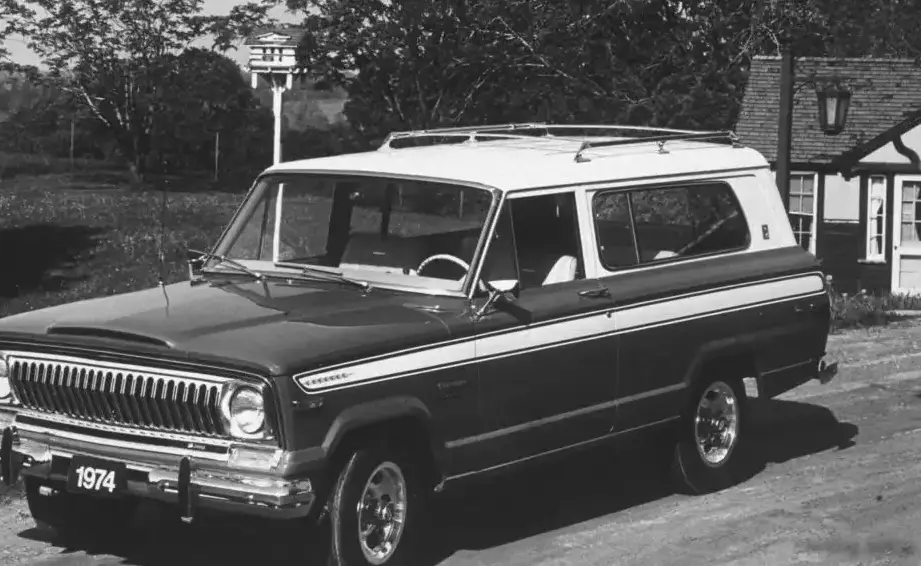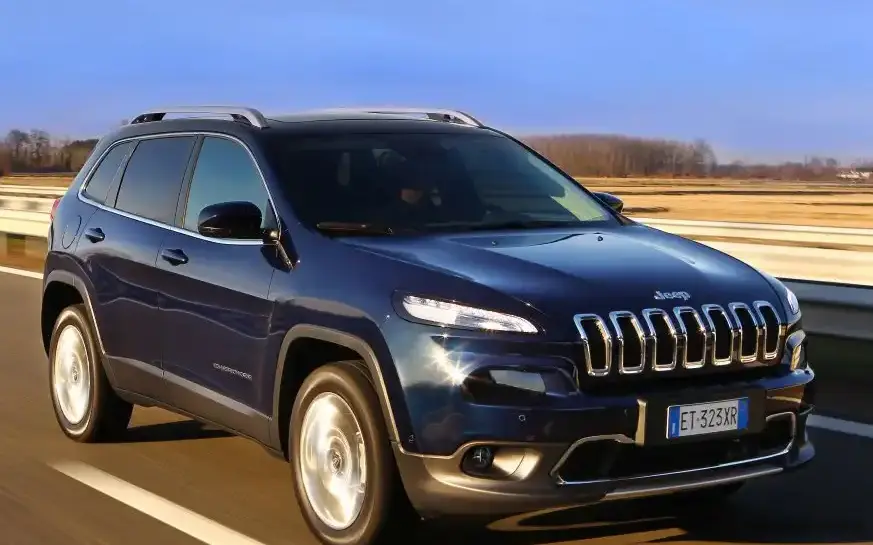
The Jeep Cherokee (KL) is a compact crossover SUV introduced for the 2014 model year, representing the fifth generation of the Cherokee lineage. Produced from 2013 to 2017, the KL Cherokee aimed to bridge the gap between the smaller Compass and the larger Grand Cherokee in Jeep’s lineup. The 2.4L MultiAir2 Tigershark engine paired with a 9-speed automatic transmission and 4WD LOCK system represents a mid-range offering within the KL Cherokee portfolio, positioned as a balance between fuel efficiency and capability. This variant was aimed at buyers seeking all-weather capability and a comfortable ride without the higher price tag of the more powerful V6 options.
Technical Specifications
| Brand | Jeep |
| Model | Cherokee |
| Generation | Cherokee V (KL) |
| Type (Engine) | 2.4 MultiAir2 TIGERSHARK (184 Hp) 4WD LOCK Automatic |
| Start of production | 2013 |
| End of production | 2017 |
| Powertrain Architecture | Internal Combustion engine |
| Body type | SUV |
| Seats | 5 |
| Doors | 5 |
| Fuel consumption (economy) – urban (EPA) | 12.4 l/100 km (19 US mpg, 22.8 UK mpg, 8.1 km/l) |
| Fuel consumption (economy) – extra urban (EPA) | 9.4 l/100 km (25 US mpg, 30.1 UK mpg, 10.6 km/l) |
| Fuel consumption (economy) – combined (EPA) | 10.7 l/100 km (22 US mpg, 26.4 UK mpg, 9.3 km/l) |
| Fuel Type | Petrol (Gasoline) |
| Emission standard | LEV II |
| Weight-to-power ratio | 9.9 kg/Hp, 101 Hp/tonne |
| Weight-to-torque ratio | 7.8 kg/Nm, 128.4 Nm/tonne |
| Power | 184 Hp @ 6400 rpm |
| Power per litre | 78 Hp/l |
| Torque | 234 Nm @ 4600 rpm (172.59 lb.-ft. @ 4600 rpm) |
| Maximum engine speed | 6500 rpm |
| Engine layout | Front, Transverse |
| Engine Model/Code | ED6 |
| Engine displacement | 2360 cm3 (144.02 cu. in.) |
| Number of cylinders | 4 |
| Engine configuration | Inline |
| Cylinder Bore | 88 mm (3.46 in.) |
| Piston Stroke | 97 mm (3.82 in.) |
| Compression ratio | 10:1 |
| Number of valves per cylinder | 4 |
| Fuel injection system | Multi-port manifold injection |
| Engine aspiration | Naturally aspirated engine |
| Valvetrain | SOHC, MultiAir |
| Engine oil capacity | 5.2 l (5.49 US qt | 4.58 UK qt) |
| Coolant | 6.7 l (7.08 US qt | 5.9 UK qt) |
| Kerb Weight | 1822-1827 kg (4016.82 – 4027.85 lbs.) |
| Max. weight | 2495 kg (5500.53 lbs.) |
| Max load | 668-673 kg (1472.69 – 1483.71 lbs.) |
| Trunk (boot) space – minimum | 700 l (24.72 cu. ft.) |
| Trunk (boot) space – maximum | 1667 l (58.87 cu. ft.) |
| Fuel tank capacity | 60 l (15.85 US gal | 13.2 UK gal) |
| Length | 4624 mm (182.05 in.) |
| Width | 1904 mm (74.96 in.) |
| Height | 1723 mm (67.83 in.) |
| Wheelbase | 2719 mm (107.05 in.) |
| Front track | 1613 mm (63.5 in.) |
| Rear (Back) track | 1614 mm (63.54 in.) |
| Ride height (ground clearance) | 222 mm (8.74 in.) |
| Minimum turning circle (turning diameter) | 11.6 m (38.06 ft.) |
| Approach angle | 29.9° |
| Departure angle | 32.2° |
| Ramp-over (brakeover) angle | 22.9° |
| Drivetrain Architecture | The Internal combustion engine (ICE) drives the front wheels permanently, and the rear wheels are driven through an electrically or mechanically operated clutch if necessary. |
| Drive wheel | All wheel drive (4×4) |
| Number of gears and type of gearbox | 9 gears, automatic transmission |
| Front suspension | Independent, type McPherson with coil spring and anti-roll bar |
| Rear suspension | Independent multi-link spring suspension with stabilizer |
| Front brakes | Ventilated discs, 330×28 mm |
| Rear brakes | Disc, 320×12 mm |
| Assisting systems | ABS (Anti-lock braking system) |
| Steering type | Steering rack and pinion |
| Power steering | Electric Steering |
| Tires size | 245/65 R17 |
| Wheel rims size | 7.5J x 17 |
INTRODUCTION
The Jeep Cherokee KL, launched in 2013 as a 2014 model, represented a significant departure from its predecessor, the Liberty. The KL Cherokee moved to a unibody construction, offering improved on-road refinement and fuel efficiency. The 2.4-liter MultiAir2 Tigershark engine, coupled with a 9-speed automatic transmission and the available 4WD LOCK system, was introduced as a key powertrain option. This configuration aimed to provide a balance of performance, fuel economy, and all-weather capability, making it a popular choice for buyers in regions with varied climates. It sat in the middle of the Cherokee lineup, below the more powerful 3.2L V6 and above the base 2.0L Turbo.
Powertrain & Engine Architecture
The heart of this Cherokee variant is the 2.4-liter inline-four cylinder engine, designated as the ED6 and marketed as the “Tigershark.” This engine utilizes Jeep’s MultiAir2 technology, an electro-hydraulic valve actuation system. MultiAir2 allows for independent control of intake valve timing and lift, optimizing combustion efficiency and reducing emissions. The engine features multi-port fuel injection and a compression ratio of 10:1. The 9-speed automatic transmission (9HP48) is a ZF-developed unit, known for its wide gear ratio spread, contributing to both fuel efficiency and improved acceleration. This transmission features a sophisticated control system to manage the numerous gears and provide smooth shifts. The 4WD LOCK system allows the driver to manually engage four-wheel drive for enhanced traction in challenging conditions, while the system normally operates in an auto mode, seamlessly engaging rear-wheel drive when needed.
Driving Characteristics
The 184 horsepower and 234 lb-ft of torque produced by the 2.4L Tigershark engine, when paired with the 9-speed automatic, delivers adequate performance for everyday driving. Acceleration is not particularly brisk, with 0-60 mph times typically around 8.5-9.5 seconds. The wide gear ratio spread of the 9-speed transmission helps to keep the engine in its optimal power band, but some drivers have noted occasional hesitation or hunting for the right gear, particularly at lower speeds. Compared to the V6 models, the 2.4L offers a more relaxed driving experience, prioritizing fuel economy over outright performance. The 4WD system provides confident traction in slippery conditions, making it well-suited for inclement weather. The steering is relatively light and precise, offering a comfortable driving experience on paved roads.
Equipment & Trim Levels
The 2.4L MultiAir2 Tigershark engine was available on several trim levels of the Cherokee, including the Limited and Latitude. Standard equipment typically included air conditioning, power windows and locks, a touchscreen infotainment system with Bluetooth connectivity, and a rearview camera. Higher trim levels added features such as leather upholstery, heated front seats, a power liftgate, and advanced safety technologies like blind-spot monitoring and rear cross-path detection. Optional extras included a panoramic sunroof, a premium audio system, and navigation. Interior upholstery varied depending on the trim level, ranging from cloth to leather. The dashboard layout was generally straightforward and user-friendly, with a focus on functionality.
Chassis & Braking
The Cherokee KL utilizes a unibody construction, providing a good balance of strength and rigidity. The front suspension features an independent McPherson strut design with coil springs and an anti-roll bar, while the rear suspension employs an independent multi-link setup with a stabilizer bar. This suspension configuration delivers a comfortable ride quality, absorbing bumps and irregularities in the road surface effectively. Braking duties are handled by ventilated discs at the front and solid discs at the rear. The standard anti-lock braking system (ABS) enhances braking performance and stability, particularly in emergency situations. The 4WD system contributes to improved braking performance on loose or slippery surfaces.
Market Reception & Comparison
The 2.4L Cherokee received mixed reviews. Critics generally praised its fuel efficiency and comfortable ride, but some found the engine to be underpowered, especially when fully loaded or towing. Compared to the V6 models, the 2.4L offered significantly better fuel economy, achieving around 22 mpg combined. However, the V6 provided noticeably quicker acceleration and more robust towing capacity. The 9-speed automatic transmission also received some criticism for its occasional hesitation and complexity. Reliability reports have indicated that the 2.4L Tigershark engine is generally reliable, but some owners have experienced issues with the MultiAir2 system, requiring maintenance or repair.
Legacy
The 2.4L MultiAir2 Tigershark engine in the Jeep Cherokee KL represents a significant step towards improved fuel efficiency and reduced emissions for the brand. While the engine may not offer the same level of performance as the V6 options, it provides a practical and economical choice for buyers who prioritize fuel economy and all-weather capability. On the used car market, these Cherokees are generally affordable and offer good value for money. However, potential buyers should be aware of the potential for issues with the MultiAir2 system and ensure that the vehicle has been properly maintained. The KL Cherokee, as a whole, helped to modernize the Jeep brand and appeal to a wider range of customers.