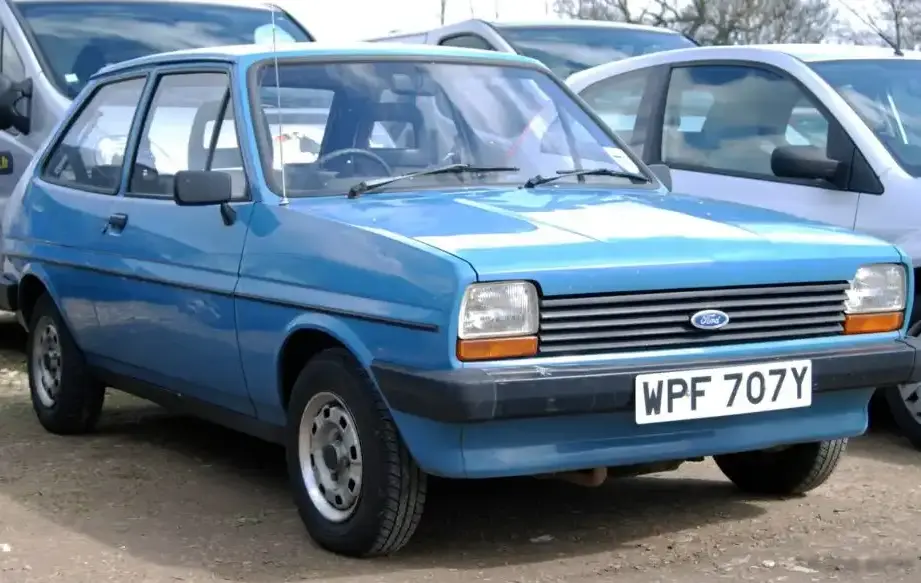
The Ford Fiesta Mk1 1.1, produced from 1976 to 1983, represents the entry point into the first generation of Ford’s globally successful supermini. Introduced as a direct response to the rising popularity of small, fuel-efficient cars – particularly those originating from Europe and Japan – the Fiesta was Ford’s first front-wheel-drive vehicle and a pivotal model in the company’s history. The 1.1-liter variant, producing 53 horsepower, was specifically positioned as the most affordable and economical option within the Fiesta Mk1 range, targeting budget-conscious buyers and those seeking a practical city car. It played a crucial role in establishing the Fiesta’s reputation for reliability and affordability, paving the way for subsequent generations.
Technical Specifications
| Brand | Ford |
| Model | Fiesta |
| Generation | Fiesta I (Mk1) |
| Type (Engine) | 1.1 (53 Hp) |
| Start of production | 1976 |
| End of production | 1983 |
| Powertrain Architecture | Internal Combustion Engine |
| Body type | Hatchback |
| Fuel Type | Petrol (Gasoline) |
| Power | 53 Hp |
| Engine Aspiration | Naturally Aspirated |
Powertrain & Engine Architecture
The Fiesta Mk1 1.1 was powered by the Ford 1.1-liter inline-four cylinder engine, internally designated as the 1100cc. This engine, while simple in design, was robust and relatively easy to maintain. It featured a single overhead camshaft (SOHC) operating two valves per cylinder. Fuel delivery was managed by a single downdraft carburetor, a common setup for vehicles of this era aiming for affordability. The engine’s modest output of 53 horsepower at 6000 rpm and 68 lb-ft of torque at 3600 rpm was achieved through a relatively low compression ratio of 8.8:1. The engine block was cast iron, contributing to its durability, while the cylinder head was aluminum. The 1.1L engine was paired exclusively with a four-speed manual transmission in most markets, although a three-speed automatic transmission was offered as an optional extra, albeit rarely selected due to its impact on fuel economy and performance. The automatic transmission was a Ford-built unit, designed for smooth but not particularly rapid shifts.
Driving Characteristics
The Fiesta Mk1 1.1 offered a decidedly unhurried driving experience. With its limited horsepower and torque, acceleration was modest, taking approximately 18 seconds to reach 60 mph. However, the car’s light weight (around 1,600 lbs) and front-wheel-drive configuration made it nimble and easy to maneuver in urban environments. The four-speed manual transmission provided adequate control, allowing drivers to keep the engine in its optimal power band. The gear ratios were relatively tall, prioritizing fuel efficiency over outright performance. The optional automatic transmission further dulled acceleration, making the car feel even slower. Steering was light and precise, contributing to the Fiesta’s enjoyable handling characteristics. While not a sports car by any means, the 1.1L Fiesta offered a comfortable and predictable ride, making it well-suited for everyday commuting and short trips.
Equipment & Trim Levels
The Fiesta Mk1 1.1 was typically offered in a basic trim level, reflecting its position as the entry-level model. Standard features included cloth upholstery, vinyl floor covering, and basic instrumentation consisting of a speedometer, fuel gauge, and temperature gauge. The interior was functional and utilitarian, prioritizing practicality over luxury. Optional extras included a heater, radio, and upgraded upholstery. Later models saw the introduction of minor cosmetic enhancements, such as improved dashboard trim and door panels. The exterior typically featured steel wheels with hubcaps, black plastic bumpers, and relatively simple body trim. The Fiesta 1.1 was available in a range of solid colors, with metallic paint options available at an extra cost.
Chassis & Braking
The Fiesta Mk1 utilized a MacPherson strut front suspension and a twist-beam rear suspension. This setup provided a good balance between ride comfort and handling. The front suspension incorporated coil springs and an anti-roll bar, while the rear suspension relied on leaf springs. Braking was initially provided by drum brakes on all four wheels, although later models were upgraded with front disc brakes. The braking system was adequate for the car’s performance, but lacked the stopping power of more modern vehicles. Steering was rack and pinion, providing precise and responsive control. The Fiesta’s relatively small size and light weight contributed to its nimble handling characteristics.
Market Reception & Comparison
The Fiesta Mk1 1.1 was generally well-received by critics and buyers alike. It was praised for its affordability, fuel efficiency, and ease of driving. However, its modest performance was often criticized, particularly when compared to higher-powered Fiesta variants, such as the 1.3L and 1.6L models. The 1.3L offered a noticeable performance boost, while the 1.6L provided significantly more power and a more engaging driving experience. Compared to rivals such as the Volkswagen Polo and the Renault 5, the Fiesta 1.1 offered a competitive price point and a reputation for reliability. Fuel economy was a key selling point, averaging around 45-50 mpg. The automatic transmission version suffered from poorer fuel economy and slower acceleration, making it a less popular choice.
Legacy
The Ford Fiesta Mk1 1.1 played a significant role in establishing the Fiesta as a successful and enduring model. Its affordability and practicality made it a popular choice for first-time car buyers and those seeking a reliable city car. The 1.1-liter engine proved to be remarkably durable, and many examples are still on the road today. While not a particularly collectible variant, the Fiesta Mk1 1.1 is appreciated by enthusiasts for its simplicity and charm. In the used car market, these models are typically inexpensive to purchase and maintain, making them an attractive option for those seeking a classic and economical vehicle. The Fiesta’s success paved the way for subsequent generations, solidifying its position as one of Ford’s most important models and a benchmark in the supermini segment.