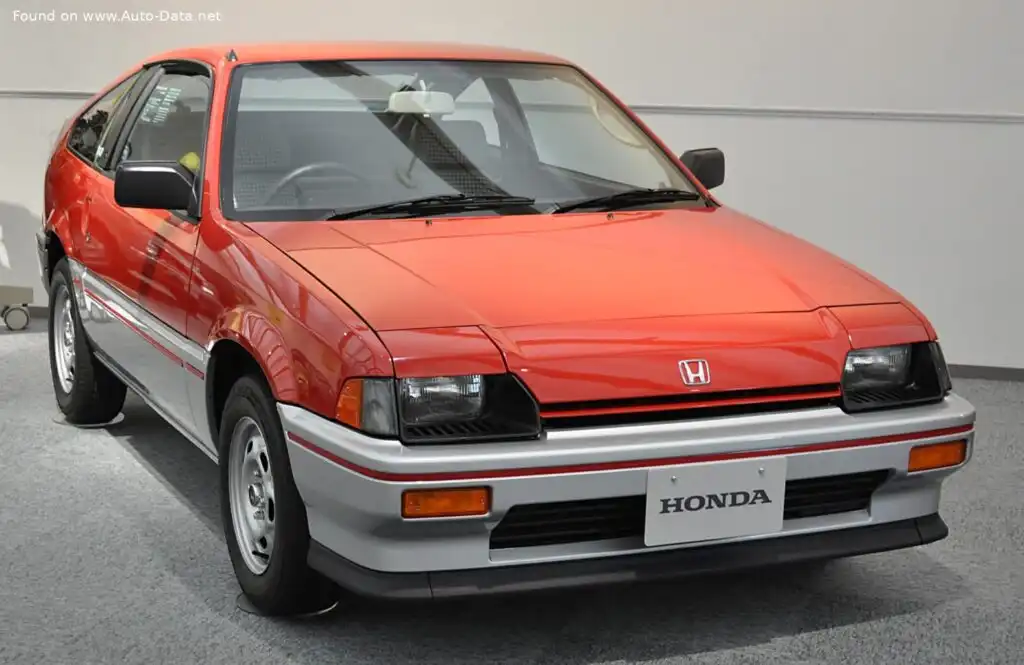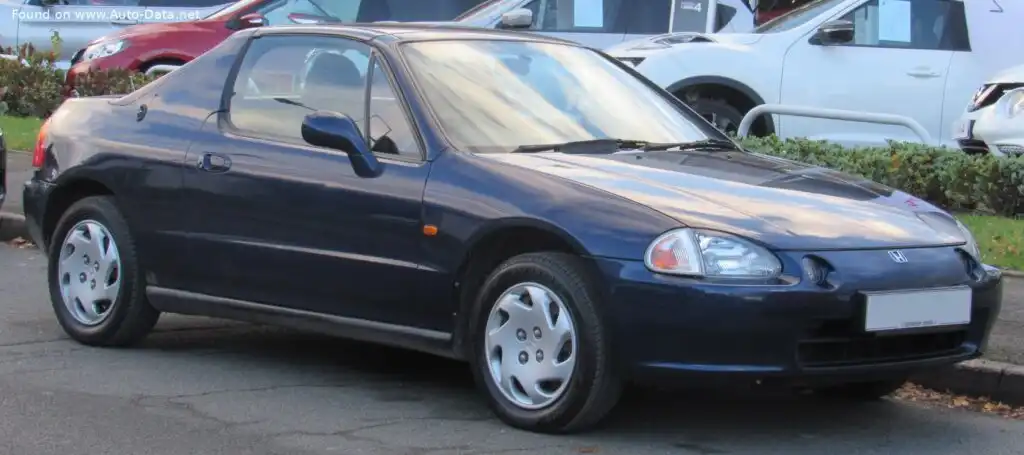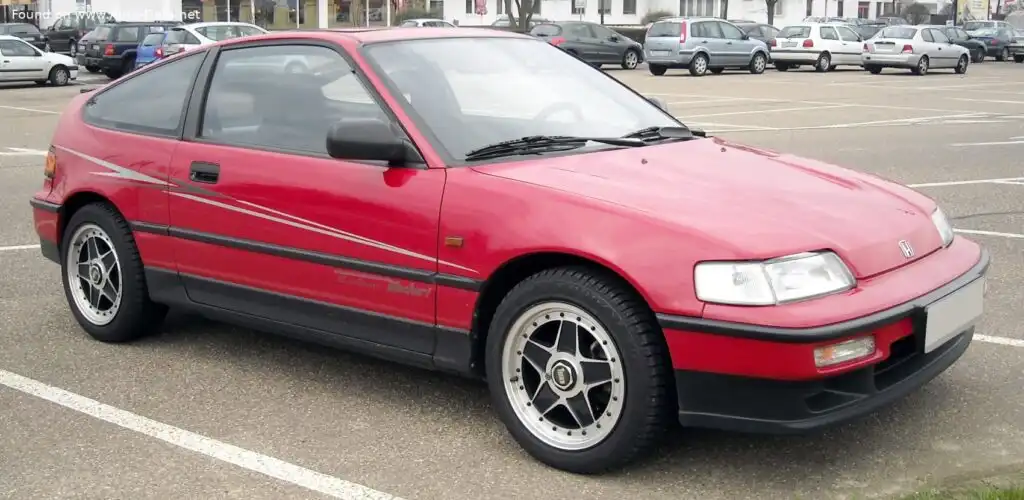
The Honda CRX II, internally designated the ED and EE chassis, represented the second generation of Honda’s iconic lightweight sports car. Produced from 1989 to 1991, it built upon the success of the first-generation CRX, offering improved styling, refinement, and performance. The 1.6 i 16V variant, powered by the D16Z5 engine producing 124 horsepower, occupied a significant position in the CRX II lineup, bridging the gap between the base models and the more potent Si/VTEC trims. This model was primarily aimed at the North American and European markets, where fuel efficiency and sporty handling were highly valued.
Technical Specifications
| Brand | Honda |
| Model | CRX |
| Generation | CRX II (ED,EE) |
| Type (Engine) | 1.6 i 16V (124 Hp) |
| Start of production | 1989 |
| End of production | 1991 |
| Powertrain Architecture | Internal Combustion engine |
| Body type | Liftback |
| Seats | 4 |
| Doors | 3 |
| Fuel consumption (urban) | 8.3 l/100 km (28.3 US mpg) |
| Fuel consumption (extra urban) | 5.4 l/100 km (43.6 US mpg) |
| Fuel Type | Petrol (Gasoline) |
| Acceleration 0 – 100 km/h | 8.5 sec |
| Acceleration 0 – 62 mph | 8.5 sec |
| Acceleration 0 – 60 mph | 8.1 sec |
| Maximum speed | 208 km/h (129.25 mph) |
| Weight-to-power ratio | 7.3 kg/Hp |
| Weight-to-torque ratio | 6.5 kg/Nm |
| Power | 124 Hp @ 6800 rpm |
| Power per litre | 78 Hp/l |
| Torque | 140 Nm @ 5700 rpm (103.26 lb.-ft. @ 5700 rpm) |
| Engine layout | Front, Transverse |
| Engine Model/Code | D16Z5 |
| Engine displacement | 1590 cm3 (97.03 cu. in.) |
| Number of cylinders | 4 |
| Engine configuration | Inline |
| Cylinder Bore | 75 mm (2.95 in.) |
| Piston Stroke | 90 mm (3.54 in.) |
| Compression ratio | 9.5:1 |
| Number of valves per cylinder | 4 |
| Fuel injection system | Multi-port manifold injection |
| Engine aspiration | Naturally aspirated engine |
| Valvetrain | DOHC |
| Engine oil capacity | 3.5 l (3.7 US qt | 3.08 UK qt) |
| Kerb Weight | 909 kg (2004 lbs.) |
| Max. weight | 1290 kg (2843.96 lbs.) |
| Max load | 381 kg (839.96 lbs.) |
| Trunk (boot) space – minimum | 196 l (6.92 cu. ft.) |
| Trunk (boot) space – maximum | 337 l (11.9 cu. ft.) |
| Fuel tank capacity | 45 l (11.89 US gal | 9.9 UK gal) |
| Permitted trailer load with brakes (12%) | 700 kg (1543.24 lbs.) |
| Permitted trailer load without brakes | 430 kg (947.99 lbs.) |
| Permitted towbar download | 50 kg (110.23 lbs.) |
| Length | 3755 mm (147.83 in.) |
| Width | 1675 mm (65.94 in.) |
| Height | 1270 mm (50 in.) |
| Wheelbase | 2300 mm (90.55 in.) |
| Front track | 1450 mm (57.09 in.) |
| Rear (Back) track | 1455 mm (57.28 in.) |
| Front overhang | 765 mm (30.12 in.) |
| Rear overhang | 690 mm (27.17 in.) |
| Ride height (ground clearance) | 150 mm (5.91 in.) |
| Drag coefficient (Cd) | 0.30 |
| Minimum turning circle (turning diameter) | 9 m (29.53 ft.) |
| Drivetrain Architecture | The Internal combustion engine (ICE) drives the front wheels of the vehicle. |
| Drive wheel | Front wheel drive |
| Number of gears and type of gearbox | 5 gears, manual transmission |
| Front suspension | Double wishbone |
| Rear suspension | Double wishbone |
| Front brakes | Ventilated discs |
| Rear brakes | Disc |
| Steering type | Steering rack and pinion |
| Tires size | 185/60 R14 |
| Wheel rims size | 5J x 14 |
INTRODUCTION
The 1.6 i 16V CRX II, produced between 1989 and 1991, was a key variant within the ED/EE generation. It represented a sweet spot in the CRX lineup, offering a balance of performance, fuel economy, and affordability. Positioned above the base 1.5-liter models, it provided a noticeable power increase without the higher price tag and more aggressive tuning of the Si/VTEC versions. The CRX II, in general, moved away from the sharply angled wedge shape of the first generation, adopting a more rounded and aerodynamic design. This generation also saw improvements in interior comfort and refinement, making it a more practical daily driver.
Powertrain & Engine Architecture
At the heart of the 1.6 i 16V CRX II lies the D16Z5 engine, a 1.6-liter (1590cc) inline-four cylinder powerplant. This engine featured a single overhead camshaft (SOHC) design with four valves per cylinder, hence the “16V” designation. It utilized multi-point fuel injection, contributing to improved fuel efficiency and throttle response. The D16Z5 produced 124 horsepower at 6800 rpm and 103.26 lb-ft of torque at 5700 rpm. The engine’s relatively high compression ratio of 9.5:1 aided in its performance. The standard transmission for this variant was a 5-speed manual, although a 4-speed automatic transmission was also available, albeit less common and impacting performance. The automatic transmission was a Honda-developed unit, known for its reliability but not particularly sporty characteristics.
Driving Characteristics
The 1.6 i 16V CRX II offered a noticeably more engaging driving experience than the base models. While not as quick as the Si/VTEC variants, the D16Z5 engine provided sufficient power for spirited driving. The 0-60 mph time was around 8.1 seconds, and it could achieve a top speed of approximately 129 mph. The manual transmission version offered precise shifts and allowed the driver to fully exploit the engine’s powerband. The automatic transmission, while convenient, resulted in some power loss and a less direct connection to the engine. The CRX II’s lightweight construction (around 2000 lbs) and well-tuned suspension contributed to its nimble handling and cornering ability. The steering was precise and communicative, providing good feedback to the driver.
Equipment & Trim Levels
The 1.6 i 16V CRX II typically came equipped with features such as power steering, a basic audio system, and cloth upholstery. Optional extras included air conditioning, power windows, and upgraded sound systems. The interior design was functional and driver-focused, with a clear instrument cluster and well-placed controls. Trim levels varied slightly depending on the market, but generally, this variant offered a step up in terms of interior appointments compared to the base models. The dashboard layout was relatively simple, prioritizing functionality over luxury.
Chassis & Braking
The CRX II utilized a lightweight monocoque chassis, contributing to its agile handling. The suspension consisted of independent double wishbones at both the front and rear, providing a comfortable ride and good road holding. The 1.6 i 16V model typically featured ventilated disc brakes at the front and disc brakes at the rear, offering adequate stopping power. The steering system was a rack-and-pinion setup, providing precise and responsive steering feel. The relatively low curb weight of around 909 kg (2004 lbs) further enhanced the car’s handling characteristics.
Market Reception & Comparison
The 1.6 i 16V CRX II was generally well-received by automotive critics. It was praised for its sporty handling, fuel efficiency, and affordability. Compared to the base models, the 1.6 i 16V offered a significant performance upgrade. However, it didn’t quite match the performance of the Si/VTEC versions, which featured a more powerful engine and sport-tuned suspension. The automatic transmission version was often criticized for its sluggishness and reduced fuel economy compared to the manual transmission model. In terms of reliability, the D16Z5 engine proved to be quite durable, although regular maintenance was essential.
Legacy
The Honda CRX II 1.6 i 16V has become a popular choice among enthusiasts and collectors. Its combination of sporty handling, fuel efficiency, and affordability has made it a desirable classic car. The D16Z5 engine is known for its reliability and relatively simple maintenance requirements. Today, well-maintained examples of this variant can command a premium in the used car market. The CRX II, in general, is remembered as a benchmark for lightweight sports cars, and the 1.6 i 16V variant represents a particularly well-rounded and enjoyable driving experience.