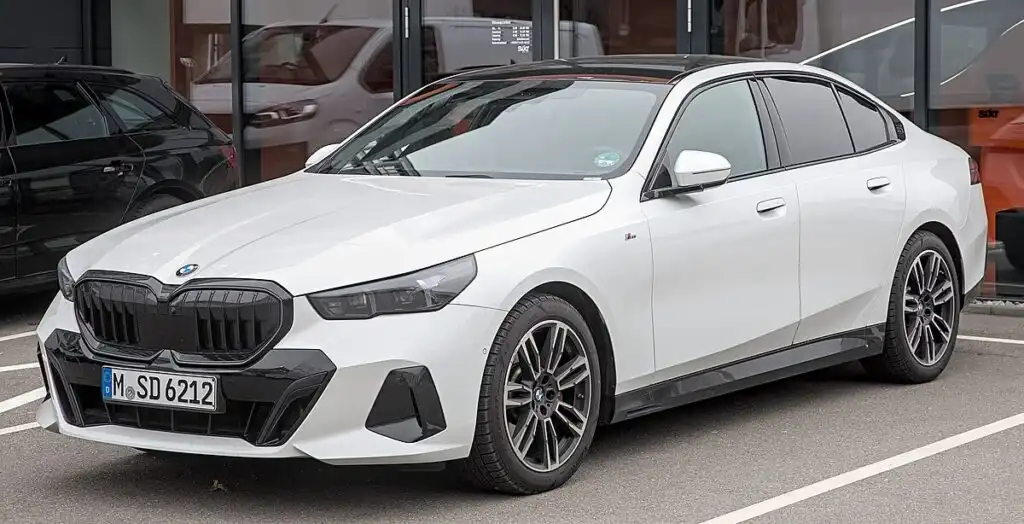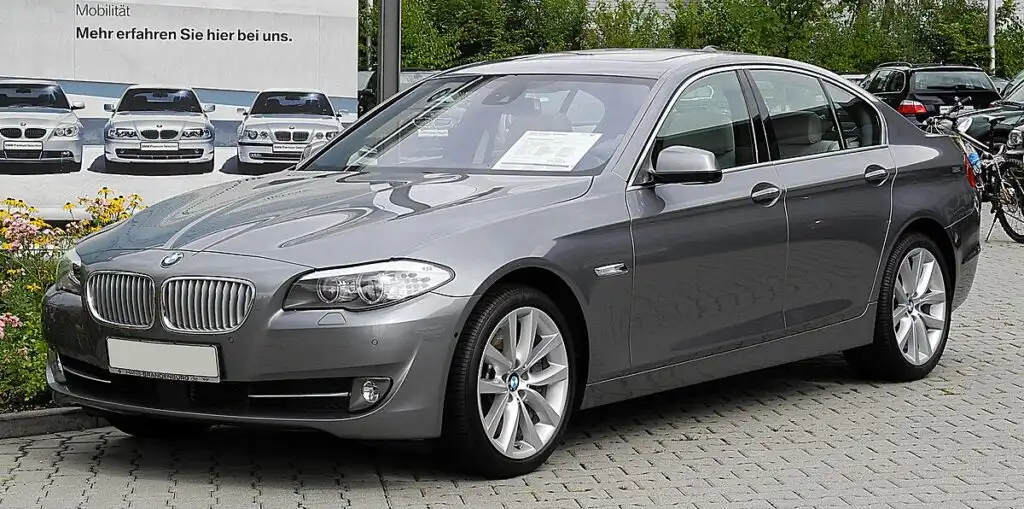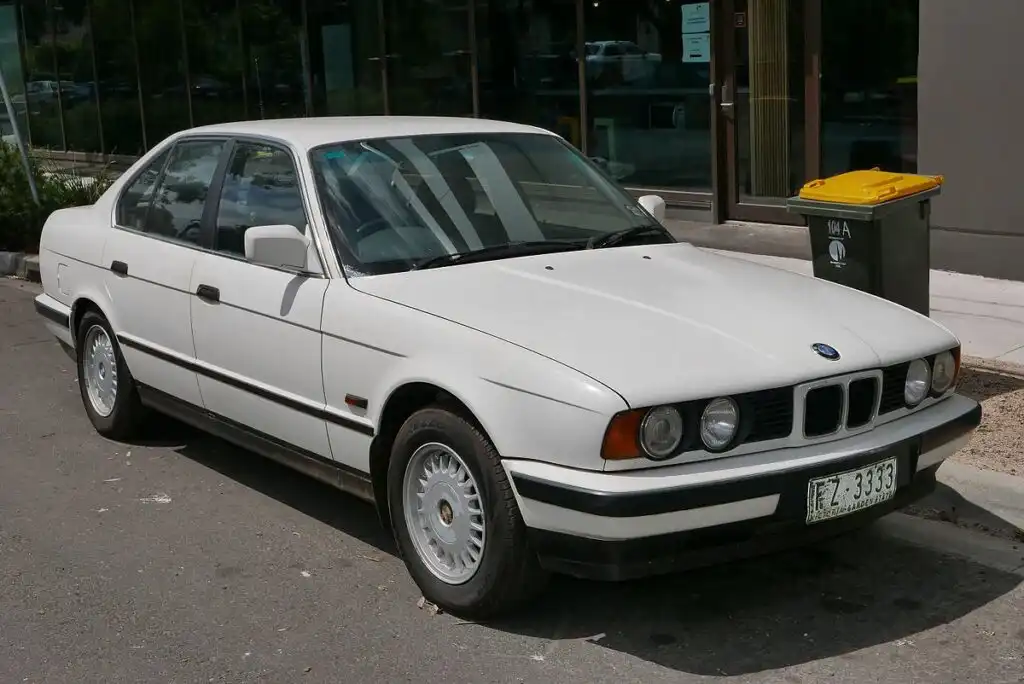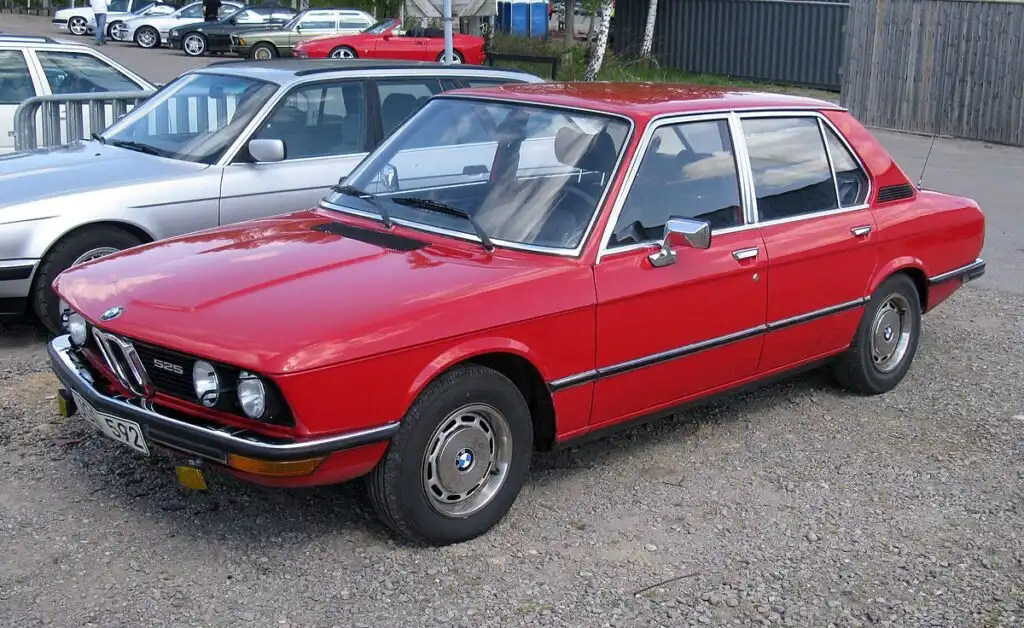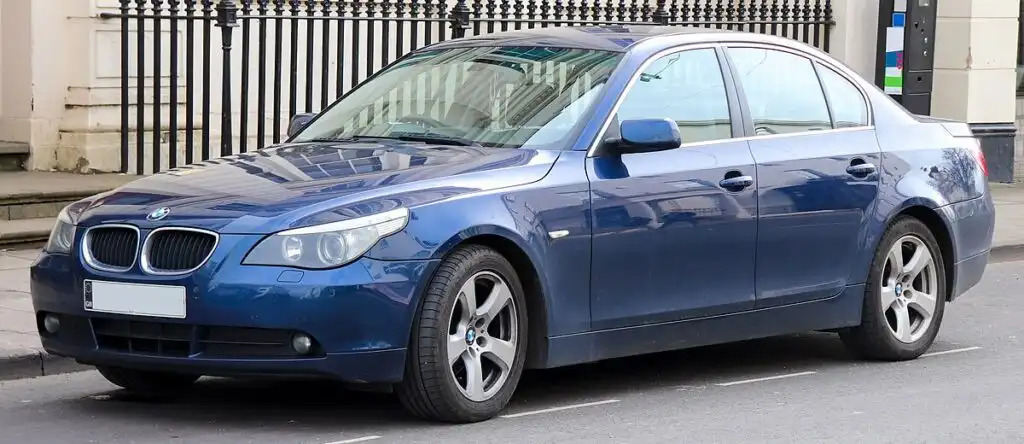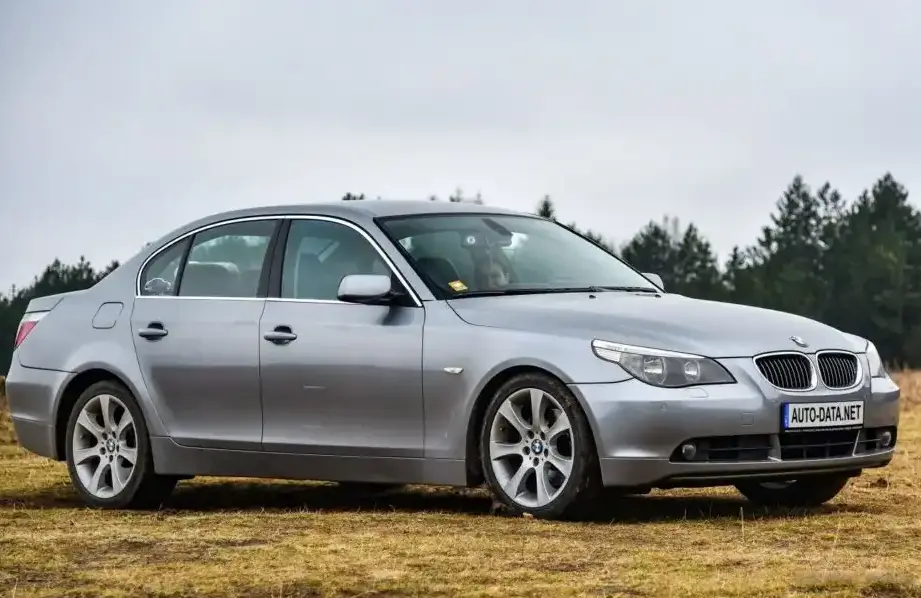
The BMW 5 Series (E60) 530d Steptronic, produced from September 2005 to March 2007, represented a compelling blend of performance and efficiency within the broader E60 5 Series lineup. Positioned as a mid-range offering, it catered to drivers seeking the refinement of a six-cylinder diesel engine coupled with the convenience of an automatic transmission. This variant played a significant role in BMW’s strategy to offer a diverse range of powertrains, appealing to a wider customer base in European markets where diesel engines were – and continue to be – highly favored. The E60 generation, known for its controversial but distinctive styling penned by Chris Bangle, aimed to modernize the 5 Series while maintaining its reputation for driving dynamics.
Technical Specifications
| Brand | BMW |
| Model | 5 Series |
| Generation | 5 Series (E60) |
| Type (Engine) | 530d (231 Hp) Steptronic |
| Start of production | September, 2005 |
| End of production | March, 2007 |
| Powertrain Architecture | Internal Combustion engine |
| Body type | Sedan |
| Seats | 5 |
| Doors | 4 |
| Fuel consumption (economy) – urban (NEDC) | 10.3 l/100 km (22.8 US mpg, 27.4 UK mpg, 9.7 km/l) |
| Fuel consumption (economy) – extra urban (NEDC) | 5.9 l/100 km (39.9 US mpg, 47.9 UK mpg, 16.9 km/l) |
| Fuel consumption (economy) – combined (NEDC) | 7.5 l/100 km (31.4 US mpg, 37.7 UK mpg, 13.3 km/l) |
| CO2 emissions (NEDC) | 200 g/km |
| Fuel Type | Diesel |
| Acceleration 0 – 100 km/h | 6.8 sec |
| Acceleration 0 – 62 mph | 6.8 sec |
| Acceleration 0 – 60 mph | 6.5 sec |
| Maximum speed | 248 km/h (154.1 mph) |
| Emission standard | Euro 4 |
| Weight-to-power ratio | 6.9 kg/Hp, 145.3 Hp/tonne |
| Weight-to-torque ratio | 3.2 kg/Nm, 314.5 Nm/tonne |
| Power | 231 Hp @ 4000 rpm |
| Power per litre | 77.2 Hp/l |
| Torque | 500 Nm @ 1750-3000 rpm (368.78 lb.-ft. @ 1750-3000 rpm) |
| Engine layout | Front, Longitudinal |
| Engine Model/Code | M57D30TU2 |
| Engine displacement | 2993 cm3 (182.64 cu. in.) |
| Number of cylinders | 6 |
| Engine configuration | Inline |
| Cylinder Bore | 84 mm (3.31 in.) |
| Piston Stroke | 90 mm (3.54 in.) |
| Compression ratio | 17:1 |
| Number of valves per cylinder | 4 |
| Fuel injection system | Diesel Commonrail |
| Engine aspiration | Turbocharger, Intercooler |
| Valvetrain | DOHC |
| Engine oil capacity | 7.7 l (8.14 US qt | 6.78 UK qt) |
| Coolant | 8.2 l (8.66 US qt | 7.21 UK qt) |
| Kerb Weight | 1590 kg (3505.35 lbs.) |
| Max. weight | 2150 kg (4739.94 lbs.) |
| Max load | 560 kg (1234.59 lbs.) |
| Trunk (boot) space – minimum | 520 l (18.36 cu. ft.) |
| Fuel tank capacity | 70 l (18.49 US gal | 15.4 UK gal) |
| Max. roof load | 100 kg (220.46 lbs.) |
| Permitted trailer load with brakes (8%) | 2000 kg (4409.25 lbs.) |
| Permitted trailer load with brakes (12%) | 2000 kg (4409.25 lbs.) |
| Permitted trailer load without brakes | 750 kg (1653.47 lbs.) |
| Permitted towbar download | 90 kg (198.42 lbs.) |
| Length | 4841 mm (190.59 in.) |
| Width | 1846 mm (72.68 in.) |
| Width including mirrors | 2030 mm (79.92 in.) |
| Height | 1468 mm (57.8 in.) |
| Wheelbase | 2888 mm (113.7 in.) |
| Front track | 1558 mm (61.34 in.) |
| Rear (Back) track | 1582 mm (62.28 in.) |
| Front overhang | 852 mm (33.54 in.) |
| Rear overhang | 1101 mm (43.35 in.) |
| Drag coefficient (Cd) | 0.28 |
| Minimum turning circle (turning diameter) | 11.4 m (37.4 ft.) |
| Drivetrain Architecture | The Internal combustion engine (ICE) drives the rear wheels of the vehicle. |
| Drive wheel | Rear wheel drive |
| Number of gears and type of gearbox | 6 gears, automatic transmission Steptronic |
| Front suspension | Spring Strut, Transverse stabilizer |
| Rear suspension | Independent multi-link spring suspension with stabilizer |
| Front brakes | Ventilated discs, 324×30 mm |
| Rear brakes | Ventilated discs, 320×20 mm |
| Assisting systems | ABS (Anti-lock braking system) |
| Steering type | Steering rack and pinion |
| Power steering | Hydraulic Steering |
| Tires size | Front wheel tires: 225/55 R16; 225/50 R17; 245/45 R17; 245/40 R18; 245/35 R19Rear wheel tires: 225/55 R16; 225/50 R17; 245/45 R17; 245/40 R18; 275/35 R18; 275/30 R19 |
| Wheel rims size | Front wheel rims: 7J x 16; 7.5J x 17; 8J x 17; 8J x 18; 8J x 19Rear wheel rims: 7J x 16; 7.5J x 17; 8J x 17; 8J x 18; 9J x 18; 9.5J x 19 |
Powertrain & Engine Architecture
At the heart of the 530d Steptronic lies the M57D30TU2, a 3.0-liter inline-six diesel engine. This engine, a staple in BMW’s diesel offerings, benefited from advancements in common-rail direct injection technology. The ‘TU2’ designation indicates an updated version of the M57 engine, featuring improved fuel injectors, a revised turbocharger, and optimized engine management software. These enhancements contributed to increased power output and reduced emissions. The engine produced 231 horsepower at 4000 rpm and a substantial 500 Nm (368.78 lb-ft) of torque between 1750 and 3000 rpm. The turbocharger, coupled with an intercooler, minimized intake air temperatures, further enhancing performance. The engine utilized a double overhead camshaft (DOHC) valvetrain with four valves per cylinder, optimizing gas flow for efficient combustion. The Steptronic automatic transmission, a six-speed unit, was specifically tuned to complement the engine’s torque characteristics, providing smooth and responsive gear changes.
Driving Characteristics
The 530d Steptronic offered a refined and comfortable driving experience. The abundant low-end torque from the diesel engine made it particularly well-suited for everyday driving and long-distance cruising. While not as overtly sporty as the gasoline-powered 530i or the high-performance M5, the 530d provided ample power for confident overtaking and effortless acceleration. The Steptronic transmission, while not offering the engagement of a manual gearbox, provided seamless shifts and allowed the driver to focus on the road. Compared to the 525d, the 530d offered a noticeable performance upgrade, while remaining more economical than the range-topping 535d. The automatic transmission’s gear ratios were optimized for both fuel efficiency and responsiveness, providing a good balance between the two.
Equipment & Trim Levels
The 530d Steptronic typically came equipped with a generous array of standard features, including automatic climate control, power-adjustable front seats, a multi-function steering wheel, and a high-quality audio system. Interior upholstery was typically a combination of cloth and leatherette, with full leather options available as an upgrade. Optional extras included a navigation system, sunroof, premium sound system, and parking sensors. The E60 5 Series offered a wide range of customization options, allowing buyers to tailor the vehicle to their specific preferences.
Chassis & Braking
The E60 5 Series featured a sophisticated chassis design, incorporating a MacPherson strut front suspension and a multi-link rear suspension. This setup provided a comfortable ride while maintaining good handling characteristics. The 530d Steptronic typically came equipped with ventilated disc brakes on all four wheels, providing ample stopping power. Anti-lock braking system (ABS) was standard, enhancing safety and stability. Stabilizer bars were fitted to both the front and rear axles, reducing body roll during cornering.
Market Reception & Comparison
The 530d Steptronic was generally well-received by automotive critics, who praised its blend of performance, efficiency, and refinement. It was often seen as a sensible choice for drivers who prioritized fuel economy and low-speed torque without sacrificing driving pleasure. Compared to the 530i, the 530d offered superior fuel economy and a more relaxed driving experience, while the 530i provided a more responsive and engaging feel. The 530d also offered a compelling alternative to other diesel-powered executive cars of the time, such as the Audi A6 and Mercedes-Benz E-Class.
Legacy
The M57D30TU2 engine, found in the 530d Steptronic, has proven to be a durable and reliable powerplant. While diesel engines are inherently more complex than their gasoline counterparts, the M57 engine has a reputation for longevity when properly maintained. Today, well-maintained examples of the E60 530d Steptronic can still be found on the used car market, offering a comfortable and economical option for those seeking a refined executive car. Common maintenance items include regular oil changes, filter replacements, and attention to the diesel particulate filter (DPF). The E60 5 Series, despite its polarizing styling, remains a popular choice among BMW enthusiasts and continues to be a respected performer in its class.