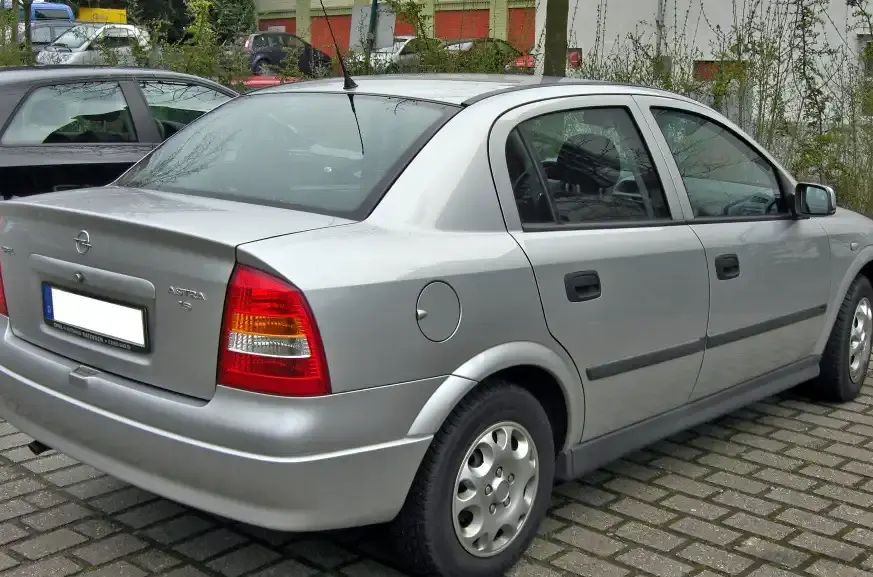
The Opel Astra G Classic 1.7 DTI 16V, produced from February 2000 to June 2003, represented an entry-level diesel offering within the broader Astra G Classic range. Positioned as a fuel-efficient and affordable option, this variant catered to buyers prioritizing economy over outright performance. It was a key component of Opel’s strategy to offer a diverse lineup within the compact segment, competing with vehicles like the Volkswagen Golf and Ford Focus. The Astra G Classic itself was a continuation of the popular Astra G series, offering a more budget-friendly alternative to the more modern Astra G models after Opel introduced the next generation. This model was primarily sold in Europe, where diesel engines held a significant market share.
Technical Specifications
| Brand | Opel |
| Model | Astra |
| Generation | Astra G Classic |
| Type (Engine) | 1.7 DTI 16V (75 Hp) |
| Start of production | February, 2000 |
| End of production | June, 2003 |
| Powertrain Architecture | Internal Combustion engine |
| Body type | Sedan |
| Seats | 5 |
| Doors | 4 |
| Fuel consumption (urban) | 6.1 l/100 km (38.6 US mpg, 46.3 UK mpg, 16.4 km/l) |
| Fuel consumption (extra urban) | 4 l/100 km (58.8 US mpg, 70.6 UK mpg, 25 km/l) |
| Fuel consumption (combined) | 4.8 l/100 km (49 US mpg, 58.9 UK mpg, 20.8 km/l) |
| CO2 emissions | 130 g/km |
| Fuel Type | Diesel |
| Acceleration 0 – 100 km/h | 14.5 sec |
| Acceleration 0 – 62 mph | 14.5 sec |
| Acceleration 0 – 60 mph | 13.8 sec |
| Maximum speed | 170 km/h (105.63 mph) |
| Emission standard | Euro 3 |
| Weight-to-power ratio | 16.1 kg/Hp, 62.2 Hp/tonne |
| Weight-to-torque ratio | 7.3 kg/Nm, 136.9 Nm/tonne |
| Power | 75 Hp @ 4400 rpm |
| Power per litre | 44.5 Hp/l |
| Torque | 165 Nm @ 1800 rpm (121.7 lb.-ft. @ 1800 rpm) |
| Engine layout | Front, Transverse |
| Engine Model/Code | Y17DT |
| Engine displacement | 1686 cm3 (102.89 cu. in.) |
| Number of cylinders | 4 |
| Engine configuration | Inline |
| Cylinder Bore | 79 mm (3.11 in.) |
| Piston Stroke | 86 mm (3.39 in.) |
| Compression ratio | 18.4:1 |
| Number of valves per cylinder | 4 |
| Fuel injection system | Direct injection |
| Engine aspiration | Turbocharger |
| Valvetrain | DOHC |
| Engine oil capacity | 4.5 l (4.76 US qt | 3.96 UK qt) |
| Coolant | 7.1 l (7.5 US qt | 6.25 UK qt) |
| Kerb Weight | 1205 kg (2656.57 lbs.) |
| Max. weight | 1725 kg (3802.97 lbs.) |
| Max load | 520 kg (1146.4 lbs.) |
| Trunk (boot) space – minimum | 460 l (16.24 cu. ft.) |
| Fuel tank capacity | 52 l (13.74 US gal | 11.44 UK gal) |
| Max. roof load | 100 kg (220.46 lbs.) |
| Permitted trailer load with brakes (12%) | 1150 kg (2535.32 lbs.) |
| Permitted trailer load without brakes | 600 kg (1322.77 lbs.) |
| Permitted towbar download | 75 kg (165.35 lbs.) |
| Length | 4252 mm (167.4 in.) |
| Width | 1709 mm (67.28 in.) |
| Width including mirrors | 1967 mm (77.44 in.) |
| Height | 1425 mm (56.1 in.) |
| Wheelbase | 2606 mm (102.6 in.) |
| Front track | 1464 mm (57.64 in.) |
| Rear (Back) track | 1452 mm (57.17 in.) |
| Front overhang | 791 mm (31.14 in.) |
| Rear overhang | 855 mm (33.66 in.) |
| Ride height (ground clearance) | 130 mm (5.12 in.) |
| Drag coefficient (Cd) | 0.29 |
| Minimum turning circle (turning diameter) | 10.8 m (35.43 ft.) |
| Drivetrain Architecture | The Internal combustion engine (ICE) drives the front wheels of the vehicle. |
| Drive wheel | Front wheel drive |
| Number of gears and type of gearbox | 5 gears, manual transmission |
| Front suspension | Independent, type McPherson with coil spring and anti-roll bar |
| Rear suspension | Semi-independent, coil spring |
| Front brakes | Ventilated discs |
| Rear brakes | Drum |
| Assisting systems | ABS (Anti-lock braking system) |
| Steering type | Steering rack and pinion |
| Power steering | Hydraulic Steering |
| Tires size | 195/60 R15 |
| Wheel rims size | 6J x 15 |
Powertrain & Engine Architecture
The heart of the Astra G Classic 1.7 DTI 16V is the Y17DT engine, a 1.7-liter inline-four cylinder diesel. This engine utilizes direct injection technology, a key feature for maximizing fuel efficiency and reducing emissions. The ‘16V’ designation indicates the engine features four valves per cylinder, enhancing breathing and contributing to improved power output. A turbocharger is employed to boost power and torque, overcoming the inherent limitations of a relatively small displacement diesel engine. The Y17DT engine is known for its robust construction and relatively simple design, contributing to its longevity. The engine is paired with a five-speed manual transmission, chosen for its affordability and efficiency. While an automatic transmission was available on other Astra G Classic models, it was not offered with the 1.7 DTI engine.
Driving Characteristics
The 1.7 DTI 16V, producing 75 horsepower and 165 Nm (121.7 lb-ft) of torque, delivered modest performance. Acceleration from 0-100 km/h (0-62 mph) took approximately 14.5 seconds, and top speed was limited to 170 km/h (105.63 mph). The engine’s torque peak at 1800 rpm provided reasonable pulling power for everyday driving, making it suitable for urban and highway use. However, compared to higher-output Astra G variants like the 1.8-liter petrol or the 2.0-liter DTI, the 1.7 DTI felt noticeably slower. The five-speed manual transmission was well-matched to the engine’s characteristics, offering a decent spread of gears for maintaining optimal engine speed. The gear ratios were geared towards fuel economy rather than spirited acceleration.
Equipment & Trim Levels
The Astra G Classic 1.7 DTI 16V typically came with a basic level of equipment, reflecting its position as an entry-level model. Standard features generally included power steering, central locking, and an adjustable steering column. Interior upholstery was typically cloth, and the dashboard featured a functional but relatively plain design. Optional extras, such as air conditioning, electric windows, and alloy wheels, were available but added to the vehicle’s cost. Trim levels varied slightly depending on the market, but the focus remained on providing a practical and affordable vehicle.
Chassis & Braking
The Astra G Classic 1.7 DTI 16V utilized a McPherson strut front suspension and a semi-independent coil spring rear suspension. This setup provided a comfortable ride quality, although it wasn’t particularly sporty. Front brakes were ventilated discs, offering adequate stopping power, while rear brakes were drums, a cost-saving measure common in this segment. ABS (Anti-lock Braking System) was standard, enhancing safety. The suspension was tuned for comfort and stability, prioritizing ride quality over handling precision.
Market Reception & Comparison
The Astra G Classic 1.7 DTI 16V was generally well-received as a fuel-efficient and affordable option. Critics praised its economy and reliability, but noted its lack of performance compared to other Astra G variants. Compared to the 1.8-liter petrol version, the 1.7 DTI offered significantly better fuel economy but considerably less power. The 2.0-liter DTI provided a better balance of performance and economy, but at a higher price point. The 1.7 DTI appealed to buyers who prioritized low running costs and practicality over driving excitement.
Legacy
The Y17DT engine, while not known for being particularly powerful, proved to be a durable and reliable unit. Many examples of the Astra G Classic 1.7 DTI 16V remain on the road today, testament to its robust construction. In the used car market, these vehicles are often sought after by buyers looking for an affordable and economical runabout. Maintenance costs are generally low, and parts availability is good. However, potential buyers should be aware of the typical wear and tear associated with diesel engines, such as turbocharger issues and injector problems. Overall, the Astra G Classic 1.7 DTI 16V represents a practical and dependable choice for those seeking a budget-friendly compact car.