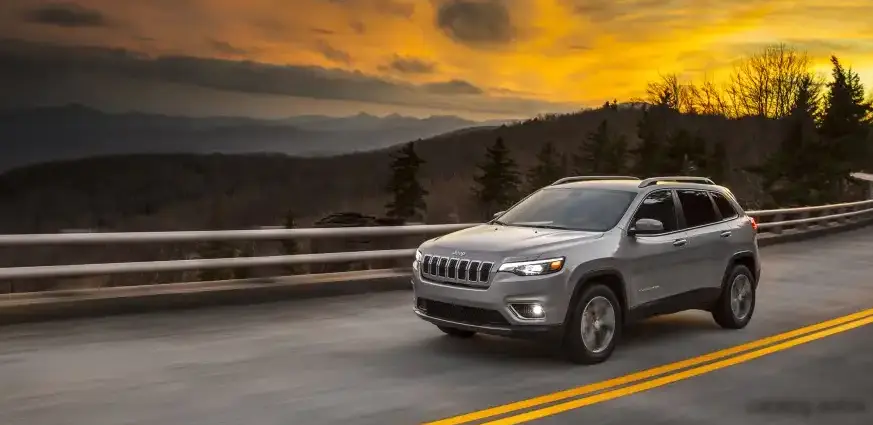
The Jeep Cherokee V (KL), specifically the facelifted version introduced in 2018, represented a significant evolution of the Cherokee mid-size SUV. The 2.2 MultiJet II turbodiesel engine paired with an automatic transmission was a key offering in many European and international markets, though less common in the United States. Production of this variant ran from September 2018 through December 2021. This configuration aimed to balance fuel efficiency with acceptable performance for daily driving, positioning itself as a practical choice within the broader Cherokee lineup, which also included gasoline engine options and various trim levels.
Technical Specifications
| Brand | Jeep |
| Model | Cherokee |
| Generation | Cherokee V (KL, facelift 2018) |
| Type (Engine) | 2.2 MultiJet II (195 Hp) Automatic |
| Start of production | September, 2018 |
| End of production | December, 2021 |
| Powertrain Architecture | Internal Combustion engine |
| Body type | SUV |
| Seats | 5 |
| Doors | 5 |
| Fuel consumption (urban) | 7.2 l/100 km (32.7 US mpg) |
| Fuel consumption (extra urban) | 5.4 l/100 km (43.6 US mpg) |
| Fuel consumption (combined) | 6.1 l/100 km (38.6 US mpg) |
| CO2 emissions | 161 g/km |
| Fuel Type | Diesel |
| Acceleration 0 – 100 km/h | 9.1 sec |
| Acceleration 0 – 62 mph | 9.1 sec |
| Acceleration 0 – 60 mph | 8.6 sec |
| Maximum speed | 205 km/h (127.38 mph) |
| Emission standard | Euro 6d |
| Power | 195 Hp @ 3500 rpm |
| Torque | 450 Nm @ 2000 rpm (331.9 lb.-ft. @ 2000 rpm) |
| Engine layout | Front, Longitudinal |
| Engine Model/Code | EBV |
| Engine displacement | 2174 cm3 (132.67 cu. in.) |
| Number of cylinders | 4 |
| Engine configuration | Inline |
| Compression ratio | 15.5:1 |
| Number of valves per cylinder | 4 |
| Fuel injection system | Diesel Commonrail |
| Engine aspiration | Turbocharger, Intercooler |
| Engine oil capacity | 4.1 l (4.33 US qt | 3.61 UK qt) |
| Coolant capacity | 6.8 l (7.19 US qt | 5.98 UK qt) |
| Max. weight | 2290 kg (5048.59 lbs.) |
| Trunk (boot) space – minimum | 448 l (15.82 cu. ft.) |
| Trunk (boot) space – maximum | 1555 l (54.91 cu. ft.) |
| Fuel tank capacity | 60 l (15.85 US gal | 13.2 UK gal) |
| AdBlue tank capacity | 15.7 l (4.15 US gal | 3.45 UK gal) |
| Permitted trailer load with brakes (12%) | 2370 kg (5224.96 lbs.) |
| Length | 4623 mm (182.01 in.) |
| Width | 1859 mm (73.19 in.) |
| Height | 1669 mm (65.71 in.) |
| Wheelbase | 2705 mm (106.5 in.) |
| Front track | 1593 mm (62.72 in.) |
| Rear track | 1603 mm (63.11 in.) |
| Ride height (ground clearance) | 150 mm (5.91 in.) |
| Minimum turning circle | 11.6 m (38.06 ft.) |
| Drivetrain Architecture | Front wheel drive |
| Number of gears | 9 |
| Gearbox type | Automatic transmission |
| Front suspension | Independent, McPherson with coil spring and anti-roll bar |
| Rear suspension | Independent multi-link with stabilizer |
| Front brakes | Ventilated discs |
| Rear brakes | Disc |
Powertrain & Engine Architecture
The heart of this Cherokee variant is the 2.2-liter MultiJet II turbodiesel engine, identified by the engine code EBV. This engine is a member of the GDE (Global Diesel Engines) family developed by Fiat Powertrain Technologies (FPT), and later Stellantis. It features a cast iron block, aluminum cylinder head, and four valves per cylinder. The MultiJet II technology employs common-rail direct injection with solenoid injectors, enabling multiple fuel injections per combustion cycle for improved efficiency and reduced noise. A variable geometry turbocharger (VGT) with an intercooler further enhances performance. The engine’s 15.5:1 compression ratio is typical for a modern diesel, contributing to its thermal efficiency. The nine-speed automatic transmission, sourced from ZF, was a key component, offering a wide range of gear ratios to optimize fuel economy and provide smooth shifts. This transmission was designed to handle the engine’s 450 Nm (331.9 lb-ft) of torque.
Driving Characteristics
The 195 horsepower and 450 Nm of torque delivered by the 2.2 MultiJet II, coupled with the nine-speed automatic, provided adequate performance for everyday driving. Acceleration from 0-60 mph took approximately 8.6 seconds, and 0-100 km/h in 9.1 seconds. While not a sports car, the engine offered sufficient power for highway merging and overtaking. The automatic transmission, while generally smooth, could sometimes exhibit slight hesitation during downshifts. The wide gear ratio spread allowed for relaxed cruising at highway speeds, contributing to good fuel economy. Compared to the gasoline-powered Cherokee variants, the diesel offered significantly better fuel efficiency, but lacked the immediate responsiveness of the petrol engines. Compared to higher-output diesel versions available in some markets, this 195 hp variant prioritized fuel economy over outright performance.
Equipment & Trim Levels
The 2.2 MultiJet II Automatic typically came equipped as a mid-range trim level in many markets. Standard features often included air conditioning, a touchscreen infotainment system with Bluetooth connectivity, alloy wheels, and a suite of safety features like ABS, electronic stability control, and multiple airbags. Higher trim levels added features such as leather upholstery, a premium sound system, navigation, and advanced driver-assistance systems (ADAS) like adaptive cruise control and lane departure warning. Interior upholstery was generally cloth on the base trims, with leather options available on higher-spec models. Dashboard configurations were consistent across the range, with a focus on functionality and ease of use.
Chassis & Braking
The Cherokee V (KL) utilized a unibody construction. The front suspension featured an independent McPherson strut design with coil springs and an anti-roll bar. The rear suspension employed an independent multi-link setup, also with coil springs and a stabilizer bar. This suspension configuration aimed to provide a balance between ride comfort and handling. Braking systems consisted of ventilated discs at the front and solid discs at the rear. ABS (Anti-lock Braking System) was standard. The 2.2 MultiJet II variants, due to their weight, often featured slightly stiffer suspension settings compared to lighter gasoline models to maintain stability and control.
Market Reception & Comparison
The 2.2 MultiJet II Automatic Cherokee was generally well-received in markets where diesel engines were popular, particularly in Europe. Critics praised its fuel efficiency and comfortable ride. However, some reviewers noted the engine could be somewhat noisy compared to gasoline alternatives. Compared to the 3.2-liter Pentastar V6 gasoline engine, the diesel offered superior fuel economy but less overall power. The diesel also tended to hold its value slightly better in the used car market due to its efficiency and durability. Reliability was generally good, although diesel particulate filter (DPF) maintenance was a consideration for owners.
Legacy
The 2.2 MultiJet II engine proved to be a reliable and durable powertrain. While diesel engine popularity has fluctuated in recent years, these Cherokees continue to be sought after by buyers prioritizing fuel economy and long-distance comfort. The nine-speed automatic transmission, while occasionally exhibiting minor issues, has generally proven to be robust. In the used car market, well-maintained examples of the 2.2 MultiJet II Cherokee command reasonable prices, reflecting their practicality and efficiency. The engine’s longevity and relatively low running costs make it a viable option for those seeking a capable and economical mid-size SUV.