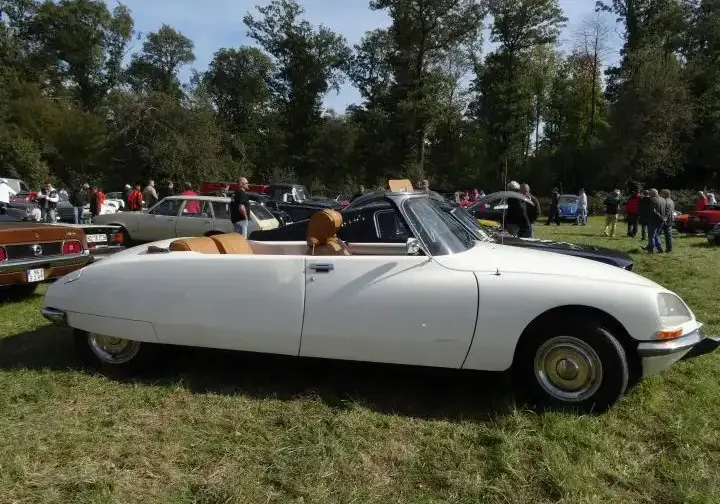
The Citroën DS III Cabriolet Chapron 21 (115 Hp) represents a unique and luxurious iteration of the iconic Citroën DS, produced between 1968 and 1971. This model combined the advanced engineering of the DS with the bespoke coachbuilding of Henri Chapron, resulting in a highly desirable and exclusive open-top grand tourer. Positioned as the most opulent version of the DS, the Chapron Cabriolet catered to a clientele seeking both technological innovation and refined elegance. It was built on the DS platform (specifically the ID21 chassis) and featured a fully convertible body crafted by Chapron, a renowned French coachbuilder specializing in luxury automobiles.
Technical Specifications
| Brand | Citroën |
| Model | DS |
| Generation | DS III Cabriolet Chapron |
| Type (Engine) | 21 (115 Hp) |
| Start of production | 1968 |
| End of production | 1971 |
| Powertrain Architecture | Internal Combustion engine |
| Body type | Cabriolet |
| Seats | 2 |
| Doors | 2 |
| Fuel Type | Petrol (Gasoline) |
| Weight-to-power ratio | 11.6 kg/Hp, 86.1 Hp/tonne |
| Weight-to-torque ratio | 7.8 kg/Nm, 128.1 Nm/tonne |
| Power | 115 Hp @ 5500 rpm |
| Power per litre | 52.9 Hp/l |
| Torque | 171 Nm @ 4000 rpm (126.12 lb.-ft. @ 4000 rpm) |
| Engine layout | Front, Longitudinal |
| Engine Model/Code | B22627 |
| Engine displacement | 2175 cm3 (132.73 cu. in.) |
| Number of cylinders | 4 |
| Engine configuration | Inline |
| Cylinder Bore | 90 mm (3.54 in.) |
| Piston Stroke | 85.5 mm (3.37 in.) |
| Compression ratio | 8.75:1 |
| Number of valves per cylinder | 2 |
| Fuel injection system | Carburettor |
| Engine aspiration | Naturally aspirated engine |
| Engine oil capacity | 5 l (5.28 US qt | 4.4 UK qt) |
| Coolant | 13 l (13.74 US qt | 11.44 UK qt) |
| Kerb Weight | 1335 kg (2943.17 lbs.) |
| Max. weight | 1780 kg (3924.23 lbs.) |
| Max load | 445 kg (981.06 lbs.) |
| Fuel tank capacity | 65 l (17.17 US gal | 14.3 UK gal) |
| Length | 4900 mm (192.91 in.) |
| Width | 1803 mm (70.98 in.) |
| Height | 1420 mm (55.91 in.) |
| Wheelbase | 3125 mm (123.03 in.) |
| Front track | 1516 mm (59.69 in.) |
| Rear (Back) track | 1316 mm (51.81 in.) |
| Minimum turning circle | 11 m (36.09 ft.) |
| Drivetrain Architecture | The Internal combustion engine (ICE) drives the front wheels of the vehicle. |
| Drive wheel | Front wheel drive |
| Number of gears and type of gearbox | 4 gears, manual transmission |
| Front suspension | Hydro-pneumatic element |
| Rear suspension | Hydro-pneumatic element |
| Front brakes | Disc |
| Rear brakes | Drum |
| Steering type | Steering rack and pinion |
| Power steering | Hydraulic Steering |
Powertrain & Engine Architecture
The DS III Cabriolet Chapron 21 was powered by Citroën’s 2.2-liter inline-four cylinder engine, designated the B22627. This engine produced 115 horsepower at 5500 rpm and 171 Nm (126.12 lb-ft) of torque at 4000 rpm. It featured a single overhead camshaft and two valves per cylinder. Fuel delivery was managed by a Solex carburetor, a common setup for the era. The engine’s longitudinal front-engine layout contributed to the car’s balanced handling. The four-speed manual transmission was the standard offering, providing drivers with direct control over the engine’s power. The engine was known for its smoothness and relative quietness, characteristics valued in a luxury vehicle.
Driving Characteristics
The 115 hp engine, coupled with the four-speed manual gearbox, provided adequate, though not overwhelming, performance for the DS III Cabriolet Chapron 21. Acceleration was respectable for the time, but the car’s considerable weight (1335 kg / 2943.17 lbs) meant it wasn’t a particularly sporty vehicle. The emphasis was on comfortable cruising and effortless grand touring. The hydropneumatic suspension, a hallmark of the DS, provided an exceptionally smooth and compliant ride, absorbing bumps and imperfections in the road with remarkable ease. Steering was precise thanks to the rack-and-pinion system with hydraulic assistance. Compared to the ID19 version, the 21 offered a noticeable increase in torque, making it more relaxed on long journeys and better suited for carrying passengers and luggage.
Equipment & Trim Levels
As a Chapron-bodied vehicle, the DS III Cabriolet 21 was exceptionally well-appointed. Standard features included luxurious leather upholstery, wood trim on the dashboard and door panels, and power-assisted steering. The convertible top was typically lined and offered excellent insulation from the elements. Optional extras included upgraded audio systems, specialized paint colors, and bespoke interior modifications tailored to the customer’s preferences. The interior layout was typical of the DS, with a distinctive dashboard featuring toggle switches and a comfortable, driver-focused design. The Chapron conversion added a level of craftsmanship and attention to detail that was not found in the standard DS models.
Chassis & Braking
The DS III Cabriolet Chapron 21 retained the innovative hydropneumatic suspension system of the standard DS. This system utilized self-leveling spheres and provided a remarkably smooth and controlled ride. The front suspension employed independent hydropneumatic elements, while the rear utilized a trailing arm setup with hydropneumatic springing and damping. Braking was accomplished via disc brakes at the front and drum brakes at the rear. While the braking system was effective for the era, it lacked the stopping power of modern systems. The steering was a rack-and-pinion design with hydraulic assistance, providing precise and effortless control.
Market Reception & Comparison
The Citroën DS III Cabriolet Chapron 21 was highly regarded by automotive journalists and enthusiasts alike. It was praised for its elegant styling, luxurious interior, and exceptional ride quality. However, its high price tag limited its appeal to a relatively small segment of the market. Compared to other luxury convertibles of the time, such as the Mercedes-Benz SL, the DS offered a more unique and technologically advanced experience. The 21 model, with its larger engine, was generally preferred over the lower-powered versions for its improved performance and refinement. Fuel economy was typical for a vehicle of its size and era, and reliability was generally good, although the complex hydropneumatic suspension required specialized maintenance.
Legacy
The Citroën DS III Cabriolet Chapron 21 remains a highly collectible and sought-after classic car today. Its rarity, combined with its unique design and advanced engineering, makes it a prized possession for enthusiasts. The hydropneumatic suspension, while requiring specialized maintenance, is still admired for its innovative design and exceptional ride quality. Well-maintained examples command significant prices in the collector car market. The DS III Cabriolet Chapron 21 stands as a testament to Citroën’s engineering prowess and Henri Chapron’s coachbuilding artistry, representing a golden age of automotive design and innovation. The engine, while not particularly powerful by modern standards, is known for its durability and relative simplicity, making it a manageable restoration project for skilled mechanics.