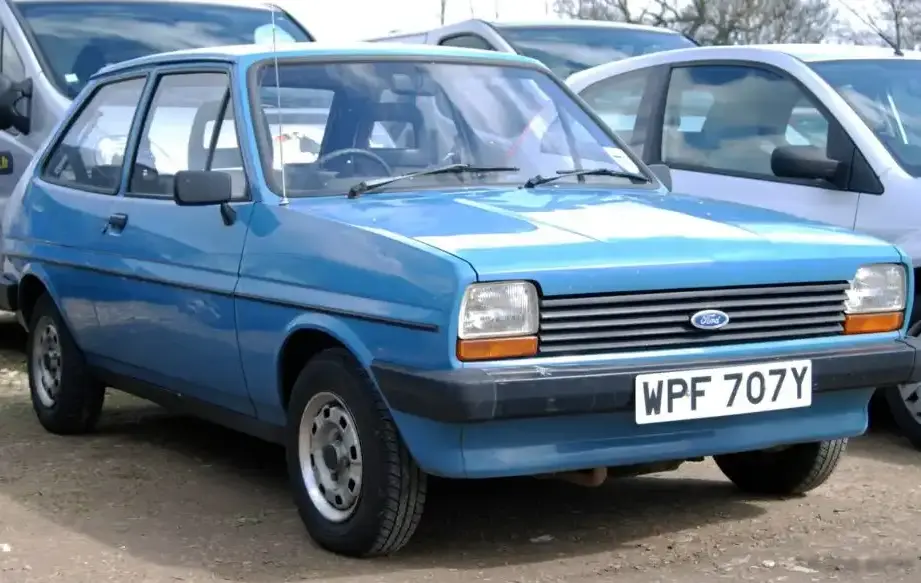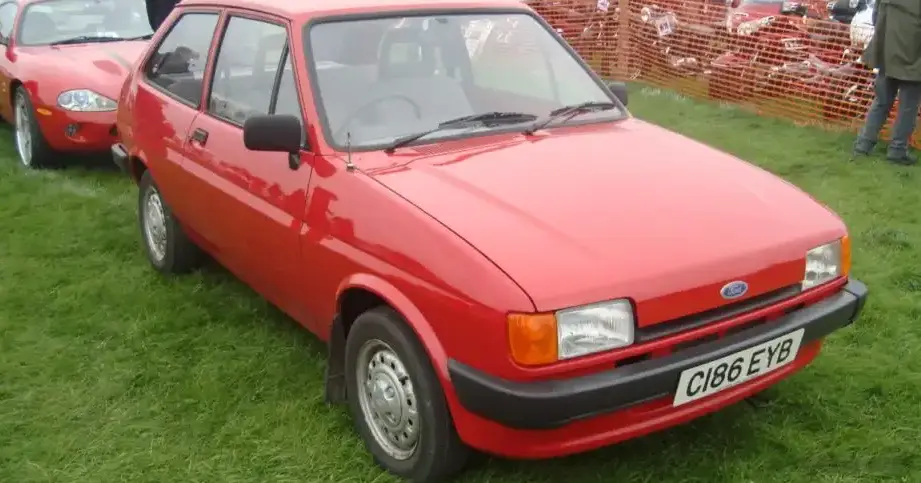
The Ford Fiesta Mk2 1.1, powered by the FBD engine producing 50 horsepower, represents the entry point into the second generation Fiesta lineup produced between 1983 and 1989. Positioned as an affordable and economical city car, this variant played a crucial role in establishing the Fiesta as a popular choice in the European market, particularly in the United Kingdom and Germany. It was designed to offer basic transportation with a focus on fuel efficiency and low running costs, appealing to first-time car buyers, commuters, and those seeking a practical small car.
Technical Specifications
| Brand | Ford |
| Model | Fiesta |
| Generation | Fiesta II (Mk2) |
| Type (Engine) | 1.1 (FBD) (50 Hp) |
| Start of production | 1983 |
| End of production | 1989 |
| Powertrain Architecture | Internal Combustion engine |
| Body type | Hatchback |
| Doors | 3 |
| Fuel Type | Petrol (Gasoline) |
| Power | 50 Hp |
| Engine Model/Code | GLC, GSF |
| Engine aspiration | Naturally aspirated engine |
| Engine oil capacity | 3.4 l (3.59 US qt | 2.99 UK qt) |
| Coolant capacity | 5.3 l (5.6 US qt | 4.66 UK qt) |
Introduction
The Fiesta Mk2, launched in 1983, was a significant update to the original Fiesta, which debuted in 1976. The Mk2 retained the basic hatchback silhouette but featured a more angular and modern design. The 1.1-liter FBD engine variant was the base model, intended to provide the most accessible price point. It was a key component of Ford’s strategy to offer a range of Fiesta models catering to diverse customer needs and budgets. The Mk2 Fiesta was built on the same front-wheel-drive platform as its predecessor, but with improvements to the chassis and suspension for enhanced handling and ride comfort. This generation of Fiesta saw increased production numbers and solidified its position as a leading small car in Europe.
Powertrain & Engine Architecture
The heart of the Fiesta Mk2 1.1 is the Ford FBD engine, a 1.1-liter inline-four cylinder petrol engine. Engine codes GLC and GSF were commonly used. This engine is a naturally aspirated, overhead valve (OHV) design, meaning it utilizes a single camshaft in the block to operate the valves. The FBD engine featured a two-barrel carburetor for fuel delivery, a relatively simple system compared to fuel injection, contributing to its affordability and ease of maintenance. The engine’s modest output of 50 horsepower at around 6000 rpm and approximately 64 lb-ft of torque was sufficient for city driving and short trips, but it wasn’t designed for high-speed performance. The engine’s internal components were robust, but its design was relatively dated even at the time of its introduction. The transmission offered with this engine was typically a four-speed manual, although a three-speed automatic transmission was also available, albeit less common. The automatic transmission was a simple, torque converter type, prioritizing smoothness over performance.
Driving Characteristics
The Fiesta Mk2 1.1, particularly in its base specification, offered a utilitarian driving experience. Acceleration was modest, with a 0-60 mph time exceeding 15 seconds. The engine felt strained at higher speeds, and overtaking required careful planning. The four-speed manual transmission provided a reasonable level of control, but the gear ratios were widely spaced, requiring frequent shifting. The automatic transmission, while offering convenience, further reduced acceleration and responsiveness. Handling was generally good for a small car of its era, with light steering and a relatively nimble feel. However, the suspension was tuned for comfort rather than sporty handling, resulting in noticeable body roll during cornering. The 1.1-liter engine’s low power output meant that the car was best suited for urban environments and shorter journeys, where its fuel efficiency and ease of parking were significant advantages. Compared to the 1.6-liter versions of the Fiesta Mk2, the 1.1 felt significantly underpowered, but it offered a more economical and affordable alternative.
Equipment & Trim Levels
The Fiesta Mk2 1.1 was typically offered in a basic trim level, focusing on essential features. Standard equipment generally included cloth upholstery, a basic instrument cluster, and manually operated windows and door locks. Central locking and electric windows were not typically available on this base model. The interior was functional and durable, but lacked the refinement of higher-spec Fiesta models. Optional extras included a radio, a sunroof, and upgraded interior trim. The exterior styling was simple, with steel wheels, black plastic bumpers, and minimal chrome trim. The Fiesta Mk2 1.1 was designed to be a no-frills, affordable car, and its equipment level reflected that philosophy. Later models within the Mk2 range saw the introduction of more luxurious trims, such as the Ghia, which offered features like alloy wheels, upgraded upholstery, and more comprehensive instrumentation.
Chassis & Braking
The Fiesta Mk2 utilized a MacPherson strut front suspension and a twist-beam rear suspension. This setup provided a reasonable balance between ride comfort and handling. The front brakes were typically disc brakes, while the rear brakes were drum brakes on the base 1.1-liter models. Higher-spec Fiesta models often featured disc brakes on all four wheels. The steering was rack and pinion, providing light and precise steering feel. The chassis was relatively lightweight, contributing to the car’s nimble handling. Stabilizer bars were not typically fitted to the base 1.1-liter models, further emphasizing the focus on comfort over sporty handling. The braking system was adequate for the car’s performance, but lacked the stopping power of more powerful Fiesta variants.
Market Reception & Comparison
The Fiesta Mk2 1.1 was generally well-received as an affordable and economical city car. Critics praised its fuel efficiency, ease of driving, and low running costs. However, they also noted its lack of power and refinement compared to more expensive rivals. Compared to other small cars of the era, such as the Volkswagen Polo and the Renault 5, the Fiesta Mk2 1.1 offered a competitive price point and a practical, if somewhat basic, package. Fuel economy was a key selling point, with the 1.1-liter engine achieving around 45-50 mpg in real-world driving conditions. Reliability was generally good, although the carburetor required periodic maintenance. The Fiesta Mk2 1.1 was often chosen by drivers who prioritized affordability and practicality over performance and luxury.
Legacy
The Fiesta Mk2 1.1, while not the most powerful or refined version of the Fiesta, remains a popular choice among classic car enthusiasts and those seeking a simple, affordable classic. The FBD engine is known for its durability and ease of maintenance, making it a relatively reliable powertrain. Parts availability is generally good, although some components may be becoming increasingly difficult to find. Today, the Fiesta Mk2 1.1 is often seen as a charming and nostalgic reminder of a simpler era of motoring. Its affordability and practicality continue to appeal to a wide range of drivers, and it remains a popular choice for restoration projects and classic car rallies. The car’s enduring appeal is a testament to its well-engineered design and its role in establishing the Fiesta as a beloved small car icon.