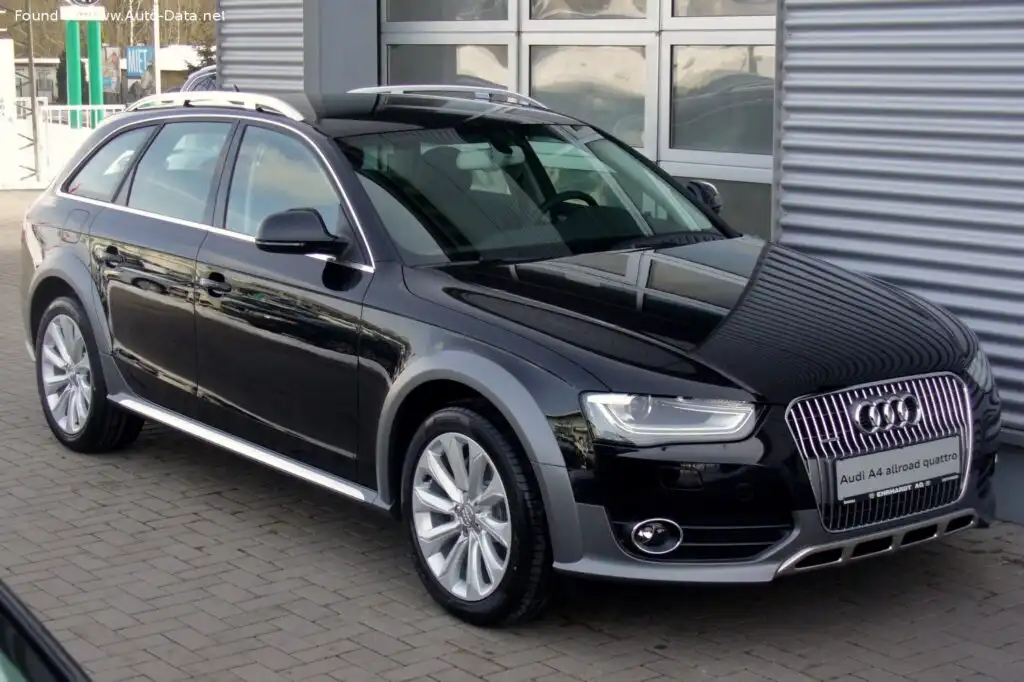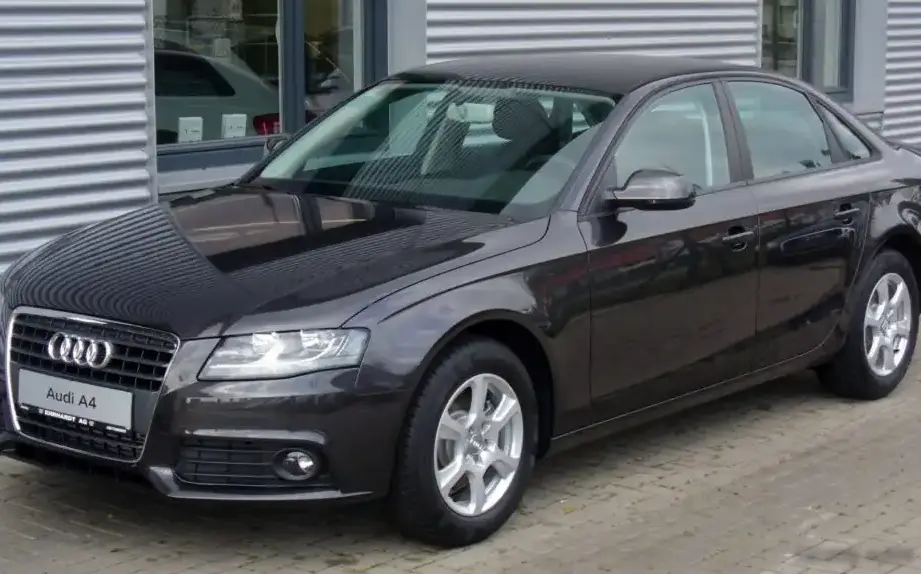
The Audi A4 (B8 8K) 3.0 TDI V6 quattro, produced from May 2007 to 2011, represented a significant offering in Audi’s mid-size executive car lineup. This variant occupied the premium segment of the B8 generation, positioned above the entry-level 1.8 TFSI and 2.0 TDI models, and below the performance-oriented S4. It was primarily marketed in Europe and other regions where diesel engines were favored, offering a blend of performance, efficiency, and all-weather capability thanks to Audi’s renowned quattro all-wheel-drive system. The B8 A4, built on the Volkswagen Group’s B8 (PL46) platform, aimed to improve upon its predecessor (B7) with enhanced refinement, technology, and driving dynamics.
Technical Specifications
| Brand | Audi |
| Model | A4 |
| Generation | A4 (B8 8K) |
| Type (Engine) | 3.0 TDI V6 (240 Hp) quattro |
| Start of production | May, 2007 |
| End of production | 2011 |
| Powertrain Architecture | Internal Combustion engine |
| Body type | Sedan |
| Seats | 5 |
| Doors | 4 |
| Fuel consumption (urban) | 9.6 l/100 km (24.5 US mpg, 29.4 UK mpg, 10.4 km/l) |
| Fuel consumption (extra urban) | 5.4 l/100 km (43.6 US mpg, 52.3 UK mpg, 18.5 km/l) |
| Fuel consumption (combined) | 6.9 l/100 km (34.1 US mpg, 40.9 UK mpg, 14.5 km/l) |
| CO2 emissions | 183 g/km |
| Fuel Type | Diesel |
| Acceleration 0 – 100 km/h | 6.1 sec |
| Acceleration 0 – 62 mph | 6.1 sec |
| Acceleration 0 – 60 mph | 5.8 sec |
| Maximum speed | 250 km/h (155.34 mph) |
| Emission standard | Euro 4 |
| Weight-to-power ratio | 6.9 kg/Hp, 145 Hp/tonne |
| Weight-to-torque ratio | 3.3 kg/Nm, 302.1 Nm/tonne |
| Power | 240 Hp @ 4000-4400 rpm |
| Power per litre | 80.9 Hp/l |
| Torque | 500 Nm @ 1500-3000 rpm (368.78 lb.-ft. @ 1500-3000 rpm) |
| Engine layout | Front, Longitudinal |
| Engine Model/Code | EA896 / CCWA |
| Engine displacement | 2967 cm3 (181.06 cu. in.) |
| Number of cylinders | 6 |
| Engine configuration | V-engine |
| Cylinder Bore | 83 mm (3.27 in.) |
| Piston Stroke | 91.4 mm (3.6 in.) |
| Compression ratio | 16.8:1 |
| Number of valves per cylinder | 4 |
| Fuel injection system | Diesel Commonrail |
| Engine aspiration | Turbocharger, Intercooler |
| Valvetrain | DOHC |
| Engine oil capacity | 6.9 l (7.29 US qt | 6.07 UK qt) |
| Coolant | 9 l (9.51 US qt | 7.92 UK qt) |
| Kerb Weight | 1655 kg (3648.65 lbs.) |
| Max. weight | 2205 kg (4861.19 lbs.) |
| Max load | 550 kg (1212.54 lbs.) |
| Trunk (boot) space – minimum | 480 l (16.95 cu. ft.) |
| Trunk (boot) space – maximum | 962 l (33.97 cu. ft.) |
| Fuel tank capacity | 65 l (17.17 US gal | 14.3 UK gal) |
| Max. roof load | 75 kg (165.35 lbs.) |
| Permitted trailer load with brakes (8%) | 2100 kg (4629.71 lbs.) |
| Permitted trailer load with brakes (12%) | 1900 kg (4188.78 lbs.) |
| Permitted trailer load without brakes | 750 kg (1653.47 lbs.) |
| Permitted towbar download | 80 kg (176.37 lbs.) |
| Length | 4703 mm (185.16 in.) |
| Width | 1826 mm (71.89 in.) |
| Height | 1427 mm (56.18 in.) |
| Wheelbase | 2808 mm (110.55 in.) |
| Front track | 1564 mm (61.57 in.) |
| Rear (Back) track | 1551 mm (61.06 in.) |
| Drag coefficient (Cd) | 0.28 |
| Minimum turning circle (turning diameter) | 11.4 m (37.4 ft.) |
| Drivetrain Architecture | The Internal combustion engine (ICE) drives permanently the four wheels of the vehicle. |
| Drive wheel | All wheel drive (4×4) |
| Number of gears and type of gearbox | 6 gears, manual transmission |
| Front suspension | Independent multi-link suspension |
| Rear suspension | Independent multi-link spring suspension with stabilizer |
| Front brakes | Ventilated discs |
| Rear brakes | Disc |
| Steering type | Steering rack and pinion |
| Power steering | Electric Steering |
| Tires size | 225/50 R17; 245/40 R18 |
| Wheel rims size | 7.5J x 17; 8J x 18 |
Powertrain & Engine Architecture
The heart of the A4 3.0 TDI quattro is the EA896 engine family, specifically the CCWA code. This 3.0-liter V6 diesel engine utilizes a common rail direct injection system, delivering fuel at extremely high pressures for optimized combustion. The engine features a single turbocharger with an intercooler, boosting power and torque output. The valvetrain employs a double overhead camshaft (DOHC) design with four valves per cylinder, enhancing breathing and efficiency. The engine’s longitudinal mounting allowed for a more balanced weight distribution, contributing to the car’s handling characteristics. The 6-speed manual transmission was standard, providing precise gear changes and a direct connection to the engine. The quattro all-wheel-drive system, utilizing a Torsen center differential, dynamically distributes torque between the front and rear axles, enhancing traction in various conditions.
Driving Characteristics
The 3.0 TDI quattro offered a compelling driving experience. The 240 horsepower and substantial 368 lb-ft of torque provided brisk acceleration, with 0-60 mph times around 5.8 seconds. The manual transmission allowed for full control over the engine’s powerband, while the quattro system ensured confident handling, particularly in inclement weather. Compared to the 1.8 TFSI, the 3.0 TDI offered significantly more torque and a broader powerband, resulting in effortless cruising and strong overtaking capabilities. While the 2.0 TDI provided similar fuel economy, it lacked the V6’s refinement and outright performance. The gear ratios were tuned for a balance between acceleration and fuel efficiency, with a relatively tall sixth gear for highway cruising.
Equipment & Trim Levels
The A4 3.0 TDI quattro typically came well-equipped, reflecting its premium positioning. Standard features included leather upholstery, automatic climate control, a multi-function steering wheel, and an Audi Concert audio system. Optional extras included navigation, sunroof, heated seats, and advanced driver-assistance systems. Trim levels varied by market, but generally offered options for upgraded interior materials, exterior styling enhancements, and larger alloy wheels. The interior design was characterized by Audi’s typically understated elegance, with a focus on ergonomics and build quality.
Chassis & Braking
The B8 A4 featured an independent multi-link suspension at both the front and rear, providing a comfortable ride and precise handling. The front suspension utilized aluminum components to reduce weight, while the rear suspension incorporated a stabilizer bar to minimize body roll. Braking duties were handled by ventilated discs at the front and solid discs at the rear, providing ample stopping power. The electric power steering offered a responsive and precise feel. The chassis was designed to be rigid and lightweight, contributing to the car’s overall dynamic performance.
Market Reception & Comparison
The Audi A4 3.0 TDI quattro was generally well-received by automotive critics. It was praised for its refined engine, comfortable ride, and all-weather capability. Fuel economy was considered competitive for a vehicle of its size and performance. Compared to rivals like the BMW 330d and Mercedes-Benz C300 CDI, the A4 offered a compelling blend of performance, luxury, and technology. Some critics noted that the manual transmission, while engaging, could be slightly notchy compared to some competitors. Reliability was generally good, although diesel particulate filter (DPF) issues could occur with infrequent long-distance driving.
Legacy
The EA896 3.0 TDI engine has proven to be a robust and reliable powertrain when properly maintained. The A4 (B8) 3.0 TDI quattro remains a popular choice in the used car market, particularly for those seeking a refined and capable executive car. Regular servicing, including oil changes and DPF maintenance, is crucial for long-term reliability. While some components may require attention due to age, the engine itself is generally considered durable. The B8 A4’s blend of performance, luxury, and all-wheel-drive capability has cemented its place as a desirable and well-regarded vehicle in its segment.