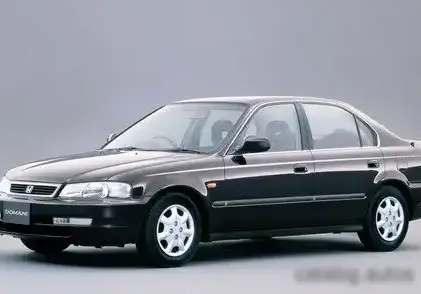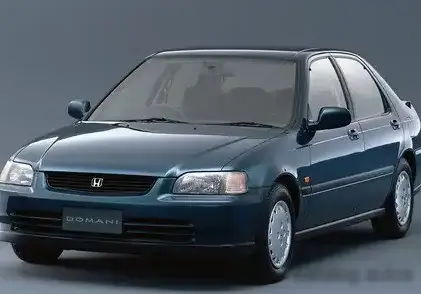
The Honda Domani 1.8 16V, produced between 1992 and 1996, was a compact sedan aimed at the Japanese domestic market (JDM) and select export markets. Positioned as a more stylish and refined alternative to the Civic, the Domani (meaning “tomorrow” in Japanese) offered a blend of practicality, comfort, and a relatively sporty driving experience. This particular variant, equipped with the 1.8-liter 16-valve engine producing 140 horsepower, represented a mid-range offering within the Domani lineup, slotting above the base 1.6-liter models and below potential limited-edition or turbocharged versions. The Domani was based on Honda’s platform, sharing components with other models of the era, but distinguished itself through its unique body styling and interior appointments.
Technical Specifications
| Brand | Honda |
| Model | Domani |
| Generation | Domani |
| Type (Engine) | 1.8 16V (140 Hp) |
| Start of production | 1992 |
| End of production | 1996 |
| Powertrain Architecture | Internal Combustion engine |
| Body type | Sedan |
| Seats | 5 |
| Doors | 4 |
| Fuel consumption (urban) | 12 l/100 km (19.6 US mpg) |
| Fuel consumption (extra urban) | 7 l/100 km (33.6 US mpg) |
| Fuel Type | Petrol (Gasoline) |
| Maximum speed | 200 km/h (124.27 mph) |
| Weight-to-power ratio | 7.8 kg/Hp |
| Weight-to-torque ratio | 6.4 kg/Nm |
| Power | 140 Hp @ 6300 rpm |
| Power per litre | 76.3 Hp/l |
| Torque | 171 Nm @ 5000 rpm (126.12 lb.-ft. @ 5000 rpm) |
| Engine layout | Front, Transverse |
| Engine displacement | 1834 cm3 (111.92 cu. in.) |
| Number of cylinders | 4 |
| Engine configuration | Inline |
| Cylinder Bore | 81 mm (3.19 in.) |
| Piston Stroke | 89 mm (3.5 in.) |
| Compression ratio | 9.2:1 |
| Number of valves per cylinder | 4 |
| Fuel injection system | Multi-port manifold injection |
| Engine aspiration | Naturally aspirated engine |
| Valvetrain | DOHC |
| Kerb Weight | 1090 kg (2403.04 lbs.) |
| Fuel tank capacity | 45 l (11.89 US gal | 9.9 UK gal) |
| Length | 4415 mm (173.82 in.) |
| Width | 1695 mm (66.73 in.) |
| Height | 1390 mm (54.72 in.) |
| Wheelbase | 2620 mm (103.15 in.) |
| Front track | 1475 mm (58.07 in.) |
| Rear track | 1465 mm (57.68 in.) |
| Drivetrain Architecture | Front wheel drive |
| Drive wheel | Front wheel drive |
| Number of gears and type of gearbox | 5 gears, manual transmission |
| Front suspension | Coil spring |
| Rear suspension | Coil spring |
| Front brakes | Ventilated discs |
| Rear brakes | Drum |
| Assisting systems | ABS (Anti-lock braking system) |
| Steering type | Steering rack and pinion |
| Power steering | Hydraulic Steering |
| Tires size | 185/65 R14 H |
Powertrain & Engine Architecture
The heart of the Domani 1.8 16V is the Honda D18A engine, a 1.8-liter inline-four cylinder powerplant. This engine utilizes a single overhead camshaft (SOHC) design, although the 16-valve configuration indicates four valves per cylinder. The D18A featured multi-point fuel injection, contributing to improved fuel efficiency and throttle response compared to earlier carbureted Honda engines. The engine’s 9.2:1 compression ratio was a compromise between performance and the fuel quality available in various markets. The five-speed manual transmission was the standard offering, providing drivers with direct control over the engine’s power. The transmission featured typical Honda robustness and a relatively short throw for precise gear changes.
Driving Characteristics
The Domani 1.8 16V offered a balanced driving experience. While not a dedicated sports sedan, the 140 horsepower engine provided adequate acceleration for everyday driving and even some spirited maneuvers. The five-speed manual transmission allowed drivers to fully exploit the engine’s powerband, with peak torque arriving at 5000 rpm. The gear ratios were well-chosen, providing good acceleration in lower gears and comfortable cruising at highway speeds. Compared to the base 1.6-liter Domani, the 1.8-liter model offered noticeably improved performance, particularly in overtaking situations. The handling was predictable and stable, thanks to the front-wheel-drive layout and well-tuned suspension.
Equipment & Trim Levels
The Domani 1.8 16V typically came equipped with features considered standard for a compact sedan of its era. These included power steering, air conditioning, and a basic audio system. Interior upholstery was typically cloth, with a relatively simple but functional dashboard layout. Optional extras could include power windows, power locks, and upgraded audio systems. The Domani aimed for a slightly more upscale feel than the Civic, with attention paid to interior materials and overall refinement.
Chassis & Braking
The Domani utilized a relatively conventional chassis design, with independent coil spring suspension at the front and a coil spring rear suspension. The front brakes were ventilated discs, providing good stopping power, while the rear brakes were drums, a cost-saving measure common in this class of vehicle. Anti-lock braking system (ABS) was available as an option, enhancing safety by preventing wheel lockup during hard braking. The steering system employed a rack-and-pinion setup, providing precise and responsive steering feel.
Market Reception & Comparison
The Honda Domani was generally well-received by automotive critics in Japan. It was praised for its stylish design, comfortable interior, and refined driving experience. Compared to the Civic, the Domani was seen as a more mature and sophisticated offering. The 1.8-liter engine provided a good balance of performance and fuel economy, making it a practical choice for everyday driving. However, some critics noted that the Domani lacked the outright sportiness of some of its competitors. Fuel economy figures were competitive for the time, averaging around 33.6 US mpg on the highway. Reliability was generally excellent, as expected from a Honda product.
Legacy
The Honda Domani, while not as widely known as some other Honda models, holds a special place in the hearts of JDM enthusiasts. The 1.8 16V variant, in particular, is appreciated for its smooth engine, engaging driving experience, and relatively simple mechanical design. Today, well-maintained Domani 1.8s are becoming increasingly collectible, particularly in Japan. The D18A engine is known for its durability and relatively easy maintenance, making it a reliable choice for classic car enthusiasts. The Domani represents a unique chapter in Honda’s history, showcasing the company’s commitment to innovation and quality.