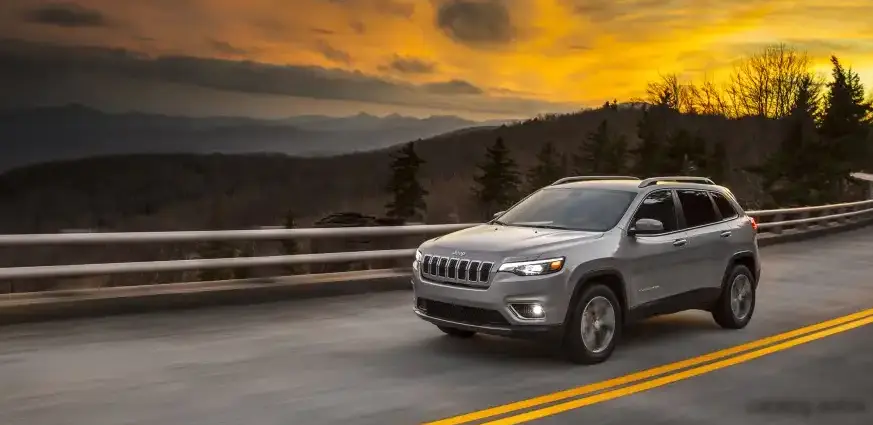
The Jeep Cherokee V (KL), specifically the facelifted version introduced in September 2018 and continuing through January 2023, represented a significant evolution of the Cherokee mid-size SUV. This variant, equipped with the 3.2-liter Pentastar V6 engine paired with a 9-speed automatic transmission, occupied a sweet spot in the Cherokee lineup, offering a balance of power, refinement, and capability. It aimed to appeal to buyers seeking a more robust engine option than the base four-cylinder, without the added cost and complexity of the Trailhawk off-road focused models.
Technical Specifications
| Brand | Jeep |
| Model | Cherokee |
| Generation | Cherokee V (KL, facelift 2018) |
| Type (Engine) | 3.2 V6 (271 Hp) Automatic |
| Start of production | September, 2018 |
| End of production | January, 2023 |
| Powertrain Architecture | Internal Combustion engine |
| Body type | SUV |
| Seats | 5 |
| Doors | 5 |
| Fuel consumption (urban) | 11.8 l/100 km (19.9 US mpg) |
| Fuel consumption (extra urban) | 8.1 l/100 km (29 US mpg) |
| Fuel consumption (combined) | 10.2 l/100 km (23.1 US mpg) |
| Fuel Type | Petrol (Gasoline) |
| Weight-to-power ratio | 6.3 kg/Hp, 158.1 Hp/tonne |
| Weight-to-torque ratio | 5.3 kg/Nm, 189 Nm/tonne |
| Power | 271 Hp @ 6500 rpm |
| Power per litre | 83.6 Hp/l |
| Torque | 324 Nm @ 4400 rpm (238.97 lb.-ft. @ 4400 rpm) |
| Maximum engine speed | 6500 rpm |
| Engine layout | Front, Longitudinal |
| Engine Model/Code | EHB |
| Engine displacement | 3240 cm3 (197.72 cu. in.) |
| Number of cylinders | 6 |
| Engine configuration | V-engine |
| Cylinder Bore | 90.9 mm (3.58 in.) |
| Piston Stroke | 83.1 mm (3.27 in.) |
| Compression ratio | 10.7:1 |
| Number of valves per cylinder | 4 |
| Fuel injection system | Multi-port manifold injection |
| Engine aspiration | Naturally aspirated engine |
| Valvetrain | DOHC |
| Engine oil capacity | 5.6 l (5.92 US qt | 4.93 UK qt) |
| Coolant | 9.5 l (10.04 US qt | 8.36 UK qt) |
| Kerb Weight | 1714 kg (3778.72 lbs.) |
| Max. weight | 2495 kg (5500.53 lbs.) |
| Max load | 781 kg (1721.81 lbs.) |
| Trunk (boot) space – minimum | 448 l (15.82 cu. ft.) |
| Trunk (boot) space – maximum | 1555 l (54.91 cu. ft.) |
| Fuel tank capacity | 60 l (15.85 US gal | 13.2 UK gal) |
| Permitted trailer load with brakes (12%) | 2041 kg (4499.63 lbs.) |
| Length | 4623 mm (182.01 in.) |
| Width | 1859 mm (73.19 in.) |
| Height | 1669 mm (65.71 in.) |
| Wheelbase | 2705 mm (106.5 in.) |
| Front track | 1593 mm (62.72 in.) |
| Rear (Back) track | 1603 mm (63.11 in.) |
| Minimum turning circle (turning diameter) | 11.5 m (37.73 ft.) |
| Approach angle | 16.7° |
| Departure angle | 24.6° |
| Drivetrain Architecture | The Internal combustion engine (ICE) drives the front wheels of the vehicle. |
| Drive wheel | Front wheel drive |
| Number of gears and type of gearbox | 9 gears, automatic transmission |
| Front suspension | Independent, type McPherson with coil spring and anti-roll bar |
| Rear suspension | Independent multi-link spring suspension with stabilizer |
| Front brakes | Ventilated discs |
| Rear brakes | Disc |
| Assisting systems | ABS (Anti-lock braking system) |
| Steering type | Steering rack and pinion |
| Power steering | Electric Steering |
| Tires size | 225/60 R17; 225/55 R18 |
| Wheel rims size | 7J x 17; 7J x 18 |
INTRODUCTION
The 2018-2023 Jeep Cherokee facelift brought with it a refreshed exterior, an upgraded interior, and importantly, continued availability of the proven 3.2-liter Pentastar V6 engine. This engine, paired with a sophisticated 9-speed automatic transmission, was a key offering for buyers who prioritized performance and towing capacity. Positioned as a mid-range option, it sat above the base 2.4-liter four-cylinder and below the more rugged and off-road oriented Trailhawk model. The Cherokee KL series, built on a unibody construction, aimed to bridge the gap between traditional body-on-frame Jeeps and more car-like crossovers, appealing to a wider audience.
Powertrain & Engine Architecture
The heart of this Cherokee variant is the 3.2-liter “Pentastar” V6 engine, designated as the EHB code. This engine is a naturally aspirated, 60-degree V-engine featuring a dual overhead camshaft (DOHC) valvetrain with four valves per cylinder. It utilizes a multi-port fuel injection system, delivering fuel directly into the intake ports. The Pentastar engine is known for its smooth operation and relatively high output for its size. The 9-speed automatic transmission, sourced from ZF, is a crucial component of this powertrain. It offers a wide gear ratio spread, contributing to both fuel efficiency and responsive acceleration. The transmission features a sophisticated control system designed to optimize shift points based on driving conditions. The transmission’s complexity, however, has been a source of some reported reliability concerns in early production years, addressed through software updates.
Driving Characteristics
The 3.2L V6 and 9-speed automatic combination delivers a noticeable improvement in performance compared to the base four-cylinder Cherokee. Acceleration is brisk, and the engine provides ample power for highway merging and passing maneuvers. The 9-speed transmission, when functioning optimally, offers smooth and quick shifts. However, some drivers have reported occasional hesitation or hunting for the right gear, particularly at lower speeds. The wide gear ratio spread does contribute to improved fuel economy, but the overall driving experience is more focused on providing usable power than maximizing efficiency. Compared to the manual transmission options available on lower trims, the automatic prioritizes convenience and ease of use, sacrificing some driver engagement.
Equipment & Trim Levels
The 3.2L V6 Automatic was typically offered on higher trim levels such as the Latitude, Limited, and North editions. Standard features generally included air conditioning, power windows and locks, a touchscreen infotainment system with Apple CarPlay and Android Auto compatibility, and a rearview camera. Higher trims added features like leather upholstery, heated front seats, a power liftgate, and advanced safety technologies such as blind-spot monitoring and rear cross-traffic alert. Optional extras included a panoramic sunroof, premium audio systems, and various appearance packages.
Chassis & Braking
The Cherokee KL utilizes an independent suspension system at all four corners. The front suspension employs a McPherson strut design with coil springs and an anti-roll bar, while the rear features a multi-link setup, also with coil springs and a stabilizer bar. This suspension configuration provides a comfortable ride quality and reasonably controlled handling. Braking duties are handled by ventilated discs at the front and solid discs at the rear. Anti-lock braking system (ABS) is standard. The braking performance is adequate for everyday driving, but the Cherokee isn’t particularly sporty in terms of stopping power.
Market Reception & Comparison
Critics generally praised the 3.2L V6 engine for its smooth power delivery and refinement. The 9-speed automatic transmission received mixed reviews, with some praising its efficiency and others criticizing its occasional quirks. Compared to competitors like the Honda CR-V, Toyota RAV4, and Ford Escape, the Cherokee offered a more rugged aesthetic and a more powerful engine option. However, its fuel economy was typically lower than that of its competitors, and its reliability ratings were somewhat mixed, particularly concerning the transmission. The 3.2L V6 offered a significant performance upgrade over the base four-cylinder, but came at a cost in terms of fuel consumption.
Legacy
The 3.2L Pentastar V6-powered Cherokee KL remains a popular choice in the used car market. The engine is generally considered reliable, although preventative maintenance, such as regular oil changes, is crucial. The 9-speed automatic transmission’s long-term durability can vary, and potential buyers should be aware of the reported issues and ensure any software updates have been performed. Overall, this variant offers a good balance of performance, comfort, and capability, making it a viable option for buyers seeking a mid-size SUV with a proven powertrain.