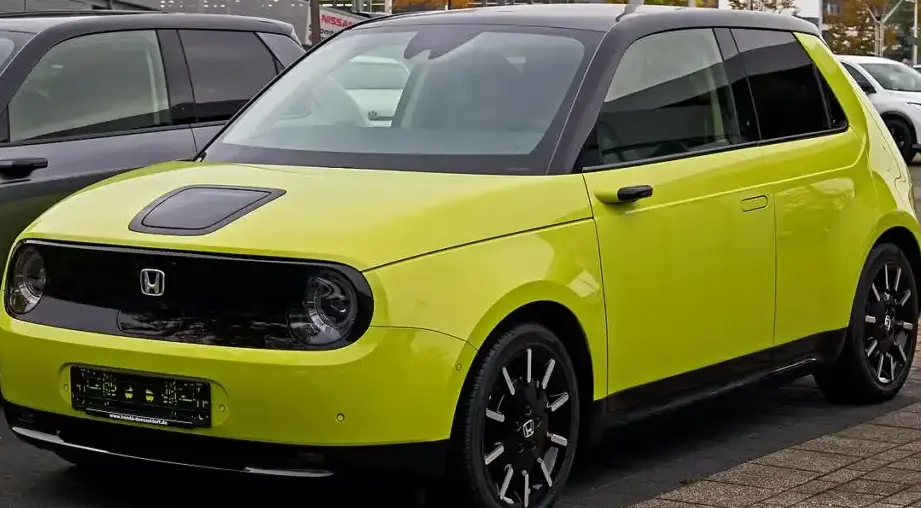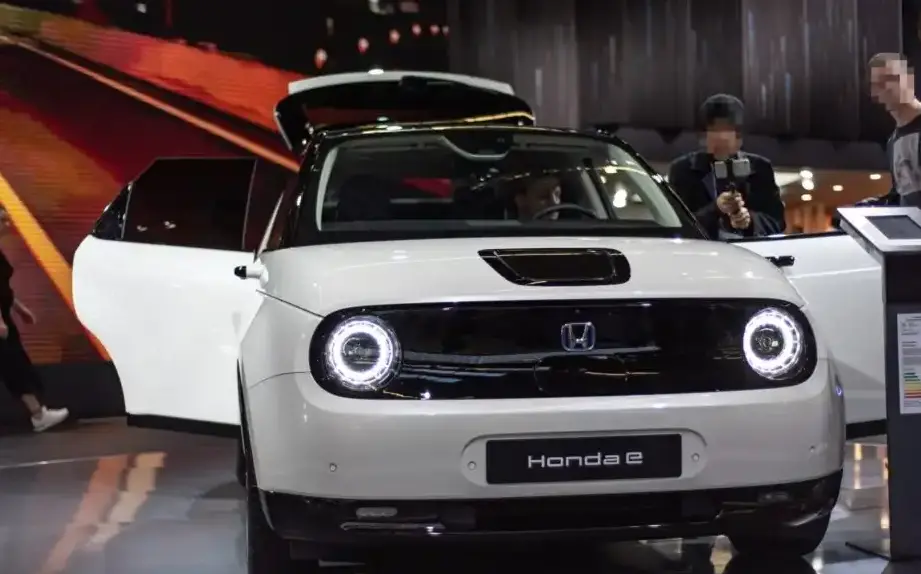
The Honda e, launched in 2019, represents Honda’s first all-electric production vehicle, initially targeted primarily at the European and Japanese markets. This compact, five-door hatchback aimed to blend retro-futuristic styling with modern electric vehicle technology. The 35.5 kWh variant, producing 136 horsepower, served as the standard model within the ‘e’ lineup, offering a balance between range, performance, and affordability. It distinguished itself from potential future, higher-performance variants by focusing on urban usability and efficient daily commuting.
Technical Specifications
| Brand | Honda |
| Model | e |
| Generation | e |
| Type (Engine) | 35.5 kWh (136 Hp) |
| Start of production | 2019 |
| Powertrain Architecture | BEV (Electric Vehicle) |
| Body type | Hatchback |
| Seats | 4 |
| Doors | 5 |
| Fuel Type | Electricity |
| Acceleration 0 – 100 km/h | 9 sec |
| Acceleration 0 – 62 mph | 9 sec |
| Acceleration 0 – 60 mph | 8.6 sec |
| Maximum speed | 145 km/h (90.1 mph) |
| Weight-to-power ratio | 11.1 kg/Hp, 89.9 Hp/tonne |
| Weight-to-torque ratio | 4.8 kg/Nm, 208.2 Nm/tonne |
| Gross battery capacity | 35.5 kWh |
| Net (usable) battery capacity | 28.5 kWh |
| Battery voltage | 355.2 V |
| Battery technology | Lithium-ion (Li-Ion) |
| Battery location | Below the floor |
| All-electric range (WLTP) | 222 km (137.94 mi) |
| Average Energy consumption (WLTP) | 17.2 kWh/100 km (27.68 kWh/100 mi, 122 MPGe, 5.8 km/kWh, 3.6 mi/kWh) |
| Electric motor power | 136 Hp |
| Electric motor Torque | 315 Nm (232.33 lb.-ft.) |
| Electric motor model/code | MCF51 |
| Electric motor location | Rear axle, Transverse |
| System power | 136 Hp |
| System torque | 315 Nm (232.33 lb.-ft.) |
| Kerb Weight | 1513 kg (3335.59 lbs.) |
| Max. weight | 1855 kg (4089.57 lbs.) |
| Max load | 342 kg (753.98 lbs.) |
| Trunk (boot) space – minimum | 171 l (6.04 cu. ft.) |
| Trunk (boot) space – maximum | 861 l (30.41 cu. ft.) |
| Length | 3894 mm (153.31 in.) |
| Width | 1752 mm (68.98 in.) |
| Height | 1512 mm (59.53 in.) |
| Wheelbase | 2538 mm (99.92 in.) |
| Front track | 1523 mm (59.96 in.) |
| Rear (Back) track | 1516 mm (59.69 in.) |
| Ride height (ground clearance) | 145 mm (5.71 in.) |
| Minimum turning circle | 9.2 m (30.18 ft.) |
| Drivetrain Architecture | One electric motor drives the rear wheels. |
| Drive wheel | Rear wheel drive |
| Number of gears | 1 gears, automatic transmission |
| Front suspension | Independent type McPherson |
| Rear suspension | McPherson |
| Front wheel tires | 185/60 R16 |
| Rear wheel tires | 205/55 R16 |
| Front wheel rims | 16 |
| Rear wheel rims | 16 |
Powertrain & Engine Architecture
The Honda e utilizes a single electric motor, designated MCF51, mounted on the rear axle in a transverse configuration. This rear-wheel-drive layout was a deliberate design choice, intended to provide a more engaging driving experience. The motor produces 136 horsepower and 315 Nm (232.33 lb.-ft.) of torque, delivering instant acceleration characteristic of electric vehicles. The powertrain is powered by a 35.5 kWh lithium-ion battery pack located under the vehicle floor, contributing to a low center of gravity. The battery operates at 355.2V. The Honda e employs a direct current fast charging system, allowing for an 80% charge in approximately 30 minutes using a compatible DC fast charger. The single-speed automatic transmission is inherent to electric vehicle drivetrains, providing seamless power delivery without traditional gear changes.
Driving Characteristics
The 136 hp and 232 lb-ft of torque provide brisk acceleration, achieving 0-60 mph in around 8.6 seconds. While not a performance-oriented vehicle, the instant torque delivery of the electric motor makes it feel quicker in everyday driving situations, particularly in urban environments. The rear-wheel-drive configuration contributes to a balanced feel, although traction can be limited in slippery conditions. The single-speed transmission offers smooth, linear acceleration. Compared to a potential higher-output version, this variant prioritizes efficiency and usability over outright speed. The steering is precise and well-weighted, enhancing the driving experience. The low center of gravity, thanks to the underfloor battery pack, minimizes body roll during cornering.
Equipment & Trim Levels
The standard Honda e 35.5 kWh came well-equipped, reflecting its positioning as a technologically advanced vehicle. Standard features included a dual 12.3-inch touchscreen display serving as the instrument cluster and infotainment system, Honda Sensing suite of safety features (including adaptive cruise control, lane keeping assist, and collision mitigation braking system), and a premium audio system. Interior upholstery was typically a combination of fabric and synthetic leather. Optional extras included premium paint colors, upgraded interior trim materials, and a charging cable. The interior design was minimalist and modern, emphasizing a clean and uncluttered aesthetic.
Chassis & Braking
The Honda e features an independent McPherson strut suspension at both the front and rear, tuned for comfort and handling. The relatively low weight of the vehicle (1513 kg / 3335.59 lbs) contributes to its agile handling characteristics. The braking system consists of disc brakes at all four wheels, with ABS (Anti-lock Braking System) as standard. The vehicle’s regenerative braking system helps to recapture energy during deceleration, increasing efficiency and extending range. The electric power steering provides precise and responsive steering feel.
Market Reception & Comparison
The Honda e received generally positive reviews from automotive critics, praising its innovative design, engaging driving dynamics, and advanced technology. However, its limited range (222 km / 137.94 mi WLTP) was a common criticism, particularly compared to some of its competitors. Fuel economy, expressed as 17.2 kWh/100 km (122 MPGe), was competitive within the EV segment. Compared to a hypothetical higher-performance variant, the 35.5 kWh model offered a more affordable entry point into the Honda e lineup, appealing to buyers prioritizing efficiency and urban usability over outright speed. Its rear-wheel-drive configuration was also a unique selling point, differentiating it from many front-wheel-drive EVs.
Legacy
The Honda e, while not a mass-market success, served as an important stepping stone for Honda in the electric vehicle market. It demonstrated Honda’s commitment to innovation and its ability to create a compelling and technologically advanced EV. The powertrain, while relatively simple in its design, has proven to be reliable in early reports. On the used car market, the Honda e holds its value reasonably well, attracting buyers seeking a stylish, well-equipped, and environmentally friendly urban vehicle. Its unique design and engaging driving dynamics continue to appeal to enthusiasts. The lessons learned from the development of the Honda e are expected to influence Honda’s future EV offerings.