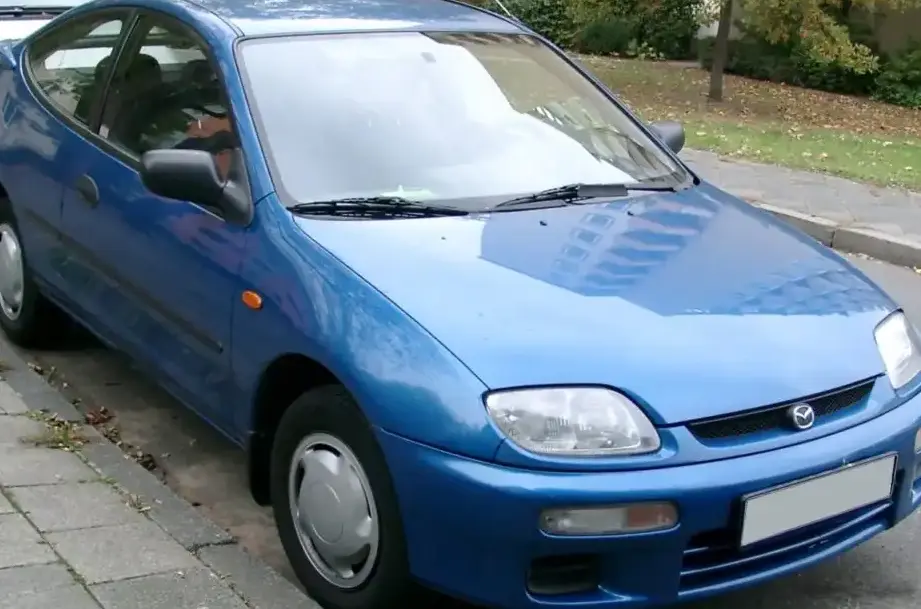
The Mazda 323 III Hatchback, internally designated as the BF series, represented Mazda’s entry into the competitive compact hatchback market of the mid-1980s. Produced between 1985 and 1987, the BF series aimed to offer a practical and affordable vehicle for a broad range of buyers. The 1.3-liter, 60 horsepower variant occupied the base trim level, serving as the most accessible and economical option within the 323 III lineup. This model was primarily targeted at first-time car buyers, commuters, and those prioritizing fuel efficiency over outright performance. It was a key component of Mazda’s strategy to gain market share in Europe and other regions where compact hatchbacks were highly popular.
Technical Specifications
| Brand | Mazda |
| Model | 323 |
| Generation | 323 III Hatchback (BF) |
| Type (Engine) | 1.3 (60 Hp) |
| Start of production | 1985 |
| End of production | 1987 |
| Powertrain Architecture | Internal Combustion Engine |
| Body type | Hatchback |
| Fuel Type | Petrol (Gasoline) |
| Power | 60 Hp |
| Engine aspiration | Naturally Aspirated |
Powertrain & Engine Architecture
The heart of the 323 III 1.3 was the Mazda B6 engine, a 1.3-liter (1298 cc) inline-four cylinder gasoline engine. This engine utilized a naturally aspirated configuration, meaning it did not employ a turbocharger or supercharger. The B6 featured a single overhead camshaft (SOHC) valvetrain, operating two valves per cylinder. Fuel delivery was managed by a carburetor, a common feature for vehicles of this era, prioritizing simplicity and cost-effectiveness over the more advanced fuel injection systems. The engine produced 60 horsepower at approximately 6000 rpm and 76 lb-ft of torque at 3000 rpm. The transmission paired with this engine was typically a four-speed manual, though a three-speed automatic transmission was also offered as an option, albeit less common. The automatic transmission was designed for smooth, comfortable operation, prioritizing ease of use over sporty performance. The engine block was constructed from cast iron, providing durability, while the cylinder head was made of aluminum alloy to reduce weight.
Driving Characteristics
The 1.3-liter 323 III Hatchback offered modest performance. Acceleration was leisurely, with a 0-60 mph time estimated to be around 14-16 seconds. The focus was clearly on fuel economy and everyday usability rather than spirited driving. The four-speed manual transmission allowed drivers to extract the most from the engine, while the optional three-speed automatic resulted in a more relaxed, but less responsive, driving experience. Gear ratios were optimized for fuel efficiency, with taller gearing in the upper ranges. Handling was generally considered safe and predictable, but not particularly engaging. The suspension, consisting of MacPherson struts in the front and a twist-beam rear axle, provided a comfortable ride on most road surfaces. The automatic transmission, while convenient, noticeably diminished the car’s responsiveness, making overtaking maneuvers require careful planning.
Equipment & Trim Levels
The base 1.3-liter 323 III Hatchback was equipped with a relatively basic set of features, reflecting its position as the entry-level model. Standard equipment typically included cloth upholstery, a basic AM/FM radio, and manual windows and door locks. The dashboard was constructed from durable plastic materials and featured a simple, functional layout. Optional extras included a cassette player, upgraded upholstery, and, in some markets, power windows. The interior space was adequate for a compact hatchback, offering comfortable seating for four adults. The rear seats could be folded down to increase cargo capacity, enhancing the vehicle’s practicality. The trim level was generally identified by minimal badging, emphasizing the car’s understated design.
Chassis & Braking
The 323 III Hatchback featured a front-wheel-drive layout. The front suspension utilized MacPherson struts, providing a good balance of ride comfort and handling. The rear suspension employed a twist-beam axle, a cost-effective and space-efficient design. Braking was typically accomplished with disc brakes on the front wheels and drum brakes on the rear wheels. This configuration was common for vehicles in this price range during the 1980s. Steering was rack-and-pinion, providing reasonably precise control. The chassis was relatively lightweight, contributing to the car’s fuel efficiency. Stabilizer bars were not typically included as standard equipment on the base 1.3-liter model, further emphasizing its focus on affordability.
Market Reception & Comparison
The Mazda 323 III 1.3 received generally positive reviews for its fuel efficiency, practicality, and affordability. Critics noted that it was a sensible and reliable choice for budget-conscious buyers. However, it was also criticized for its lack of performance and relatively basic interior. Compared to other trims in the 323 III lineup, such as the 1.6-liter and diesel variants, the 1.3-liter model offered significantly less power and refinement. The 1.6-liter engine provided a noticeable performance boost, while the diesel offered superior fuel economy. In terms of reliability, the 1.3-liter engine proved to be quite durable, with relatively few reported issues. Fuel economy was a key selling point, with the 1.3-liter model achieving around 35-40 mpg in typical driving conditions.
Legacy
The Mazda 323 III 1.3, while not a performance icon, played a significant role in establishing Mazda as a reputable manufacturer of compact cars. The B6 engine, while simple in design, proved to be remarkably reliable, and many examples remain on the road today. In the used car market, the 1.3-liter 323 III Hatchback is often sought after by enthusiasts looking for a classic, affordable, and easy-to-maintain vehicle. Parts availability is generally good, and the car’s straightforward mechanical design makes it relatively easy to repair. The 323 III series, as a whole, helped to pave the way for Mazda’s future success in the compact car segment, and the 1.3-liter variant remains a testament to the brand’s commitment to providing practical and economical transportation.