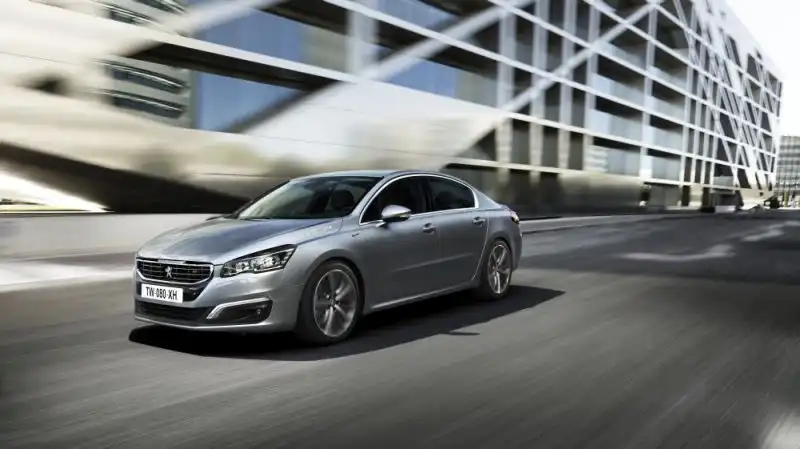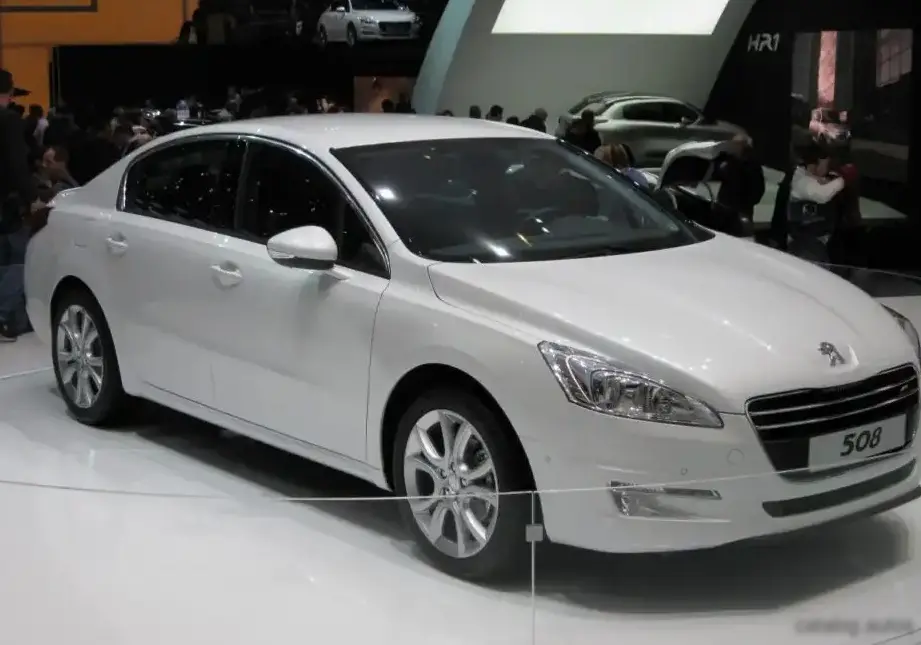
The Peugeot 508, launched in 2010, represented a significant step forward for the French automaker, aiming to compete directly with established mid-size offerings from Germany, the UK, and other European manufacturers. The first generation, designated the 508 I (Phase I), was produced from 2010 to 2014 and was available in both sedan and wagon (SW) body styles. Among the engine options offered, the 1.6 THP (Turbo High Pressure) producing 156 horsepower became a popular choice, particularly in markets prioritizing fuel efficiency and a balance between performance and cost. This variant occupied a mid-range position within the 508 lineup, slotting between the lower-powered 1.6 VTi and the more potent 2.0 HDi diesel and higher-output gasoline engines.
Technical Specifications
| Brand | Peugeot |
| Model | 508 |
| Generation | 508 I (Phase I, 2010) |
| Type (Engine) | 1.6 THP (156 Hp) |
| Start of production | 2010 |
| End of production | 2014 |
| Powertrain Architecture | Internal Combustion engine |
| Body type | Sedan |
| Seats | 5 |
| Doors | 4 |
| Fuel consumption (urban) | 9.2 l/100 km (25.6 US mpg) |
| Fuel consumption (extra urban) | 4.8 l/100 km (49 US mpg) |
| Fuel consumption (combined) | 6.4 l/100 km (36.8 US mpg) |
| Fuel Type | Petrol (Gasoline) |
| Acceleration 0 – 100 km/h | 8.6 sec |
| Acceleration 0 – 62 mph | 8.6 sec |
| Acceleration 0 – 60 mph | 8.2 sec |
| Maximum speed | 222 km/h (137.94 mph) |
| Emission standard | Euro 5 |
| Weight-to-power ratio | 9 kg/Hp |
| Weight-to-torque ratio | 5.8 kg/Nm |
| Power | 156 Hp @ 6000 rpm |
| Torque | 240 Nm @ 4000 rpm (177.01 lb.-ft.) |
| Engine layout | Front, Transverse |
| Engine Model/Code | 5FV EP6CDT |
| Engine displacement | 1598 cm3 (97.52 cu. in.) |
| Number of cylinders | 4 |
| Engine configuration | Inline |
| Number of valves per cylinder | 4 |
| Fuel injection system | Direct injection |
| Engine aspiration | Turbocharger, Intercooler |
| Engine oil capacity | 4.25 l (4.49 US qt) |
| Coolant capacity | 6.4 l (6.76 US qt) |
| Kerb Weight | 1400 kg (3086.47 lbs.) |
| Max. weight | 1995 kg (4398.22 lbs.) |
| Max load | 595 kg (1311.75 lbs.) |
| Trunk (boot) space – minimum | 473 l (16.7 cu. ft.) |
| Trunk (boot) space – maximum | 515 l (18.19 cu. ft.) |
| Fuel tank capacity | 72 l (19.02 US gal) |
| Length | 4792 mm (188.66 in.) |
| Width | 1920 mm (75.59 in.) |
| Height | 1456 mm (57.32 in.) |
| Wheelbase | 2817 mm (110.91 in.) |
| Minimum turning circle | 11.9 m (39.04 ft.) |
| Drivetrain Architecture | Front wheel drive |
| Number of gears | 6 |
| Gearbox type | Manual transmission |
| Front suspension | Independent type McPherson |
| Rear suspension | Independent multi-link suspension |
| Front brakes | Ventilated discs |
| Rear brakes | Disc |
| Tires size | 215/60 R16; 215/55 R17; 235/45 R18 |
| Wheel rims size | 16; 17; 18 |
Powertrain & Engine Architecture
The heart of this 508 variant is the 1.6 THP engine, a member of Peugeot and Citroën’s Prince engine family, developed in collaboration with BMW. The ‘THP’ designation signifies Turbo High Pressure, indicating the use of a twin-scroll turbocharger and direct fuel injection. The engine code, 5FV EP6CDT, is crucial for identifying specific components and service information. The direct injection system, operating at pressures up to 150 bar, ensures precise fuel delivery and contributes to both performance and efficiency. The engine features a four-valve-per-cylinder configuration and a timing chain, generally considered more durable than timing belts. The 156 hp version utilizes a slightly different turbocharger and engine management calibration compared to the higher-output 163 hp variant. The engine is transversely mounted at the front of the vehicle, driving the front wheels. The standard transmission for this trim was a six-speed manual gearbox, known for its relatively precise shift feel. While an automatic transmission was available, it was typically paired with the lower-powered 1.6 VTi engine.
Driving Characteristics
The 1.6 THP 156 hp engine provides a respectable level of performance for everyday driving. Acceleration from 0-60 mph takes approximately 8.2 seconds, making it adequately quick for merging onto highways and overtaking. The turbocharger provides a noticeable boost in power from around 2000 rpm, delivering a usable amount of torque throughout the rev range. However, it doesn’t offer the same punch as the larger displacement engines or the diesel alternatives. The six-speed manual transmission is well-matched to the engine’s characteristics, allowing drivers to keep the engine in its optimal power band. Compared to the 2.0 HDi diesel, the 1.6 THP feels less effortless at lower speeds but offers a more responsive and engaging driving experience. The manual gearbox also provides more driver control than the optional automatic transmission found on other 508 models.
Equipment & Trim Levels
The 1.6 THP 156 hp variant typically came equipped with a reasonable level of standard features. These generally included air conditioning, power windows, power mirrors, a CD/MP3 stereo system, and alloy wheels. Higher trim levels, such as Allure or Feline, added features like dual-zone climate control, a touchscreen infotainment system, parking sensors, and leather upholstery. Optional extras included a panoramic sunroof, navigation system, and xenon headlights. Interior upholstery was typically cloth in the base trims, with leather options available on higher-spec models. The dashboard layout was generally functional and well-built, although some critics found the design somewhat conservative.
Chassis & Braking
The Peugeot 508 I features a McPherson strut front suspension and a multi-link rear suspension, providing a good balance between ride comfort and handling. The suspension setup was tuned to prioritize comfort over outright sportiness. The front brakes are ventilated discs, while the rear brakes are solid discs. Anti-lock Braking System (ABS) and Electronic Brakeforce Distribution (EBD) are standard safety features. Stabilizer bars are fitted to both the front and rear axles to reduce body roll during cornering. The steering is a rack and pinion system, providing reasonably precise steering feel.
Market Reception & Comparison
The 1.6 THP 156 hp 508 was generally well-received by automotive critics. It was praised for its fuel efficiency, comfortable ride, and stylish design. However, some reviewers noted that the engine could feel strained when pushed hard, and the interior lacked the premium feel of some of its German rivals. Compared to the 2.0 HDi diesel, the 1.6 THP offered lower running costs in terms of fuel price but sacrificed some low-end torque and overall fuel economy. The 1.6 THP was often seen as a good compromise for drivers who wanted a stylish and comfortable mid-size sedan without the expense of a larger engine or diesel powertrain.
Legacy
The 1.6 THP engine, while generally reliable, has been known to exhibit some issues with carbon buildup on the intake valves, particularly if subjected to frequent short journeys. Regular use of fuel system cleaners and occasional high-speed runs can help mitigate this problem. The six-speed manual transmission is generally considered durable and requires minimal maintenance. Today, the 508 I 1.6 THP 156 hp represents a relatively affordable entry point into the mid-size sedan market. Well-maintained examples can still provide years of reliable service, offering a comfortable and stylish driving experience. Its blend of fuel efficiency and performance continues to appeal to buyers seeking a practical and enjoyable family car.