
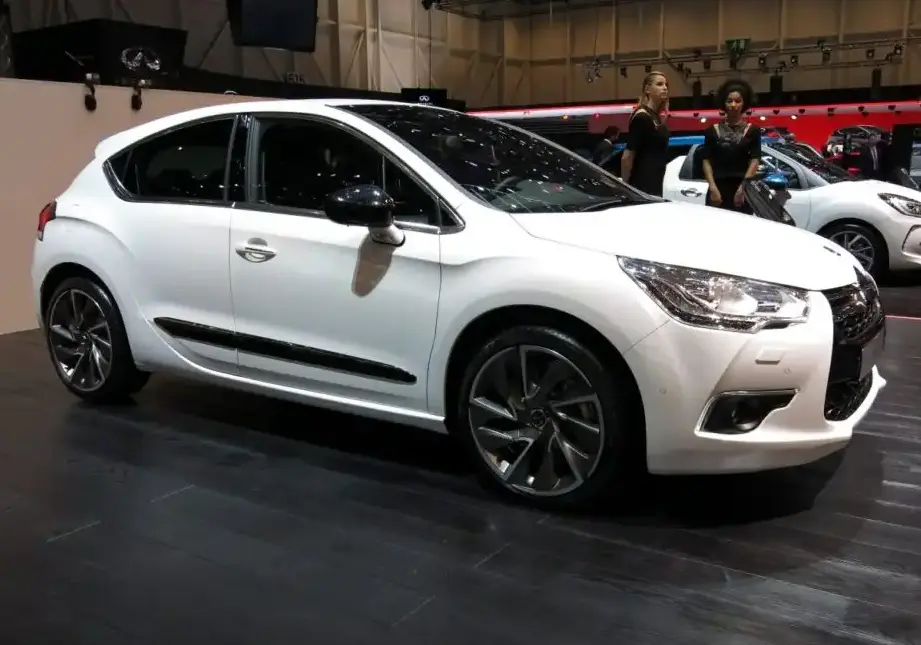
The Citroen DS4 1.6 HDi, producing 112 horsepower, was a key variant in the DS4 lineup, a compact hatchback produced between 2011 and 2012. Positioned as a mid-range offering, it aimed to bridge the gap between the more economical base models and the higher-performance petrol options. The DS4 itself was Citroen’s attempt to create a more premium and stylish hatchback, differentiating itself from the more mainstream C4. This particular diesel variant played a significant role in the European market, where fuel efficiency and torque were highly valued.
Technical Specifications
| Brand | Citroen |
| Model | DS4 |
| Generation | DS4 |
| Type (Engine) | 1.6 HDi (112 Hp) |
| Start of production | 2011 |
| End of production | 2012 |
| Powertrain Architecture | Internal Combustion engine |
| Body type | Hatchback |
| Seats | 5 |
| Doors | 5 |
| Fuel consumption (urban) | 5.9 l/100 km (39.9 US mpg, 47.9 UK mpg, 16.9 km/l) |
| Fuel consumption (extra urban) | 4 l/100 km (58.8 US mpg, 70.6 UK mpg, 25 km/l) |
| Fuel consumption (combined) | 4.7 l/100 km (50 US mpg, 60.1 UK mpg, 21.3 km/l) |
| CO2 emissions | 122 g/km |
| Fuel Type | Diesel |
| Acceleration 0 – 100 km/h | 12.4 sec |
| Acceleration 0 – 62 mph | 12.4 sec |
| Acceleration 0 – 60 mph | 11.8 sec |
| Maximum speed | 190 km/h (118.06 mph) |
| Emission standard | Euro 5 |
| Weight-to-power ratio | 12.2 kg/Hp, 82.1 Hp/tonne |
| Weight-to-torque ratio | 5.1 kg/Nm, 197.8 Nm/tonne |
| Power | 112 Hp @ 3600 rpm |
| Power per litre | 71.8 Hp/l |
| Torque | 270 Nm @ 1750 rpm (199.14 lb.-ft. @ 1750 rpm) |
| Engine layout | Front, Transverse |
| Engine Model/Code | 9HR DV6C |
| Engine displacement | 1560 cm3 (95.2 cu. in.) |
| Number of cylinders | 4 |
| Engine configuration | Inline |
| Cylinder Bore | 75 mm (2.95 in.) |
| Piston Stroke | 88.3 mm (3.48 in.) |
| Compression ratio | 16:1 |
| Number of valves per cylinder | 2 |
| Fuel injection system | Diesel Commonrail |
| Engine aspiration | Turbocharger, Intercooler |
| Engine oil capacity | 3.8 l (4.02 US qt | 3.34 UK qt) |
| Kerb Weight | 1365 kg (3009.31 lbs.) |
| Max. weight | 1805 kg (3979.34 lbs.) |
| Max load | 440 kg (970.03 lbs.) |
| Trunk (boot) space – minimum | 385 l (13.6 cu. ft.) |
| Trunk (boot) space – maximum | 1021 l (36.06 cu. ft.) |
| Fuel tank capacity | 60 l (15.85 US gal | 13.2 UK gal) |
| Permitted trailer load with brakes (12%) | 1300 kg (2866.01 lbs.) |
| Permitted trailer load without brakes | 680 kg (1499.14 lbs.) |
| Permitted towbar download | 75 kg (165.35 lbs.) |
| Length | 4275 mm (168.31 in.) |
| Width | 1810 mm (71.26 in.) |
| Height | 1533 mm (60.35 in.) |
| Wheelbase | 2612 mm (102.83 in.) |
| Front track | 1531 mm (60.28 in.) |
| Rear (Back) track | 1525 mm (60.04 in.) |
| Front overhang | 924 mm (36.38 in.) |
| Rear overhang | 739 mm (29.09 in.) |
| Minimum turning circle (turning diameter) | 10.7 m (35.1 ft.) |
| Drivetrain Architecture | The Internal combustion engine (ICE) drives the front wheels of the vehicle. |
| Drive wheel | Front wheel drive |
| Number of gears and type of gearbox | 6 gears, manual transmission |
| Front suspension | Independent type McPherson |
| Rear suspension | Semi-independent, coil spring |
| Front brakes | Ventilated discs |
| Rear brakes | Disc |
| Assisting systems | ABS (Anti-lock braking system) |
| Steering type | Steering rack and pinion |
| Tires size | 215/55 R17; 225/45 R18; 225/40 R19 |
| Wheel rims size | 17; 18; 19 |
Powertrain & Engine Architecture
The DS4 1.6 HDi utilized the PSA Group’s DV6 engine family, specifically the 9HR (DV6C) variant. This 1.6-liter, four-cylinder diesel engine was a common sight in Citroen and Peugeot vehicles of the era. It featured a common rail direct injection system, delivering fuel at high pressure for improved combustion efficiency and reduced emissions. The engine employed a single overhead camshaft (SOHC) design with two valves per cylinder. A turbocharger with an intercooler was standard, boosting power output and providing a broader torque curve. The 112 horsepower output was achieved at 3600 rpm, while the peak torque of 270 Nm (199 lb-ft) was available from just 1750 rpm. This low-end torque was a key characteristic of the engine, making it well-suited for everyday driving. The engine was paired with a 6-speed manual transmission, delivering power to the front wheels.
Driving Characteristics
The DS4 1.6 HDi offered a comfortable and refined driving experience, prioritizing fuel economy and usability over outright performance. Acceleration from 0 to 100 km/h (0-62 mph) took around 12.4 seconds, which was adequate for most situations but not particularly sporty. The strength of this engine lay in its mid-range torque, allowing for effortless overtaking and relaxed cruising. The 6-speed manual transmission was well-matched to the engine, providing smooth gear changes and helping to keep the engine in its optimal power band. Compared to the more powerful petrol versions of the DS4, the 1.6 HDi felt less responsive, but it offered significantly better fuel economy. The gear ratios were tuned for efficiency, with a relatively long final drive contributing to lower engine speeds at highway speeds.
Equipment & Trim Levels
The DS4 1.6 HDi typically came equipped with a reasonable level of standard features. These included air conditioning, electric front windows, a CD stereo with USB connectivity, and ABS brakes. Higher trim levels added features such as alloy wheels, rear parking sensors, automatic headlights and wipers, and a more sophisticated infotainment system. Interior upholstery was typically cloth, with options for leather upgrades. The DS4’s interior design was a key selling point, featuring a distinctive dashboard layout and a comfortable driving position. Optional extras included a panoramic sunroof, navigation system, and a premium sound system.
Chassis & Braking
The DS4 featured a McPherson strut front suspension and a semi-independent coil spring rear suspension. This setup provided a good balance between ride comfort and handling. The front brakes were ventilated discs, while the rear brakes were solid discs. ABS (Anti-lock Braking System) was standard, enhancing safety and stability during braking. The DS4’s chassis was relatively lightweight, contributing to its fuel efficiency and agility. Stabilizer bars were fitted to both the front and rear axles to reduce body roll during cornering.
Market Reception & Comparison
The Citroen DS4 1.6 HDi was generally well-received by critics, who praised its fuel efficiency, comfortable ride, and stylish design. However, some reviewers noted that the engine lacked the punch of the petrol alternatives. Compared to other diesel hatchbacks in its class, such as the Volkswagen Golf TDI, the DS4 offered a more distinctive and premium feel. Fuel economy was competitive, with combined figures around 4.7 l/100 km (50 US mpg). Reliability was generally good, although some owners reported issues with the diesel particulate filter (DPF) system, a common problem with modern diesel engines.
Legacy
The Citroen DS4 1.6 HDi remains a relatively common sight on European roads today. The DV6 engine is known for its durability, although regular maintenance is essential to prevent issues with the turbocharger and DPF. In the used car market, the DS4 1.6 HDi offers a good value proposition for buyers seeking a fuel-efficient and stylish hatchback. While it may not be the most exciting car to drive, it provides a comfortable and practical ownership experience. The DS4, as a whole, represented Citroen’s attempt to move upmarket and compete with more premium brands, and the 1.6 HDi variant played a crucial role in achieving that goal.
