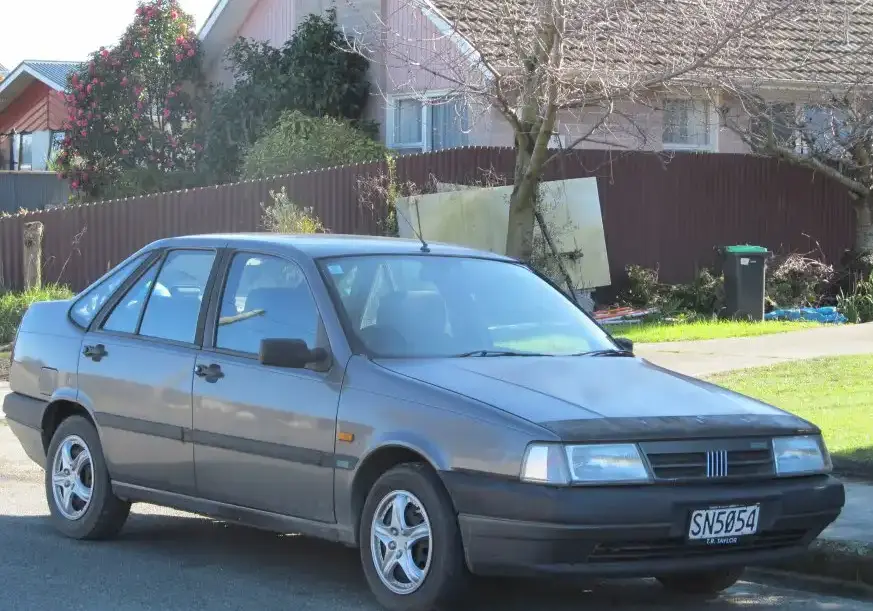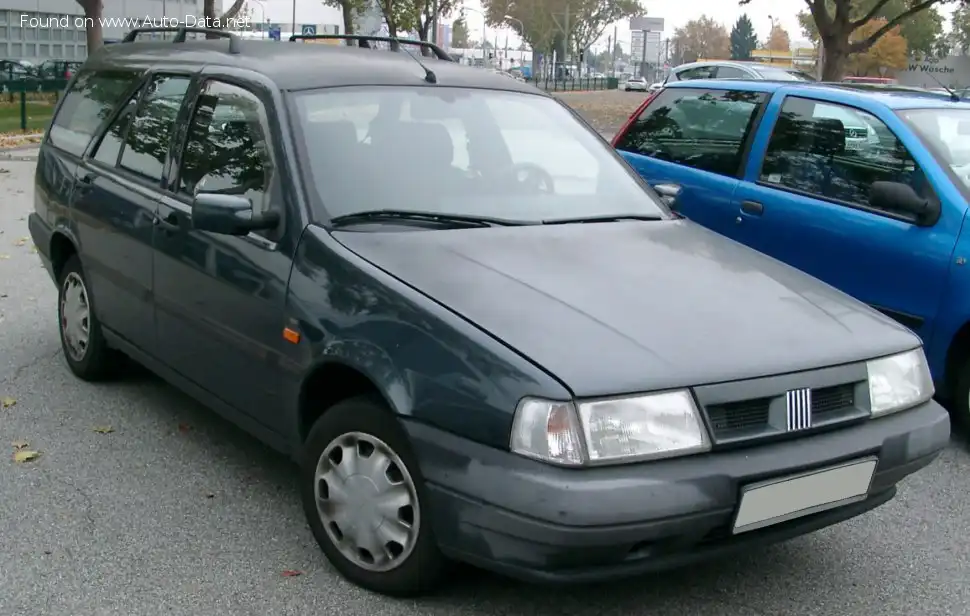
The Fiat Tempra SW (Series 159) 1.4 i.e., produced between 1992 and 1996, represented the entry-level engine option for Fiat’s popular station wagon. Positioned as a practical and affordable family vehicle, the 1.4-liter variant aimed to provide economical transportation within the broader Tempra SW lineup, which also included more powerful 1.6L, 1.8L, and even turbocharged versions. The Tempra SW itself was a significant model for Fiat, offering a spacious and versatile alternative to traditional sedans, and contributing to Fiat’s presence in the European family car market. The 159 chassis code designates the station wagon body style, while 159.AC and 159.AX denote specific sub-variants related to market and minor equipment differences.
Technical Specifications
| Brand | Fiat |
| Model | Tempra |
| Generation | Tempra SW (159) |
| Type (Engine) | 1.4 i.e. (159.AC, 159.AX) (69 Hp) |
| Start of Production | 1992 |
| End of Production | 1996 |
| Powertrain Architecture | Internal Combustion Engine |
| Body Type | Station Wagon (Estate) |
| Fuel Type | Petrol (Gasoline) |
| Power | 69 Hp |
| Engine Model/Code | 836 A4.000 |
| Engine Aspiration | Naturally Aspirated |
| Engine Oil Capacity | 3.7 l (3.91 US qt | 3.26 UK qt) |
| Coolant Capacity | 5.5 l (5.81 US qt | 4.84 UK qt) |
Powertrain & Engine Architecture
The heart of the Tempra SW 1.4 i.e. was the 836 A4.000 engine, a 1372cc inline-four cylinder unit. This engine featured a single overhead camshaft (SOHC) valvetrain operating two valves per cylinder. Fuel delivery was managed by Bosch Mono-Jetronic fuel injection, a relatively simple system for the time, prioritizing reliability and cost-effectiveness over ultimate performance. The Mono-Jetronic system utilized a single fuel injector positioned centrally in the throttle body, distributing fuel to all four cylinders. This setup, while less precise than multi-point injection, was known for its durability and ease of maintenance. The engine’s compression ratio was approximately 9.2:1. The 1.4L engine was typically paired with a four-speed automatic transmission, although a five-speed manual gearbox was also available. The automatic transmission was a conventional hydraulic control unit, offering smooth but not particularly quick shifts.
Driving Characteristics
The 1.4-liter Tempra SW, with its 69 horsepower, was not designed for spirited driving. Acceleration was modest, with a 0-60 mph time estimated to be around 14-16 seconds. The automatic transmission further dampened performance, with noticeable delays in downshifting. However, the engine proved to be reasonably tractable for everyday driving, providing sufficient power for cruising on highways and navigating city streets. The gear ratios in the four-speed automatic were spaced to prioritize fuel economy over outright acceleration. Compared to the 1.6L and 1.8L versions, the 1.4L felt noticeably slower, particularly when fully loaded with passengers and cargo. The manual transmission version offered a slightly more engaging driving experience, allowing the driver to better utilize the available power, but still didn’t transform the Tempra into a performance vehicle. The focus was clearly on providing a comfortable and economical ride.
Equipment & Trim Levels
The 1.4 i.e. Tempra SW typically represented the base trim level. Standard equipment generally included central locking, power steering, and basic instrumentation. Interior upholstery was typically cloth, with a relatively simple dashboard layout. Air conditioning was often an optional extra, as were electric windows and a radio/cassette player. Higher trim levels, available with the larger engines, offered features such as alloy wheels, upgraded interior trim, and more sophisticated audio systems. The 1.4L model was often chosen by buyers prioritizing practicality and affordability over luxury features. Safety features were relatively basic for the early 1990s, typically consisting of seatbelts and a collapsible steering column.
Chassis & Braking
The Tempra SW utilized a MacPherson strut front suspension and a torsion beam rear suspension. This setup provided a reasonable balance between ride comfort and handling. The 1.4L model, being the lightest variant, generally exhibited slightly more nimble handling than its higher-powered siblings. Braking systems varied depending on the market and specific sub-variant. Front brakes were typically ventilated discs, while rear brakes were often drum brakes on the base 1.4L model. Higher trim levels and larger engine options often featured rear disc brakes. Stabilizer bars were fitted to both the front and rear axles to reduce body roll during cornering. The steering was a recirculating ball system, providing a relatively light but not particularly precise feel.
Market Reception & Comparison
The Fiat Tempra SW 1.4 i.e. was generally well-received as an affordable and practical family vehicle. Critics acknowledged its spacious interior and generous cargo capacity. However, the 1.4L engine was often criticized for its lack of power, particularly when compared to the more potent engine options available in the Tempra range. Fuel economy was a strong point, with the 1.4L engine achieving around 30-35 mpg in mixed driving conditions. Reliability was generally good, although the Mono-Jetronic fuel injection system could occasionally require maintenance. Compared to competitors such as the Ford Escort Estate and the Vauxhall/Opel Astra Estate, the Tempra SW offered a competitive level of space and practicality at a relatively affordable price point. The 1.6L and 1.8L Tempra SW models were often preferred by buyers seeking more performance and refinement.
Legacy
The Tempra SW 1.4 i.e. powertrain, while not particularly groundbreaking, proved to be reasonably durable and reliable. Many examples remain on the road today, often serving as affordable and practical transportation. The 836 A4.000 engine is known for its simplicity and ease of maintenance, making it a relatively inexpensive engine to keep running. However, age-related issues such as corrosion and wear and tear on rubber components are common. In the used car market, the 1.4L Tempra SW typically commands a lower price than the higher-powered variants, making it an attractive option for budget-conscious buyers. The Tempra SW, in general, is remembered as a significant model for Fiat, representing a successful attempt to compete in the increasingly popular station wagon segment.