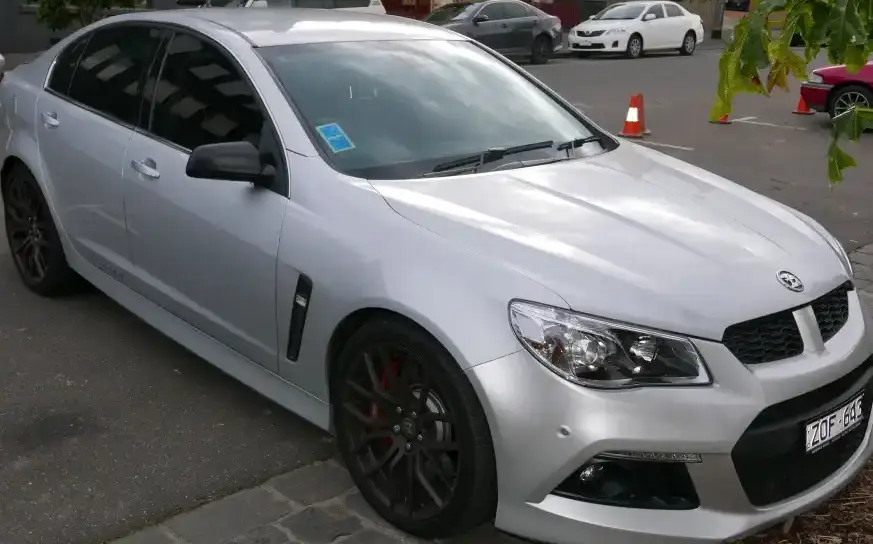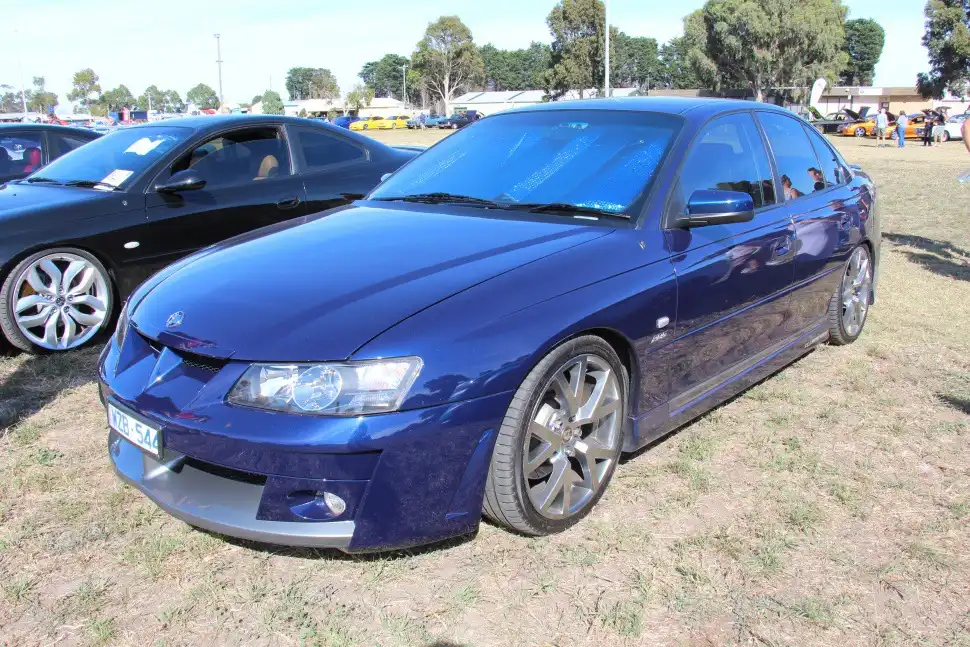
The HSV Clubsport (VY) R8 5.7 V8, produced between 2002 and 2003, represents a high-performance variant of the Holden Commodore, specifically engineered by HSV (Holden Special Vehicles). Positioned as the flagship of the VY Clubsport range, the R8 model delivered significantly enhanced performance compared to the standard Clubsport and other Commodore derivatives. It was built on the GM Zeta platform, shared with other Holden models, but distinguished by its unique engine, suspension tuning, and aggressive styling. The VY series represented a substantial update to the VX series, with improvements in refinement, safety, and overall driving experience. The R8, in particular, catered to enthusiasts seeking a powerful, rear-wheel-drive sedan with track-capable performance.
Technical Specifications
| Brand | HSV |
| Model | Clubsport |
| Generation | Clubsport (VY) |
| Type (Engine) | R8 5.7 V8 (354 Hp) |
| Start of production | 2002 |
| End of production | 2003 |
| Powertrain Architecture | Internal Combustion engine |
| Body type | Sedan |
| Seats | 5 |
| Doors | 4 |
| Fuel Type | Petrol (Gasoline) |
| Acceleration 0 – 100 km/h | 5.5 sec |
| Acceleration 0 – 62 mph | 5.5 sec |
| Acceleration 0 – 60 mph | 5.2 sec |
| Maximum speed | 263 km/h (163.42 mph) |
| Weight-to-power ratio | 4.8 kg/Hp, 208.7 Hp/tonne |
| Weight-to-torque ratio | 3.6 kg/Nm, 280.1 Nm/tonne |
| Power | 354 Hp @ 5600 rpm |
| Power per litre | 62.5 Hp/l |
| Torque | 475 Nm @ 4000 rpm (350.34 lb.-ft. @ 4000 rpm) |
| Maximum engine speed | 6000 rpm |
| Engine layout | Front, Longitudinal |
| Engine displacement | 5665 cm3 (345.7 cu. in.) |
| Number of cylinders | 8 |
| Engine configuration | V-engine |
| Cylinder Bore | 99 mm (3.9 in.) |
| Piston Stroke | 92 mm (3.62 in.) |
| Compression ratio | 10.1:1 |
| Number of valves per cylinder | 2 |
| Fuel injection system | Multi-port manifold injection |
| Engine aspiration | Naturally aspirated engine |
| Engine oil capacity | 6.2 l (6.55 US qt | 5.46 UK qt) |
| Kerb Weight | 1696 kg (3739.04 lbs.) |
| Trunk (boot) space – minimum | 475 l (16.77 cu. ft.) |
| Fuel tank capacity | 75 l (19.81 US gal | 16.5 UK gal) |
| Length | 4980 mm (196.06 in.) |
| Width | 1842 mm (72.52 in.) |
| Height | 1450 mm (57.09 in.) |
| Wheelbase | 2788 mm (109.76 in.) |
| Front track | 1558 mm (61.34 in.) |
| Rear (Back) track | 1574 mm (61.97 in.) |
| Drag coefficient (Cd) | 0.32 |
| Minimum turning circle | 11 m (36.09 ft.) |
| Drivetrain Architecture | Rear wheel drive |
| Number of gears and type of gearbox | 6 gears, manual transmission |
| Front brakes | Ventilated discs |
| Rear brakes | Ventilated discs |
| Tires size | 235/40 ZR18 |
| Wheel rims size | 8J x 18 ET48 |
Powertrain & Engine Architecture
The heart of the Clubsport R8 was the 5.7-liter LS1 V8 engine. This naturally aspirated powerplant, a staple of Holden performance vehicles, produced 354 horsepower at 5600 rpm and 475 Nm (350 lb-ft) of torque at 4000 rpm. The LS1 featured a cast iron block with aluminum cylinder heads, a two-valve-per-cylinder configuration, and a multi-port fuel injection system. The engine’s design prioritized low-end torque and a broad powerband, making it responsive in a variety of driving situations. The R8 was exclusively offered with a six-speed manual transmission, providing precise control and enhancing the driving experience. This transmission was a Borg-Warner T-56, known for its durability and positive shift feel.
Driving Characteristics
The combination of the potent LS1 V8 and the six-speed manual transmission resulted in exhilarating performance. The R8 could accelerate from 0 to 60 mph in approximately 5.2 seconds and achieve a top speed of 163 mph. The manual gearbox allowed drivers to fully exploit the engine’s power, while the rear-wheel-drive configuration provided a traditional sports car feel. Compared to the automatic-equipped Clubsport variants, the R8 offered significantly more driver engagement and quicker acceleration. The suspension was tuned for a balance between comfort and handling, providing a firm but controlled ride. The R8’s handling was further enhanced by its limited-slip differential, which improved traction during cornering.
Equipment & Trim Levels
The Clubsport R8 came standard with a comprehensive list of features, including sports seats, air conditioning, a premium sound system, and power windows and mirrors. Unique to the R8 were its distinctive body kit, including a front lip spoiler, side skirts, and a rear spoiler. Interior trim featured unique R8 badging and a leather-wrapped steering wheel. Optional extras included a sunroof, leather upholstery, and upgraded audio systems. The interior design, while functional, was relatively understated, focusing on providing a driver-focused environment.
Chassis & Braking
The VY Clubsport R8 utilized a modified Commodore chassis with significant enhancements to the suspension system. The front suspension featured MacPherson struts with a stabilizer bar, while the rear suspension employed a multi-link setup, also with a stabilizer bar. Braking duties were handled by ventilated disc brakes on all four wheels, providing ample stopping power. The R8’s braking system was further enhanced by ABS (Anti-lock Braking System). The suspension tuning was stiffer than the standard Clubsport, reducing body roll and improving handling precision.
Market Reception & Comparison
The HSV Clubsport R8 was widely praised by automotive journalists for its performance, handling, and value. It was considered a direct competitor to other high-performance sedans, such as the Ford Falcon XR8 and imported models like the BMW M3. Critics noted the R8’s impressive acceleration and engaging driving experience. Compared to the standard Clubsport, the R8 offered a substantial performance upgrade, justifying its higher price tag. The R8’s fuel economy was typical for a V8-powered performance car, averaging around 15-18 mpg in mixed driving. Reliability was generally good, although the LS1 engine was known to occasionally experience oil leaks.
Legacy
The HSV Clubsport VY R8 remains a highly sought-after vehicle among Australian car enthusiasts. Its combination of performance, practicality, and relative affordability has made it a popular choice in the used car market. The LS1 engine is known for its durability and potential for modification, making the R8 a popular platform for performance upgrades. Well-maintained examples of the R8 are appreciating in value, reflecting their status as a modern classic. The VY R8 represents a high point in Australian performance car history, showcasing the engineering expertise of HSV and the enduring appeal of the V8 engine.