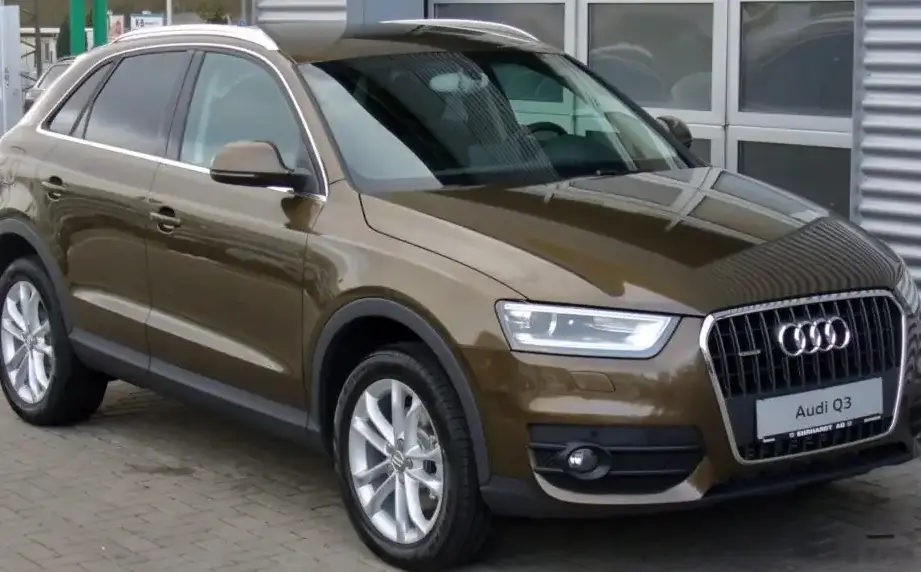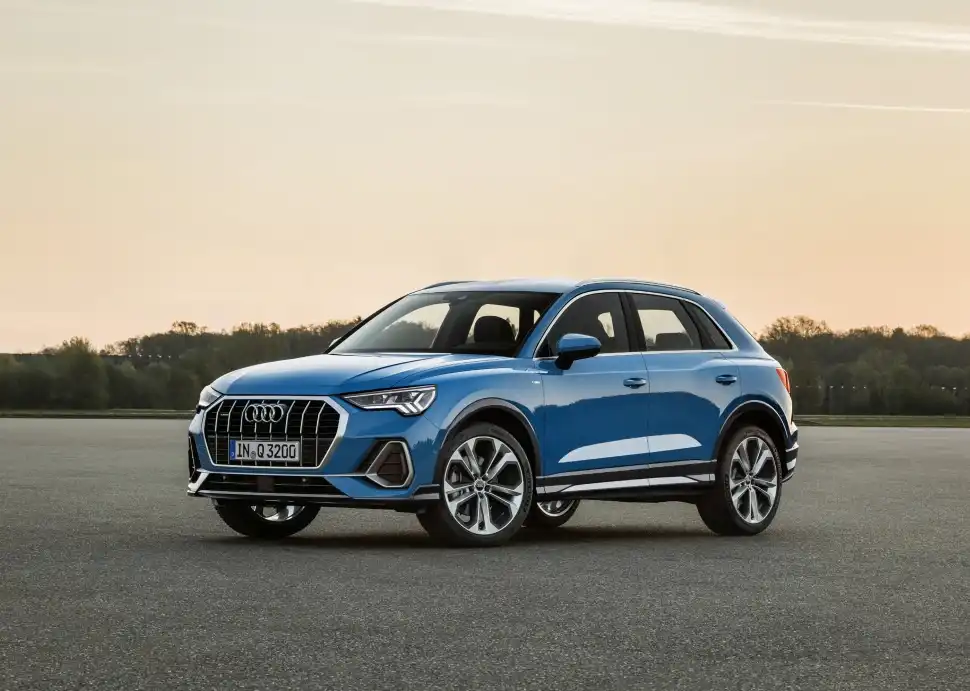
The Audi Q3 II (F3) 40 TFSI quattro S tronic represents a significant iteration in Audi’s compact luxury SUV lineup. Produced from 2018 through August 2020, this variant occupied a key position within the F3 generation, offering a balance between performance, efficiency, and all-weather capability. It was primarily marketed in Europe and other global markets, serving as a popular choice for buyers seeking a premium SUV experience with a responsive turbocharged engine and the added security of Audi’s quattro all-wheel-drive system. This model aimed to bridge the gap between the entry-level Q3 trims and the more powerful, performance-oriented versions.
Technical Specifications
| Brand | Audi |
| Model | Q3 |
| Generation | Q3 II (F3) |
| Type (Engine) | 40 TFSI (190 Hp) quattro S tronic |
| Start of production | 2018 |
| End of production | August, 2020 |
| Powertrain Architecture | Internal Combustion engine |
| Body type | SUV |
| Seats | 5 |
| Doors | 5 |
| Combined fuel consumption (WLTP) | 8.7-9.2 l/100 km (27 – 25.6 US mpg, 32.5 – 30.7 UK mpg, 11.5 – 10.9 km/l) |
| CO2 emissions (WLTP) | 197-209 g/km |
| Fuel consumption (economy) – urban | 9.2-9.4 l/100 km (25.6 – 25 US mpg, 30.7 – 30.1 UK mpg, 10.9 – 10.6 km/l) |
| Fuel consumption (economy) – extra urban | 6.0-6.3 l/100 km (39.2 – 37.3 US mpg, 47.1 – 44.8 UK mpg, 16.7 – 15.9 km/l) |
| Fuel consumption (economy) – combined | 7.2-7.5 l/100 km (32.7 – 31.4 US mpg, 39.2 – 37.7 UK mpg, 13.9 – 13.3 km/l) |
| CO2 emissions | 164-170 g/km |
| Fuel Type | Petrol (Gasoline) |
| Acceleration 0 – 100 km/h | 7.4 sec |
| Acceleration 0 – 62 mph | 7.4 sec |
| Acceleration 0 – 60 mph | 7 sec (Calculated) |
| Maximum speed | 220 km/h (136.7 mph) |
| Emission standard | Euro 6d – TEMP |
| Weight-to-power ratio | 8.5 kg/Hp, 117.3 Hp/tonne |
| Weight-to-torque ratio | 6.5 kg/Nm, 154.3 Nm/tonne |
| Power | 190 Hp @ 5000-6000 rpm |
| Power per litre | 95.8 Hp/l |
| Torque | 250 Nm @ 1500-3500 rpm (184.39 lb.-ft. @ 1500-3500 rpm) |
| Engine layout | Front, Transverse |
| Engine Model/Code | EA888 / DKTC |
| Engine displacement | 1984 cm3 (121.07 cu. in.) |
| Number of cylinders | 4 |
| Engine configuration | Inline |
| Cylinder Bore | 82.5 mm (3.25 in.) |
| Piston Stroke | 92.8 mm (3.65 in.) |
| Compression ratio | 9.6:1 |
| Number of valves per cylinder | 4 |
| Fuel injection system | Direct injection |
| Engine aspiration | Turbocharger, Intercooler |
| Engine oil capacity | 5.7 l (6.02 US qt | 5.02 UK qt) |
| Coolant | 9.2 l (9.72 US qt | 8.09 UK qt) |
| Kerb Weight | 1620 kg (3571.49 lbs.) |
| Max. weight | 2150 kg (4739.94 lbs.) |
| Max load | 530 kg (1168.45 lbs.) |
| Trunk (boot) space – minimum | 530 l (18.72 cu. ft.) |
| Trunk (boot) space – maximum | 1525 l (53.85 cu. ft.) |
| Fuel tank capacity | 60 l (15.85 US gal | 13.2 UK gal) |
| Max. roof load | 75 kg (165.35 lbs.) |
| Permitted trailer load with brakes (8%) | 2100 kg (4629.71 lbs.) |
| Permitted trailer load with brakes (12%) | 2100 kg (4629.71 lbs.) |
| Permitted trailer load without brakes | 750 kg (1653.47 lbs.) |
| Permitted towbar download | 90 kg (198.42 lbs.) |
| Length | 4484 mm (176.54 in.) |
| Width | 1856 mm (73.07 in.) |
| Width including mirrors | 2024 mm (79.69 in.) |
| Height | 1616 mm (63.62 in.) |
| Wheelbase | 2680 mm (105.51 in.) |
| Front track | 1584 mm (62.36 in.) |
| Rear (Back) track | 1576 mm (62.05 in.) |
| Front overhang | 896 mm (35.28 in.) |
| Rear overhang | 908 mm (35.75 in.) |
| Drag coefficient (Cd) | 0.32 |
| Minimum turning circle | 11.8 m (38.71 ft.) |
| Drive wheel | All wheel drive (4×4) |
| Number of gears and type of gearbox | 7 gears, automatic transmission S tronic |
| Front suspension | Independent type McPherson |
| Rear suspension | Independent multi-link suspension |
| Front brakes | Ventilated discs |
| Rear brakes | Disc |
| Assisting systems | ABS (Anti-lock braking system) |
| Steering type | Steering rack and pinion |
| Power steering | Electric Steering |
| Tires size | 215/65 R17 |
| Wheel rims size | 6.5J x 17 |
INTRODUCTION
The Audi Q3 II (F3) 40 TFSI quattro S tronic, launched in 2018, represented the second generation of Audi’s popular compact SUV. Built on the Volkswagen Group’s MQB platform (specifically the 1HX0/A3 variant), the F3 Q3 aimed to offer a more refined and technologically advanced package than its predecessor. The “40 TFSI” designation indicated the engine output, signifying a 2.0-liter turbocharged four-cylinder engine producing 190 horsepower. The “quattro” label denotes Audi’s renowned all-wheel-drive system, and “S tronic” refers to the seven-speed dual-clutch transmission. This particular configuration was positioned as a mid-range offering, appealing to buyers who desired a blend of performance, fuel efficiency, and all-weather capability without the higher price tag of the more powerful variants.
Powertrain & Engine Architecture
At the heart of the Q3 40 TFSI lies the EA888 2.0-liter turbocharged inline-four engine, specifically the DKTC code variant. This engine is a cornerstone of the Volkswagen Group’s powertrain strategy, known for its robust construction and tuning potential. It utilizes direct fuel injection, delivering fuel directly into the combustion chamber for improved efficiency and power. The engine also features an intercooler to cool the intake air, further enhancing performance. The valvetrain employs dual overhead camshafts (DOHC) with four valves per cylinder, optimizing airflow for increased power output. The seven-speed S tronic dual-clutch transmission provides rapid and seamless gear changes, contributing to both performance and fuel economy. This transmission offers both automatic and manual shift modes, allowing the driver to tailor the driving experience to their preferences. The quattro all-wheel-drive system utilizes a multi-plate clutch to distribute torque between the front and rear axles, providing enhanced traction and stability in various driving conditions.
Driving Characteristics
The Q3 40 TFSI quattro S tronic delivers a composed and refined driving experience. The 190 horsepower and 250 Nm (184 lb-ft) of torque provide adequate acceleration, with a 0-60 mph time of around 7 seconds. While not as overtly sporty as some of its competitors, the Q3 40 TFSI offers a responsive and engaging driving feel. The S tronic transmission contributes to smooth and quick gear changes, enhancing the overall driving experience. The quattro all-wheel-drive system provides excellent grip and stability, particularly in inclement weather or on slippery surfaces. Compared to the base Q3 models with lower-powered engines, the 40 TFSI offers a noticeable improvement in performance. However, it doesn’t quite match the outright acceleration of the higher-output variants, such as the 45 TFSI. The gear ratios are tuned for a balance between fuel efficiency and performance, providing adequate power for everyday driving situations.
Equipment & Trim Levels
The Q3 40 TFSI quattro S tronic typically came equipped with a generous array of standard features. These included Audi’s MMI infotainment system with a 7-inch touchscreen display, automatic climate control, leather upholstery, and a suite of driver-assistance systems such as lane departure warning and automatic emergency braking. Optional extras included a larger touchscreen display, a panoramic sunroof, a premium sound system, and adaptive cruise control. Interior trim levels varied, with options for different materials and finishes. The dashboard layout was modern and minimalist, reflecting Audi’s design philosophy. The seats were comfortable and supportive, providing a pleasant driving experience even on long journeys.
Chassis & Braking
The Q3 40 TFSI utilizes an independent McPherson strut suspension at the front and a multi-link suspension at the rear, providing a comfortable and controlled ride. The suspension tuning is geared towards providing a balance between comfort and handling. The braking system consists of ventilated discs at the front and solid discs at the rear, providing adequate stopping power. Anti-lock braking system (ABS) and electronic stability control (ESC) are standard features, enhancing safety and stability. The steering is electrically assisted, providing a precise and responsive feel.
Market Reception & Comparison
The Audi Q3 40 TFSI quattro S tronic was generally well-received by automotive critics. It was praised for its refined interior, comfortable ride, and capable all-wheel-drive system. However, some critics noted that the engine could feel slightly underpowered compared to some of its rivals. Fuel economy was considered to be competitive for its class, with combined fuel consumption figures ranging from 7.2 to 7.5 l/100 km (32.7 – 31.4 US mpg). Compared to the lower-powered Q3 variants, the 40 TFSI offered a significant improvement in performance. However, it was more expensive and slightly less fuel-efficient. Compared to competitors such as the BMW X3 and Mercedes-Benz GLC, the Q3 40 TFSI offered a compelling value proposition, providing a similar level of luxury and technology at a lower price point.
Legacy
The EA888 engine, found in the Q3 40 TFSI, has proven to be a reliable and durable powertrain. While some early versions of the EA888 engine were prone to carbon buildup, the later iterations, including the DKTC code, have addressed these issues. The S tronic transmission is also generally reliable, although regular maintenance is essential to ensure optimal performance. In the used car market, the Q3 40 TFSI quattro S tronic remains a popular choice, offering a good balance of features, performance, and value. Its reputation for reliability and the availability of genuine Audi parts contribute to its continued appeal.