
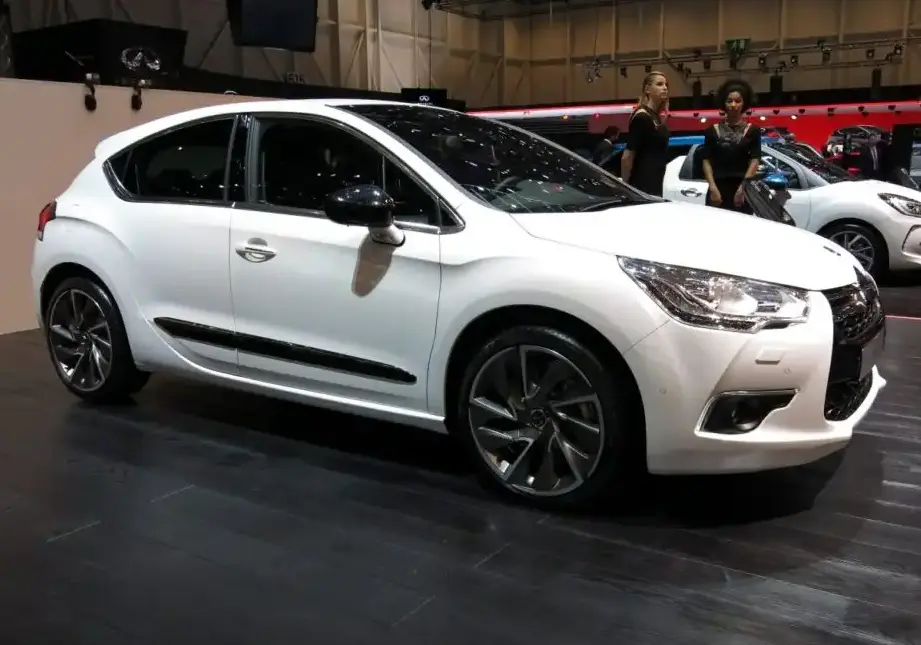
The Citroen DS4 1.6 THP (156 hp) was a variant of the DS4 compact hatchback produced between 2011 and 2015. Positioned as a mid-range offering within the DS4 lineup, it aimed to bridge the gap between the more economical diesel options and the higher-performance, though less common, petrol variants. The DS4 itself was Citroën’s attempt to create a more premium and stylish hatchback, differentiating itself from the more mainstream C4. This particular model, powered by the 1.6 THP engine, was primarily sold in European markets, offering a balance of performance and fuel efficiency for buyers seeking a slightly more engaging driving experience than the diesel alternatives.
Technical Specifications
| Brand | Citroen |
| Model | DS4 |
| Generation | DS4 |
| Type (Engine) | 1.6 THP (156 Hp) |
| Start of production | 2011 |
| End of production | 2015 |
| Powertrain Architecture | Internal Combustion engine |
| Body type | Hatchback |
| Seats | 5 |
| Doors | 5 |
| Fuel consumption (urban) | 9 l/100 km (26.1 US mpg, 31.4 UK mpg, 11.1 km/l) |
| Fuel consumption (extra urban) | 5.1 l/100 km (46.1 US mpg, 55.4 UK mpg, 19.6 km/l) |
| Fuel consumption (combined) | 6.5 l/100 km (36.2 US mpg, 43.5 UK mpg, 15.4 km/l) |
| CO2 emissions | 149 g/km |
| Fuel Type | Petrol (Gasoline) |
| Acceleration 0 – 100 km/h | 9.9 sec |
| Acceleration 0 – 62 mph | 9.9 sec |
| Acceleration 0 – 60 mph | 9.4 sec |
| Maximum speed | 214 km/h (132.97 mph) |
| Emission standard | Euro 5 |
| Weight-to-power ratio | 8.2 kg/Hp, 121.5 Hp/tonne |
| Weight-to-torque ratio | 5.4 kg/Nm, 186.9 Nm/tonne |
| Power | 156 Hp @ 6000 rpm |
| Power per litre | 97.6 Hp/l |
| Torque | 240 Nm @ 1400 rpm (177.01 lb.-ft. @ 1400 rpm) |
| Engine layout | Front, Transverse |
| Engine Model/Code | 5FV EP6CDT |
| Engine displacement | 1598 cm3 (97.52 cu. in.) |
| Number of cylinders | 4 |
| Engine configuration | Inline |
| Cylinder Bore | 77 mm (3.03 in.) |
| Piston Stroke | 85.8 mm (3.38 in.) |
| Compression ratio | 11:1 |
| Number of valves per cylinder | 4 |
| Fuel injection system | Direct injection |
| Engine aspiration | Turbocharger, Intercooler |
| Valvetrain | DOHC |
| Engine oil capacity | 4.25 l (4.49 US qt | 3.74 UK qt) |
| Kerb Weight | 1284 kg (2830.74 lbs.) |
| Max. weight | 1795 kg (3957.3 lbs.) |
| Max load | 511 kg (1126.56 lbs.) |
| Trunk (boot) space – minimum | 385 l (13.6 cu. ft.) |
| Trunk (boot) space – maximum | 1021 l (36.06 cu. ft.) |
| Fuel tank capacity | 60 l (15.85 US gal | 13.2 UK gal) |
| Permitted trailer load with brakes (12%) | 1400 kg (3086.47 lbs.) |
| Permitted trailer load without brakes | 680 kg (1499.14 lbs.) |
| Permitted towbar download | 75 kg (165.35 lbs.) |
| Length | 4275 mm (168.31 in.) |
| Width | 1810 mm (71.26 in.) |
| Height | 1533 mm (60.35 in.) |
| Wheelbase | 2612 mm (102.83 in.) |
| Front track | 1531 mm (60.28 in.) |
| Rear (Back) track | 1525 mm (60.04 in.) |
| Front overhang | 924 mm (36.38 in.) |
| Rear overhang | 739 mm (29.09 in.) |
| Minimum turning circle (turning diameter) | 10.7 m (35.1 ft.) |
| Drivetrain Architecture | The Internal combustion engine (ICE) drives the front wheels of the vehicle. |
| Drive wheel | Front wheel drive |
| Number of gears and type of gearbox | 6 gears, manual transmission |
| Front suspension | Independent type McPherson |
| Rear suspension | Semi-independent, coil spring |
| Front brakes | Ventilated discs |
| Rear brakes | Disc |
| Assisting systems | ABS (Anti-lock braking system) |
| Steering type | Steering rack and pinion |
| Tires size | 215/55 R17; 225/45 R18; 225/40 R19 |
| Wheel rims size | 17; 18; 19 |
Powertrain & Engine Architecture
The heart of the DS4 1.6 THP was the EP6CDT engine, a 1.6-liter turbocharged inline-four cylinder petrol engine developed jointly by PSA Peugeot Citroën and BMW. This engine, part of the Prince engine family, featured direct fuel injection, a twin-scroll turbocharger, and a double overhead camshaft (DOHC) valvetrain with four valves per cylinder. The direct injection system allowed for precise fuel delivery, improving efficiency and reducing emissions. The turbocharger provided a significant boost in power, overcoming the limitations of the relatively small displacement. The 5FV gearbox was a 6-speed manual transmission. This transmission was chosen for its balance of efficiency and driver engagement, although an automatic transmission was available as an option in some markets.
Driving Characteristics
The 156 hp 1.6 THP engine provided a noticeable step up in performance compared to the base diesel engines offered in the DS4. Acceleration from 0-60 mph took around 9.4 seconds, and the car felt reasonably responsive in everyday driving situations. The turbocharger did exhibit some lag at lower engine speeds, but once spooled up, it delivered a strong surge of torque. The manual transmission offered precise shifts, and the gear ratios were well-suited for both urban and highway driving. While not a sports car, the DS4 1.6 THP provided a more enjoyable driving experience than many of its competitors in the compact hatchback segment.
Equipment & Trim Levels
The DS4 1.6 THP typically came equipped with a decent level of standard features, including air conditioning, power windows, power mirrors, a CD stereo system, and alloy wheels. Higher trim levels added features such as a panoramic sunroof, leather upholstery, navigation system, and parking sensors. The interior design of the DS4 was distinctive, with a driver-focused cockpit and a unique dashboard layout. The seats were generally comfortable and supportive, and the cabin offered a reasonable amount of space for passengers.
Chassis & Braking
The DS4 featured a McPherson strut front suspension and a semi-independent coil spring rear suspension. This setup provided a good balance of ride comfort and handling. The steering was precise and well-weighted, and the car felt stable and secure in corners. The braking system consisted of ventilated discs at the front and solid discs at the rear, with ABS (Anti-lock Braking System) as standard. The brakes provided adequate stopping power for most driving situations.
Market Reception & Comparison
The Citroen DS4 1.6 THP was generally well-received by automotive critics. It was praised for its stylish design, comfortable ride, and responsive engine. However, some critics noted the turbo lag and the relatively small interior space. Compared to other petrol-powered hatchbacks in its class, the DS4 1.6 THP offered a good balance of performance and fuel economy. It was also more affordable than some of the more premium offerings from German manufacturers. The diesel variants of the DS4 were generally more popular due to their superior fuel efficiency, but the 1.6 THP provided a compelling alternative for buyers who prioritized driving enjoyment.
Legacy
The 1.6 THP engine, while generally reliable, has been known to exhibit some issues with carbon buildup on the intake valves, particularly in vehicles that are primarily driven on short journeys. Regular servicing and the use of high-quality fuel can help to mitigate this problem. The DS4 itself was discontinued in 2015, but it remains a popular choice among used car buyers who are looking for a stylish and comfortable hatchback. The 1.6 THP variant, in particular, is sought after by those who appreciate its responsive engine and engaging driving dynamics. Today, well-maintained examples of the DS4 1.6 THP can still provide years of reliable service.
