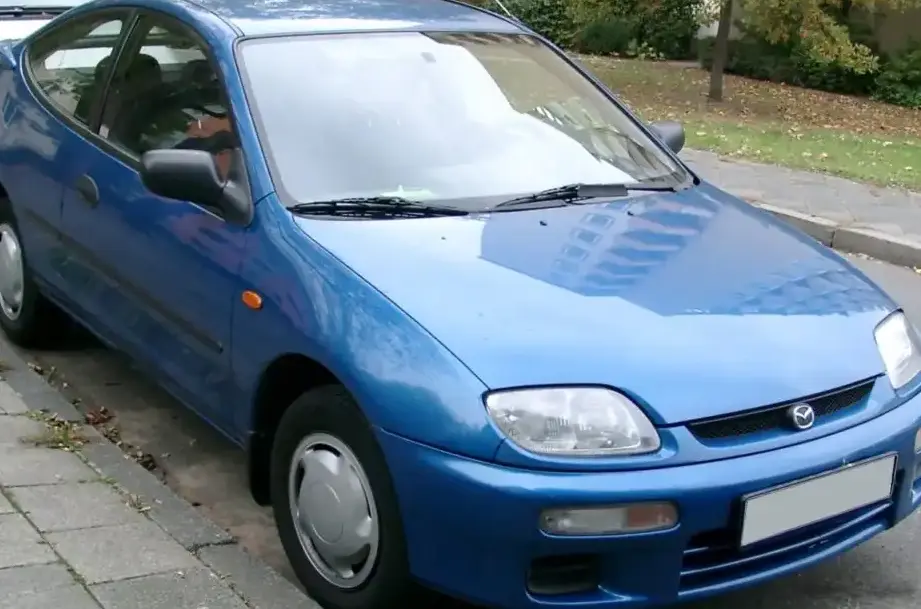
The Mazda 323 III Hatchback, internally designated as the BF platform, represented Mazda’s entry into the competitive compact hatchback segment during the mid-to-late 1980s. Produced from 1985 to 1989, the BF series aimed to offer a blend of practicality, affordability, and Mazda’s signature sporty handling. The 1.5i variant, powered by a 95 horsepower engine, served as a core model within the range, positioned as a sensible and economical choice for buyers prioritizing fuel efficiency and everyday usability over outright performance. It was a key offering in European and Asian markets, where smaller, fuel-efficient cars were highly valued, and also found a niche audience in the United States.
Technical Specifications
| Brand | Mazda |
| Model | 323 |
| Generation | 323 III Hatchback (BF) |
| Type (Engine) | 1.5 i (95 Hp) |
| Start of production | 1985 |
| End of production | 1989 |
| Powertrain Architecture | Internal Combustion engine |
| Body type | Hatchback |
| Fuel Type | Petrol (Gasoline) |
| Power | 95 Hp |
| Engine aspiration | Naturally aspirated engine |
Powertrain & Engine Architecture
The heart of the 323 III 1.5i was the Mazda B6 engine, a 1.5-liter inline-four cylinder gasoline engine. This engine, bearing the code B6-ZE in many markets, was a relatively simple design, utilizing a single overhead camshaft (SOHC) valvetrain with two valves per cylinder. Fuel delivery was managed by a carburetor in earlier models (1985-1986) and transitioned to electronic fuel injection (EFI) in later years (1987-1989), improving fuel economy and reducing emissions. The EFI system utilized a basic electronic control unit (ECU) to manage fuel delivery based on engine speed, load, and other parameters. The engine produced 95 horsepower at approximately 6000 rpm and 93 lb-ft of torque at 4000 rpm. The transmission paired with the 1.5i was typically a four-speed automatic, although a five-speed manual transmission was also available as an option. The automatic transmission was designed for smooth, comfortable shifts, prioritizing ease of use over sporty responsiveness. It featured a conventional torque converter and planetary gearsets.
Driving Characteristics
The 323 III 1.5i with the automatic transmission offered a comfortable, if not particularly exhilarating, driving experience. Acceleration was adequate for everyday driving, with a 0-60 mph time estimated around 12-14 seconds. The automatic transmission’s gear ratios were geared towards fuel efficiency, resulting in relatively slow acceleration. The engine felt somewhat strained at higher speeds, and overtaking maneuvers required careful planning. Compared to the more powerful 1.6-liter or even the later 1.8-liter variants, the 1.5i lacked the punch needed for spirited driving. However, the Mazda 323 III was known for its well-tuned suspension, providing a comfortable ride and predictable handling. The steering was light and precise, making it easy to maneuver in urban environments. The automatic transmission, while not sporty, offered smooth and reliable operation, making it a popular choice for drivers who preferred convenience over performance.
Equipment & Trim Levels
The 1.5i trim level generally represented the base model in the 323 III Hatchback range. Standard equipment typically included cloth upholstery, a basic AM/FM radio, and manual windows and door locks. Air conditioning was often an optional extra, as were power windows and central locking. Interior trim was functional and durable, prioritizing practicality over luxury. The dashboard layout was straightforward, with clearly labeled controls. Later models (1987-1989) with EFI often included a more modern instrument cluster with additional gauges. Optional extras could include a sunroof, upgraded stereo systems, and alloy wheels, allowing buyers to customize their vehicle to some extent. The overall interior ambiance was simple and functional, reflecting the car’s affordable positioning.
Chassis & Braking
The Mazda 323 III Hatchback utilized a front-engine, front-wheel-drive layout. The suspension consisted of MacPherson struts at the front and a twist-beam axle at the rear. This suspension setup provided a good balance between ride comfort and handling. The 1.5i variant typically featured drum brakes on the rear wheels and disc brakes on the front, providing adequate stopping power for its weight class. Stabilizer bars were often included as standard equipment, further enhancing handling stability. The chassis was relatively lightweight, contributing to the car’s fuel efficiency and nimble handling. Steering was rack-and-pinion, providing precise and responsive control.
Market Reception & Comparison
The Mazda 323 III 1.5i was generally well-received by automotive critics as a practical and affordable compact hatchback. It was praised for its fuel efficiency, comfortable ride, and predictable handling. However, it was often criticized for its lack of power and somewhat basic interior. Compared to other models in the 323 III range, such as the 1.6-liter or 1.8-liter variants, the 1.5i offered lower performance but better fuel economy. It competed with other popular compact hatchbacks of the era, such as the Volkswagen Golf, Ford Escort, and Opel Astra. In terms of reliability, the 1.5i powertrain proved to be generally robust, although regular maintenance was essential to prevent issues. Fuel economy was a strong point, typically achieving around 30-35 mpg in mixed driving conditions.
Legacy
The Mazda 323 III 1.5i, while not the most powerful or luxurious model in the range, remains a fondly remembered car for many owners. Its simplicity, reliability, and fuel efficiency have made it a popular choice in the used car market. The B6 engine, while not known for its high performance, is relatively easy to maintain and repair. Parts availability is generally good, although some components may be becoming increasingly scarce. Today, well-maintained examples of the 323 III 1.5i are sought after by enthusiasts and collectors, representing a nostalgic reminder of the 1980s compact car era. The car’s enduring appeal lies in its blend of practicality, affordability, and Mazda’s reputation for building reliable and enjoyable-to-drive vehicles.