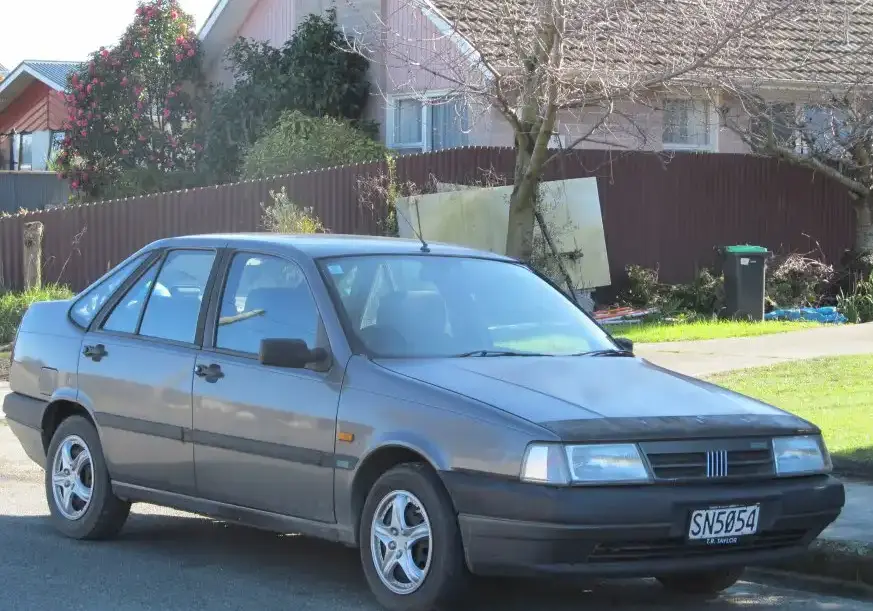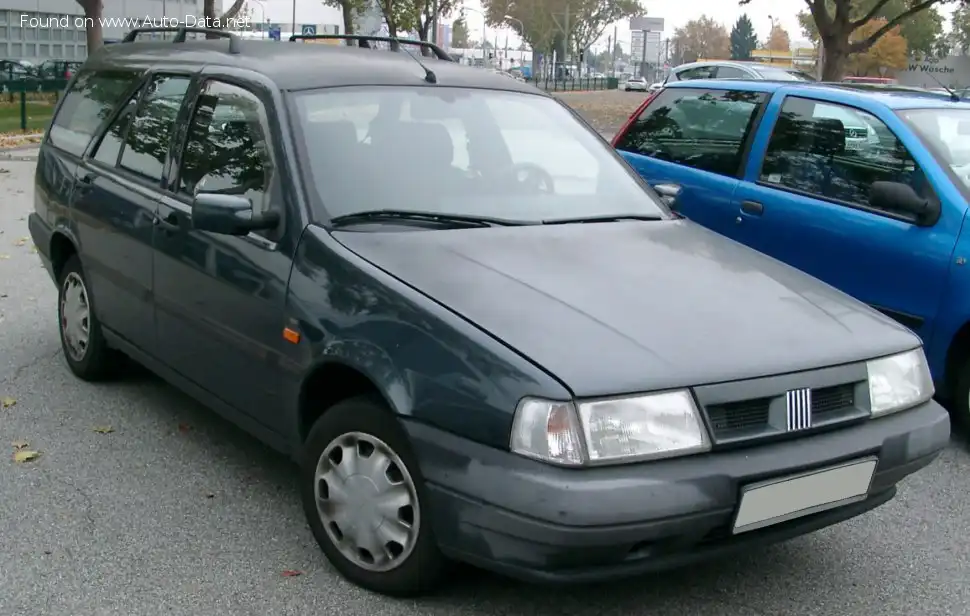
The Fiat Tempra Station Wagon (SW), specifically the 1.6 i.e. (159.AJ) variant producing 90 horsepower, was a key model in Fiat’s lineup during its 1994-1996 production run. Positioned as a practical and affordable family vehicle, the Tempra SW aimed to provide spaciousness and utility within the mid-size segment. This particular engine and transmission combination represented an entry-level offering within the Tempra SW range, appealing to buyers prioritizing economy and functionality over outright performance. It was part of the 159 project series, representing a significant step forward for Fiat in terms of design and engineering compared to its predecessors.
Technical Specifications
| Brand | Fiat |
| Model | Tempra |
| Generation | Tempra S.w. (159) |
| Type (Engine) | 1.6 i.e. (159.AJ) (90 Hp) |
| Start of production | 1994 |
| End of production | 1996 |
| Powertrain Architecture | Internal Combustion engine |
| Body type | Station wagon (estate) |
| Seats | 5 |
| Doors | 5 |
| Fuel consumption (combined) | 7.8 l/100 km (30.2 US mpg, 36.2 UK mpg, 12.8 km/l) |
| Fuel Type | Petrol (Gasoline) |
| Acceleration 0 – 100 km/h | 13.6 sec |
| Acceleration 0 – 62 mph | 13.6 sec |
| Acceleration 0 – 60 mph | 12.9 sec |
| Maximum speed | 178 km/h (110.6 mph) |
| Weight-to-power ratio | 12.9 kg/Hp, 77.5 Hp/tonne |
| Weight-to-torque ratio | 9.1 kg/Nm, 109.3 Nm/tonne |
| Power | 90 Hp @ 5750 rpm |
| Power per litre | 56.9 Hp/l |
| Torque | 127 Nm @ 2750 rpm (93.67 lb.-ft. @ 2750 rpm) |
| Engine layout | Front, Transverse |
| Engine Model/Code | 159 B9.000 |
| Engine displacement | 1581 cm3 (96.48 cu. in.) |
| Number of cylinders | 4 |
| Engine configuration | Inline |
| Cylinder Bore | 86.4 mm (3.4 in.) |
| Piston Stroke | 67.4 mm (2.65 in.) |
| Compression ratio | 9.2:1 |
| Number of valves per cylinder | 2 |
| Fuel injection system | Multi-port manifold injection |
| Engine aspiration | Naturally aspirated engine |
| Valvetrain | OHC |
| Engine oil capacity | 3.8 l (4.02 US qt | 3.34 UK qt) |
| Coolant | 6.6 l (6.97 US qt | 5.81 UK qt) |
| Kerb Weight | 1162 kg (2561.77 lbs.) |
| Max. weight | 1760 kg (3880.14 lbs.) |
| Max load | 598 kg (1318.36 lbs.) |
| Trunk (boot) space – minimum | 500 l (17.66 cu. ft.) |
| Trunk (boot) space – maximum | 1025 l (36.2 cu. ft.) |
| Fuel tank capacity | 60 l (15.85 US gal | 13.2 UK gal) |
| Length | 4472 mm (176.06 in.) |
| Width | 1695 mm (66.73 in.) |
| Height | 1500 mm (59.06 in.) |
| Wheelbase | 2450 mm (96.46 in.) |
| Front track | 1435 mm (56.5 in.) |
| Rear (Back) track | 1415 mm (55.71 in.) |
| Drivetrain Architecture | The Internal combustion engine (ICE) drives the front wheels of the vehicle. |
| Drive wheel | Front wheel drive |
| Number of gears and type of gearbox | 5 gears, manual transmission |
| Front suspension | Wishbone |
| Rear suspension | Coil spring |
| Front brakes | Disc |
| Rear brakes | Disc |
| Assisting systems | ABS (Anti-lock braking system) |
| Steering type | Steering rack and pinion |
| Power steering | Hydraulic Steering |
| Tires size | 175/65 R14 |
Powertrain & Engine Architecture
The heart of this Tempra SW variant is the 1.6-liter inline-four cylinder engine, designated as the 159 B9.000. This engine falls into Fiat’s ‘i.e.’ series, signifying the use of multi-point fuel injection. The engine utilizes a single overhead camshaft (OHC) valvetrain, operating two valves per cylinder. The 9.2:1 compression ratio was a typical value for naturally aspirated engines of this era, balancing performance and fuel efficiency. The engine’s 127 Nm (93.67 lb-ft) of torque is produced at 2750 rpm, providing reasonable low-end responsiveness for everyday driving. The engine was paired with a five-speed manual transmission, chosen for its affordability and simplicity. While an automatic transmission was offered on other Tempra models, it wasn’t available with this specific 1.6L engine.
Driving Characteristics
The 90 horsepower output of the 1.6 i.e. engine in the Tempra SW translated to adequate, but not exhilarating, performance. Acceleration from 0 to 60 mph took approximately 12.9 seconds, and the top speed was around 110.6 mph. The five-speed manual transmission allowed drivers to keep the engine in its optimal power band, but the overall experience was geared towards practicality rather than sporty driving. Compared to the more powerful 2.0-liter versions of the Tempra, this 1.6L model felt noticeably slower, particularly when fully loaded with passengers and cargo. However, the 1.6L offered a smoother and more forgiving driving experience, making it ideal for urban commuting and long highway journeys where outright speed wasn’t a priority.
Equipment & Trim Levels
The 1.6 i.e. Tempra SW typically represented the base trim level. Standard equipment generally included power steering, central locking, and basic instrumentation. Interior upholstery was typically cloth, and the dashboard featured a functional, if somewhat utilitarian, design. Optional extras, depending on the market, could include air conditioning, power windows, and an upgraded audio system. The focus was on providing essential features at an affordable price point, making the Tempra SW accessible to a wider range of buyers.
Chassis & Braking
The Tempra SW utilized a front-wheel-drive layout with independent wishbone suspension at the front and a coil spring rear suspension. This setup provided a reasonable balance between ride comfort and handling. Brakes were disc brakes on all four wheels, a relatively advanced feature for a vehicle in this class during the mid-1990s. An Anti-lock Braking System (ABS) was also included as standard, enhancing safety and control during emergency braking situations. The chassis was designed to maximize interior space while maintaining structural rigidity.
Market Reception & Comparison
The Fiat Tempra SW 1.6 i.e. was generally well-received as a practical and affordable family vehicle. Critics praised its spacious interior, comfortable ride, and reasonable fuel economy. However, the engine’s performance was often cited as a drawback, particularly when compared to more powerful alternatives. Compared to the 2.0-liter Tempra SW, the 1.6L model offered significantly better fuel economy (around 7.8 l/100km) but at the cost of performance. The 1.9 TDI diesel version offered even better fuel economy, but with a different driving experience focused on torque rather than horsepower. The 1.6L version was aimed at buyers who prioritized value and practicality over outright performance.
Legacy
The Fiat Tempra SW, including the 1.6 i.e. variant, has become a relatively sought-after classic among Fiat enthusiasts. The 159 B9.000 engine is known for its reliability, provided it receives regular maintenance. While not particularly powerful, the engine is relatively simple to repair and parts availability remains reasonable. Today, well-maintained examples of the Tempra SW 1.6 i.e. are increasingly valued for their practicality, spaciousness, and nostalgic appeal. The Tempra SW represented a significant step forward for Fiat in terms of design and engineering, and it remains a fondly remembered vehicle for many European drivers.