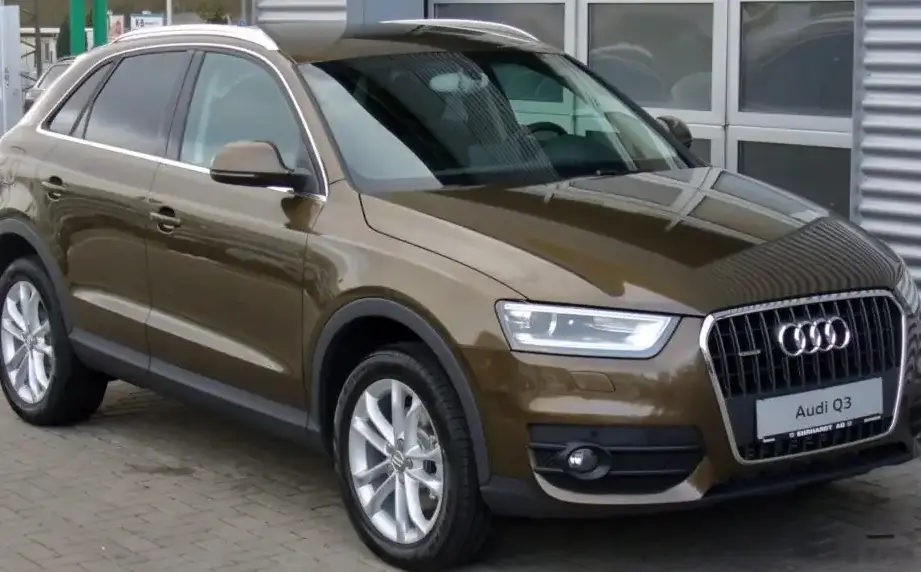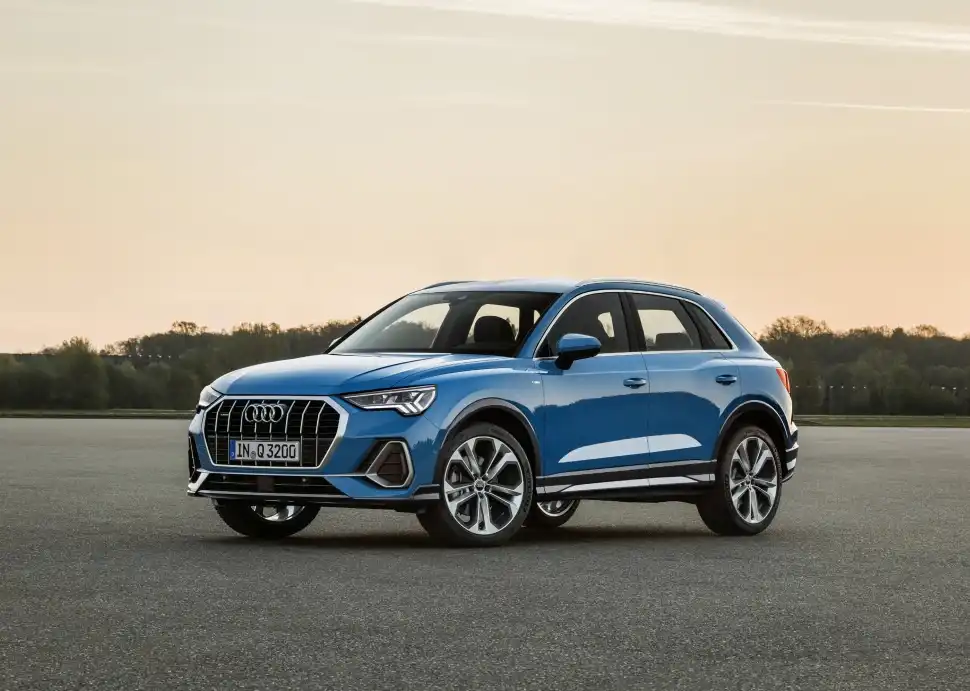
The Audi Q3 II (F3) 45 TFSI quattro tiptronic represents a significant iteration in Audi’s compact luxury SUV lineup. Introduced in 2019 and continuing through the 2025 model year, this variant occupies a strong mid-range position within the F3 generation, offering a blend of performance, technology, and practicality. Built on the Volkswagen Group’s MQB platform, the Q3 aimed to compete directly with rivals like the BMW X3, Mercedes-Benz GLC, and Acura RDX, offering a premium experience in a smaller, more manageable package. The 45 TFSI designation signifies its engine output, and the “quattro” label denotes Audi’s renowned all-wheel-drive system, paired with a sophisticated eight-speed tiptronic automatic transmission.
Technical Specifications
| Brand | Audi |
| Model | Q3 |
| Generation | Q3 II (F3) |
| Type (Engine) | 45 TFSI (228 Hp) quattro tiptronic |
| Start of production | 2019 |
| End of production | 2025 |
| Powertrain Architecture | Internal Combustion engine |
| Body type | SUV |
| Seats | 5 |
| Doors | 5 |
| Fuel consumption (economy) – urban (EPA) | 11.8-12.4 l/100 km (19.9 – 19 US mpg, 23.9 – 22.8 UK mpg, 8.5 – 8.1 km/l) |
| Fuel consumption (economy) – extra urban (EPA) | 8.4-8.7 l/100 km (28 – 27 US mpg, 33.6 – 32.5 UK mpg, 11.9 – 11.5 km/l) |
| Fuel consumption (economy) – combined (EPA) | 10.2-10.7 l/100 km (23.1 – 22 US mpg, 27.7 – 26.4 UK mpg, 9.8 – 9.3 km/l) |
| Fuel Type | Petrol (Gasoline) |
| Acceleration 0 – 100 km/h | 7.4 sec |
| Acceleration 0 – 62 mph | 7.4 sec |
| Acceleration 0 – 60 mph | 7 sec |
| Maximum speed | 210 km/h (130.49 mph) – Electronically limited |
| Weight-to-power ratio | 7.8 kg/Hp, 128.7 Hp/tonne |
| Weight-to-torque ratio | 5.1 kg/Nm, 197.6 Nm/tonne |
| Power | 228 Hp @ 5000-6700 rpm |
| Power per litre | 114.9 Hp/l |
| Torque | 350 Nm @ 1700-4400 rpm (258.15 lb.-ft. @ 1700-4400 rpm) |
| Engine layout | Front, Transverse |
| Engine Model/Code | EA888 / DHHA, DSNA |
| Engine displacement | 1984 cm3 (121.07 cu. in.) |
| Number of cylinders | 4 |
| Engine configuration | Inline |
| Cylinder Bore | 82.5 mm (3.25 in.) |
| Piston Stroke | 92.8 mm (3.65 in.) |
| Compression ratio | 9.6:1 |
| Number of valves per cylinder | 4 |
| Fuel injection system | Direct injection |
| Engine aspiration | Turbocharger, Intercooler |
| Valvetrain | DOHC |
| Engine oil capacity | 5.7 l (6.02 US qt | 5.02 UK qt) |
| Coolant | 10 l (10.57 US qt | 8.8 UK qt) |
| Kerb Weight | 1771-1776 kg (3904.39 – 3915.41 lbs.) |
| Trunk (boot) space – minimum | 530 l (18.72 cu. ft.) |
| Trunk (boot) space – maximum | 1525 l (53.85 cu. ft.) |
| Fuel tank capacity | 60 l (15.85 US gal | 13.2 UK gal) |
| Max. roof load | 75 kg (165.35 lbs.) |
| Permitted trailer load with brakes (12%) | 680 kg (1499.14 lbs.) |
| Permitted towbar download | 70 kg (154.32 lbs.) |
| Length | 4485 mm (176.57 in.) |
| Width | 1849 mm (72.8 in.) |
| Width including mirrors | 2024 mm (79.69 in.) |
| Height | 1598 mm (62.91 in.) |
| Wheelbase | 2680 mm (105.51 in.) |
| Front track | 1580 mm (62.2 in.) |
| Rear (Back) track | 1572 mm (61.89 in.) |
| Front overhang | 896 mm (35.28 in.) |
| Rear overhang | 908 mm (35.75 in.) |
| Drag coefficient (Cd) | 0.36 |
| Minimum turning circle (turning diameter) | 11.7 m (38.39 ft.) |
| Drivetrain Architecture | The Internal combustion engine (ICE) drives the front wheels permanently, and the rear wheels are driven through an electrically or mechanically operated clutch if necessary. |
| Drive wheel | All wheel drive (4×4) |
| Number of gears and type of gearbox | 8 gears, automatic transmission tiptronic |
| Front suspension | Independent, type McPherson with coil spring and anti-roll bar |
| Rear suspension | Independent multi-link spring suspension with stabilizer |
| Front brakes | Ventilated discs, 340 mm |
| Rear brakes | Ventilated discs, 310 mm |
| Assisting systems | ABS (Anti-lock braking system) |
| Steering type | Steering rack and pinion |
| Power steering | Electric Steering |
| Tires size | 235/55 R18; 235/50 R19; 255/40 R20 |
| Wheel rims size | 7J x 18; 7J x 19; 8.5J x 20 |
Powertrain & Engine Architecture
At the heart of the Q3 45 TFSI lies the EA888 2.0-liter turbocharged four-cylinder engine. Specifically, engine codes DHHA and DSNA were commonly used for this configuration. This engine is a direct-injection powerplant, utilizing a sophisticated fuel delivery system for optimal combustion efficiency and power output. The EA888 engine family is known for its robust construction and tuning potential. The turbocharger, coupled with an intercooler, provides a significant boost in power and torque, delivering 228 horsepower and 350 Nm (258 lb-ft) of torque. The eight-speed tiptronic automatic transmission is a torque-converter type, offering smooth and responsive shifts. It features a manual shift mode for driver control, and adapts to driving style for optimized performance.
Driving Characteristics
The Q3 45 TFSI quattro tiptronic delivers a composed and refined driving experience. The 2.0-liter turbo engine provides ample power for everyday driving and confident highway merging and overtaking. While not a sports car, the 7.4-second 0-60 mph acceleration is respectable for its class. The tiptronic transmission is well-tuned, providing smooth gear changes and quick responses when in manual mode. The quattro all-wheel-drive system enhances traction and stability, particularly in inclement weather conditions. Compared to the base Q3 models with lower horsepower engines, the 45 TFSI offers a noticeable performance upgrade. It also feels more responsive than diesel variants, though those offer superior fuel economy. The gear ratios are optimized for a balance of acceleration and fuel efficiency, with taller gearing in higher gears for relaxed cruising.
Equipment & Trim Levels
The 45 TFSI quattro tiptronic trim typically came well-equipped with standard features such as leather upholstery, a panoramic sunroof, a premium sound system, and a suite of advanced driver-assistance systems including adaptive cruise control, lane departure warning, and automatic emergency braking. The infotainment system featured a touchscreen display with Apple CarPlay and Android Auto compatibility. Optional extras included upgraded leather packages, a head-up display, and a virtual cockpit digital instrument cluster. Interior trim options ranged from brushed aluminum to wood veneers, allowing for a degree of personalization.
Chassis & Braking
The Q3’s chassis features an independent suspension setup at all four corners. The front utilizes a McPherson strut design, while the rear employs a multi-link setup. This configuration provides a comfortable ride quality while maintaining good handling characteristics. Stabilizer bars are fitted front and rear to reduce body roll during cornering. Braking duties are handled by ventilated disc brakes on all four wheels, providing ample stopping power. The ABS (Anti-lock Braking System) and electronic stability control systems enhance safety and control.
Market Reception & Comparison
The Audi Q3 45 TFSI quattro tiptronic was generally well-received by automotive critics. It was praised for its refined interior, comfortable ride, and strong performance. The all-wheel-drive system was also a highlight, providing excellent traction and stability. Fuel economy was considered average for its class, with combined figures around 23 mpg. Compared to other trims in the Q3 lineup, the 45 TFSI offered a significant performance upgrade, justifying its higher price point. However, some critics noted that the infotainment system could be complex to navigate.
Legacy
The EA888 engine, in its various iterations, has proven to be a reliable and durable powerplant. The eight-speed tiptronic transmission is also generally considered to be a robust unit. While long-term maintenance costs can be higher than some competitors due to the Audi brand, the Q3 45 TFSI quattro tiptronic holds its value relatively well in the used car market. Its combination of luxury, performance, and practicality continues to make it an attractive option for buyers seeking a compact SUV. Common issues reported include occasional oil consumption and potential carbon buildup on the intake valves, but these are generally manageable with proper maintenance.