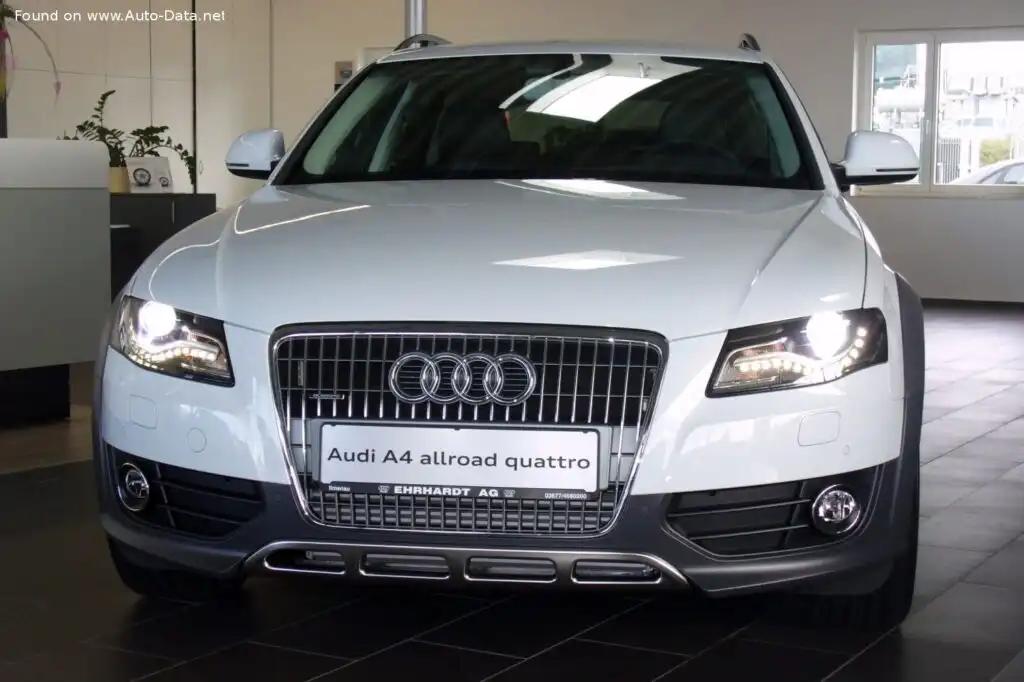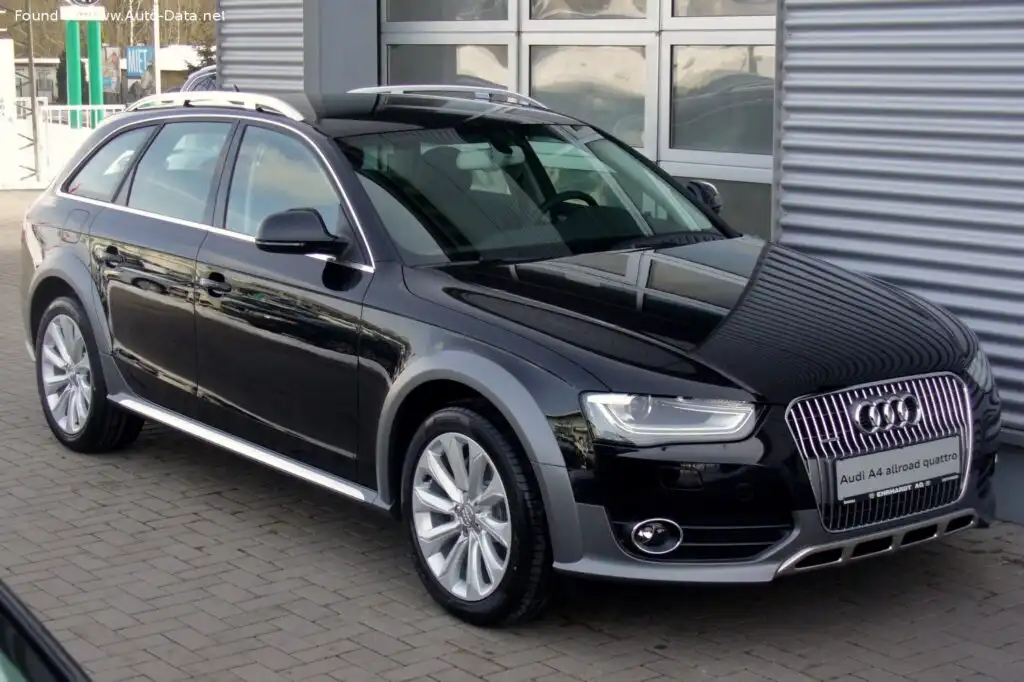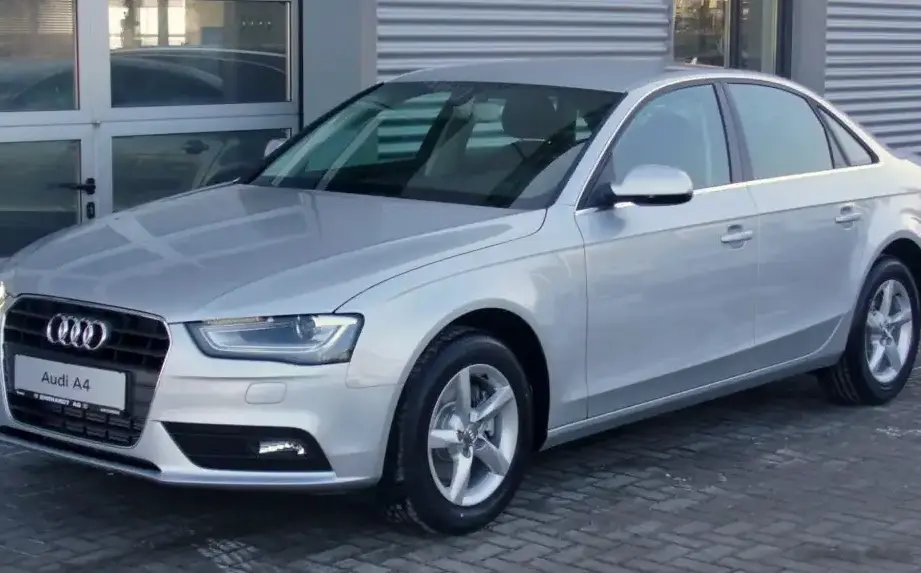
The Audi A4 (B8 8K) facelift, produced from 2012 to 2013, represented a significant mid-cycle refresh of Audi’s popular compact executive car. Among the various engine and drivetrain configurations offered, the 2.0 T quattro model, producing 214 horsepower, occupied a strong position in the lineup, appealing to drivers seeking a balance of performance, all-weather capability, and refinement. This variant was positioned as a step up from the base 1.8T models, offering considerably more power and the added security of Audi’s quattro all-wheel drive system. It served as a compelling alternative to rear-wheel drive BMW 3 Series and Mercedes-Benz C-Class models.
Technical Specifications
| Brand | Audi |
| Model | A4 |
| Generation | A4 (B8 8K, facelift 2011) |
| Type (Engine) | 2.0 T (214 Hp) quattro |
| Start of production | 2012 |
| End of production | 2013 |
| Powertrain Architecture | Internal Combustion engine |
| Body type | Sedan |
| Seats | 5 |
| Doors | 4 |
| Fuel consumption (urban) | 10.7 l/100 km (22 US mpg, 26.4 UK mpg, 9.3 km/l) |
| Fuel consumption (extra urban) | 7.3 l/100 km (32.2 US mpg, 38.7 UK mpg, 13.7 km/l) |
| Fuel consumption (combined) | 9 l/100 km (26.1 US mpg, 31.4 UK mpg, 11.1 km/l) |
| Fuel Type | Petrol (Gasoline) |
| Acceleration 0 – 100 km/h | 6.8 sec |
| Acceleration 0 – 62 mph | 6.8 sec |
| Acceleration 0 – 60 mph | 6.5 sec |
| Maximum speed | 209 km/h (129.87 mph) |
| Weight-to-power ratio | 7.7 kg/Hp, 130.5 Hp/tonne |
| Weight-to-torque ratio | 4.7 kg/Nm, 213.4 Nm/tonne |
| Power | 214 Hp @ 4300-6000 rpm |
| Power per litre | 107.9 Hp/l |
| Torque | 350 Nm @ 1500-4200 rpm (258.15 lb.-ft. @ 1500-4200 rpm) |
| Engine layout | Front, Longitudinal |
| Engine Model/Code | CAEB, CPMA |
| Engine displacement | 1984 cm3 (121.07 cu. in.) |
| Number of cylinders | 4 |
| Engine configuration | Inline |
| Cylinder Bore | 82.5 mm (3.25 in.) |
| Piston Stroke | 92.8 mm (3.65 in.) |
| Compression ratio | 9.6:1 |
| Number of valves per cylinder | 4 |
| Fuel injection system | Direct injection |
| Engine aspiration | Turbocharger, Intercooler |
| Valvetrain | DOHC |
| Engine oil capacity | 4.6 l (4.86 US qt | 4.05 UK qt) |
| Coolant | 7 l (7.4 US qt | 6.16 UK qt) |
| Kerb Weight | 1640 kg (3615.58 lbs.) |
| Trunk (boot) space – minimum | 480 l (16.95 cu. ft.) |
| Trunk (boot) space – maximum | 962 l (33.97 cu. ft.) |
| Fuel tank capacity | 61 l (16.11 US gal | 13.42 UK gal) |
| Length | 4701 mm (185.08 in.) |
| Width | 1826 mm (71.89 in.) |
| Width including mirrors | 2040 mm (80.31 in.) |
| Height | 1427 mm (56.18 in.) |
| Wheelbase | 2808 mm (110.55 in.) |
| Front track | 1564 mm (61.57 in.) |
| Rear (Back) track | 1551 mm (61.06 in.) |
| Front overhang | 862 mm (33.94 in.) |
| Rear overhang | 1031 mm (40.59 in.) |
| Drag coefficient (Cd) | 0.31 |
| Minimum turning circle (turning diameter) | 11.5 m (37.73 ft.) |
| Drive wheel | All wheel drive (4×4) |
| Number of gears and type of gearbox | 6 gears, manual transmission |
| Front suspension | Independent multi-link suspension |
| Rear suspension | Independent on trapezoidal lever |
| Front brakes | Ventilated discs |
| Rear brakes | Disc |
| Assisting systems | ABS (Anti-lock braking system) |
| Steering type | Steering rack and pinion |
| Power steering | Electric Steering |
| Tires size | 245/45 R17 |
| Wheel rims size | 17 |
Powertrain & Engine Architecture
The heart of the A4 2.0 T quattro is the EA888 2.0-liter turbocharged inline-four cylinder engine. Specifically, the CAEB and CPMA engine codes were commonly found in this model. This engine utilizes direct fuel injection (FSI) and a single turbocharger with an intercooler to deliver a potent combination of power and efficiency. The engine’s DOHC (Dual Overhead Camshaft) valvetrain, with four valves per cylinder, contributes to its responsive nature. The 2.0T engine benefits from variable valve timing on both the intake and exhaust sides, optimizing performance across the rev range. The 6-speed manual transmission was standard, providing precise gear changes and a direct connection to the engine. The quattro all-wheel drive system employs a Torsen center differential, distributing torque between the front and rear axles as needed, enhancing traction and stability in various driving conditions.
Driving Characteristics
The 214 hp output and 350 Nm (258 lb-ft) of torque provided by the 2.0 T engine translated into brisk acceleration. The 0-60 mph sprint was typically achieved in around 6.5 seconds. While not as overtly sporty as the S4, the 2.0 T quattro offered ample power for everyday driving and confident overtaking maneuvers. The manual transmission’s gear ratios were well-matched to the engine’s torque curve, providing strong pull throughout the mid-range. Compared to the base 1.8T models, the 2.0 T quattro felt significantly more responsive and capable. The quattro system instilled a sense of security, particularly in inclement weather, and allowed for confident cornering. The ride quality, while firm, was generally comfortable, striking a good balance between handling and everyday usability.
Equipment & Trim Levels
The A4 2.0 T quattro typically came well-equipped, even in base trim. Standard features included leather upholstery, tri-zone automatic climate control, a multi-function steering wheel, and an Audi Concert audio system. Optional extras included a navigation system, sunroof, heated front seats, and a premium sound system. The interior design was typically understated and elegant, with high-quality materials and a focus on ergonomics. The dashboard layout was clean and intuitive, with easy-to-read gauges and controls.
Chassis & Braking
The B8 A4 featured a sophisticated chassis design, with an independent multi-link suspension at all four corners. This suspension setup provided excellent ride quality and handling characteristics. The front suspension utilized aluminum subframes and control arms to reduce weight and improve rigidity. The rear suspension employed a trapezoidal link design, further enhancing stability and control. Brakes consisted of ventilated discs at all four corners, providing ample stopping power. ABS (Anti-lock Braking System) was standard, along with electronic stability control (ESC).
Market Reception & Comparison
The Audi A4 2.0 T quattro was generally well-received by automotive critics. It was praised for its refined driving experience, powerful engine, and all-weather capability. Fuel economy was considered reasonable for its class, averaging around 26 mpg in combined driving. Compared to the 1.8T models, the 2.0 T quattro offered a significant performance upgrade, justifying the higher price tag for many buyers. Reliability was generally good, although some owners reported issues with the turbocharger and fuel injectors over the long term. The A4 2.0 T quattro competed directly with the BMW 328i xDrive and Mercedes-Benz C300 4MATIC, offering a compelling alternative with its distinctive styling and advanced technology.
Legacy
The B8 A4 2.0 T quattro remains a popular choice in the used car market today. Its combination of performance, refinement, and all-wheel drive capability continues to appeal to buyers seeking a well-rounded compact executive car. The EA888 2.0-liter engine is known for its tunability, and many owners have opted to modify their vehicles for increased power. While maintenance costs can be higher than some competitors, the A4 2.0 T quattro’s overall reliability is generally considered good, making it a solid long-term investment.