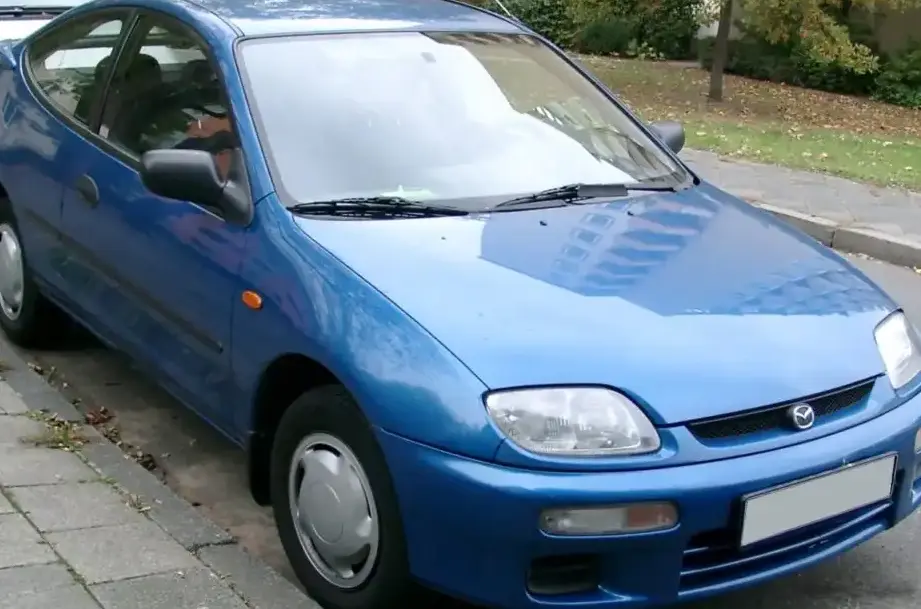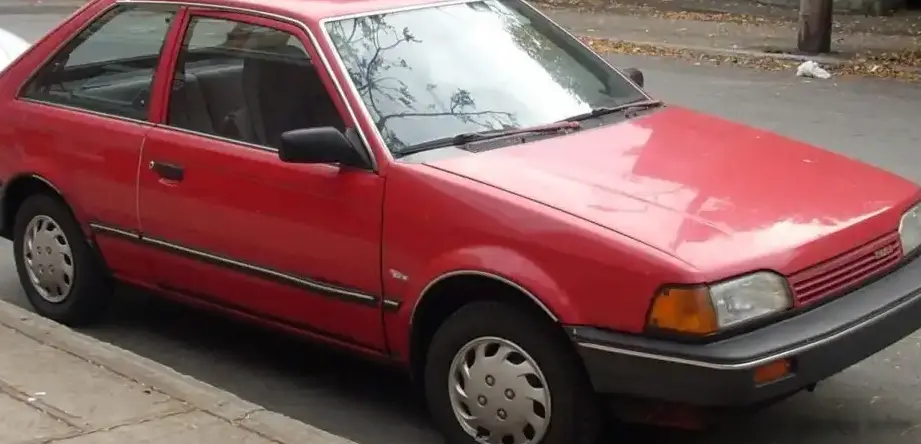
The Mazda 323 III Hatchback, internally designated as the BF platform, represented Mazda’s entry into the competitive compact hatchback segment during the late 1980s. Produced from 1987 to 1989, the BF series aimed to offer a blend of practicality, affordability, and Mazda’s signature sporty handling. The 1.6-liter, 73 horsepower variant occupied the lower end of the 323 III hatchback lineup, serving as the most accessible option for budget-conscious buyers. This model was primarily targeted at first-time car owners and those seeking economical transportation, particularly in European and Asian markets where smaller, fuel-efficient vehicles were highly valued. While not a performance leader, the 1.6L BF 323 provided a reliable and reasonably equipped package.
Technical Specifications
| Brand | Mazda |
| Model | 323 |
| Generation | 323 III Hatchback (BF) |
| Type (Engine) | 1.6 (73 Hp) |
| Start of production | 1987 |
| End of production | 1989 |
| Powertrain Architecture | Internal Combustion engine |
| Body type | Hatchback |
| Fuel Type | Petrol (Gasoline) |
| Power | 73 Hp |
| Engine aspiration | Naturally aspirated engine |
Powertrain & Engine Architecture
The heart of the 1.6-liter Mazda 323 III Hatchback was the B6 engine, a naturally aspirated, inline-four cylinder powerplant. This engine, displacing 1586cc, utilized a cast iron block and an aluminum cylinder head. Fuel delivery was managed by a carburetor, a common feature for vehicles of this era, rather than fuel injection. The B6 engine featured a single overhead camshaft (SOHC) valvetrain with eight valves (two per cylinder). This configuration prioritized simplicity and reliability over outright performance. The 73 horsepower output was achieved at approximately 6000 rpm, while peak torque of around 95 lb-ft was available at 3000 rpm. The transmission offered was typically a four-speed automatic, although a five-speed manual was also available as an option. The automatic transmission was designed for smooth, comfortable shifts, prioritizing ease of use over sporty responsiveness. It was a relatively conventional three-speed unit with torque converter.
Driving Characteristics
The 1.6-liter engine and automatic transmission combination resulted in a driving experience focused on practicality and fuel economy. Acceleration was modest, with a 0-60 mph time estimated to be around 13-15 seconds. The automatic transmission’s gear ratios were geared towards maximizing fuel efficiency, resulting in a somewhat leisurely pace. Compared to the available five-speed manual transmission, the automatic version felt noticeably slower, particularly during overtaking maneuvers. However, the automatic offered a more relaxed driving experience, especially in urban traffic. The suspension, consisting of MacPherson struts in the front and a twist-beam rear axle, provided a comfortable ride, absorbing bumps and imperfections in the road reasonably well. Handling was predictable and safe, but not particularly engaging. The steering, while not overly heavy, lacked the precision found in some of its competitors.
Equipment & Trim Levels
The 1.6-liter Mazda 323 III Hatchback typically represented the base trim level. Standard equipment generally included cloth upholstery, a basic AM/FM radio, and manual windows and door locks. Air conditioning was often an optional extra, as were power steering and upgraded audio systems. Interior plastics were durable but relatively basic in appearance. The dashboard layout was functional and straightforward, with clearly labeled controls. The rear seats offered adequate space for passengers, and the hatchback configuration provided a reasonable amount of cargo space, which could be further expanded by folding down the rear seats. The exterior styling was typical of the late 1980s, with a boxy silhouette and relatively simple lines. Wheel covers were standard, with optional alloy wheels available as an upgrade.
Chassis & Braking
The BF 323 III Hatchback utilized a front-engine, front-wheel-drive layout. The chassis was a unibody construction, providing a good balance of strength and weight. The front suspension employed MacPherson struts, coil springs, and an anti-roll bar. The rear suspension utilized a twist-beam axle with coil springs. Braking duties were handled by disc brakes in the front and drum brakes in the rear. The braking system was adequate for everyday driving, but lacked the stopping power of more advanced systems found in higher-performance vehicles. Power steering was often an optional extra, and when equipped, it provided a noticeable improvement in maneuverability. The tires were typically 175/70R14, offering a compromise between ride comfort and handling.
Market Reception & Comparison
The 1.6-liter Mazda 323 III Hatchback was generally well-received as an affordable and reliable compact car. Critics praised its fuel efficiency and comfortable ride, but noted its lack of performance. Compared to other vehicles in its class, such as the Volkswagen Golf, Ford Escort, and Nissan Sentra, the 323 offered a competitive package, particularly in terms of value for money. The automatic transmission version was often criticized for its sluggish performance compared to the manual transmission option. Fuel economy was a strong point, with the 1.6-liter engine achieving around 30-35 mpg in mixed driving conditions. Reliability was generally good, although some owners reported minor issues with the carburetor and cooling system. The 323 III was positioned as a more practical and economical alternative to Mazda’s more sporty offerings, such as the 323F.
Legacy
The Mazda 323 III Hatchback, particularly the 1.6-liter variant, has become a relatively common sight in the used car market. While not highly sought after by collectors, these vehicles remain popular among those seeking an affordable and reliable classic car. The B6 engine is known for its durability, and many examples are still on the road today with relatively high mileage. Maintenance is generally straightforward, and parts are still readily available, although some components may be becoming increasingly difficult to find. The 1.6-liter automatic version is often considered a good choice for those seeking a comfortable and economical daily driver. However, potential buyers should be aware of the potential for carburetor issues and cooling system leaks. Overall, the BF 323 III Hatchback represents a solid and dependable example of late 1980s Japanese automotive engineering.