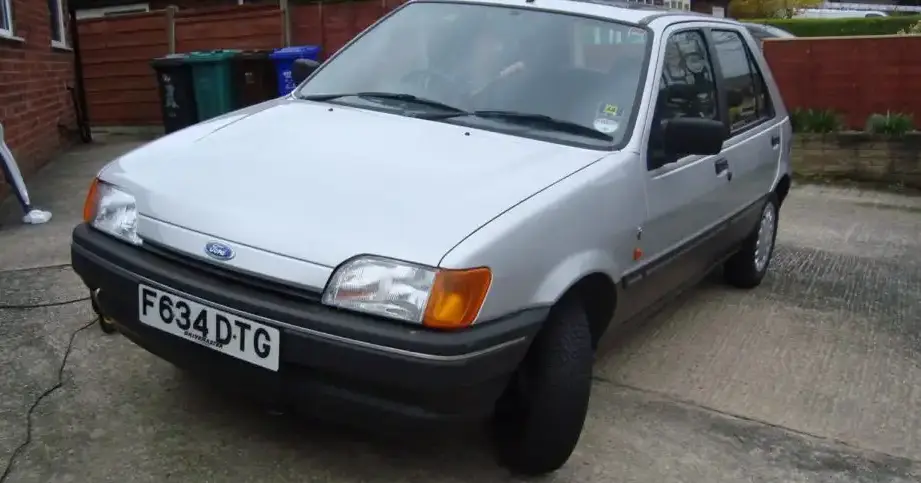
The Ford Fiesta Mk3, produced between 1989 and 1995, represented a significant evolution for Ford’s popular supermini. The 1.4-liter (71 horsepower) variant, often equipped with a four-speed automatic transmission, occupied an important position in the Fiesta Mk3 lineup, offering a balance between affordability and convenience. This model aimed to provide comfortable, everyday transportation for families and drivers prioritizing ease of use over outright performance. It was a common sight on European roads, and while not widely exported to the US, it exemplifies the compact car ethos prevalent in the late 1980s and early 1990s.
Technical Specifications
| Brand | Ford |
| Model | Fiesta |
| Generation | Fiesta III (Mk3) |
| Type (Engine) | 1.4 (71 Hp) |
| Start of production | 1989 |
| End of production | 1995 |
| Powertrain Architecture | Internal Combustion engine |
| Body type | Hatchback |
| Seats | 5 |
| Doors | 3/5 |
| Fuel consumption (urban) | 8.6 l/100 km (27.4 US mpg) |
| Fuel consumption (extra urban) | 5.2 l/100 km (45.2 US mpg) |
| Fuel consumption (combined) | 6.7 l/100 km (35.1 US mpg) |
| Fuel Type | Petrol (Gasoline) |
| Acceleration 0 – 100 km/h | 12.2 sec |
| Acceleration 0 – 62 mph | 12.2 sec |
| Acceleration 0 – 60 mph | 11.6 sec |
| Maximum speed | 164 km/h (101.9 mph) |
| Weight-to-power ratio | 11.5 kg/Hp |
| Weight-to-torque ratio | 7.9 kg/Nm |
| Power | 71 Hp @ 5500 rpm |
| Power per litre | 51 Hp/l |
| Torque | 103 Nm @ 4000 rpm (75.97 lb.-ft. @ 4000 rpm) |
| Engine layout | Front, Transverse |
| Engine Model/Code | F6E |
| Engine displacement | 1392 cm3 (84.95 cu. in.) |
| Number of cylinders | 4 |
| Engine configuration | Inline |
| Cylinder Bore | 77.2 mm (3.04 in.) |
| Piston Stroke | 74.3 mm (2.93 in.) |
| Compression ratio | 8.5:1 |
| Number of valves per cylinder | 2 |
| Fuel injection system | Single-point injection |
| Engine aspiration | Naturally aspirated |
| Valvetrain | OHC |
| Engine oil capacity | 3.5 l (3.7 US qt | 3.08 UK qt) |
| Coolant capacity | 7 l (7.4 US qt | 6.16 UK qt) |
| Kerb Weight | 815 kg (1796.77 lbs.) |
| Max. weight | 1275 kg (2810.89 lbs.) |
| Max load | 460 kg (1014.13 lbs.) |
| Trunk (boot) space – minimum | 250 l (8.83 cu. ft.) |
| Trunk (boot) space – maximum | 625 l (22.07 cu. ft.) |
| Fuel tank capacity | 42 l (11.1 US gal | 9.24 UK gal) |
| Length | 3743 mm (147.36 in.) |
| Width | 1606 mm (63.23 in.) |
| Height | 1379 mm (54.29 in.) |
| Wheelbase | 2446 mm (96.3 in.) |
| Front track | 1392 mm (54.8 in.) |
| Rear track | 1384 mm (54.49 in.) |
| Drivetrain Architecture | Front wheel drive |
| Number of gears | 4 (Automatic) |
| Front suspension | Coil spring |
| Rear suspension | Coil spring |
| Front brakes | Disc |
| Rear brakes | Drum |
| Assisting systems | ABS (Anti-lock braking system) |
| Steering type | Steering rack and pinion |
| Tires size | 155/70 R13 |
INTRODUCTION
The Ford Fiesta Mk3, launched in 1989, built upon the success of its predecessors, offering a more refined and spacious package. The 1.4-liter engine, paired with a four-speed automatic transmission, was a popular choice for buyers seeking a comfortable and easy-to-drive city car. This configuration positioned itself as a step up from the base 1.0-liter models, offering more power for highway driving and overtaking, while remaining more affordable than the sportier 1.6-liter variants. Available in both three and five-door body styles, the 1.4 Automatic catered to a broad range of customers, from young drivers to families.
Powertrain & Engine Architecture
The heart of the Fiesta Mk3 1.4 Automatic is the Ford F6E engine, a 1392cc inline-four cylinder petrol engine. This engine utilized a single-point fuel injection system, a relatively common technology in the late 1980s and early 1990s. The overhead camshaft (OHC) valvetrain operated two valves per cylinder. While not a particularly high-tech engine by modern standards, the F6E was known for its reliability and relatively low maintenance costs. The four-speed automatic transmission, while providing convenience, was not known for its sportiness. It featured a traditional torque converter and planetary gearset, prioritizing smooth shifts over rapid acceleration. The transmission’s gear ratios were geared towards fuel efficiency and comfortable cruising rather than performance.
Driving Characteristics
The Fiesta Mk3 1.4 Automatic offered a comfortable, if not exhilarating, driving experience. With 71 horsepower and 103 Nm (76 lb-ft) of torque, acceleration was adequate for everyday driving, but overtaking required careful planning. The automatic transmission, while smooth, could feel sluggish, particularly when attempting quick maneuvers. Compared to the five-speed manual version of the 1.4, the automatic suffered a noticeable performance penalty. The manual transmission allowed for better control and more responsive acceleration. However, the automatic’s ease of use made it a popular choice for drivers who primarily used the car for commuting or city driving. The suspension provided a reasonably comfortable ride, absorbing most bumps and imperfections in the road surface.
Equipment & Trim Levels
The 1.4 Automatic Fiesta Mk3 typically came equipped with basic but functional features. Standard equipment included central locking, electric front windows (on some models), and a basic stereo system. Interior upholstery was typically cloth, with a simple dashboard layout. Optional extras included a sunroof, upgraded stereo systems, and metallic paint finishes. Higher trim levels, such as the ‘Si’ or ‘Ghia’ models, offered additional features like alloy wheels, upgraded interior trim, and more sophisticated audio systems. The 1.4 Automatic often served as a base for these higher trim levels, allowing buyers to add features as desired.
Chassis & Braking
The Fiesta Mk3 utilized a relatively simple chassis design, with coil springs and a torsion beam rear suspension. Front brakes were disc brakes, providing adequate stopping power, while rear brakes were drums. This configuration was typical for cars in this price range during the period. Some models were equipped with Anti-lock Braking System (ABS), which improved braking performance, particularly on slippery surfaces. The steering was a rack and pinion system, providing reasonably precise steering feel. The suspension was tuned for comfort, prioritizing ride quality over handling precision.
Market Reception & Comparison
The Fiesta Mk3 1.4 Automatic was generally well-received by critics as a practical and affordable city car. However, the automatic transmission was often criticized for its lack of responsiveness. Compared to the manual version, the automatic offered lower fuel economy and slower acceleration. The 1.6-liter models provided significantly more performance, but at a higher price point. The 1.0-liter models were even more affordable, but lacked the power needed for comfortable highway driving. The 1.4 Automatic struck a balance between these extremes, offering a compromise between performance, economy, and price.
Legacy
The Ford Fiesta Mk3 1.4 Automatic remains a relatively common sight on roads today, testament to its durability and reliability. The F6E engine is known for its longevity, and with proper maintenance, can provide many years of service. However, age-related issues, such as corrosion and wear and tear on rubber components, are common. The automatic transmission, while reliable, can be prone to issues if not serviced regularly. In the used car market, the 1.4 Automatic Fiesta Mk3 represents an affordable and practical option for those seeking a classic city car. Its simplicity and ease of maintenance make it a popular choice for enthusiasts and first-time car owners.