
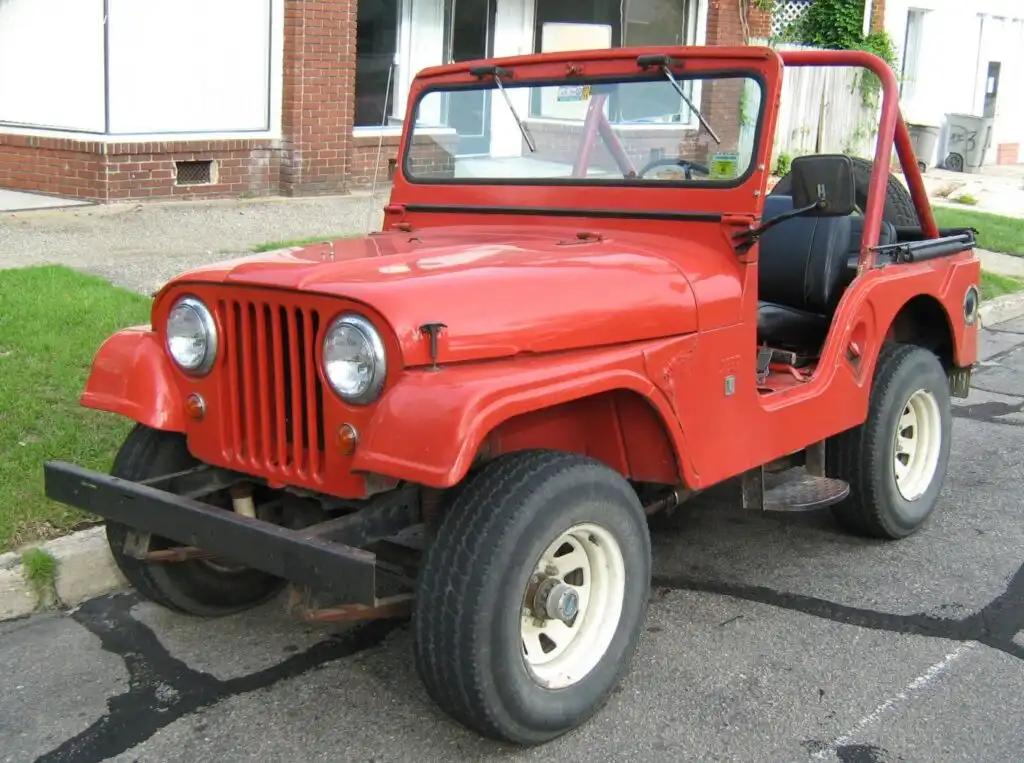
The Jeep CJ-5 4.2, produced from 1972 to 1987, represents a significant evolution in the iconic CJ (Civilian Jeep) lineage. Positioned as a versatile and accessible off-road vehicle, the 4.2-liter (258 cubic inch) engine variant became a mainstay of the CJ-5 lineup, offering a balance of affordability, durability, and capability. It served as a popular choice for recreational drivers and those needing a rugged utility vehicle, bridging the gap between the more basic models and the higher-performance options. The CJ-5 itself was a pivotal model, extending the CJ’s lifespan and solidifying its place in American automotive culture.
Technical Specifications
| Brand | Jeep |
| Model | CJ |
| Generation | CJ-5 |
| Type (Engine) | 4.2 (103 Hp) |
| Start of production | 1972 |
| End of production | 1987 |
| Powertrain Architecture | Internal Combustion engine |
| Body type | Off-road vehicle |
| Fuel Type | Petrol (Gasoline) |
| Power | 103 Hp |
| Engine Model/Code | AMC 258 |
| Engine aspiration | Naturally aspirated engine |
| Engine oil capacity | 5.7 l (6.02 US qt | 5.02 UK qt) |
| Coolant capacity | 10 l (10.57 US qt | 8.8 UK qt) |
| Length | 3424 mm (134.8 in.) |
| Width | 1521 mm (59.88 in.) |
| Width including mirrors | 1742 mm (68.58 in.) |
| Height | 1717 mm (67.6 in.) |
| Front overhang | 567 mm (22.32 in.) |
| Rear overhang | 706 mm (27.8 in.) |
Powertrain & Engine Architecture
The heart of the CJ-5 4.2 was the AMC 258 inline-six cylinder engine. This 4.2-liter (258 cubic inch) engine was a workhorse, known for its robust construction and relatively simple design. It featured a cast iron block and cylinder head, and utilized a single barrel carburetor for fuel delivery. The engine employed a traditional pushrod valvetrain, contributing to its mechanical simplicity and ease of maintenance. While not a powerhouse in terms of horsepower – rated at 103 hp – the engine produced a respectable 195 lb-ft of torque, which was crucial for off-road driving and hauling. The AMC 258 was known for its low-end grunt, making it well-suited to the CJ-5’s intended purpose. Transmission options typically included a three-speed automatic or a four-speed manual. The automatic transmission, a TorqueFlite A727, was a common pairing with the 4.2-liter engine, providing ease of use for a wider range of drivers.
Driving Characteristics
The CJ-5 4.2 with the automatic transmission offered a relaxed and accessible driving experience. Acceleration was modest, but sufficient for most on-road and off-road tasks. The automatic transmission’s gear ratios were geared towards low-end torque, providing good pulling power for navigating obstacles and climbing hills. Compared to the manual transmission versions, the automatic CJ-5 sacrificed some driver control and responsiveness, but gained in convenience. The 4.2-liter engine’s torque curve meant that it didn’t require frequent downshifting, making it a comfortable choice for casual off-roading and everyday driving. However, drivers seeking more spirited performance often opted for the V8 engine options available in the CJ-5 lineup. The suspension, typically consisting of leaf springs, provided a reasonably comfortable ride on paved roads, although it was primarily designed for off-road articulation and durability.
Equipment & Trim Levels
The CJ-5 4.2 typically represented a mid-range trim level within the CJ-5 family. Standard equipment generally included basic instrumentation, vinyl upholstery, and a simple dashboard layout. Optional extras could include features like a radio, upgraded seats, a roll bar, and various off-road accessories such as winches and lift kits. Interior trim levels varied depending on the year and package selected, with some models offering more comfortable seating and upgraded interior finishes. The CJ-5 was largely customizable, allowing buyers to tailor the vehicle to their specific needs and preferences. Hardtops and soft tops were available, providing weather protection and versatility.
Chassis & Braking
The CJ-5 utilized a body-on-frame construction, providing a rugged and durable platform for off-road use. The chassis was relatively simple, consisting of a ladder frame and a solid axle suspension. Early models often featured drum brakes on all four wheels, while later models transitioned to front disc brakes for improved stopping power. Rear drum brakes remained common throughout the production run. Steering was typically manual, although power steering was available as an option. The CJ-5’s relatively short wheelbase and high ground clearance contributed to its excellent off-road capability. Stabilizer bars were not typically standard equipment, prioritizing articulation over on-road handling.
Market Reception & Comparison
The CJ-5 4.2 was generally well-received by consumers and automotive critics as a capable and affordable off-road vehicle. It offered a good balance of performance, durability, and price, making it a popular choice for recreational drivers and those needing a versatile utility vehicle. Compared to the V8-powered CJ-5s, the 4.2-liter version offered better fuel economy, although at the expense of outright power. The 4.2-liter engine was also considered more reliable and easier to maintain than the V8 options. Compared to other off-road vehicles of the era, such as the Ford Bronco and the International Scout, the CJ-5 offered a more compact size and a simpler design, making it easier to maneuver in tight spaces and maintain in remote locations.
Legacy
The AMC 258 engine, as found in the CJ-5, has earned a reputation for durability and longevity. Many examples are still on the road today, testament to the engine’s robust construction. While not known for its high performance, the AMC 258 is relatively easy to rebuild and maintain, making it a popular choice for restoration projects. The CJ-5 4.2 remains a sought-after vehicle in the used car market, particularly among enthusiasts who appreciate its classic styling and off-road capability. Its simplicity and affordability continue to appeal to a wide range of buyers, ensuring its place as a beloved icon of American automotive history. Parts availability remains good, further contributing to its enduring popularity.
