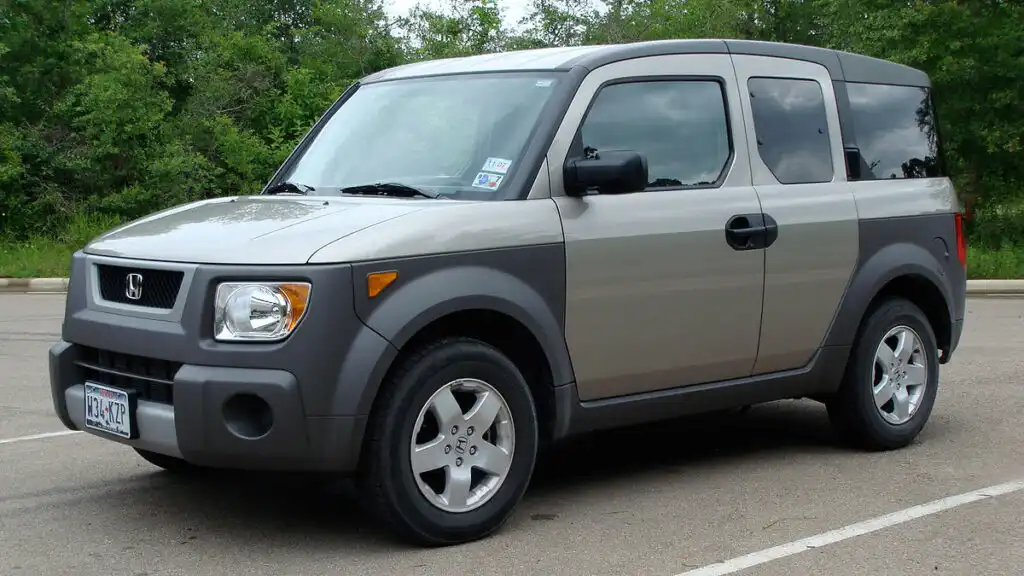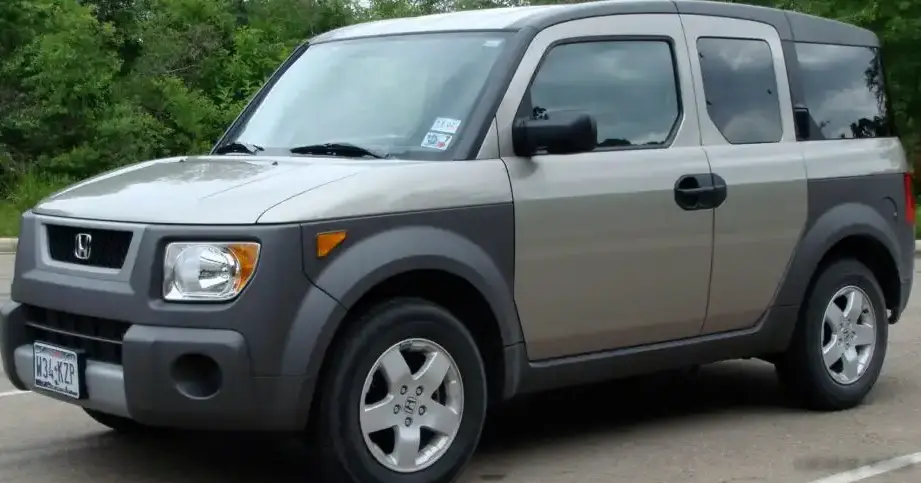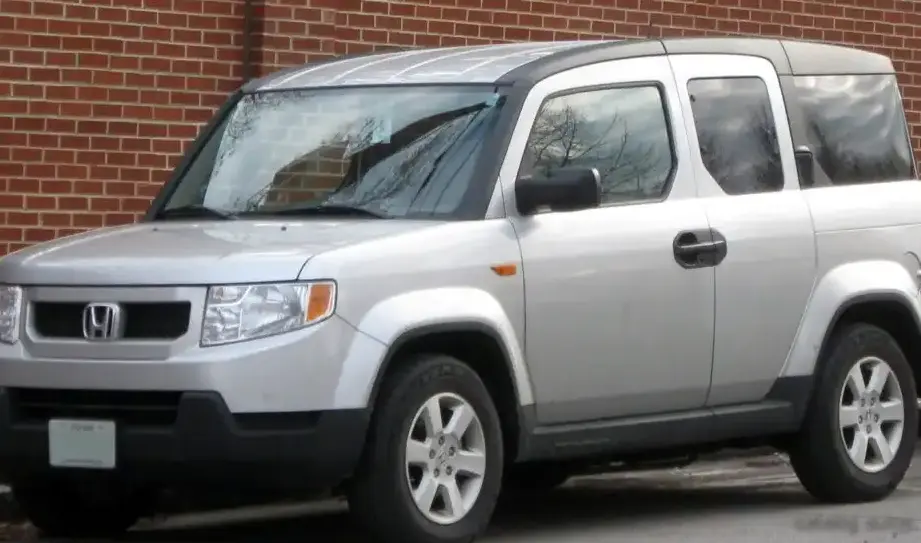
The Honda Element, particularly the facelifted version produced from 2008 to 2011, represented a unique offering in the compact SUV segment. Characterized by its boxy design, durable interior, and focus on utility, the Element aimed to appeal to active lifestyle enthusiasts. The 2.4-liter, 166 horsepower variant occupied the sole engine and trim level position within the lineup during its production run, offering a single, well-equipped package. It was built on Honda’s compact platform, sharing underpinnings with the CR-V, but distinguished itself through its unconventional styling and interior features. The Element was discontinued in 2011 due to declining sales, but it maintains a dedicated following for its practicality and distinctive character.
Technical Specifications
| Brand | Honda |
| Model | Element |
| Generation | Element I (facelift 2008) |
| Type (Engine) | 2.4 (166 Hp) |
| Start of production | 2008 year |
| End of production | 2011 year |
| Powertrain Architecture | Internal Combustion engine |
| Body type | SUV |
| Seats | 5 |
| Doors | 5 |
| Fuel Type | Petrol (Gasoline) |
| Power | 166 Hp @ 5800 rpm |
| Power per litre | 70.5 Hp/l |
| Torque | 218 Nm @ 4000 rpm / 160.79 lb.-ft. @ 4000 rpm |
| Engine layout | Front, Transverse |
| Engine Model/Code | K24A8 |
| Engine displacement | 2354 cm3 / 143.65 cu. in. |
| Number of cylinders | 4 |
| Engine configuration | Inline |
| Cylinder Bore | 87 mm / 3.43 in. |
| Piston Stroke | 99 mm / 3.9 in. |
| Compression ratio | 10.5:1 |
| Number of valves per cylinder | 4 |
| Fuel injection system | Multi-port manifold injection |
| Engine aspiration | Naturally aspirated engine |
| Engine oil capacity | 4.2 l / 4.44 US qt | 3.7 UK qt |
| Fuel tank capacity | 60 l / 15.85 US gal | 13.2 UK gal |
| Length | 4315 mm / 169.88 in. |
| Width | 1819 mm / 71.61 in. |
| Height | 1788 mm / 70.39 in. |
| Wheelbase | 2576 mm / 101.42 in. |
| Front track | 1577 mm / 62.09 in. |
| Rear (Back) track | 1582 mm / 62.28 in. |
| Drivetrain Architecture | The Internal combustion engine (ICE) drives the front wheels of the vehicle. |
| Drive wheel | Front wheel drive |
| Front suspension | Independent type McPherson |
| Rear suspension | Transverse stabilizer |
| Front brakes | Disc |
| Rear brakes | Disc |
| Tires size | 215/70 R16; 255/55 R18 |
| Wheel rims size | 16; 18 |
Powertrain & Engine Architecture
The heart of the 2008-2011 Honda Element was the K24A8 engine, a 2.4-liter inline-four cylinder powerplant. This engine belonged to Honda’s K-series family, known for its reliability and relatively high output for its displacement. The K24A8 featured a single overhead camshaft (SOHC) design with four valves per cylinder, utilizing Honda’s VTEC (Variable Valve Timing and Lift Electronic Control) system for improved efficiency and performance. Fuel delivery was handled by a multi-point fuel injection system. The engine produced 166 horsepower at 5800 rpm and 161 lb-ft of torque at 4000 rpm. The engine was paired exclusively with a four-speed automatic transmission, designed for smooth operation and ease of use. This transmission was a conventional torque converter automatic, prioritizing comfort over outright performance.
Driving Characteristics
The 2.4-liter engine and four-speed automatic transmission combination in the Element provided adequate, but not exhilarating, performance. Acceleration was reasonable for everyday driving, but the transmission’s limited number of gears meant the engine often felt strained during highway passing maneuvers. The automatic transmission was tuned for fuel efficiency and smooth shifts, rather than aggressive downshifts. Compared to a hypothetical manual transmission version, the automatic offered less driver engagement and slightly reduced fuel economy. The Element’s front-wheel-drive configuration contributed to predictable handling, but lacked the all-weather capability of an all-wheel-drive system. The relatively tall gear ratios prioritized fuel economy over quick acceleration.
Equipment & Trim Levels
The 2008-2011 Honda Element came standard with a surprisingly comprehensive list of features. Standard equipment included air conditioning, power windows and locks, a CD player with auxiliary input, and cruise control. The interior was notable for its durable, water-resistant upholstery, designed to withstand the rigors of an active lifestyle. The rear seats were easily removable, creating a large, flat cargo area. Optional extras included a premium audio system, alloy wheels, and a sunroof. The Element’s interior design was minimalist and functional, prioritizing practicality over luxury. The dashboard layout was straightforward and easy to use.
Chassis & Braking
The Honda Element utilized an independent McPherson strut suspension in the front and a multi-link suspension in the rear, providing a comfortable ride quality. A transverse stabilizer bar was included on both axles to reduce body roll during cornering. The Element’s braking system consisted of disc brakes on all four wheels, providing adequate stopping power for its weight class. The steering was hydraulically assisted, offering a reasonable level of feedback. The Element’s suspension was tuned for comfort and stability, rather than sporty handling. The vehicle’s relatively high ground clearance allowed for some light off-road capability.
Market Reception & Comparison
The Honda Element received generally positive reviews from automotive critics, who praised its practicality, durability, and unique styling. However, some critics noted its lack of performance and somewhat unrefined driving experience. Compared to other compact SUVs of the time, such as the Toyota RAV4 and Honda CR-V, the Element offered a more utilitarian and adventurous character. Fuel economy was average for its class, with EPA estimates of around 20 mpg city and 25 mpg highway. Reliability was generally excellent, consistent with Honda’s reputation for building durable vehicles. The Element’s unique design and limited appeal contributed to its relatively low sales volume.
Legacy
The Honda Element has developed a cult following among outdoor enthusiasts and those seeking a practical and versatile vehicle. The K24A8 engine is known for its longevity and reliability, and well-maintained examples of the Element continue to provide dependable transportation. In the used car market, the Element commands a relatively high price compared to other vehicles of similar age and mileage, reflecting its desirability and limited availability. The Element’s innovative design and focus on utility have influenced other vehicles in the compact SUV segment. It remains a distinctive and memorable vehicle, fondly remembered for its unique character and practicality.