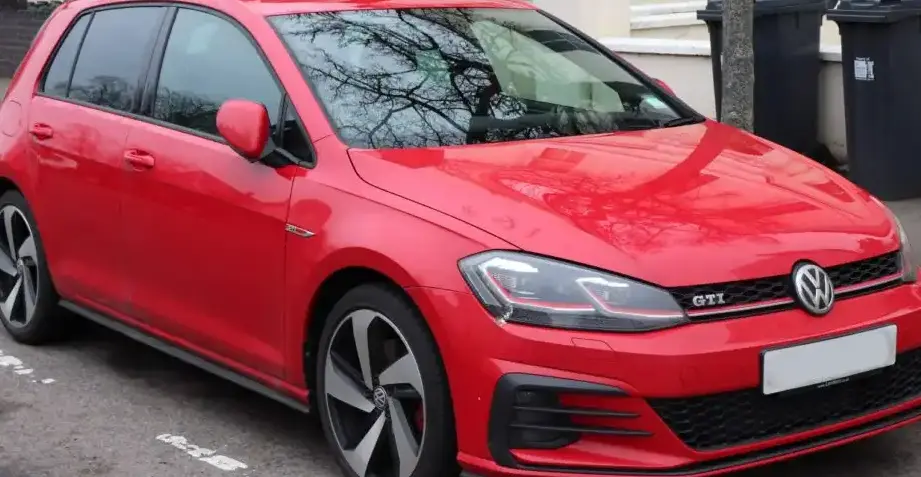
The Volkswagen Golf VII, produced from 2012 to 2014, represented a significant evolution of Volkswagen’s iconic hatchback. Among the various engine and transmission combinations offered, the 2.0 TDI with 150 horsepower was a popular choice, particularly in European markets. This variant occupied a mid-range position within the Golf VII lineup, offering a balance between performance, fuel efficiency, and cost. It was positioned above the lower-powered diesel options and below the more potent, performance-oriented trims like the GTI.
Technical Specifications
| Brand | Volkswagen |
| Model | Golf |
| Generation | Golf VII (5-door) |
| Type (Engine) | 2.0 TDI (150 Hp) |
| Start of production | August, 2012 |
| End of production | April, 2014 |
| Powertrain Architecture | Internal Combustion engine |
| Body type | Hatchback |
| Seats | 5 |
| Doors | 5 |
| Fuel consumption (urban) | 5 l/100 km (47 US mpg, 56.5 UK mpg, 20 km/l) |
| Fuel consumption (extra urban) | 3.6 l/100 km (65.3 US mpg, 78.5 UK mpg, 27.8 km/l) |
| Fuel consumption (combined) | 4.1 l/100 km (57.4 US mpg, 68.9 UK mpg, 24.4 km/l) |
| Fuel Type | Diesel |
| Acceleration 0 – 100 km/h | 8.6 sec |
| Acceleration 0 – 62 mph | 8.6 sec |
| Acceleration 0 – 60 mph | 8.2 sec |
| Maximum speed | 216 km/h (134.22 mph) |
| Weight-to-power ratio | 9 kg/Hp, 110.8 Hp/tonne |
| Weight-to-torque ratio | 4.2 kg/Nm, 236.3 Nm/tonne |
| Power | 150 Hp @ 3000-4000 rpm |
| Power per litre | 76.2 Hp/l |
| Torque | 320 Nm @ 1750-3000 rpm (236.02 lb.-ft. @ 1750-3000 rpm) |
| Engine layout | Front, Transverse |
| Engine Model/Code | CRBC, CRLB |
| Engine displacement | 1968 cm3 (120.09 cu. in.) |
| Number of cylinders | 4 |
| Engine configuration | Inline |
| Fuel injection system | Diesel Commonrail |
| Engine aspiration | Turbocharger, Intercooler |
| Engine oil capacity | 4.7 l (4.97 US qt | 4.14 UK qt) |
| Kerb Weight | 1354 kg (2985.06 lbs.) |
| Max. weight | 1860 kg (4100.6 lbs.) |
| Max load | 506 kg (1115.54 lbs.) |
| Trunk (boot) space – minimum | 380 l (13.42 cu. ft.) |
| Trunk (boot) space – maximum | 1270 l (44.85 cu. ft.) |
| Fuel tank capacity | 50 l (13.21 US gal | 11 UK gal) |
| Length | 4255 mm (167.52 in.) |
| Width | 1799 mm (70.83 in.) |
| Height | 1452 mm (57.17 in.) |
| Wheelbase | 2637 mm (103.82 in.) |
| Front track | 1549 mm (60.98 in.) |
| Rear (Back) track | 1520 mm (59.84 in.) |
| Minimum turning circle | 10.9 m (35.76 ft.) |
| Drivetrain Architecture | Front wheel drive |
| Number of gears | 6 gears, manual transmission |
| Front brakes | Ventilated discs |
| Assisting systems | ABS (Anti-lock braking system) |
| Steering type | Steering rack and pinion |
| Power steering | Electric Steering |
Powertrain & Engine Architecture
The heart of this Golf VII variant is the 2.0-liter four-cylinder diesel engine, identified by engine codes CRBC or CRLB. This engine belongs to Volkswagen’s modular engine family, known for its compact design and efficiency. It utilizes a common rail direct injection system, delivering fuel directly into the combustion chamber at extremely high pressure. This technology, coupled with a turbocharger and intercooler, optimizes combustion for increased power and reduced emissions. The engine features four valves per cylinder and a single overhead camshaft. The 150 horsepower output is achieved between 3000 and 4000 rpm, while the peak torque of 320 Nm (236 lb-ft) is available from 1750 to 3000 rpm. This broad torque curve provides strong pulling power across a wide range of engine speeds. The engine is paired with a six-speed manual transmission, delivering power to the front wheels.
Driving Characteristics
The 2.0 TDI 150 hp Golf VII offered a refined and capable driving experience. While not as overtly sporty as the GTI, it provided ample power for everyday driving and comfortable highway cruising. The six-speed manual transmission allowed for precise gear selection, and the engine’s strong low-end torque meant that frequent downshifts weren’t necessary. Acceleration from 0 to 60 mph took approximately 8.2 seconds, making it competitive with other vehicles in its class. The gear ratios were well-matched to the engine’s power delivery, providing good responsiveness in most situations. Compared to the lower-powered 1.6 TDI variants, the 2.0 TDI offered noticeably more performance, especially when fully loaded or tackling uphill climbs. However, it didn’t quite match the punch of the higher-output TDI models or the petrol-powered GTI.
Equipment & Trim Levels
The 2.0 TDI 150 hp Golf VII typically came equipped with a solid range of standard features. These included air conditioning, power windows, power mirrors, a CD/MP3 stereo system, and alloy wheels. Higher trim levels, such as Trendline, Comfortline, and Highline, added features like automatic climate control, a touchscreen infotainment system, parking sensors, and upgraded interior upholstery. Optional extras included a panoramic sunroof, navigation system, and adaptive cruise control. Interior materials were generally of good quality, with a focus on durability and practicality. The dashboard layout was clean and functional, with intuitive controls.
Chassis & Braking
The Golf VII’s chassis was a key element of its well-rounded driving experience. The front suspension utilized MacPherson struts, while the rear suspension employed a multi-link setup. This configuration provided a good balance between ride comfort and handling precision. The 2.0 TDI models typically featured ventilated disc brakes on the front wheels and either disc or drum brakes on the rear wheels, depending on the trim level. Anti-lock braking system (ABS) was standard, enhancing safety and stability during braking. The steering was precise and well-weighted, providing good feedback to the driver. Stabilizer bars were fitted to both the front and rear axles to reduce body roll during cornering.
Market Reception & Comparison
The Volkswagen Golf VII 2.0 TDI 150 hp received generally positive reviews from automotive critics. It was praised for its fuel efficiency, comfortable ride, and refined engine. Critics noted that the engine provided ample power for most driving situations, and the manual transmission was smooth and precise. Compared to other trims in the Golf VII lineup, the 2.0 TDI offered a compelling balance between performance and economy. It was more expensive than the lower-powered diesel models, but it provided a noticeable improvement in performance. Fuel economy was a strong point, with combined figures averaging around 57.4 US mpg. Reliability was generally good, although some owners reported issues with the diesel particulate filter (DPF) system.
Legacy
The 2.0 TDI 150 hp engine proved to be a durable and reliable powerplant when properly maintained. While the Golf VII generation has been superseded by newer models, the 2.0 TDI variants remain popular on the used car market. They are often sought after by buyers who prioritize fuel efficiency and practicality. However, potential buyers should be aware of the potential for DPF issues and the importance of regular servicing. The Golf VII 2.0 TDI 150 hp represents a well-engineered and versatile hatchback that continues to offer a compelling ownership experience.